

readwithpride.com
Let’s be real for a second: for a long time, queer people have had to be the ultimate detectives. Before we had entire sections dedicated to MM romance books or neon-colored "Pride" displays in windows, we had to hunt for ourselves between the lines. We looked for a lingering glance in a Victorian novel, a shared "friendship" that seemed a little too intense in a biography, or a poem that spoke of a "love that dare not speak its name."
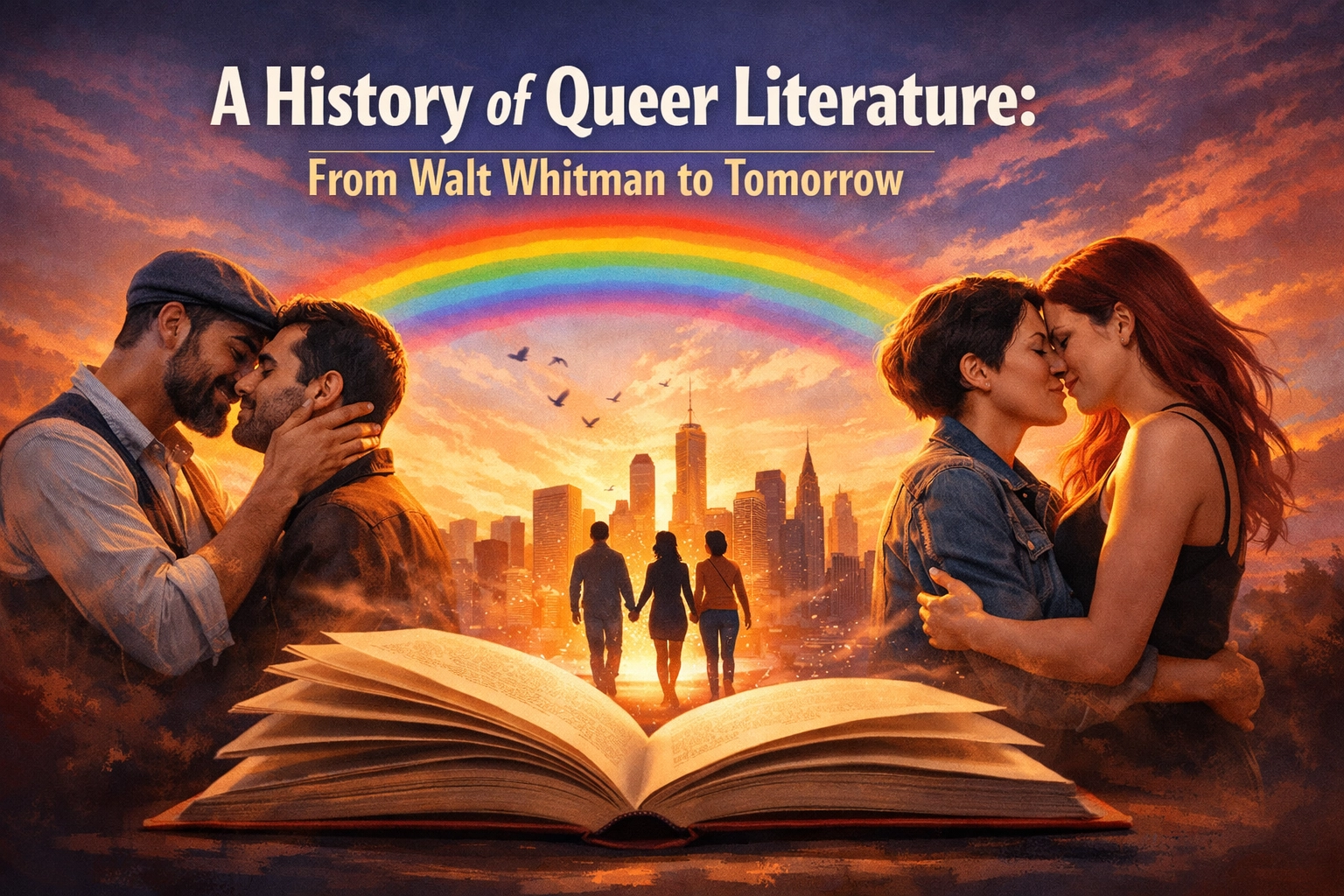
At Read with pride, we believe that knowing where we came from is just as important as knowing what’s on our 2026 TBR list. Our history isn’t just about struggle; it’s about the ingenious ways we’ve always found to tell our stories. So, grab a coffee (or a glass of wine, we don't judge), and let’s take a journey through the evolution of gay literature: from the bearded bards of the 1800s to the steamy historical mm romance novels of today.
The Bearded Bard: Walt Whitman and the "Calamus"
If we’re talking about the foundations of modern queer writing, we have to start with the man, the myth, the beard: Walt Whitman. In the mid-19th century, Whitman published Leaves of Grass. While the mainstream public saw a rugged American poet celebrating nature, the queer community found something else entirely.
In his "Calamus" poems, Whitman wrote about "the manly love of comrades." He wasn't just talking about grabbing a beer with the guys; he was describing deep, spiritual, and physical connections between men. He used the calamus root as a symbol: a plant that grows in clusters, representing the bond of brotherhood and love. Whitman gave us a vocabulary of affection before the word "homosexual" was even coined. He was the original influencer for gay love stories, proving that our desire for connection has always been woven into the fabric of great literature.
The Era of Coding and Shadows
As we moved into the late 19th and early 20th centuries, things got… complicated. Legal crackdowns meant that being explicit was dangerous. This gave birth to the era of "coding."
Authors like Oscar Wilde pushed the boundaries until they broke. The Picture of Dorian Gray was used against Wilde in his own trial to prove his "indecency." But even in the shadows, queer themes thrived. Gothic fiction became a playground for the "other." Think about Joseph Sheridan Le Fanu’s Carmilla (1872), which gave us the lesbian vampire trope long before Twilight was a glimmer in anyone's eye. Or Matthew Lewis’s The Monk, where intense homoerotic subtext simmered under the surface of religious horror.
The Secret Manuscripts
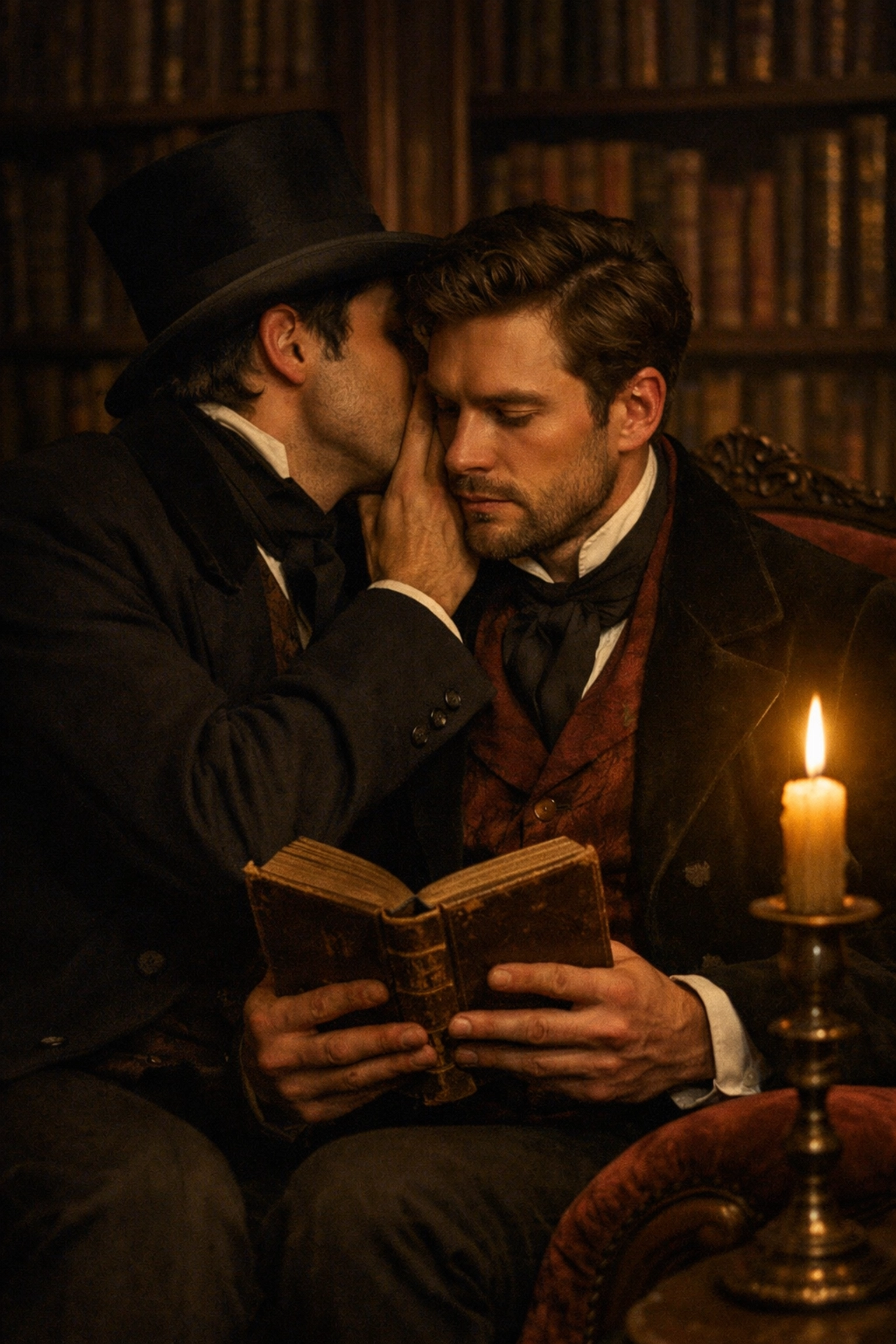
The early 20th century was a time of "write it now, publish it later… much later." E.M. Forster wrote Maurice in 1914. It’s a beautiful, groundbreaking story about a young man in England coming to terms with his sexuality and eventually finding a "happily ever after" with a gamekeeper. But Forster knew the world wasn't ready. He kept the manuscript hidden, only showing it to close friends like Christopher Isherwood. It wasn't published until 1971, after his death.
Then there was the Bloomsbury Group. Virginia Woolf’s Orlando (1928) is essentially a love letter to Vita Sackville-West, exploring gender-fluidity and time-traveling romance. These weren't just gay books; they were literary masterpieces that refused to be contained by the binary.
1969: The Spark and the Explosion
Everything changed with the Stonewall Inn uprising on June 28, 1969. The rebellion in the streets translated into a rebellion on the page. We stopped asking for permission to exist in books.
The 1970s and 80s saw a massive surge in gay fiction. We had Patricia Nell Warren’s The Front Runner (1974), which became the first contemporary gay novel to hit the New York Times bestseller list. We had the raw, political power of Audre Lorde and the fabulous, interconnected world of Armistead Maupin’s Tales of the City.
The founding of the Lambda Literary Awards in 1989 was a signal to the world: LGBTQ+ fiction is a genre of excellence, and we are here to stay.
The Rise of the Trope: Historical MM Romance Novels
Fast forward to 2026, and the landscape is unrecognizable (in the best way possible). One of the most popular niches today is historical mm romance novels. Why? Because we love seeing ourselves in the past: but this time, with the happy endings we were denied for centuries.
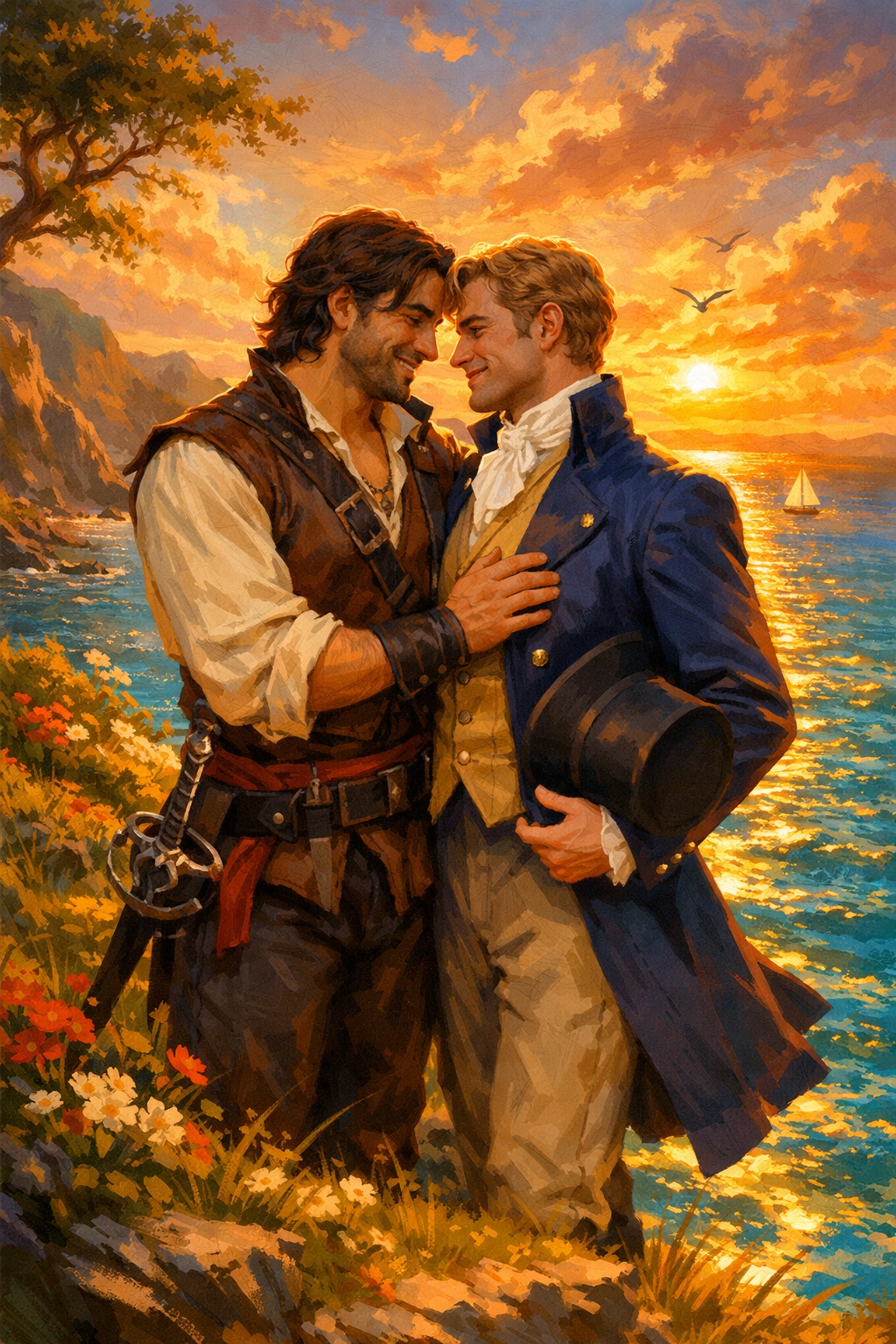
These books take the "coding" of the past and blow it wide open. Whether it’s a regency romance with a secret Duke or a gritty Victorian tale of forbidden love, MM historical romance allows readers to reclaim history. Tropes like "enemies to lovers" or "forced proximity" work incredibly well in historical settings where the stakes are high and the social rules are rigid.
If you’re looking for a perfect example of this, check out The Swordsman’s Compass. It’s a testament to how far the genre has come: combining rich historical detail with the kind of authentic, heartfelt connection that makes M/M books so addictive.
Why We Read with Pride in 2026
Today, we aren't just looking for "representation." We’re looking for joy. The shift from "tragedy porn" (where the queer character always dies at the end: look up the "Bury Your Gays" trope if you want to be annoyed) to "Queer Joy" is the most significant movement in modern gay literature.
We want gay romance novels where the protagonists get the guy, the house, and the dog. We want gay fantasy romance where the hero saves the prince and then marries him. We want gay thrillers where the detective's sexuality is just one part of a complex, high-stakes life.
At Readwithpride.com, we are obsessed with the new wave of 2026 gay books. From MM contemporary hits to steamy MM romance that pushes the envelope, the diversity of voices is staggering. We are seeing more BIPOC queer authors, trans and non-binary narratives, and "Ace/Aro" representation than ever before.
The Future is Queer
As we look toward "tomorrow," the boundaries of LGBTQ+ fiction are continuing to dissolve. We’re seeing more crossover into mainstream genres, with popular gay books like Red, White & Royal Blue paving the way for a world where queer stories are simply… stories.
But we will never forget the coded poems of Whitman or the hidden manuscripts of Forster. They are the reason we can stand tall today and Read with pride.
Join the Community
Ready to dive into your next favorite read? Whether you’re a fan of MM romance books, gay adventure romance, or award-winning gay fiction, we’ve got you covered.
- Explore our latest releases: Read with Pride Store
- Discover new favorites: Gay Book Recommendations
- Connect with us on social media:
Let’s keep making history, one page at a time.
#LGBTQBooks #MMRomance #QueerHistory #ReadWithPride #HistoricalMMRomance #GayFiction #GayRomance #MMBooks #QueerLiterature #2026Books #GayLoveStory

Leave a Reply
You must be logged in to post a comment.