

readwithpride.com
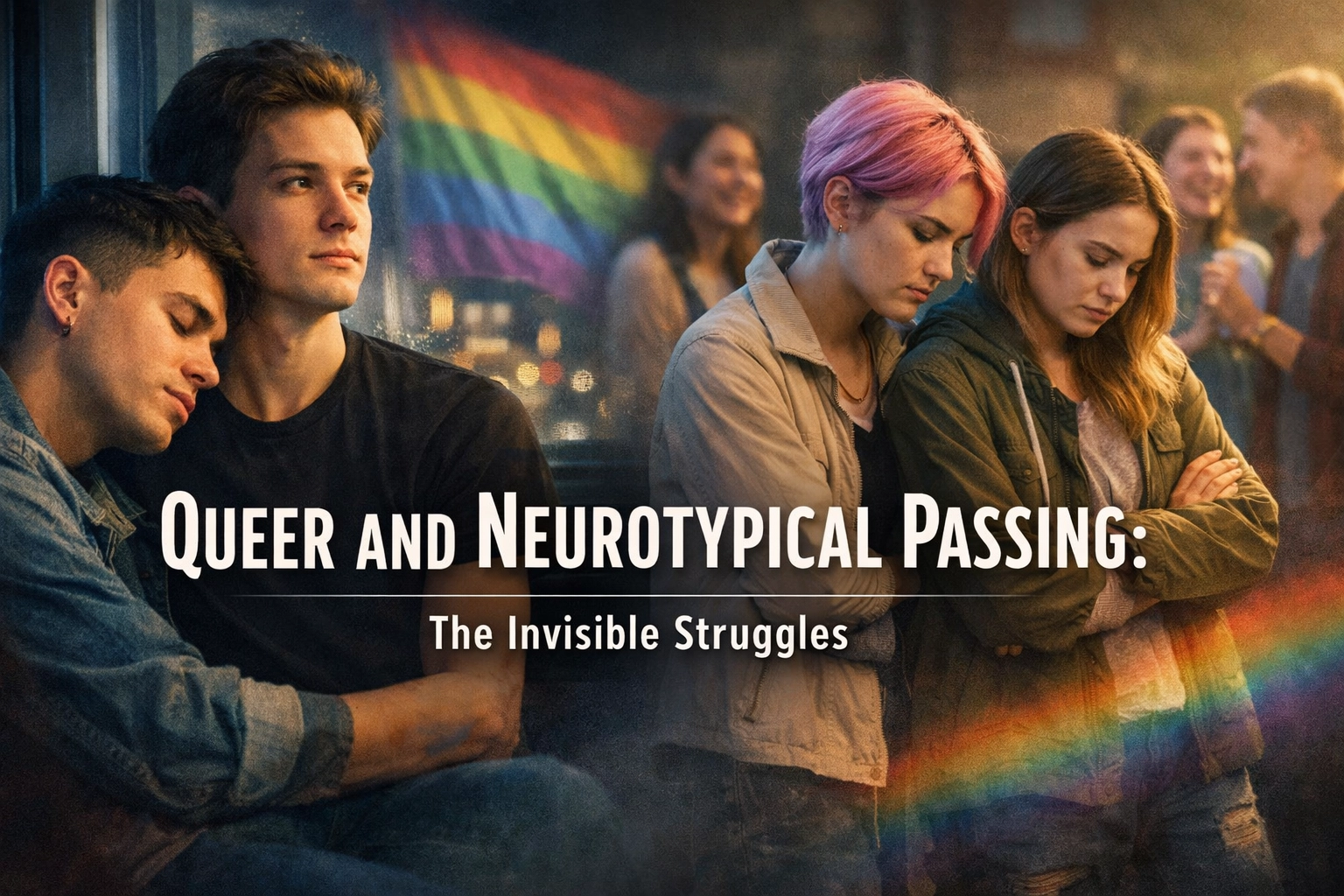
Let’s talk about the mask. Not the skincare kind (though we love a good sheet mask), but the heavy, invisible one that so many of us in the LGBTQ+ community wear every single day. If you’re queer and you also happen to be neurotypical passing, you’re navigating a very specific, often exhausting, kind of double life.
At Read with Pride, we’re all about the stories that make us feel seen. Usually, that’s through the pages of an MM romance or a groundbreaking piece of queer fiction. But sometimes, the most important story is the one happening inside your own head, the one that nobody else sees because you’re "passing" so well.
The Privilege and the Prison of "Passing"
In both the queer world and the neurodivergent world, "passing" is a double-edged sword. On one hand, it’s a form of protection. If you’re "straight-passing," you might avoid the overt homophobia that your more flamboyant or gender-nonconforming siblings face. If you’re "neurotypical passing," you might avoid the stigma, the infantalization, or the "helpful" unsolicited advice that comes when people realize your brain works a little differently.
But here’s the kicker: passing isn't always a choice, and it’s definitely not a vacation. It’s often a survival mechanism called masking. You’re essentially performing a character, let’s call them "Standard Human 1.0", just to get through a trip to the grocery store or a staff meeting.
For many of us, this performance is exhausting. It’s like running a high-end software program on a laptop that’s already overheating. You look fine on the outside, but the fan is screaming and the battery is at 2%.
The Layered Invisibility: Queer + Neurodivergent
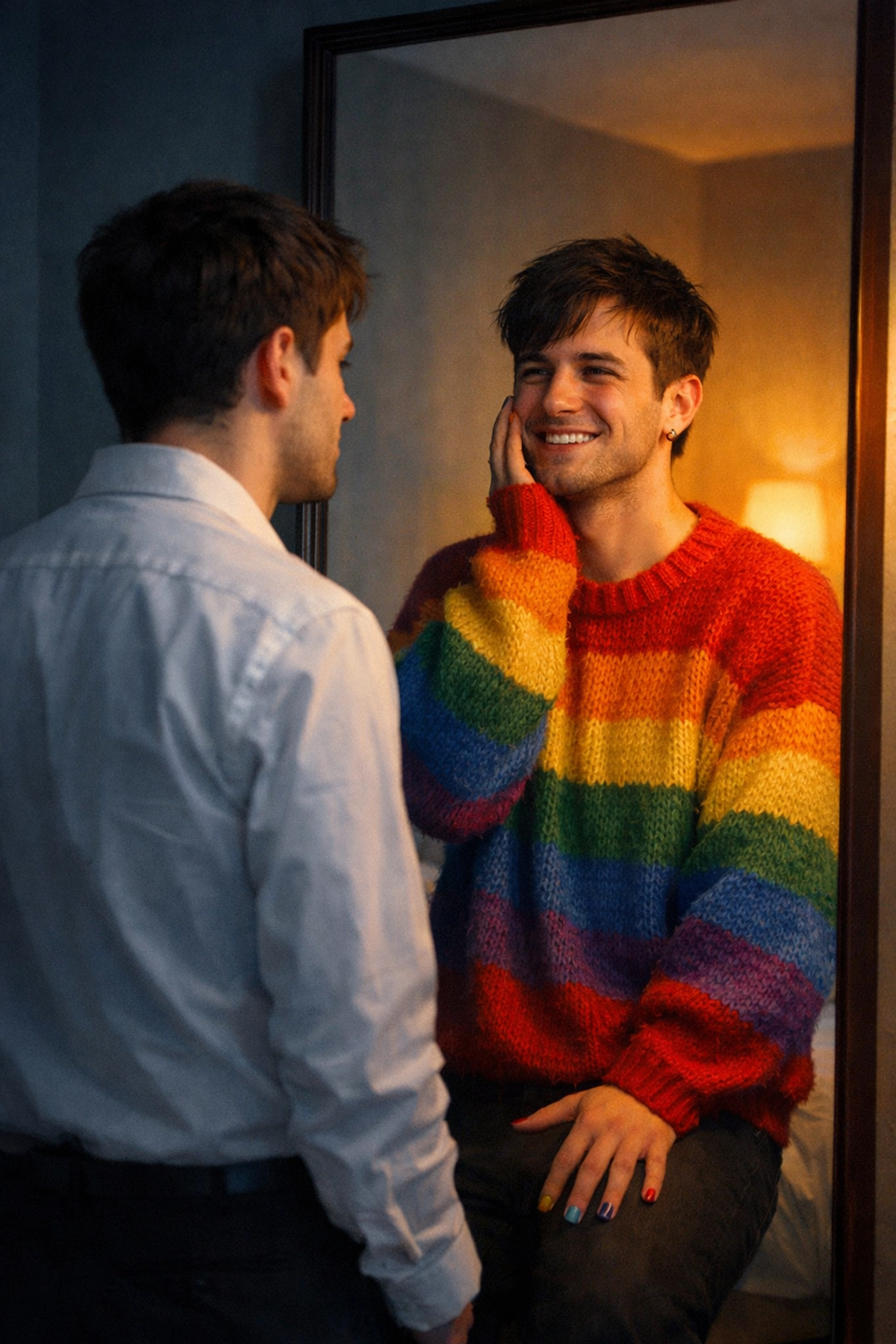
When these two identities overlap, the struggle becomes layered. You aren't just managing one secret; you're managing a complex web of them. You might be an autistic person who has learned to mirror social cues perfectly, while also being a bisexual man who has learned to tone down his "queerness" to fit into a corporate environment.
This creates a "layered invisibility." People see a "normal" person, and they treat you accordingly. They make the "locker room" jokes or the "boys will be boys" comments because they assume you’re one of them. They expect you to handle sensory overload (like a loud, crowded Pride event!) because "everyone loves a party, right?"
The internal dialogue is a constant stream of:
- "Am I making enough eye contact?"
- "Did that joke land, or was I being weird?"
- "Should I mention my partner, or is it too risky here?"
- "I need to leave this room right now because the lights are humming, but if I do, I’ll look 'dramatic.'"
It’s a lot. And when you finally get home and take that mask off, the emotional crash is real. This is why so many of us retreat into gay books and MM novels. There’s a safety in the written word that the physical world often lacks.
The Struggle Within the Community
You’d think the LGBTQ+ community would be the ultimate safe haven, but even here, being neurotypical passing can feel isolating. Pride events are often sensory nightmares, loud music, bright lights, glitter everywhere, and massive crowds. For someone who is neurodivergent, this can be physically painful.
But because you "look" neurotypical, your hesitation to join the parade or your need to sit in a quiet corner might be misinterpreted. You might be told you’re "not being a team player" or that you’re "not proud enough."
Even in the realm of gay romance books, we’ve seen a history of "perfect" characters. The stoic alpha, the bubbly twink, archetypes that don’t always leave room for the guy who needs to stim to regulate his emotions or the person who takes everything literally. Thankfully, in 2026, we’re seeing a massive shift. We’re seeing characters who are messy, neurodivergent, and deeply queer, and it’s about time.
Why We Mask (and Why We Stop)
Masking isn't just about being shy. It’s a response to a world that hasn't always been kind to "different." For queer folks, the history of being "out" is a history of resistance. For neurodivergent folks, the history of being "unmasked" is often a history of being marginalized.
When you combine them, you get a person who is hyper-aware of their surroundings. You become an expert at reading the room because your safety, social or physical, depends on it.
However, the tide is turning. We are seeing more people reclaim their identities. We are seeing people say, "Yeah, I’m queer, and yeah, I’m autistic/ADHD/OCD, and I’m done trying to act 'normal' for your comfort." This unmasking is a form of self-love. It’s choosing authenticity over a performance that is literally killing your joy.

Finding Solace in Queer Literature
One of the best ways to start unmasking is to find characters who are doing the same. At Readwithpride.com, we’ve noticed a huge spike in demand for stories that feature neurodivergent leads. Whether it's an enemies to lovers MM romance where one character learns to accommodate the other's sensory needs, or a gay fantasy romance where "magic" is a metaphor for a different kind of brain, these stories matter.
If you’re looking for something that hits deep, check out our guide on 7 mistakes people make with LGBTQ character development. It dives into why authentic representation is more than just a checkbox: it's a lifeline.
Reading popular gay books that reflect our specific brand of "weirdness" allows us to practice being ourselves in the safety of our own minds. When you see a character in a steamy MM romance who is loved for their neurodivergent traits, not in spite of them, something shifts inside you. It gives you permission to exist.
Tips for Navigating the Invisible Struggle
If you’re feeling the weight of the mask today, here are a few things to remember:
- Your Burnout is Valid: If you feel exhausted after "normal" social interactions, it’s not because you’re weak. It’s because you’re working twice as hard as everyone else.
- Find Your "Low-Spoon" Community: You don't have to be at every bar or parade to be queer. Digital book clubs, small Discord servers, or even just following your favorite MM authors on social media can provide community without the sensory overload.
- Use Literature as a Bridge: If you find it hard to explain your internal world to others, use books! Giving a partner a copy of a heartfelt gay fiction novel with a neurodivergent lead can be a great way to say, "This is how I feel."
- Set Boundaries: It is okay to leave the party early. It is okay to wear noise-canceling headphones at the airport. It is okay to be your authentic, unmasked self, even if it makes "neurotypicals" a little confused.

The Future is Intersectional
As we move through 2026, the goal for the LGBTQ+ community shouldn't just be "acceptance": it should be "accessibility." We need to create spaces (both physical and literary) where passing isn't a requirement for safety.
At Read with Pride, we’re committed to promoting top LGBTQ+ books that explore every facet of our identities. From genre-bending MM romance to gay historical romance, we want to see the "invisible" struggles brought into the light.
The mask is heavy. You don't have to wear it all the time. Sometimes, the bravest thing you can do is put down the character you’ve been playing and just… be.
Stay tuned to our blog for more deep dives into the lives and stories of our beautiful, diverse community.
And remember: whether you’re passing, masking, or fully unmasked, you are valid. You are seen. And you are definitely not alone.
Want more queer content? Follow us on our socials!
- Instagram: read.withpride
- X (Twitter): @Read_With_Pride
- Facebook: Read With Pride
#LGBTQ #Neurodivergent #QueerBooks #MMRomance #ReadWithPride #NeurotypicalPassing #InvisibleStruggle #GayFiction #2026Books #AutisticJoy #ADHDQueers

Leave a Reply
You must be logged in to post a comment.