

readwithpride.com
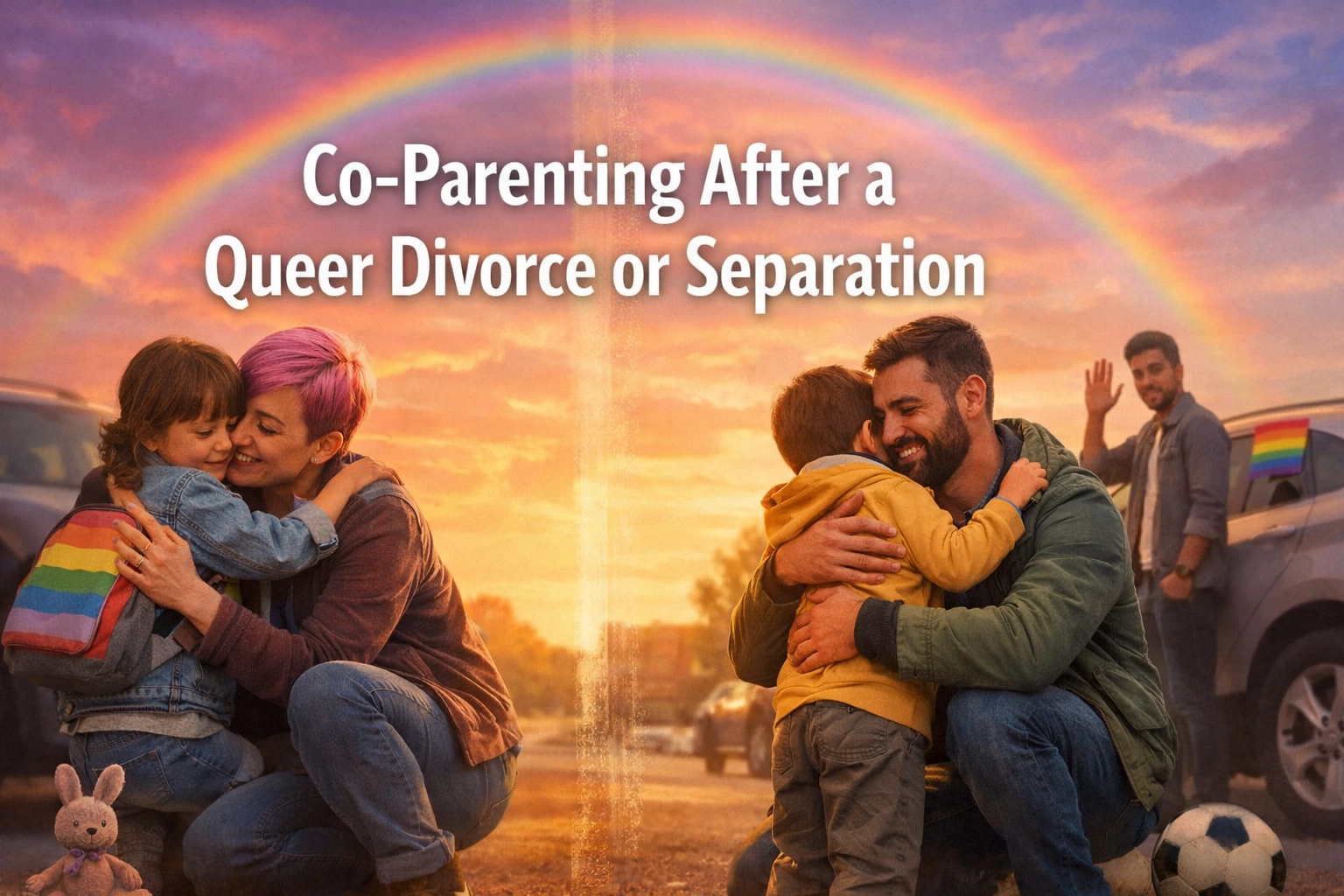
Let’s be real for a second. In the world of MM romance books and gay love stories, we usually close the tab or the Kindle cover right as the wedding bells fade or the "I love you" is whispered over a sunset. We live for the HEA (Happily Ever After). But in the messy, beautiful, real-world community that Read with pride serves, sometimes the "ever after" looks a little different. Sometimes, the romance ends, but the family doesn't.
Navigating a divorce or separation is a gut-punch, no matter who you are. But when you’re part of the LGBTQ+ community, there’s an extra layer of "Wait, how do we do this?" because the traditional heteronormative scripts for "exes with kids" don't always fit our lives. Whether you were the biological parent, the adoptive parent, or the "de facto" parent who’s been there since day one, the transition from partners to co-parents is an arc more complex than any gay psychological thriller.
Here is how to navigate co-parenting after a queer divorce with grace, authenticity, and, most importantly, your sanity intact.
The Queer Advantage: Multiplicity and Cooperation
One thing the queer community has always excelled at is redefining family. Long before we were winning the right to marry, we were building "chosen families." We know that love isn't limited to a nuclear, binary structure. When a queer relationship ends, we have the unique opportunity to lean into that history.
In many gay novels and queer fiction pieces, we see the beauty of "found family." Co-parenting is essentially an extension of that. You aren't just "splitting up"; you are transitioning your family into a new shape. Research suggests that LGBTQ+ families often approach separation with a higher baseline for cooperation because we’ve already had to fight so hard to exist. We aren't just following a template; we’re creating one.

1. Establish a Communication "Neutral Zone"
In a steamy MM romance, communication issues are a great plot device for a "misunderstanding" trope. In real-life co-parenting, they’re a disaster. The first step to healthy co-parenting is moving the conversation away from the "why we broke up" and toward the "what the kids need today."
- Use Tech to Your Advantage: If speaking to your ex still feels like walking through a minefield, use co-parenting apps like OurFamilyWizard or even a shared Google Calendar. It keeps the logistics (soccer practice, dentist appointments, birthday parties) in one place without the emotional weight of a text thread.
- The 24-Hour Rule: Unless it’s an emergency, give yourself 24 hours to respond to a message that triggers you. You aren't in a gay contemporary romance where you need to have a witty comeback; you’re a CEO of a very small, very important company (your child’s life).
- Keep it Child-Centric: If the conversation starts to veer into "You always did this when we were married," pivot back. "I hear you’re frustrated, but right now we need to decide on the summer camp schedule."
2. Consistency: Two Homes, One Heartbeat
Kids thrive on predictability. While it’s tempting to be the "cool house" with no bedtime and endless snacks, especially if you’re trying to overcompensate for the guilt of the split, it doesn't help them in the long run.
You don't need to have identical houses, but the "big" rules should be consistent. If one parent is strictly anti-screen time and the other allows eight hours of Minecraft, the child is the one who suffers the confusion. Aim for a unified front on:
- Discipline and boundaries.
- Bedtime routines.
- Homework expectations.
- How you talk about your LGBTQ+ family structure to the outside world.
3. The Legal Jungle: Protecting Your Rights
This is where it gets heavy. In the world of gay historical romance, legalities were often the villain. In 2026, things are better, but they aren't perfect. If you were the non-biological or non-adoptive parent in a state or country with shaky protections, a separation can feel terrifying.
Even if things are amicable now, get everything in writing.
- Parentage Petitions: If you haven't already established legal parentage, do it now.
- Detailed Parenting Plans: Don't just settle for "we’ll figure it out." Outline holidays, travel logistics (especially if you're traveling to less-than-friendly areas), and medical decision-making.
- Documentation: Keep a record of your involvement in the child’s life, school records, doctor visits, and photos. It sounds clinical, but it’s about protecting the child’s right to have both of their parents.

4. Addressing Stigma and Stability
Our kids are growing up in a world that is increasingly inclusive, but they still might face questions or comments about having "two dads" or "two moms" who are no longer together.
Validate their feelings. If they’re sad, let them be sad. If they’re confused, use age-appropriate books from a gay book club or resources like Readwithpride.com to show them that families come in all shapes. Seeing themselves, and their specific family situation, reflected in LGBTQ+ fiction or picture books can be incredibly healing.
Equip them with scripts. "My parents loved each other very much, and they both love me, they just live in different houses now." It’s simple, honest, and empowering.
5. The "New Partner" Arc: Real Life vs. Gay Fiction
At some point, one or both of you will start dating again. In an enemies to lovers MM romance, a new partner might be a source of jealousy and drama. In co-parenting, they need to be a source of stability.
- The Wait Period: Most experts suggest waiting at least six months before introducing a new partner to the kids.
- The Co-Parent Heads-Up: Out of respect, tell your ex before you tell the kids. "Hey, I’ve been seeing someone seriously, and I’m planning on introducing them to the kids next month." This prevents your ex from being blindsided by a child saying, "Guess what? Daddy’s new friend Steve stayed for breakfast!"
- Role Clarity: A new partner is an "added bonus" adult, not a replacement parent.

6. Self-Care: You Can’t Pour from an Empty Cup
Separation is exhausting. You’re grieving a relationship while trying to be a superhero parent. It’s okay to not be okay.
Find your own "chosen family" to lean on. Whether it’s a local queer parenting group, a gay book club, or just a group of friends who will bring you wine and listen to you vent, don't do this alone. If you find yourself doom-scrolling through emotional MM books to feel something, maybe it’s time to talk to a therapist who specializes in LGBTQ+ family dynamics.
Why We Still "Read with Pride"
At Read with Pride, we believe that every story matters: not just the ones with the perfect endings. The story of a queer family navigating a separation with maturity and love is one of the most "prideful" stories there is. It shows the world that our families are resilient, our love is valid, and our commitment to our children transcends our romantic status.
If you’re looking for stories that reflect the complexity of modern queer life: from heartfelt gay fiction to MM contemporary reads that dive into parenting: check out our latest curated lists. We’re more than just a place for LGBTQ+ ebooks; we’re a community.

Final Thoughts for the Journey
Co-parenting isn't a sprint; it’s a marathon through a landscape that is constantly shifting. There will be days when you feel like you’re winning and days when you feel like you’re failing. Just remember: your kids don't need perfect parents. They need parents who love them more than they dislike each other.
Stay authentic, stay brave, and keep reading.
Connect with us and the community:
- Website: readwithpride.com
- Instagram: @read.withpride
- Facebook: Read with Pride
- X (Twitter): @Read_With_Pride
#QueerParenting #LGBTQFamilies #CoParenting #ReadWithPride #MMRomanceBooks #GayRomance #QueerLove #GayFiction #2026GayBooks #ParentingAfterDivorce

Leave a Reply
You must be logged in to post a comment.