

readwithpride.com
Let’s be real for a second. In the world of MM romance books, we usually get the "Happily Ever After" (HEA) or at least a "Happily For Now" (HFN) right as the credits roll: or the last page turns. We see the dramatic airport chase, the tearful confession, and the first "I love you." But for those of us living queer lives in 2026, we know that the real story starts in the sequel. You know, the one where someone forgets to take out the recycling for the third week in a row, or where the "slow burn" of your early dating days turns into a "slow simmer" of domestic life.
Maintaining a long-term queer relationship: whether it’s a monogamous marriage, a polyamorous constellation, or a deeply committed partnership with your chosen family: is a beautiful, radical act. But it’s also hard work. We don’t always have the roadmap that heteronormative society provides, and honestly? That’s both a blessing and a curse.
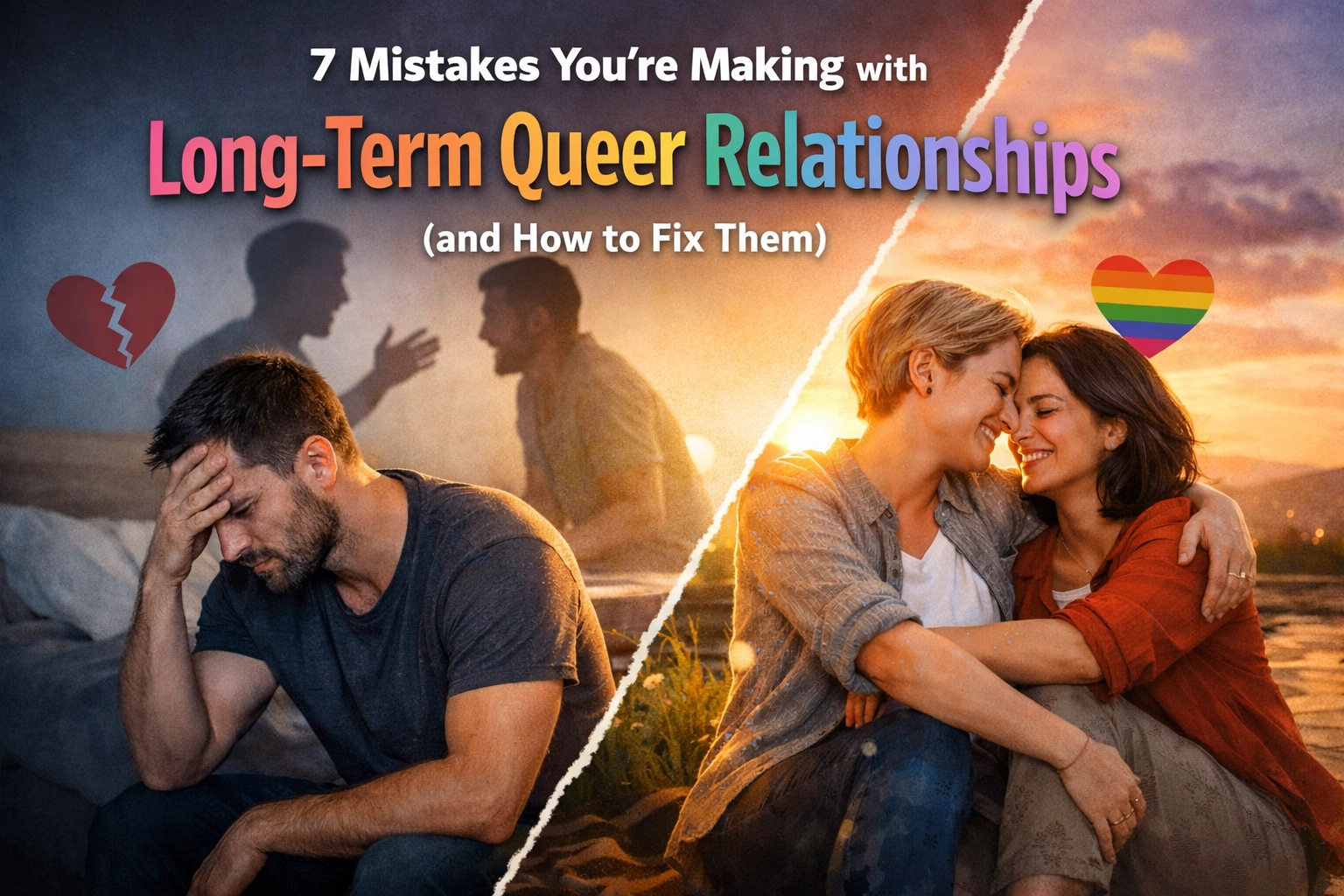
At Read with Pride, we’re obsessed with authentic stories, and that includes the stories we live every day. If you feel like your relationship has hit a snag, don't panic. You’re likely just making one of these common mistakes. Here are 7 mistakes you’re probably making in your long-term queer relationship and, more importantly, how to fix them.
1. Getting Trapped in the "Attachment Style" Loop
We’ve all seen it in our favorite gay romance novels: the brooding, emotionally unavailable lead and the persistent, heart-on-his-sleeve pursuer. It makes for great tension on the page, but in a five-year relationship? It’s exhausting.
The Mistake: Many queer couples fall into a "push-pull" dynamic. One partner identifies as anxious (seeking constant reassurance) while the other is avoidant (pulling away when things get too intense). Over time, this creates a cycle where the more one reaches out, the more the other retreats. It’s not a lack of love; it’s a clash of survival mechanisms.
The Fix: Start by recognizing your own "blueprint." Instead of blaming your partner for being "cold" or "clingy," see the cycle as the enemy, not the person. If you're feeling the urge to withdraw, try saying, "I’m feeling overwhelmed and need twenty minutes to decompress, but I promise I’m coming back to talk." If you're the anxious one, practice self-soothing or check out our guide on psychological realism to see how these traits manifest in the characters we love.

2. Using Criticism Instead of Requests
There’s a famous saying in relationship therapy that criticism is "battery acid" for a relationship. This is especially true for the LGBTQ+ community, where many of us have spent years being criticized by society, family, or even ourselves.
The Mistake: When you’re frustrated, it’s easy to say, "You never help with the house" or "You’re so selfish with your time." This is an attack on your partner’s character, which triggers defensiveness and shuts down productive conversation.
The Fix: Turn your complaints into "Softened Start-ups." Instead of an attack, make a specific request centered on your feelings. "I’m feeling a bit overwhelmed with the chores; could you handle the dishes tonight?" sounds a lot better than a lecture. We explore similar themes of rebuilding communication in The Unspoken Chapter.
3. Ignoring the "Minority Stress" Factor
Our relationships don’t exist in a vacuum. Even in 2026, navigating the world as a queer person involves a baseline level of stress that our cis-het counterparts don't always face.
The Mistake: You’re snapping at your partner because you’re exhausted, but you don't realize the exhaustion is coming from a day of microaggressions at work or anxiety over political climates. You blame each other for the "vibe" being off, when the real culprit is external.
The Fix: Name it. Explicitly acknowledge when external stressors are affecting your mood. Saying, "I’m not mad at you, I’m just drained from dealing with the world today," can prevent a lot of unnecessary fights. This "emotional realism" is what makes gay fiction resonate so deeply: it acknowledges that love isn't just about what happens between two people, but how they survive the world together.

4. Letting Communication Become "Functional Only"
In the beginning, you talked until 3:00 AM about your dreams, your traumas, and your favorite MM romance tropes. Five years later, your texts are mostly: "Did you buy oat milk?" and "The dog threw up."
The Mistake: You’ve stopped being curious about each other. You assume you know everything there is to know, so you stop asking meaningful questions. This leads to a slow emotional drift.
The Fix: Schedule a "State of the Union." It sounds corporate, but it works. Once a week, spend 20 minutes asking: What’s one thing I did this week that made you feel loved? and Is there anything you’re struggling with that I can support you on? Whether you’re in a monogamous setup or exploring polyamorous MM romance, intentionality is the secret sauce.
5. Avoiding the Power and Equity Talk
Who makes the most money? Who does the laundry? Who plans the vacations? In queer relationships, we don’t have "traditional" gender roles to fall back on, which is great: but it means we have to negotiate everything.
The Mistake: Letting resentment build because one person feels they are carrying the "mental load" or the financial burden without it being acknowledged.
The Fix: Have a transparent audit of your shared life. If one person works longer hours, maybe the other handles more of the domestic labor. There is no "right" way to do it, as long as it feels equitable to both of you. For inspiration on how characters navigate these complex balances, check out our multi-dimensional male characters guide.

6. Thinking Intimacy is Only About Sex
We love a steamy MM romance as much as anyone, but a long-term relationship requires a broader definition of intimacy.
The Mistake: If the sex life hits a lull (which is normal!), partners often start to feel disconnected in every other way. You stop cuddling, stop holding hands, and stop sharing your inner thoughts because the "big" intimacy feels missing.
The Fix: Redefine intimacy. It’s physical affection (hugs, kisses, backrubs), but it’s also "intellectual intimacy" (reading a book together) and "shared meaning" (building a life/goal together). Sometimes, the best way to get back to the bedroom is to spend more time on the couch just being present. If you need a reminder of what deep connection looks like, dive into some emotional MM books that prioritize heart over heat.
7. Isolating Yourselves from the Community
There’s a trope in some gay novels where the couple rides off into the sunset and never speaks to anyone else again. In reality, that’s a recipe for disaster.
The Mistake: Expecting your partner to be your everything: your lover, your best friend, your therapist, and your only source of queer community. No one person can fulfill all those roles.
The Fix: Lean into your chosen family. Queer relationships thrive when they are supported by a network of friends who "get it." Whether it’s a gay book club, a local community center, or just a group chat with your besties, having a support system outside your relationship actually makes your relationship stronger.
Finding the Path Forward
At the end of the day, a long-term relationship is a living thing. It changes, it grows, and sometimes it needs a little "editing" to get the story back on track. By avoiding these mistakes and staying curious about your partner, you’re not just maintaining a relationship: you’re writing your own epic gay love story.
For more insights into queer life, relationship dynamics, and the best LGBTQ+ ebooks of 2026, stay tuned to Read with Pride. We’re here to celebrate every chapter of your journey.
Want more authentic queer content?
Check out our latest releases in the E-book Store or explore our blog for more relationship deep dives.
Follow us for daily pride:
#QueerLove #MMRomance #ReadWithPride #LGBTQRelationships #GayFiction #LongTermLove #2026GayBooks #ChosenFamily #RelationshipAdvice

2 thoughts on “7 Mistakes You’re Making with Long-Term Queer Relationships (and How to Fix Them)”
-
Pingback: Why Embracing Queer Hobbies Will Change the Way You Connect with Your Community - readwithpride.com The best LGBTQ+ e-books
-
Pingback: Beyond the Upload: How Read with Pride’s Free Tools Support Your Launch - readwithpride.com The best LGBTQ+ e-books
Leave a Reply
You must be logged in to post a comment.