

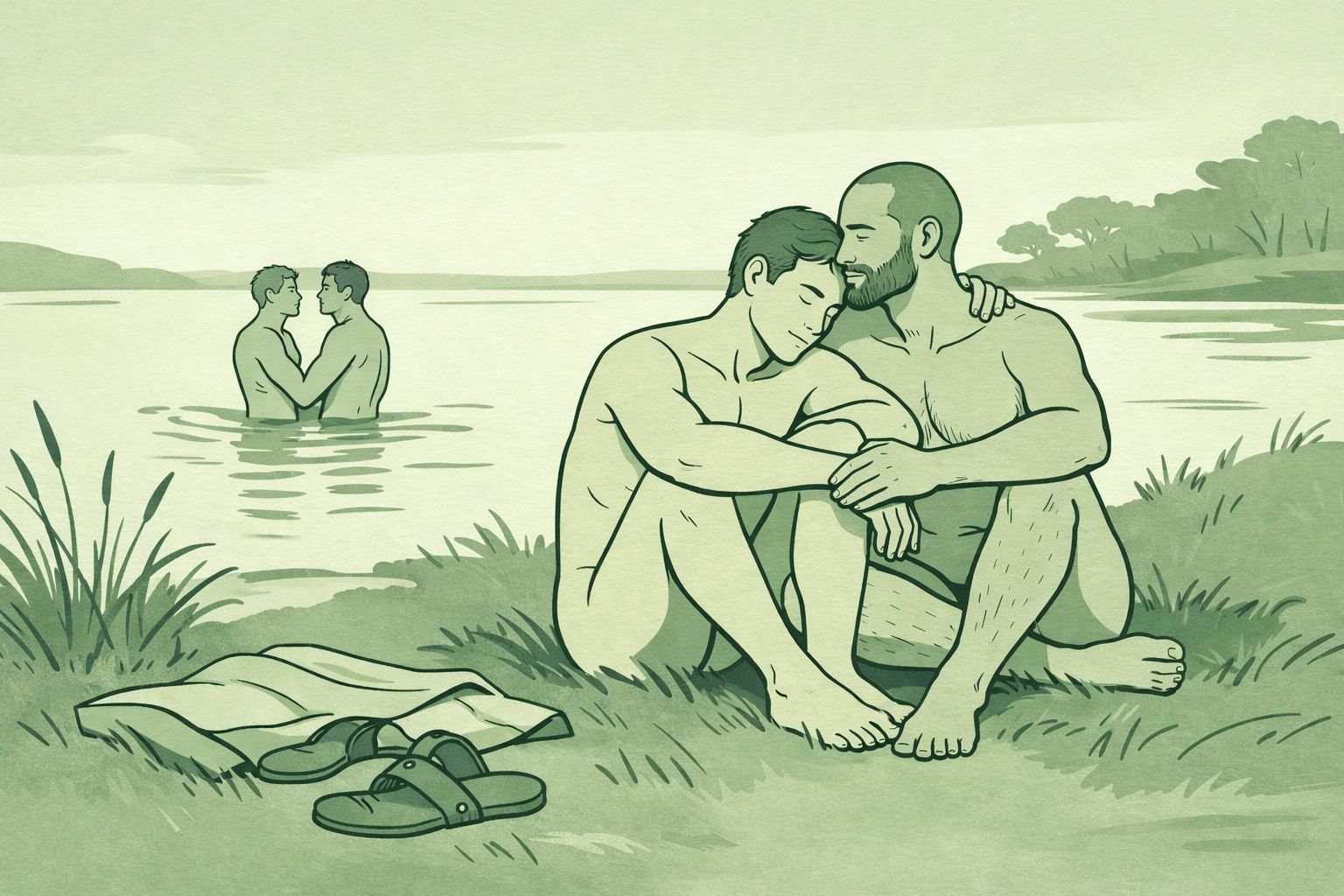
There's a moment: if you've ever experienced social nudism or naturism: where everything changes. The sun hits your skin without barriers. The air moves across your body in ways you've forgotten it could. There's no fabric between you and the world, no waistband digging in, no collar restricting your throat. Just you. Just skin. Just breath.
And it's terrifying. And it's liberating.
That moment? That's what I'm always chasing in my MM romance and LGBTQ+ fiction. Not the nudity itself, but what it means. Because when you strip away the physical layers, you're forced to confront something deeper: emotional vulnerability. And that's where the real story begins.
The Armor We Wear
We all have our armor. Some of us wear suits and ties, literally buttoned up, projecting control and competence. Others hide behind band t-shirts and hoodies, signaling which tribe we belong to, which version of ourselves we want the world to see. Clothes are more than fabric; they're a language. They tell people who we think we are, or who we want them to believe we are.
But what happens when you remove that language? What happens when there's nothing left to signal, nothing left to hide behind?
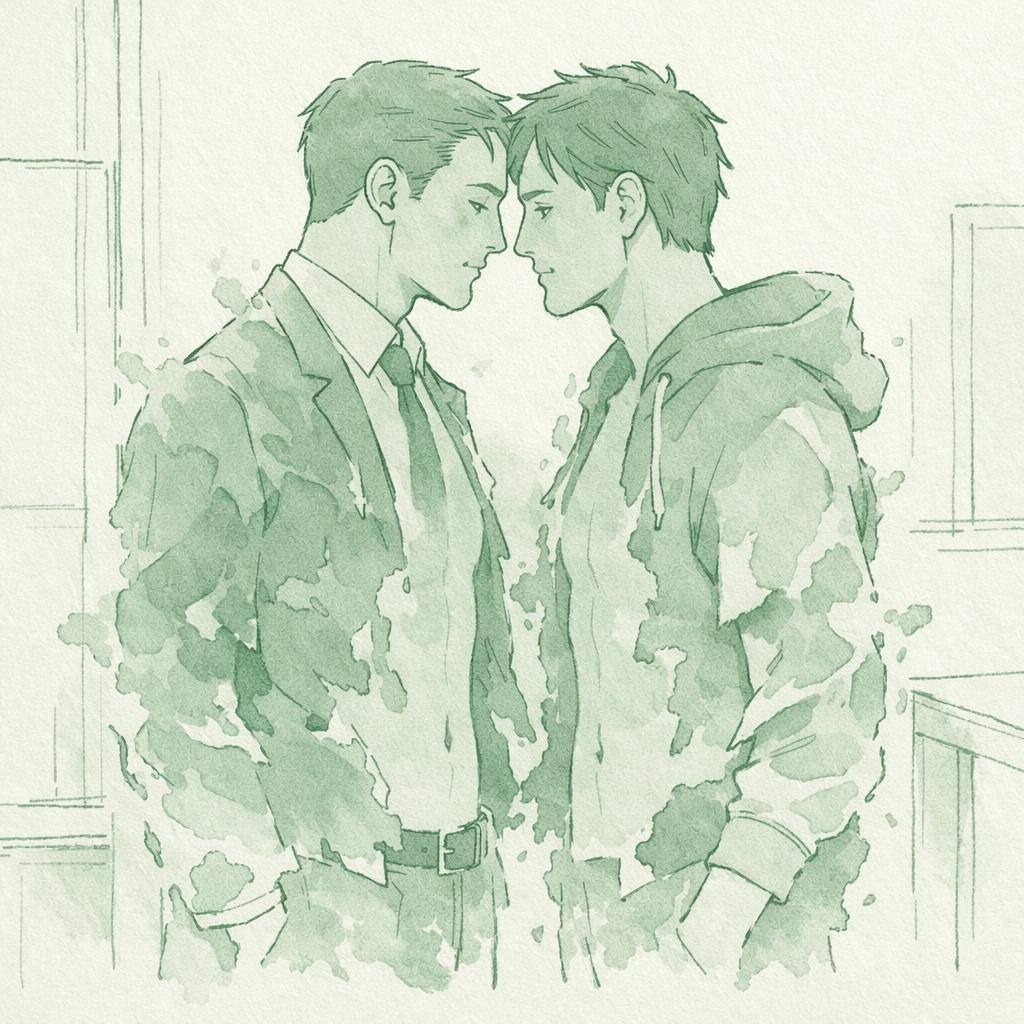
In gay romance and MM fiction, this metaphor becomes even more potent. So many queer characters: especially gay men and bisexual men navigating their identities: have spent years performing. Performing straightness. Performing masculinity. Performing invulnerability. The closet isn't just a social construct; it's a wardrobe of masks we've carefully curated to survive.
When I write about naturism or social nudity in books like The House of Lights or The Berlin Companions, I'm not just describing bodies in saunas or at beaches. I'm describing the stripping away of those performances. I'm showing characters who can no longer hide: from the world, from each other, from themselves.
Clothes are control. Nudity is surrender.
And surrender, my friends, is where authentic gay love stories begin.
The Act of Being Seen
Let me be crystal clear: nudism in my writing isn't about sex. It's about being seen. Fully, completely, terrifyingly seen.
There's a beautiful paradox at the heart of naturism. In nudist spaces, the removal of clothing often desexualizes the body. Without the framing of fashion, without the suggestion of what's hidden beneath, bodies become just… bodies. Human. Flawed. Real. A belly that's soft. Scars from old surgeries. Skin that sags or stretches or freckles in odd places.
This is the nakedness that matters in gay fiction and queer literature: the nakedness of being witnessed in your entirety: not just the parts you've polished for public consumption, but the raw, unedited truth of who you are.
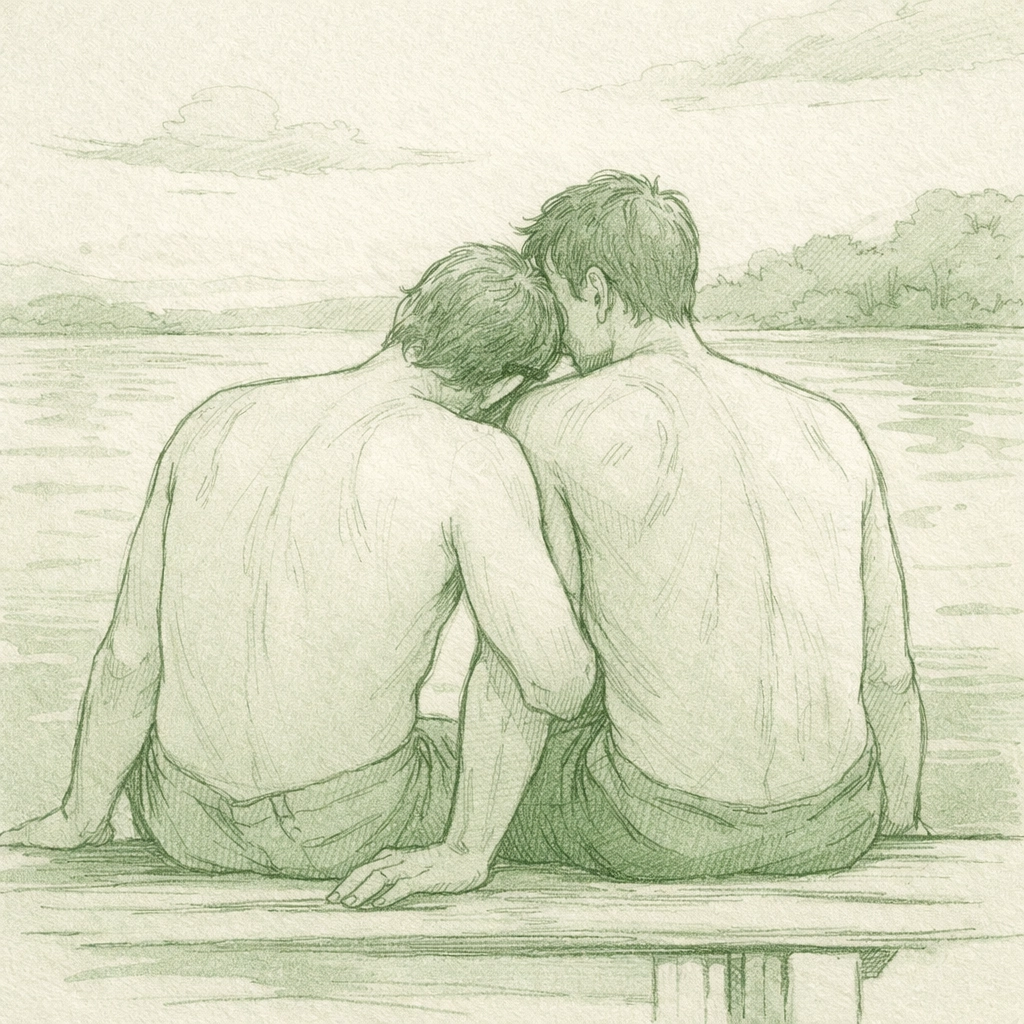
In MM romance, we often talk about the "walls" characters build around their hearts. The emotional distance. The refusal to say "I love you" or "I need you" or "I'm scared." But what if those walls aren't just emotional? What if they're also physical?
When two men stand naked together: whether in a sauna, a bedroom, or a sun-drenched beach in one of my novels: they're doing more than removing clothes. They're removing pretense. They're saying, This is me. All of me. The parts I'm proud of and the parts I've tried to hide. Can you love this?
That is the act of being seen. And it's absolutely terrifying. And absolutely necessary.
Vulnerability as Strength
Here's where the metaphor deepens. In my experience writing LGBTQ+ fiction and gay novels, I've found that the characters who embrace their nakedness: physical and emotional: are often the strongest.
Not strongest in the traditional sense. Not the alpha heroes with perfect bodies and unshakeable confidence. But strong in the way that matters: strong enough to be vulnerable.
Take a character like the ones in The Satin Pillow or The Silent Heartbeat. These are men who've been hurt. Men who've learned to protect themselves by never letting anyone too close. But when they finally shed those defenses: when they finally allow themselves to be emotionally naked: they don't become weaker. They become real.
And real is powerful.
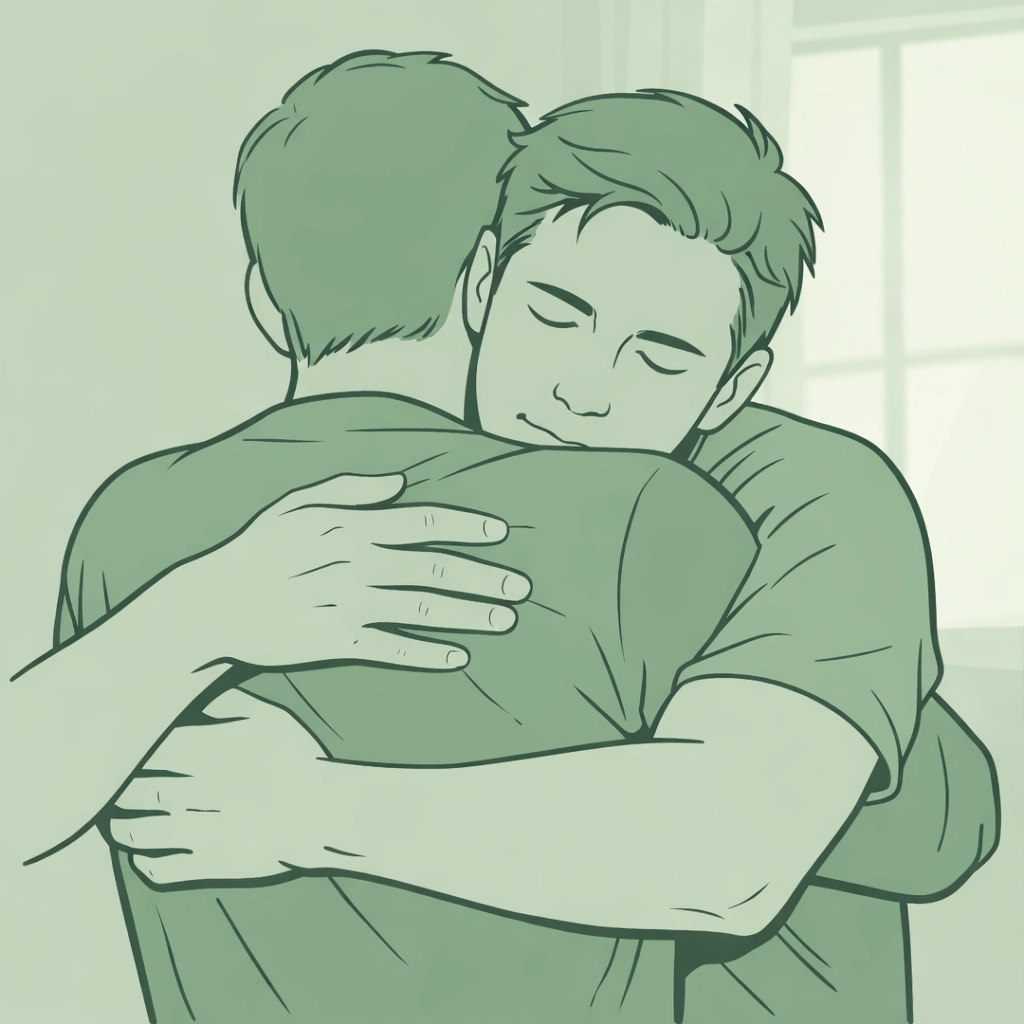
Emotional vulnerability in MM books isn't about crying more or being fragile. It's about authenticity. It's about standing in the full light of day and saying, "I'm afraid. I've failed. I don't have all the answers. I need you."
Physical nudism teaches us this lesson in miniature. When you're at a naturist beach or resort, you quickly realize that nobody's judging your body the way you feared they would. People are too busy worrying about their own insecurities to fixate on yours. And in that realization, there's freedom. There's relief. There's the beginning of self-acceptance.
The same applies to emotional nakedness in gay romance and queer fiction. When characters finally risk being seen: truly seen: they often discover that love isn't about perfection. It's about presence. It's about showing up as you are, scars and all, and trusting that you're enough.
Browse the complete collection of Dick Ferguson's MM romance novels at Read with Pride: where authentic representation and emotional depth meet steamy, heartfelt gay love stories.
Why We Crave Authenticity
So why does this metaphor resonate so deeply? Why do readers of LGBTQ+ ebooks and gay books keep coming back to stories that explore vulnerability, nudity, and emotional exposure?
Because we're all desperate to be known.
In a world where we're constantly curating our online personas, filtering our photos, and performing our best selves, there's something profoundly comforting about stories where characters drop the act. Where they're messy. Where they're uncertain. Where they stand naked, literally or figuratively: and still find love.
Gay fiction and MM novels offer a unique space to explore this because queer identity itself often involves a journey toward authenticity. Coming out is its own form of nakedness: revealing the truth of who you are to a world that may not accept you. It's vulnerability as an act of courage. It's emotional nudity with stakes.
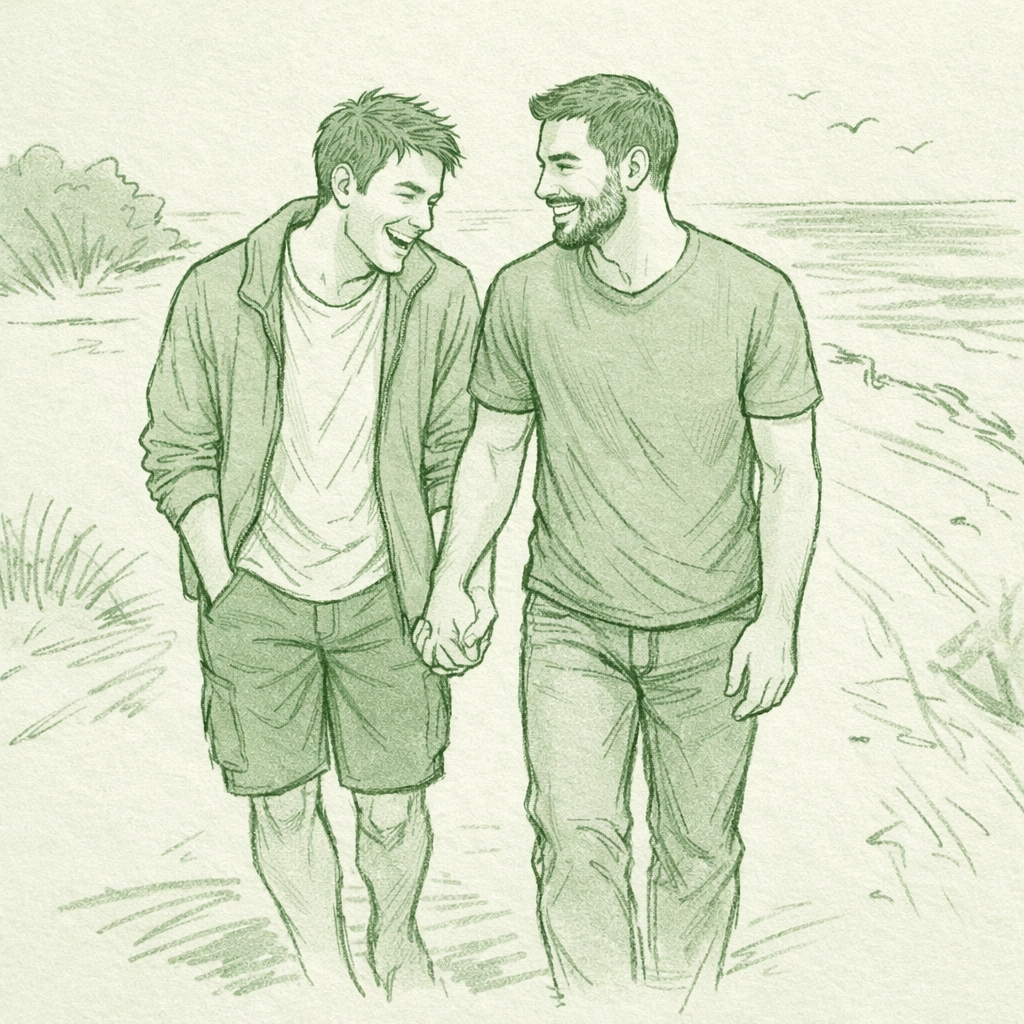
When I write about naturism or social nudity, I'm writing about that same courage. I'm writing about characters who've spent their lives hiding: hiding their desires, their identities, their hearts: and who finally find a space (and a person) where they can be fully, unapologetically themselves.
That's the magic of LGBTQ+ romance. That's why we read. That's why we write.
Explore themes of emotional vulnerability and authentic gay relationships in books like The Price of Desire and The Campaign for Us: available now at dickfergusonwriter.com.
An Invitation to Strip Down
If you've made it this far, I want to invite you into this conversation. Whether you're part of the naturism community, a longtime reader of MM romance, or someone simply curious about stories that prioritize emotional depth over superficial drama: there's a place for you here.
My books aren't for everyone. They're for people who believe that vulnerability is strength. They're for readers who want gay love stories that go beyond the surface, that explore what it really means to be seen and loved in all your imperfection.
They're for anyone who's ever stood naked: physically or emotionally: and wondered if they'd be enough.
You are.
Check out the full catalog of MM fiction, gay romance books, and LGBTQ+ literature at Read with Pride. Every story is a journey toward authenticity, connection, and love.
Follow Dick Ferguson for more insights into gay fiction, MM romance, and the art of emotional vulnerability:
📷 Instagram: @dickfergusonwriter
🐦 X/Twitter: @DickFergus94902
📘 Facebook: Dick Ferguson Writer
📚 Read with Pride
#ReadWithPride #MMRomance #GayRomance #LGBTQBooks #Naturism #NudismInFiction #EmotionalVulnerability #GayFiction #QueerLiterature #AuthenticRepresentation #GayLoveStories #MMNovels #LGBTQRomance #GayBooks #DickFerguson #QueerFiction #ReadingWithPride

Leave a Reply
You must be logged in to post a comment.