

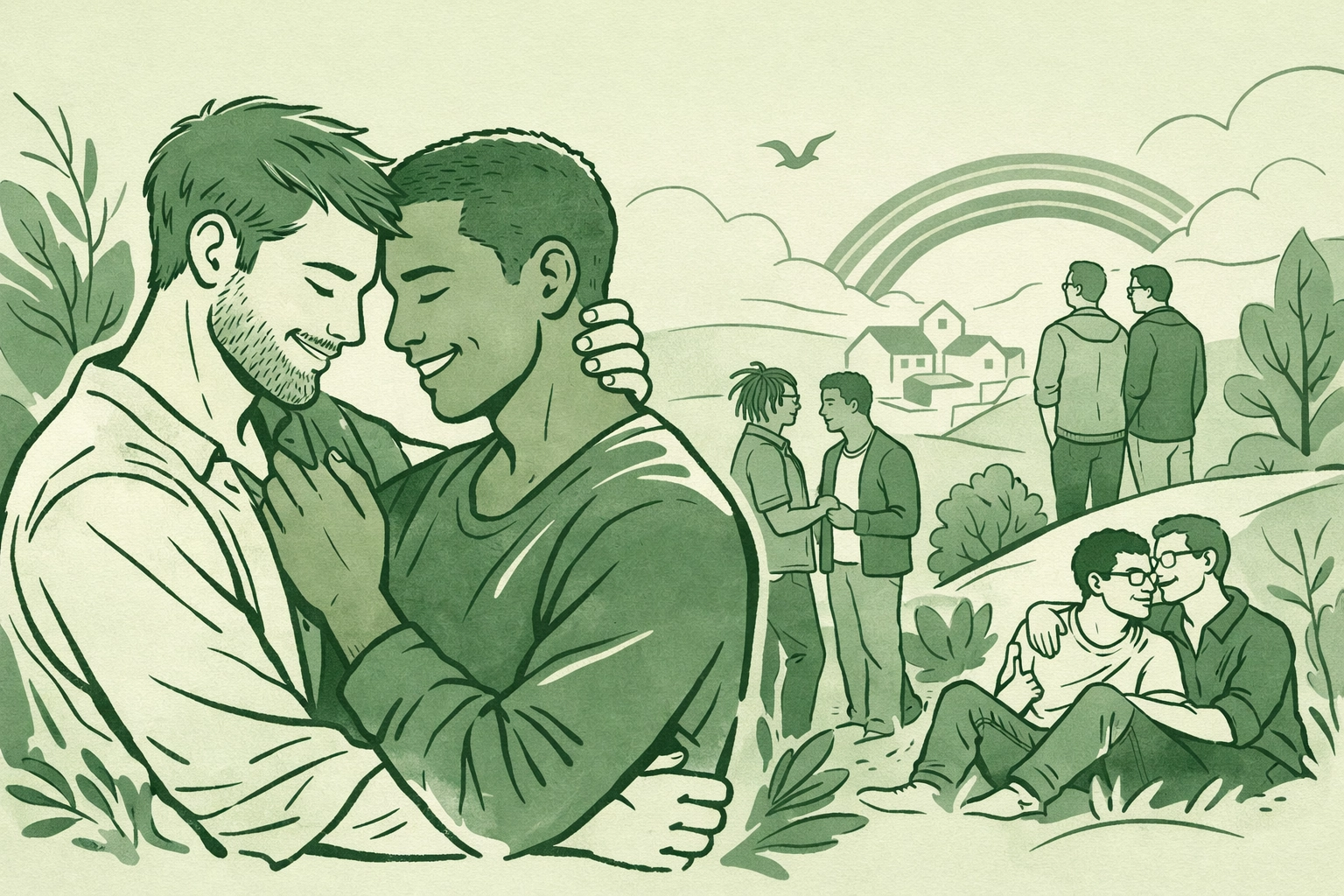
Hey everyone, Penny here! It’s Monday, March 23, 2026, and today we’re diving deep into something that’s been on my mind, and something that sits at the very heart of what we do here at Read with Pride.
When we talk about community, we often think of a group of people who just happen to like the same things, maybe the same gay romance tropes or the same MM romance authors. But building a true community is about much more than shared hobbies. It’s about understanding the nuances of who we are.
To kick things off today, I want to start with a topic that often gets overlooked in the broader LGBTQ+ conversation: A Guide to Understanding Asexuality and Aromanticism for Allies. If you want to build a community that actually feels like home for everyone, this is where you start.
Understanding the "A" in LGBTQ+: A Guide for Allies
For a long time, the "A" in our community's acronym was either ignored or misunderstood as "Ally." But as we move forward in 2026, it’s time to get clear: it stands for Asexual and Aromantic.
If you’re an ally (or even a member of the community who isn't on the ace/aro spectrum), you might wonder how this fits into the world of gay novels and MM romance. After all, so much of our literature is built on the foundation of sexual tension and romantic attraction.
Asexuality is a spectrum where people experience little to no sexual attraction to others. Aromanticism is a spectrum where people experience little to no romantic attraction. Here’s the kicker: someone can be both, or they can be one and not the other. You can have a gay man who is asexual but experiences deep romantic attraction to other men. You can have someone who is aromantic but still enjoys sexual relationships.
Why does this matter for community building? Because when we assume that everyone’s "end goal" is a traditional sexual and romantic pairing, we accidentally alienate a huge chunk of our family. By understanding these identities, we stop centering every event or discussion on "finding a partner" and start focusing on the deep, emotional bonds that make us a community. In queer fiction, we’re seeing more "slow burn" stories and "platonic soulmates" that reflect these experiences, and it’s beautiful.
Creating Safe Havens: Beyond Surface-Level Diversity
Understanding queer identity fundamentally reshapes how we build spaces. Research shows that LGBTQ+ youth are significantly less likely to report feeling safe or accepted in their general communities compared to their non-LGBTQ+ peers. This isn’t just about being "nice"; it’s about creating safe havens.
When you truly grasp the layers of queer identity, including the specific hurdles faced by gay men and those in M/M books, you realize that inclusivity isn't a checkbox. It’s an intentional practice. A safe haven is a place where a person can express their identity without fear of judgment or violence.
In our world of LGBTQ+ ebooks, these safe havens often exist in digital spaces, book clubs, discord servers, and comment sections where readers of gay love stories can discuss their favorite characters. But for these spaces to thrive, the builders (that's us!) need to recognize that our community isn't a monolith.
The Power of Intersectionality
One of the biggest mistakes people make when building a community is trying a "one-size-fits-all" approach. But queer identity doesn't exist in a vacuum. It intersects with race, gender, disability, and socioeconomic status.
A black gay man’s experience in the community is going to be different from a white gay man’s. A trans man looking for gay fiction that reflects his journey has different needs than a cisgender reader. When we build communities with an understanding of queer identity, we acknowledge these intersections. We stop asking, "How can we make this for everyone?" and start asking, "How can we make sure everyone’s specific needs are met?"
This is especially important in MM contemporary and gay historical romance. Readers are looking for stories that don’t just show a generic "gay experience," but an emotionally deep, high-angst, or joyful experience that feels authentic to their specific intersection of life. This is why we prioritize popular gay books that offer diverse perspectives.
Community as Essential Health Infrastructure
Here’s a fact that might surprise you: Community isn’t just a social "extra." For many LGBTQ+ people, it’s essential health infrastructure.
Connection to a community has been proven to directly reduce depression, anxiety, and suicidal ideation, especially among gender-diverse individuals. When we create a space where people can talk about best MM romance or share their own gay love story, we are literally helping to save lives.
Building a community based on understanding queer identity means recognizing that we are providing a lifeline. Every time we recommend a gay book club or share a list of 2026 gay books, we are strengthening the social fabric that keeps our community resilient. It’s about more than just reading; it’s about belonging.
Leveraging Our Unique Strengths
Finally, understanding queer identity allows us to leverage the unique strengths that LGBTQ+ people bring to the table. We are a community built on open-mindedness, acceptance, and a profound respect for diversity. We’ve had to build our own families (the "chosen family" concept) for decades, which makes us experts at building intentional communities.
When we stop trying to fit into the "standard" mold of community building and lean into our queer strengths, we create something much more vibrant. We celebrate the "steamy MM romance" alongside the "heartfelt gay fiction." We honor the "gay spy romance" and the "gay psychological thriller" with equal passion because we know that our identities are multifaceted.
How You Can Help Build This Community
If you’re an ally or a member of the community, here are three ways you can use this understanding to change how you build spaces:
- Listen First: When someone identifies as asexual, aromantic, or any other identity on the spectrum, believe them. Ask how you can support their specific needs within the group.
- Diverse Content: Whether you’re running a small book blog or a large forum, ensure the LGBTQ+ Kindle books you promote cover a wide range of experiences. Check out our latest collection here: Read with Pride Store.
- Active Safety: Don’t just say a space is "safe." Enforce rules that protect people from discrimination and celebrate the unique strengths of queer individuals.
Understanding queer identity isn't just a learning curve; it's a superpower. It allows us to build communities that are more resilient, more inclusive, and more joyful. Whether you’re here for the top LGBTQ+ books or the gay historical romance, know that you are part of a community that values you exactly as you are.
Let's keep reading with pride, keep learning, and keep building.
Follow us on social media:
- Instagram: https://www.instagram.com/dickfergusonwriter
- X (Twitter): https://www.x.com/DickFergus94902
- Facebook: https://www.facebook.com/profile.php?id=61572869844598
- Website: www.readwithpride.com
Explore our latest gay eBooks and MM romance books at our store: https://readwithpride.com/e-book-store/dickfergusonwriter/
#ReadWithPride #LGBTQBooks #GayRomance #MMRomance #QueerFiction #GayAuthors #MMBooks #GayFiction #AceAlly #AromanticAwareness #GayBookClub #ReadingWithPride #2026GayBooks
Hey Dick, here are three blog post options for tomorrow:
- The Art of the Slow Burn: Why emotional tension and high-angst beats instant gratification in modern MM romance.
- Beyond the Trope: A look at how "Bodyguard Romance" is evolving to include deeper explorations of mental health and vulnerability.
- Forgotten Voices: Why gay historical romance is the most important genre for reclaiming our lost queer history.

Leave a Reply
You must be logged in to post a comment.