


There's something about 3 AM in a big city that strips everything down to its bones. The noise fades. The crowds dissolve. What remains is the skeleton of urban life: the hum of fluorescent lights, the distant wail of sirens, and the rhythmic pulse of public transit keeping the city's heart beating through the loneliest hours.
Midnight at the Depot: The Rhythm of the Rails is Dick Ferguson's exploration of that liminal space where two men find each other in the echoing silence of an empty bus depot. This isn't your typical MM romance: it's a meditation on connection, solitude, and the unexpected intimacy that blooms when the world sleeps.
The Night Shift: Where Loneliness Meets Routine
Marcus drives the 47 route. The graveyard shift. His world consists of empty streets, flickering streetlights, and the occasional drunk stumbling home. He knows every pothole, every curve, every stop where no one ever waits anymore. The bus becomes his confessional, his meditation chamber, his prison and sanctuary all at once.

Isaiah works security at the main depot. Eight hours of watching monitors, walking empty platforms, ensuring the safety of a space that feels increasingly haunted after midnight. His footsteps echo. His radio crackles with static. He counts the hours until dawn like a prisoner marking days.
Ferguson captures the specific weight of night-shift isolation: that peculiar feeling of being awake while the world dreams, of existing in parallel to normal life. It's a loneliness that's uniquely urban, surrounded by millions yet fundamentally alone.
The Architecture of Urban Solitude
What makes this gay romance compelling is Ferguson's attention to setting. The depot isn't just a backdrop: it's a character. The fluorescent buzz becomes a soundtrack. The smell of diesel and disinfectant creates atmosphere. The play of shadows across concrete platforms establishes mood.
Marcus and Isaiah's relationship develops not in grand romantic gestures but in small, stolen moments:
- A shared cigarette during a fifteen-minute break
- The way Isaiah times his rounds to coincide with Marcus's return
- Coffee from the ancient vending machine, sweetened with more packets than necessary
- Conversations that start about schedules and routes but drift into philosophy at 4 AM
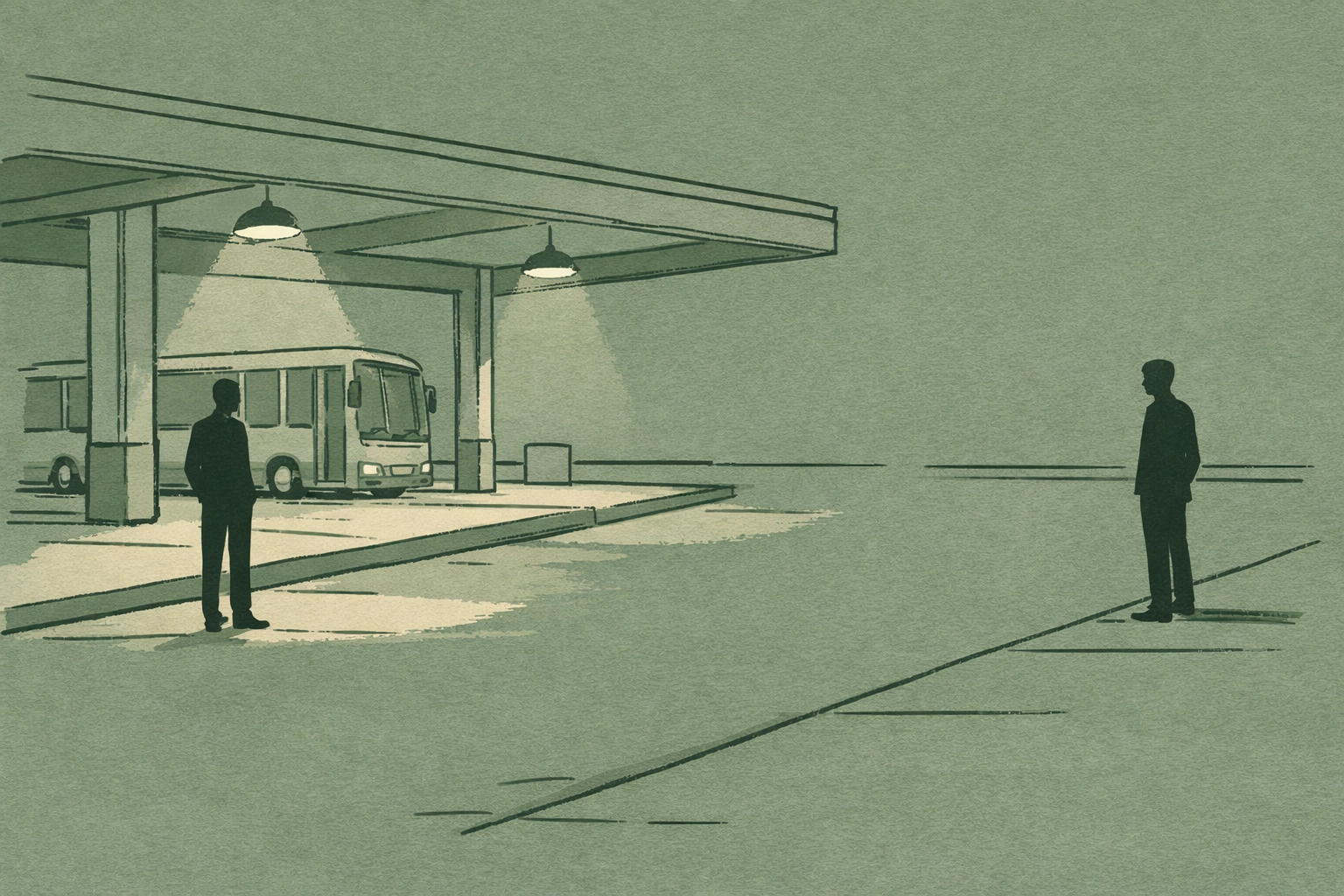
This is MM fiction that understands that intimacy often begins in the mundane. The gay love story unfolds through accumulation rather than explosion: each night adding another layer until suddenly these two men realize they've become essential to each other's existence.
The Language of Silence
Ferguson's prose in this piece is deliberately sparse, echoing the emptiness of the late-night cityscape. Sentences become shorter as the night deepens. Paragraphs break like the interrupted sleep of shift workers. The rhythm of the writing mirrors the rhythm of the rails, the stop-and-start of bus routes, the circular pattern of security rounds.
There's a musicality to the way Marcus and Isaiah communicate. Often, they don't need words. A nod. A glance. The way Isaiah straightens when he hears Marcus's bus pulling in. The way Marcus takes the long route back to the depot just to extend his time in Isaiah's orbit.
This contemporary gay romance proves that you don't need elaborate dialogue to convey deep emotion. Sometimes silence speaks louder than declarations.
The City That Never Sleeps (But Sometimes Whispers)
Dick Ferguson excels at capturing authentic urban environments, and the nighttime city in this story feels viscerally real. If you've ever been awake at 3 AM in a major metropolitan area, you'll recognize the specific atmosphere:
The way sounds travel differently without daytime traffic to absorb them. The eerie beauty of empty streets that teem with humanity during daylight hours. The particular quality of light from 24-hour convenience stores. The exhaustion that settles into your bones but keeps you alert, hyperaware.

Marcus and Isaiah exist in this in-between space: not quite part of the sleeping city, not quite part of the waking one. They're liminal figures in a liminal time, which makes their connection feel both fragile and profound.
Blue-Collar Romance with Literary Depth
What distinguishes this from typical MM romance books is Ferguson's refusal to romanticize working-class struggle while still finding romance within it. Marcus's job is exhausting. Isaiah's is monotonous. Neither man has the luxury of grand romantic gestures or expensive dates.
Their courtship happens in stolen minutes between shifts, in text messages sent during breaks, in the knowledge that someone else is awake and thinking of you while the city dreams. It's gay fiction grounded in economic reality, in the constraints of time and money and obligation.
Yet within those constraints, Ferguson finds poetry. The way Marcus saves the last piece of his sandwich for Isaiah. The way Isaiah "just happens" to need to patrol Marcus's platform more frequently. Small acts of care become monumental when they're carved out of exhaustion.
This approach will resonate with readers who loved The Campaign for Us or On a Steady Course: stories where characters face real obstacles and genuine struggles while building authentic connections.
The Symbolism of Transit
Throughout the narrative, Ferguson uses the transit system itself as metaphor. Buses follow predetermined routes but occasionally deviate. Security maintains order but can't control chaos. Schedules promise predictability but delays are inevitable.
Marcus and Isaiah's relationship mirrors this: structured by their jobs, scheduled around their shifts, yet ultimately following its own unpredictable trajectory. They're both trying to maintain control in a system that resists control, to find meaning in repetitive motion.
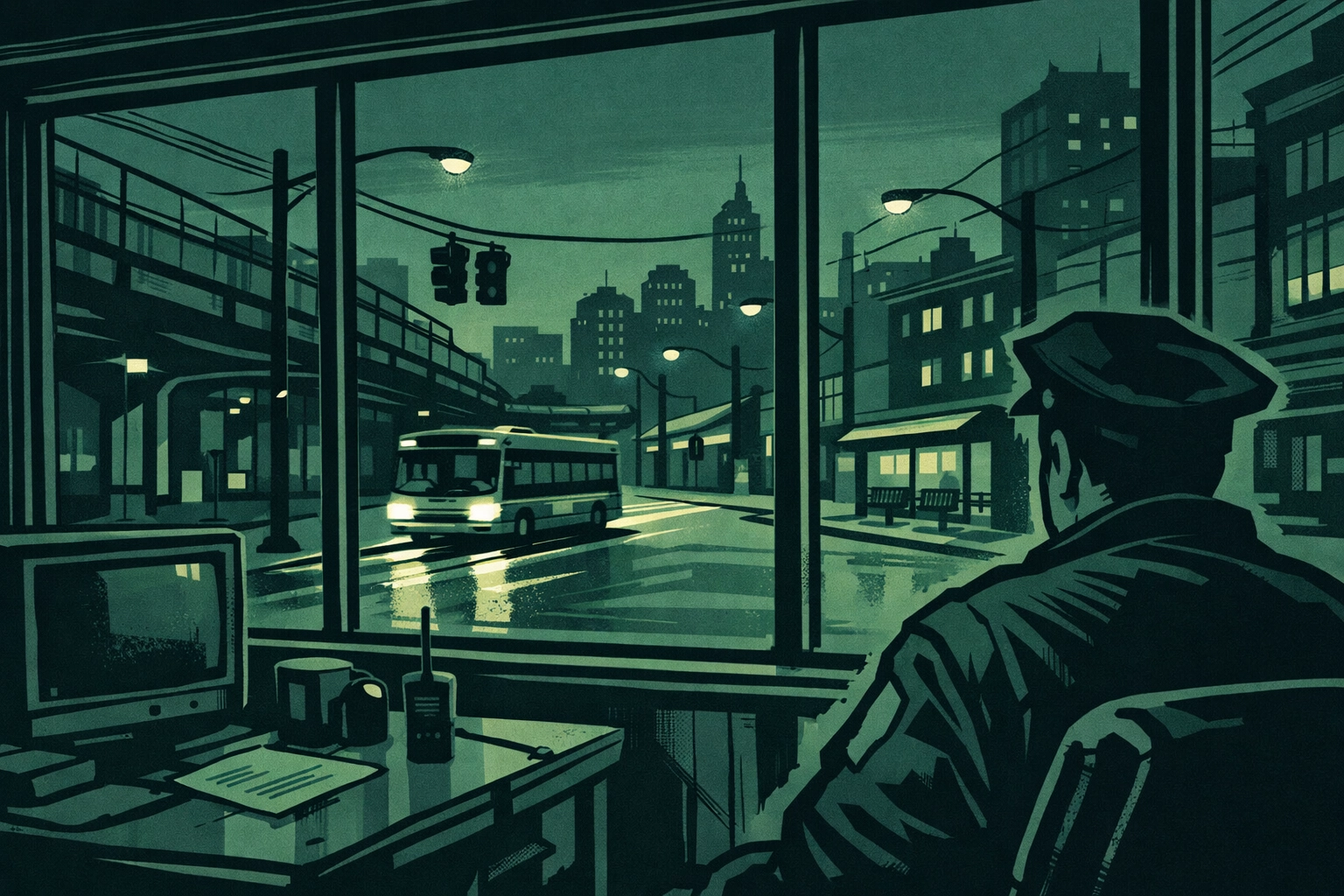
The depot becomes their meeting point, literally and metaphorically. It's where their paths intersect, where their carefully separate lives collide, where possibility exists within routine.
Why This Story Matters in 2026
As we move through 2026, Ferguson's exploration of working-class queer fiction feels increasingly relevant. While much LGBTQ+ romance focuses on affluent characters with time and resources for elaborate romantic scenarios, Midnight at the Depot centers working men whose romance must fit around brutal schedules and economic necessity.
This is gay literature that honors the reality of most people's lives: where love happens not in spite of work but alongside it, where connection must be negotiated around practical constraints, where intimacy develops in unconventional spaces because those are the spaces available.
Ferguson reminds us that MM novels can be both literary and accessible, can find poetry in bus schedules and beauty in security camera footage, can make the ordinary extraordinary through careful attention and emotional honesty.
The Evocative Power of Mood
What readers will remember most about this story is its mood: that specific mixture of melancholy and hope, exhaustion and tenderness, loneliness and connection. Ferguson sustains this throughout, never breaking the spell, maintaining the hushed quality of 3 AM conversation.
It's emotional MM books that trust readers to feel deeply without melodrama, to understand that quiet moments can carry as much weight as dramatic declarations. The story whispers rather than shouts, and that restraint makes it more powerful.
Discover More Urban Stories
If Midnight at the Depot resonates with you, explore more of Dick Ferguson's work at dickfergusonwriter.com. For readers who appreciate literary gay romance books with authentic settings and complex characters, titles like The Phoenix of Ludgate and The Melody of Silence offer similar depth.
The beauty of Ferguson's catalog is its range: from historical romance to contemporary fiction, from light-hearted tales to profound explorations of identity and connection. Every story shares a commitment to authentic emotion and well-crafted prose.
Visit readwithpride.com to discover more LGBTQ+ ebooks that center authentic queer experiences and celebrate love in all its forms.
Follow Dick Ferguson for more MM romance and LGBTQ+ fiction:
📱 Instagram: @dickfergusonwriter
🐦 X/Twitter: @DickFergus94902
📘 Facebook: Dick Ferguson Writer
📚 Read With Pride: www.readwithpride.com
#MMRomance #GayRomance #LGBTQBooks #ReadWithPride #UrbanRomance #WorkingClassRomance #GayFiction #QueerLiterature #ContemporaryRomance #DickFerguson #MMNovels #GayLoveStories #2026LGBTQ #BluCollarRomance #LiteraryRomance #AuthenticQueerStories #ReadingWithPride

Leave a Reply
You must be logged in to post a comment.