

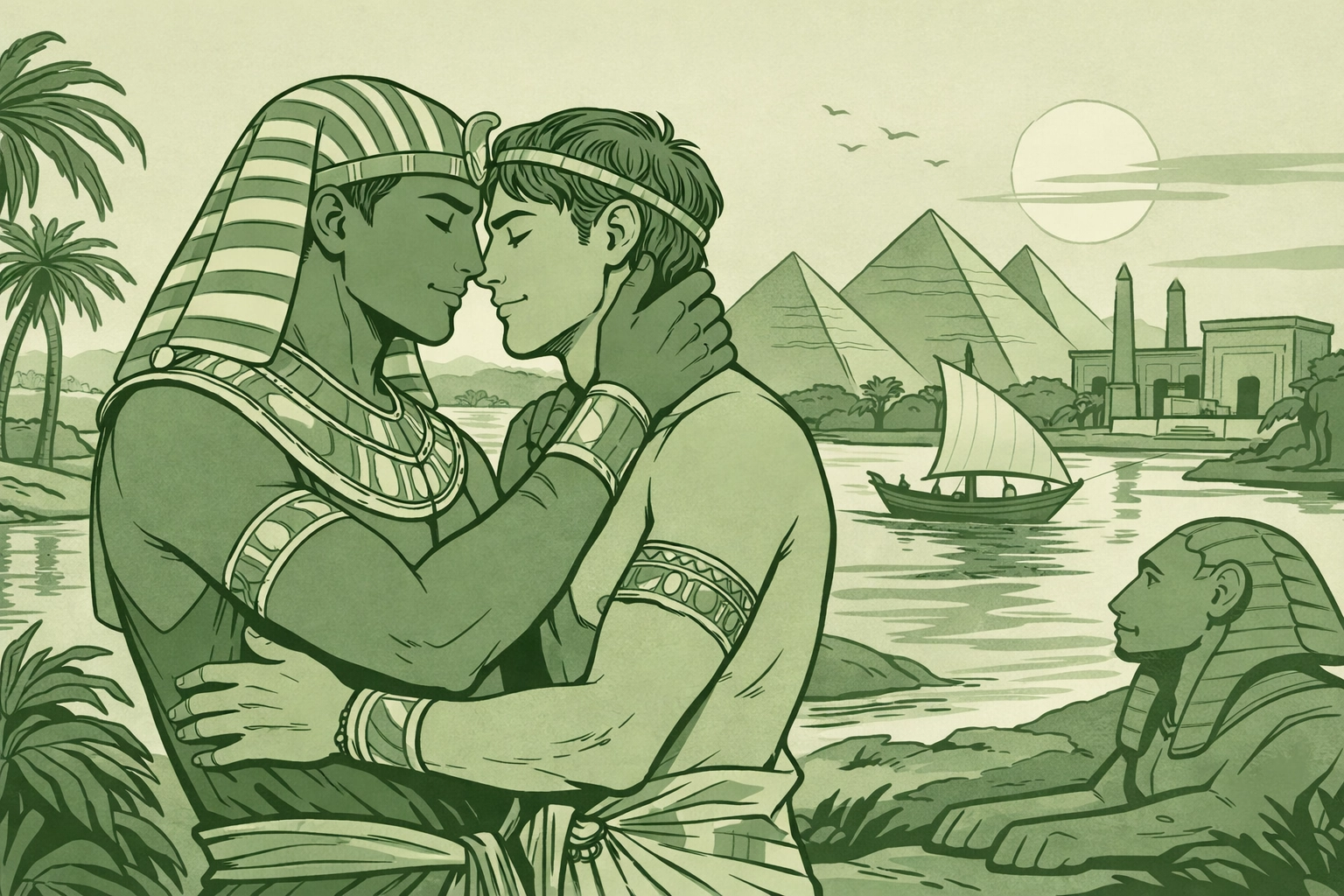
Looking for literary MM romance with emotional depth that transcends typical tropes? Ancient Egypt delivers everything empathetic readers crave: gilded palaces hiding raw vulnerability, power struggles wrapped in silk, and love stories that risk everything. At Read with Pride, we celebrate character-driven MM romance stories for empathetic readers, and no historical setting matches the Nile's combination of grandeur and dangerous intimacy.
Why Ancient Egypt Dominates the MM Romance Landscape
Ancient Egypt wasn't just pyramids and hieroglyphs. It was a civilization built on secrets, hidden burial chambers, coded religious texts, and court politics where one whispered accusation could end a dynasty. For MM romance authors, this creates the ultimate pressure cooker for emotional intensity.
The historical record shows nuanced attitudes toward same-sex relationships in ancient Egypt. While not universally condemned, these connections operated within rigid social hierarchies. Power dynamics determined acceptability, not love, making authentic romantic equality a rebellious act. This tension between historical constraint and fictional emotional freedom is where the magic happens for writers crafting gay romance books with substance.
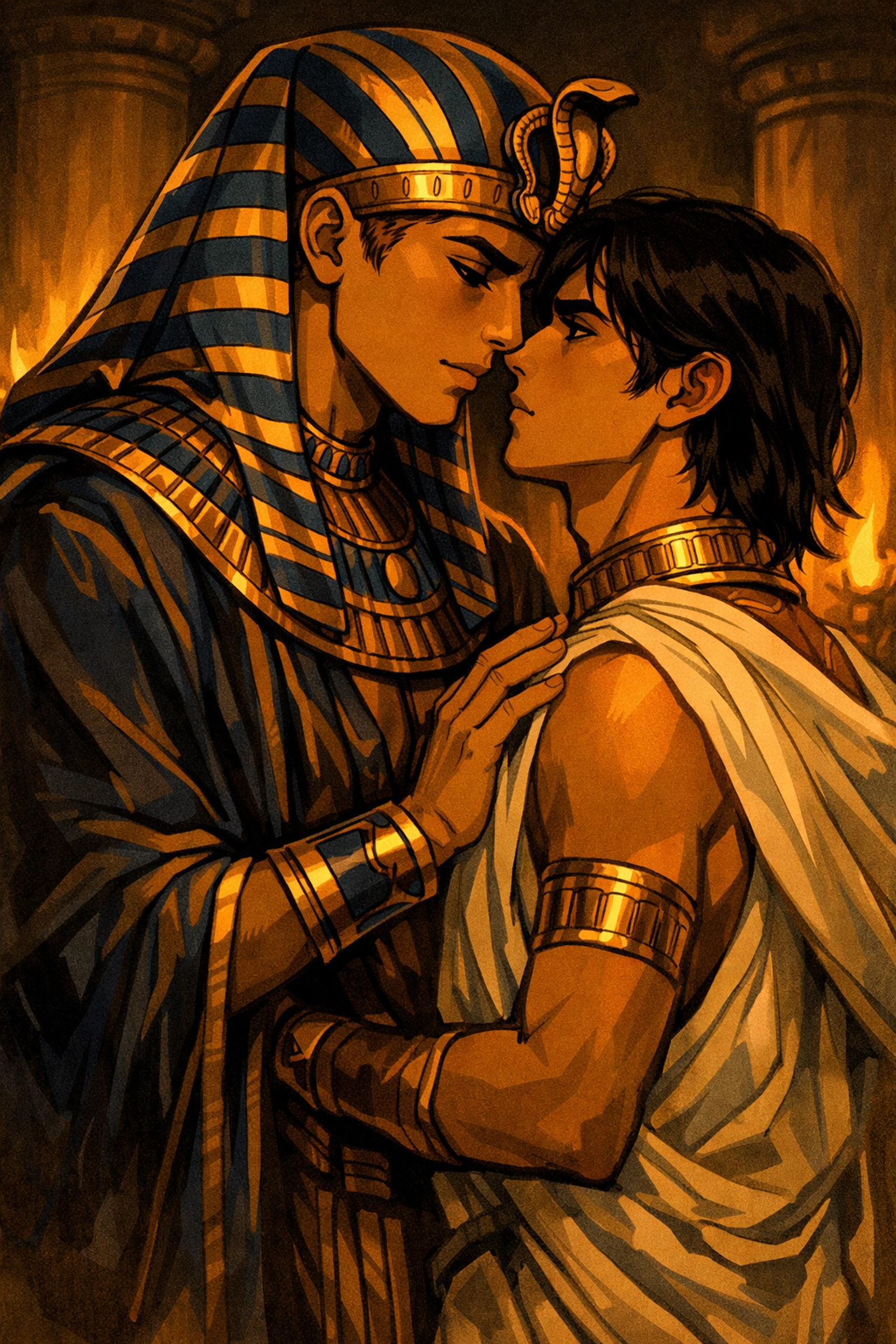
Alt text: Two men in Egyptian royal attire standing close in golden firelight, faces inches apart, one wearing a pharaoh's crown and the other draped in ceremonial white linen, shadows emphasizing the charged intimacy between them
Consider the famous tomb of Khnumhotep and Niankhkhnum (circa 2400 BCE), two men depicted nose-to-nose, hands intertwined, in poses reserved for married couples. Egyptologists debate whether they were lovers, siblings, or twins. That ambiguity? It's narrative gold. Every author gets to reimagine what those intimate carvings really meant.
The "Male Queen" Phenomenon: Power Meets Vulnerability
The term "male queen" isn't historically accurate, but it captures something visceral: the consort who wields influence without a crown. In Egyptian MM romance, this archetype explodes with possibility.
Picture a pharaoh's most trusted advisor, brilliant, politically indispensable, yet socially invisible as a romantic partner. He attends state banquets draped in jewels, speaks with the authority of the throne, but returns each night to chambers where he must hide the pharaoh's touch on his skin. The LGBTQ+ fiction potential here is staggering: external power masking private desperation.
This dynamic delivers what Dick Ferguson's readers demand: men who are neither helpless victims nor one-dimensional alphas. They're strategists navigating impossible choices, protect the kingdom or claim their love publicly? The "male queen" becomes a mirror for anyone who's ever felt powerful in one arena while being erased in another.
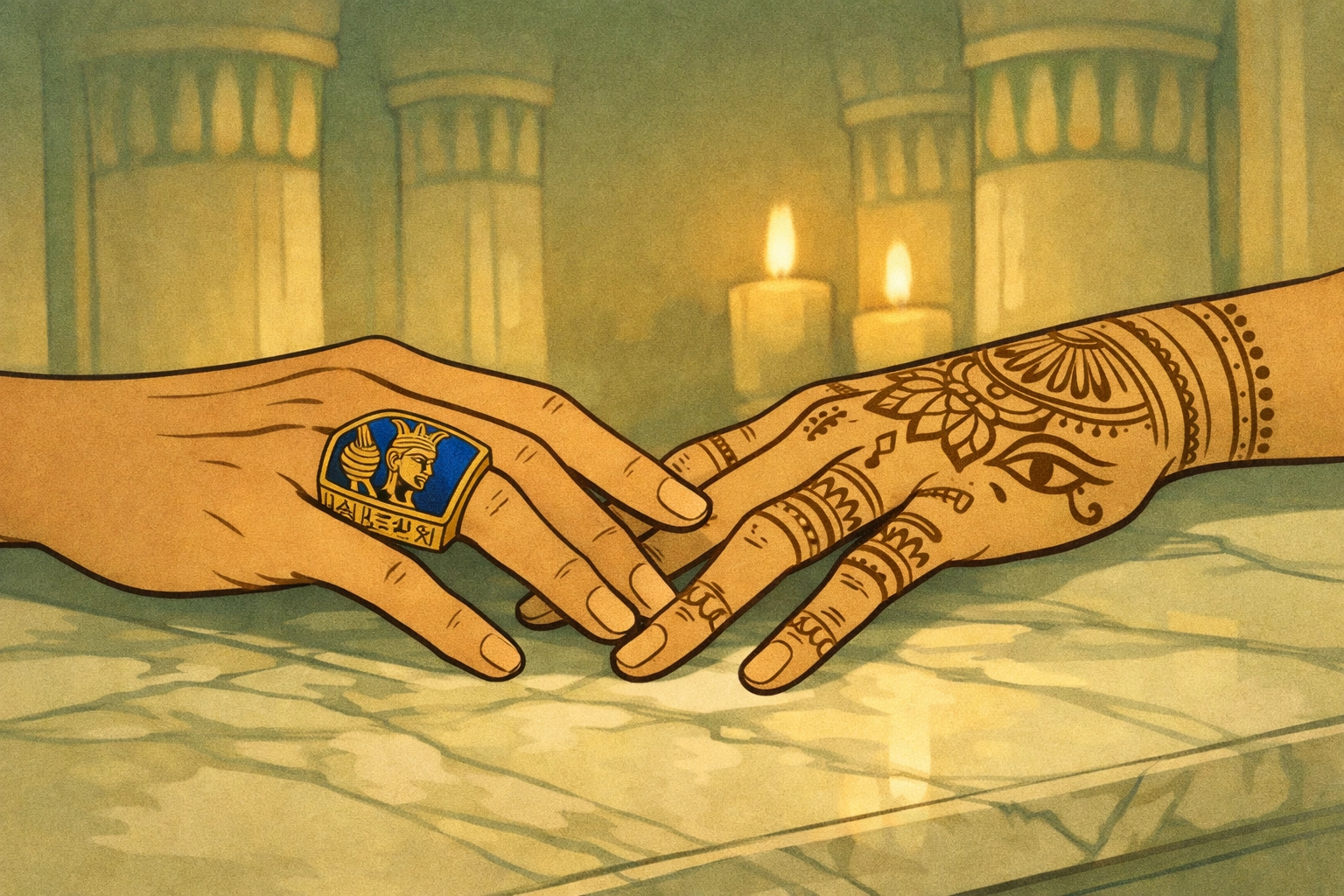
Alt text: Close-up of two male hands touching on a marble surface, one wearing a gold pharaoh's ring and the other with henna designs, Egyptian palace columns blurred in background
Secrets That Build Unbearable Tension
Ancient Egyptian courts thrived on surveillance. Priests documented everything. Servants gossiped. Rival nobles waited for scandalous leverage. For MM romance, this creates organic, relentless stakes.
Every stolen glance in a throne room is a risk. Every private meeting could be witnessed by a resentful scribe. The couple can't simply "run away", they're bound by duty, legacy, and the weight of divine kingship. This isn't manufactured angst; it's structural tension baked into the setting.
Gay romance novels set in ancient Egypt force characters to choose between self-preservation and authentic connection. A pharaoh might command armies but can't command the court's acceptance of his male lover. A priest sworn to celibacy must decide if love is worth abandoning the gods. These aren't melodramatic obstacles, they're emotionally devastating dilemmas that queer fiction readers recognize from their own lives.
The historical Amarna period offers rich inspiration: Akhenaten revolutionized religion and art, depicting unprecedented intimacy with his male officials in temple carvings. While mainstream Egyptology frames these as political alliances, romance authors see the raw material for forbidden passion hidden beneath state propaganda.
Gilded Aesthetics, Raw Emotions
Ancient Egypt's visual splendor amplifies emotional contrasts. Golden masks hide weeping faces. Perfumed banquet halls conceal political knives. Linen robes brush against scarred hearts.
For MM romance books targeting literary audiences, this setting offers metaphor-rich prose without purple excess. A character running fingers through desert sand mirrors his inability to hold onto his lover. Kohl-lined eyes that seduce in public become weapons of self-protection in private. The Nile itself, giver of life, destroyer of civilizations, reflects the paradox of love that sustains and ruins simultaneously.
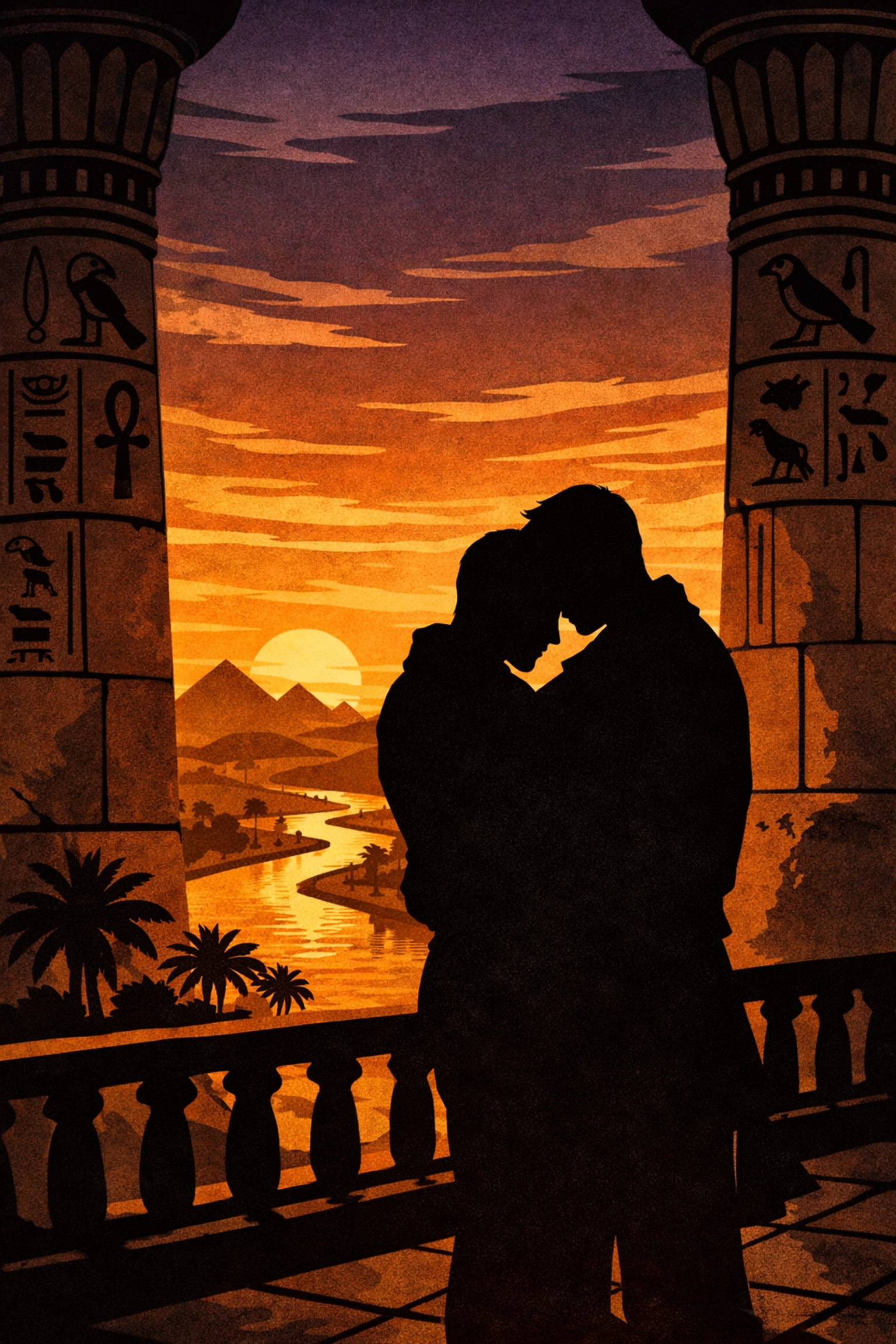
Alt text: Silhouette of two men embracing on a palace balcony at sunset, the Nile river and golden desert visible below, their bodies creating one merged shadow against the pillars
Dick Ferguson's approach to gay fiction has always prioritized emotional archaeology, excavating the human heart beneath historical grandeur. Ancient Egypt provides endless layers to dig through: religious devotion versus carnal desire, public duty versus private truth, the immortality of legacy versus the mortality of touch.
This setting also allows for body positivity themes. Egyptian art celebrated physical form without modern shame, muscular laborers, soft-bellied scribes, scarred soldiers all depicted with equal dignity. For MM novels exploring intimacy beyond conventional beauty standards, this cultural context is liberating.
Why Empathetic Readers Choose Egyptian MM Romance
Character-driven MM romance stories for empathetic readers require settings that don't do the emotional work for the author. Ancient Egypt provides obstacles and atmosphere, but the real story is always how two souls navigate impossible circumstances.
Readers choosing literary MM romance over generic trope-filled plots want to feel the weight of consequences. They want love that costs something, reputation, safety, destiny. Egypt's combination of documented history and vast unknowns lets authors ground stakes in reality while exploring emotional depths the hieroglyphs never recorded.
The best gay love stories in this setting balance spectacle with vulnerability. Yes, there are chariot chases and assassination plots. But the scene that breaks readers? The pharaoh who can commission monuments to last millennia but can't publicly acknowledge the man who holds his heart in trembling hands.
Historical Romance Meets Modern Resonance
Ancient Egypt's cultural attitudes toward same-sex relationships were neither utopian nor universally oppressive: they were complicated. This mirrors the modern LGBTQ+ experience far better than fantasy worlds with zero homophobia or historical settings with cartoonish bigotry.
In Egyptian MM romance, acceptance might exist in whispers but not proclamations. A couple might be acknowledged privately by trusted confidants while publicly maintaining fiction. They navigate a world where their relationship isn't illegal but isn't quite legitimate either: a gray zone many contemporary readers recognize.
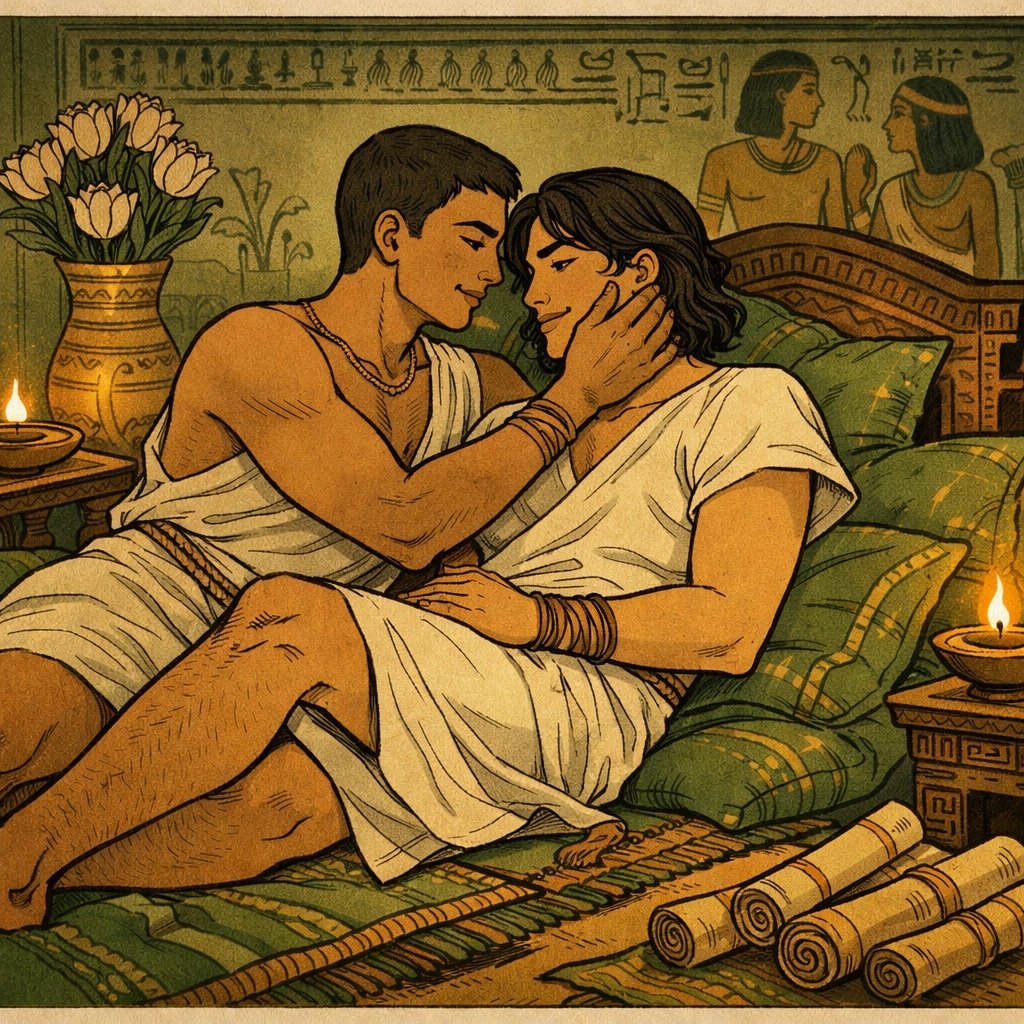
Alt text: Ancient Egyptian bedchamber scene showing two men reclining on cushions surrounded by oil lamps and papyrus scrolls, one gently touching the other's face, golden light emphasizing intimate vulnerability
This is why gay historical romance set in Egypt resonates: it validates the complexity of queer existence across time. Love has always found ways to survive hostile or ambiguous circumstances. The specificity of Egyptian culture: its religious frameworks, political structures, artistic traditions: grounds this universal truth in tangible detail.
Explore Egyptian-Inspired Stories and More
Ready to experience the emotional depth of LGBTQ+ ebooks that treat history as more than costume drama? Read with Pride curates gay romance books where setting serves character, and every historical detail amplifies human connection.
While Dick Ferguson's catalog doesn't currently feature ancient Egypt, titles like The Marble Heart: A Tale of the Gladiator demonstrate his commitment to historical settings where power, vulnerability, and forbidden desire collide. For readers craving MM fiction with archaeological precision and emotional excavation, start exploring at dickfergusonwriter.com.
The Nile has kept secrets for millennia. Some of the most powerful ones involve love that refused to be erased by time or tradition. That's the promise of literary MM romance with emotional depth: stories that honor both history and the human heart.
Follow Read with Pride on social media:
Instagram: @dickfergusonwriter
X/Twitter: @DickFergus94902
Facebook: Dick Ferguson Writer
Website: www.readwithpride.com
#MMRomance #GayRomance #LGBTQBooks #ReadWithPride #AncientEgypt #HistoricalRomance #GayFiction #QueerLiterature #MMBooks #GayHistoricalRomance #LiteraryRomance #GayAuthors #LGBTQFiction #EmotionalDepth #CharacterDriven #GayLoveStories #ReadingWithPride #2026Books #QueerBooks #MMNovels

Leave a Reply
You must be logged in to post a comment.