

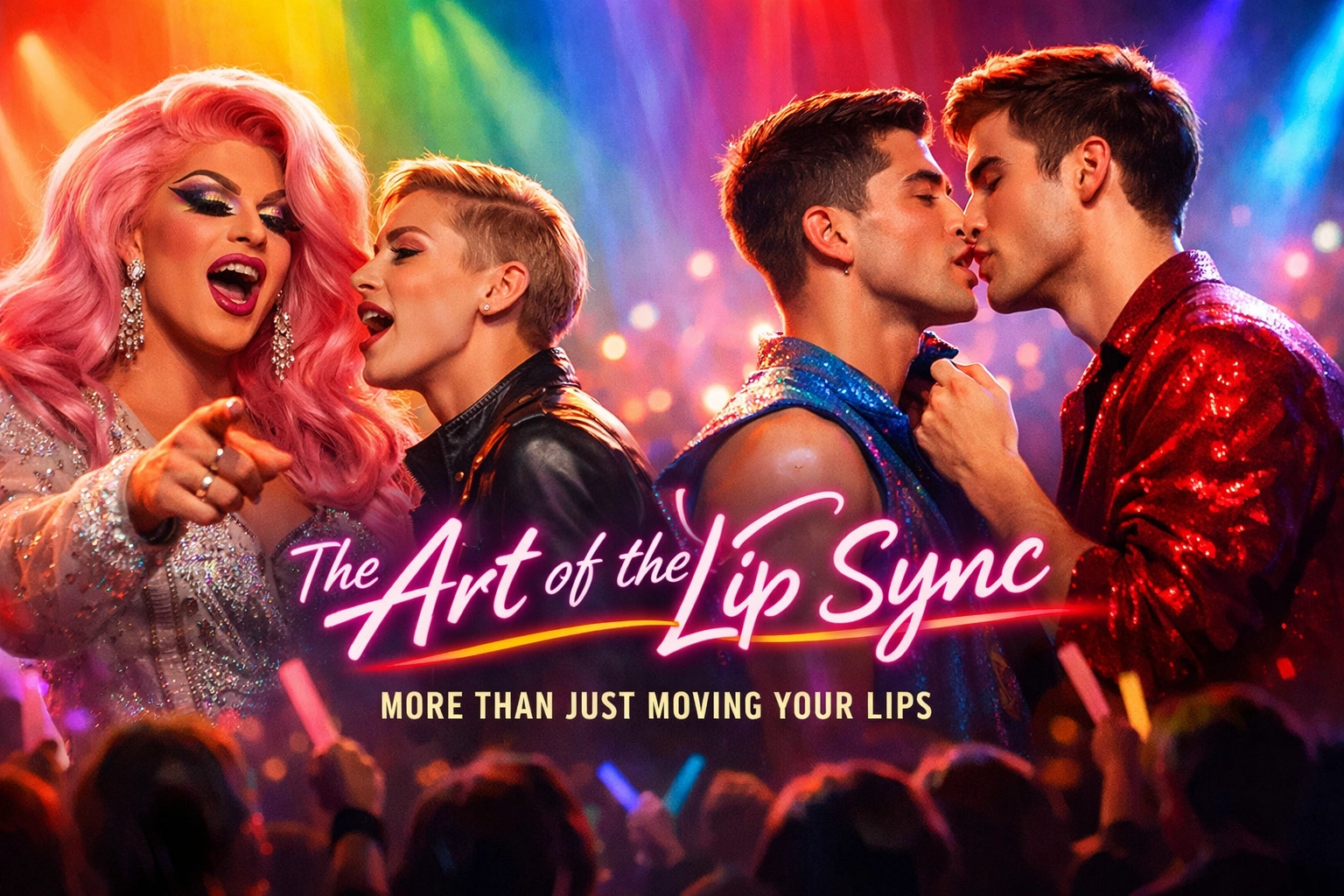
Part 6 of the "Life as a Drag Queen" Series
Let's clear something up right now: if you think lip syncing is just mouthing words while Beyoncé does the heavy lifting, you've got another thing coming. The art of the drag queen lip sync is a full-contact sport: part theatre, part athleticism, part emotional excavation, and 100% commitment to making the audience forget, even for three minutes and forty-two seconds, that you're not actually the one singing.
This is where drag becomes undeniable LGBTQ entertainment at its finest. It's where technical precision meets raw emotion, where choreography collides with vulnerability, and where a queen proves she's more than just a pretty face in a wig.
The Science Behind the Sorcery
Here's what most people don't realize: every single syllable has a shape. Linguists call them phonemes and visemes: the sounds and the mouth positions that create them. An "O" makes your lips round like you're about to kiss someone (or dramatically gasp at the tea you just heard). An "M" presses your lips together like you're judging someone silently. An "F" catches your top teeth on your bottom lip like you're mid-whisper.
Now multiply that by every word in a four-minute song, add in the fact that you're doing this under stage lights hot enough to melt your contour, while wearing heels that could double as weapons, and suddenly you understand why drag performance art deserves respect.
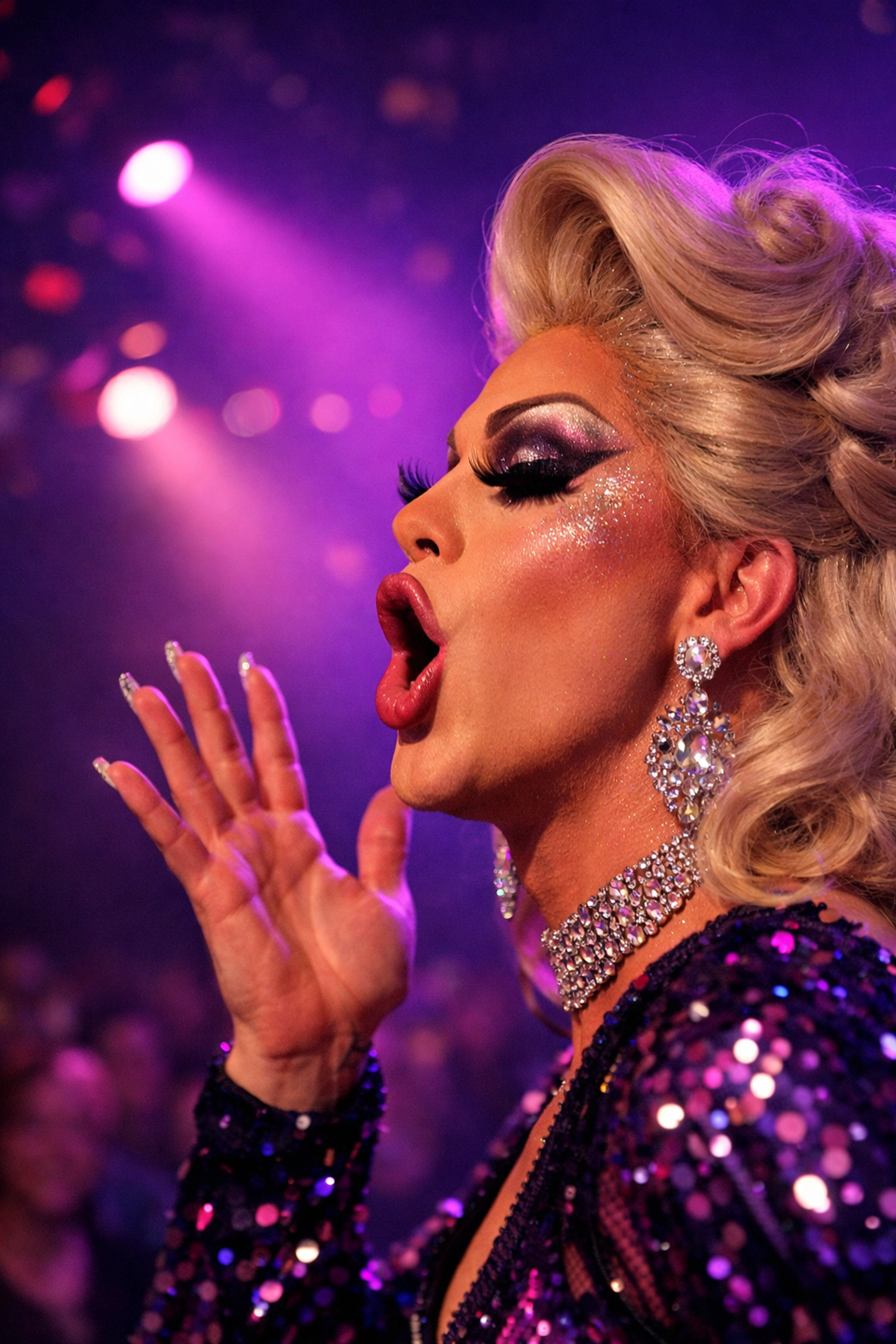
Professional queens spend hours: sometimes days: perfecting a single number. They'll play the track frame by frame, studying not just the words but the breaths, the pauses, the tiny vocal inflections that make a performance feel real rather than robotic. It's the difference between someone moving their mouth and someone embodying a song so completely that you'd swear they recorded it themselves.
The Emotional Architecture
But here's where it gets really good: the mouth movements are just the foundation. The real magic happens when a queen takes someone else's voice and makes it tell their story.
Think about it. When a drag queen performs Whitney Houston's "I Have Nothing," she's not just hitting the right mouth shapes on "Don't make me close one more door." She's channeling every heartbreak, every rejection, every moment she's ever had to hide who she really is. The song becomes a vehicle for her truth, even though the voice belongs to someone else.
This is the emotional alchemy that separates a decent lip sync from a lip sync battle moment that gets shared 50,000 times on Instagram. It's about connecting the technical skill to genuine feeling: letting the audience see your vulnerability while you're giving them fantasy.
Power Ballads vs. Dance Tracks: Two Different Games
Ask any queen and they'll tell you: performing a Celine Dion power ballad requires a completely different skill set than serving a high-energy Janet Jackson dance number.
Power ballads are all about stillness and precision. When you're lip syncing "My Heart Will Go On," you can't hide behind death drops and splits. The audience is watching your face, reading every micro-expression, tracking every emotional beat. One wrong eyebrow raise and the spell is broken. These performances demand restraint, control, and the ability to make eye contact with 200 strangers while pretending your heart is actually breaking in real time.
It's intimate. It's vulnerable. It's the performance equivalent of inviting the audience into your therapy session, except with better lighting and false eyelashes that weigh more than a small dog.
Dance tracks, on the other hand? That's where queens get to be athletes. We're talking full choreography: the splits, the flips, the hairography, the costume reveals, the death drops that make straight people in the audience audibly gasp. These are the best drag songs for showing off physical prowess and stamina.
But here's the catch: even while you're doing a backflip in six-inch platforms, you still have to nail every single word. The mouth still has to match. The face still has to sell it. You're essentially doing Olympic-level gymnastics while also performing brain surgery-level precision work with your mouth and facial muscles.
No pressure.
The Rehearsal Reality
Want to know what separates the legendary queens from the local bar performers? Practice. Obsessive, relentless, borderline neurotic practice.
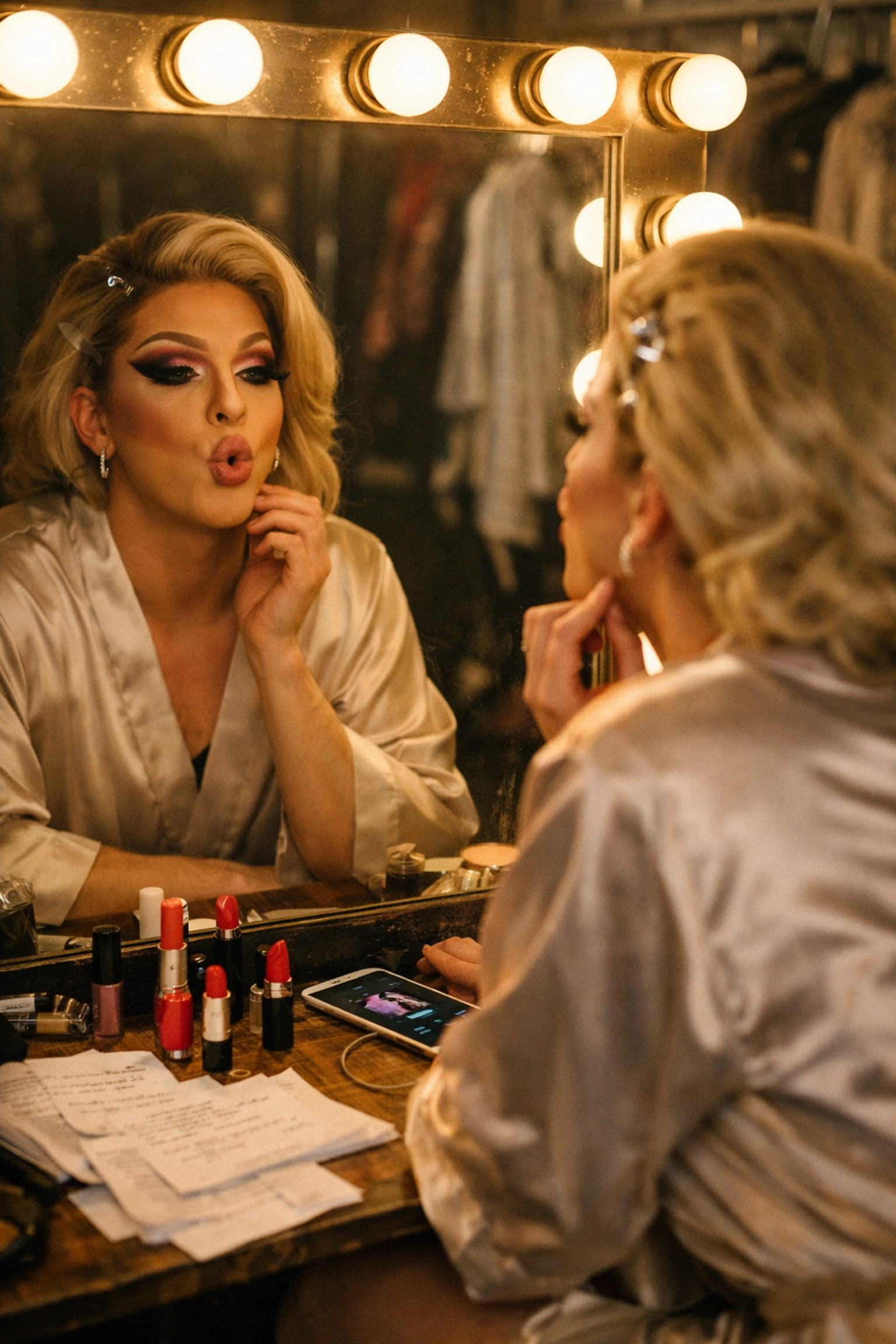
Queens will rehearse a single number 50, 60, 100 times before they take it to a stage. They'll practice in front of mirrors, film themselves, watch the playback, adjust, and do it all over again. They'll learn the song so intimately that they know exactly when the singer takes a breath, when there's a slight rasp in the vocal, when the tempo shifts by a fraction.
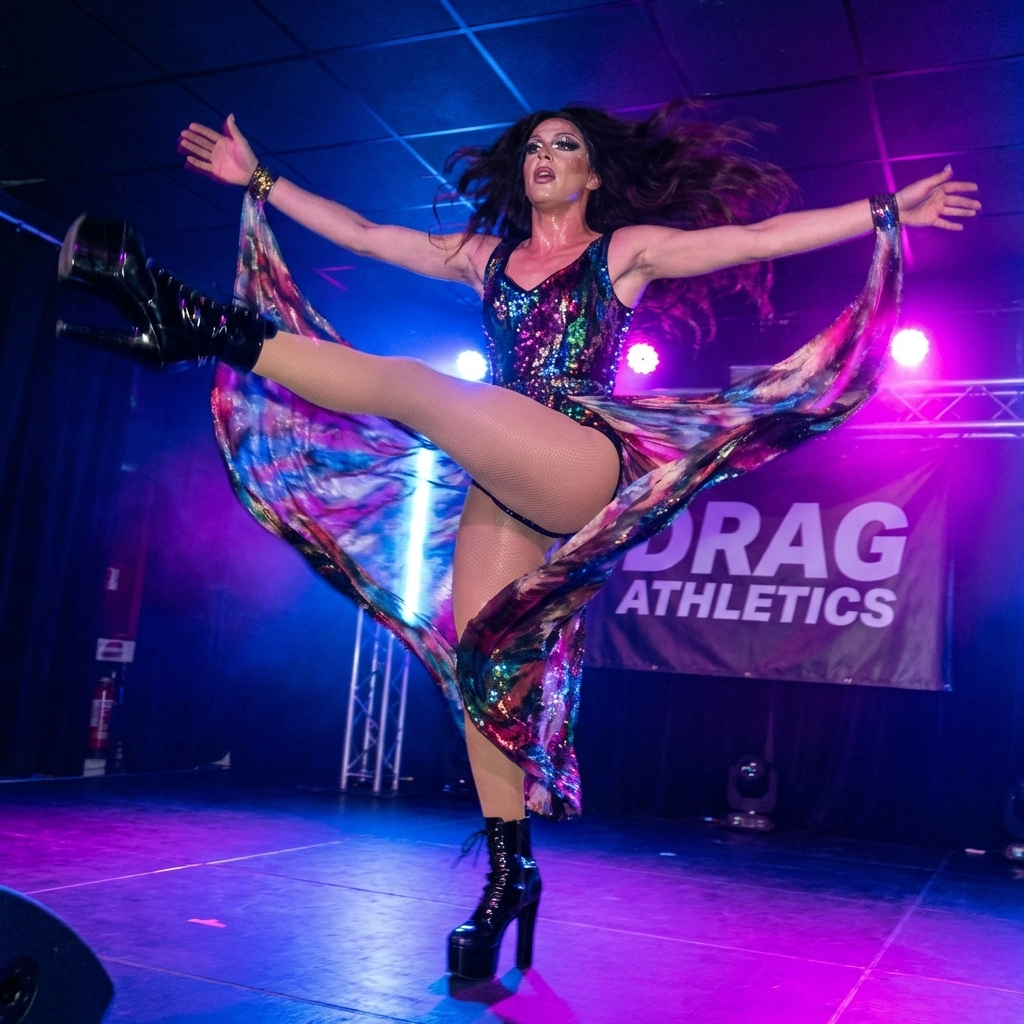
And it's not just about memorization. It's about muscle memory: training your mouth, your face, your body to move instinctively so that when you're under those lights with adrenaline flooding your system and the audience screaming, you don't have to think. You just become.
This level of dedication is what makes drag performance art worthy of the same respect given to any other theatrical discipline. These queens are craftspeople, honing their skills with the same commitment that dancers train at the barre or actors work on their monologues.
The Audience Connection
Here's the truth that every professional queen knows: a lip sync isn't just about fooling people into thinking you're singing. It's about creating a shared emotional experience. It's about making the audience feel something: joy, sadness, pride, defiance, freedom.
When a queen locks eyes with someone in the front row during the climactic note of "And I Am Telling You I'm Not Going," something electric happens. For that moment, she's not performing at the audience; she's performing with them. They're in it together, sharing this manufactured yet utterly genuine moment of connection.
This is especially powerful in LGBTQ+ spaces, where these performances often carry extra weight. A queen lip syncing Lady Gaga's "Born This Way" isn't just entertaining: she's affirming, celebrating, and validating every person in that room. The technical skill serves the emotional truth, and the emotional truth gives meaning to the technical skill.
It's the same reason so many of us at Read with Pride gravitate toward MM romance books and gay fiction: we're hungry for stories that reflect our experiences, our emotions, our truths. Whether those stories come through pages or through a perfectly executed lip sync, the need for authentic representation remains the same.
More Than Just Entertainment
The art of the lip sync represents something bigger than just LGBTQ entertainment. It's a form of expression that was born from necessity: a way for queer performers to claim space, tell stories, and create art in a world that often denied them those opportunities.
Every perfectly timed mouth movement is an act of defiance. Every emotional connection is proof of resilience. Every standing ovation is validation that this art form: often dismissed, frequently misunderstood: matters deeply to the people who create it and the communities who celebrate it.
So the next time you watch a drag queen lip sync, pay attention. Notice the precision. Feel the emotion. Recognize the athleticism. Appreciate the hours of practice that went into those three minutes of seeming effortlessness.
Because it's not just moving your lips. It's art, athleticism, storytelling, and survival all wrapped up in sequins and served under a spotlight.
And that's something worth celebrating. 🏳️🌈
Stay tuned for Story #7 in our "Life as a Drag Queen" series, coming soon!
Connect with us:
- Website: readwithpride.com
- Instagram: @read.withpride
- Facebook: Read With Pride
- X/Twitter: @Read_With_Pride
#ReadWithPride #DragQueen #LipSync #LGBTQEntertainment #DragPerformance #QueerArt #DragCulture #LipSyncBattle #PerformanceArt #LGBTQCommunity #QueerStories #MMRomance #GayBooks #LGBTQBooks #Pride2026 #DragIsArt #QueerCreativity #LGBTQPride

Leave a Reply
You must be logged in to post a comment.