

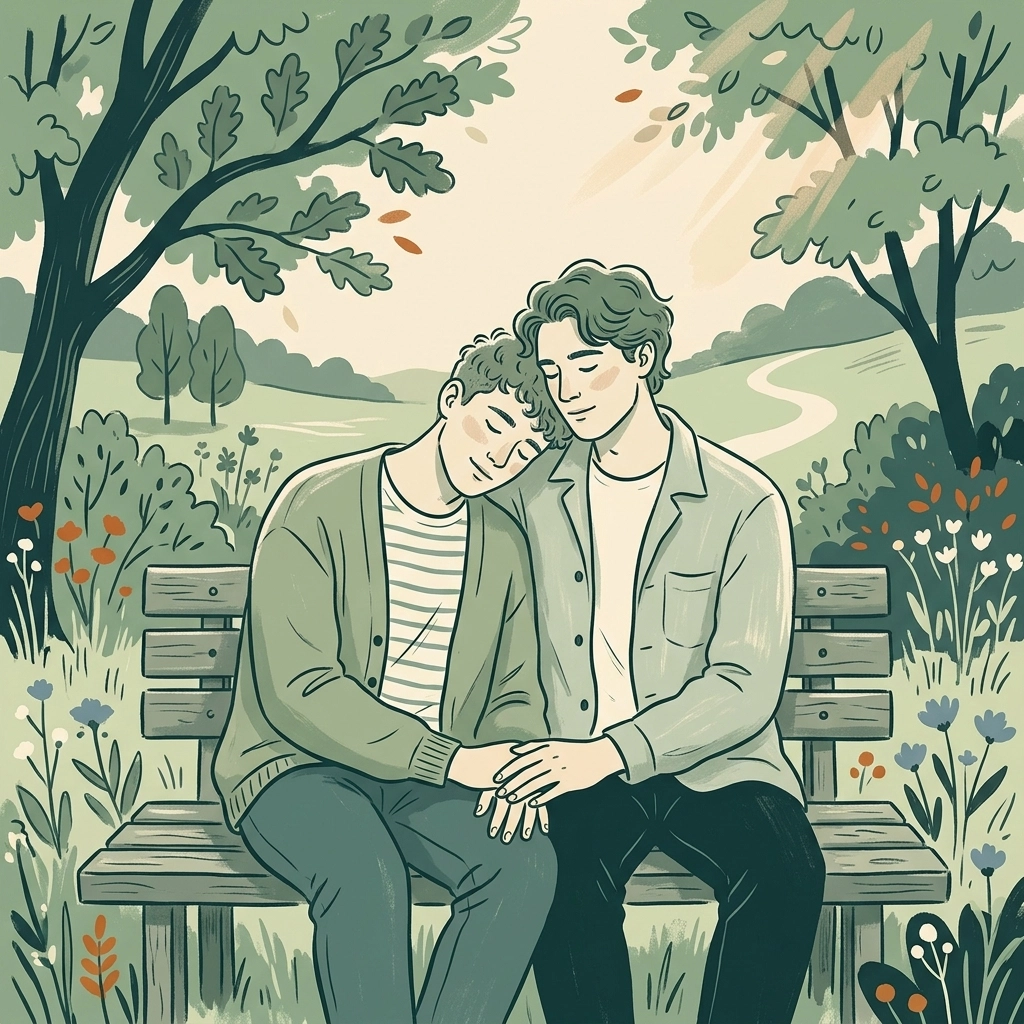
5) The Beauty of Being Non-Binary: Living Beyond the Binary Gaze
If you’re non-binary, you’ve probably felt the binary gaze, that constant pressure to be “more like a man” or “more like a woman” so other people can file you neatly away. But non-binary life isn’t a halfway point. It’s a full, real, complete identity that deserves ease, joy, and respect.
Here’s what tends to help on the self-love side:
- Let your identity be spacious. Some people feel agender, some feel genderfluid, some feel like “both,” “neither,” or “something else entirely.” You don’t owe anyone a tidy explanation.
- Pronouns are not a test. Try what feels right. Change them if you need to. Keep them private if you need to. Your comfort matters.
- Style is a playground, not proof. Clothes, hair, voice, makeup, and body language can be affirming, but none of them are “requirements” to count as non-binary.
- Boundaries are self-respect in action. It’s okay to correct people. It’s also okay to conserve energy and not correct everyone.
Non-binary self-love often looks like releasing the idea that your identity has to be “legible” to strangers to be valid. You are not a public service announcement, you’re a person.
6) Queer Identity Can Evolve (And That Doesn’t Make You “Confused”)
A lot of people think the goal is to “figure yourself out” once, forever, with a perfect label. Real life is usually messier, and honestly, more human.
- You can come out as one thing, then later realise another label fits better.
- You can be stable in your identity and still learn new language that resonates.
- You can be certain about your attractions and still have shifting experiences of desire, intimacy, and connection.
What you feel today is real. If it changes later, that future experience is real too. Evolving isn’t failing, it’s information.
7) Labels: Tools, Not Cages
Labels can be powerful. They help you find community, describe your experience, and feel less alone. But labels can also feel tight if you treat them like a lifelong contract.
Try this mindset: a label is a tool for communication and belonging. If it helps, use it. If it doesn’t, set it down.
A few gentle prompts:
- Does this label make me feel seen?
- Does it reduce shame or increase pressure?
- Am I using it for me or for other people?
You’re allowed to take your time. You’re allowed to change your mind. You’re allowed to be private.
8) Unpacking Internalised Shame (Without Blaming Yourself)
Internalised homophobia, biphobia, and transphobia don’t come from nowhere. They’re learned, picked up from family messages, school norms, religion, media, politics, or just the daily drip of “be normal.”
Self-love isn’t pretending that didn’t happen. It’s recognising it happened and choosing to heal anyway.
What healing can look like:
- Notice the script. When you hear “I’m too much,” “I’m not real,” or “No one will love me,” ask: Whose voice is that? Where did I learn it?
- Replace punishment with compassion. Talk to yourself like you would to a close friend.
- Make room for grief. You may grieve the years you spent hiding or shrinking. That grief is valid, and it can coexist with pride.
This is also where queer stories matter. Reading queer fiction, especially emotionally rich LGBTQ+ fiction, can gently rewire what you think is possible for you.
9) Coming Out: You Don’t Owe Anyone a Deadline
Coming out is often framed as a single brave moment. For many people it’s a long, ongoing process with different levels of safety in different places.
A few truths that deserve to be said plainly:
- You can be out to friends and not to family.
- You can be out online and private at work.
- You can be out about your sexuality and not your gender (or vice versa).
- You can choose not to come out if it’s not safe.
Self-love is not measured by how public you are. It’s measured by how gently you treat yourself while you decide what’s right.
10) Community: Find Spaces That Celebrate You (Not Just Tolerate You)
A good queer space doesn’t make you prove you belong. It doesn’t treat you like a debate topic. It doesn’t force you to perform a “correct” kind of queerness.
Look for spaces that:
- Use inclusive language (and correct themselves when they mess up)
- Respect pronouns without drama
- Make room for bi people, trans people, non-binary people, ace people, and questioning folks
- Celebrate queer joy as much as queer struggle
If in-person community is hard to find, online communities can be a lifeline. Even a small group chat with one affirming friend counts.
11) Relationships: Building Love That Doesn’t Require You to Shrink
Whether you’re dating men, exploring your identity, or healing from old relationship patterns, self-love shows up in how you choose connection.
For many gay men, bi men, and queer men, the big relationship lesson is this: attraction isn’t the same thing as safety. Chemistry can be loud. Emotional security is quieter, but it’s what lets you thrive.
Try asking:
- Do I feel calmer around this person, or constantly on edge?
- Do they respect my boundaries the first time?
- Can I be honest without being punished?
- Do I like who I become around them?
And if you’re a reader who loves high-angst stories, consider how fiction can help you name what you want in real life: loyalty, emotional vulnerability, earned trust, and that feeling of “I’m safe with you.”
12) Boundaries: The Practical Side of Self-Love
Boundaries aren’t about being cold. They’re about being clear.
Useful boundaries for queer life might include:
- “Don’t use that word for me.”
- “I’m not discussing my body/sex life with you.”
- “You can ask respectful questions, but I won’t debate my identity.”
- “If you misgender me, I’ll correct you, and I need you to try.”
If you’re not used to boundaries, start small. One sentence. One limit. One “no” that you don’t over-explain.
13) Self-Care That Actually Helps (Not the Instagram Kind)
Self-care isn’t just candles and baths (though, sure, those can be great). Queer self-care often looks like reducing exposure to shame and increasing exposure to affirmation.
A simple, realistic self-care menu:
- Curate your feeds: unfollow accounts that make you feel “wrong”
- Keep one supportive contact you can message on rough days
- Build a “gender euphoria” or “queer joy” playlist
- Move your body in ways that feel kind (not punishing)
- Read queer stories that make you feel hopeful
If books are part of your comfort ritual, explore LGBTQ+ ebooks that focus on emotional depth: heartfelt gay fiction, queer fiction with found family, or MM romance where care and consent are central. Our curated store is here when you want it: https://readwithpride.com/e-book-store/dickfergusonwriter/
14) Therapy & Support: Getting Help That’s Actually Affirming
Queer-affirming support can be life-changing, especially if you’re dealing with anxiety, depression, trauma, or identity stress.
A therapist doesn’t need to share your identity to be affirming, but they should:
- Use correct pronouns and names
- Understand minority stress (how discrimination impacts mental health)
- Avoid framing queerness as the “problem”
- Help you build tools for boundaries, self-worth, and resilience
If therapy isn’t accessible, look for peer support groups, queer helplines, or community-led spaces. Support counts even when it isn’t perfect.
15) Representation Matters (And You’re Allowed to Want More)
Seeing yourself in stories is not a childish need: it’s a human need. Representation helps you imagine a future where you’re loved, safe, and fully yourself.
If you grew up with little or no representation, you may be rebuilding your inner world now. That’s not embarrassing. That’s brave.
When you’re choosing what to read, try this: aim for stories that give you dignity, not just drama. Give yourself narratives where queer people get complex lives, deep love, and real happy endings (or at least meaningful ones).
And if you’re specifically a fan of man/man love stories: MM romance, gay romance, and M/M books can be a powerful form of self-affirmation when they focus on tenderness, emotional growth, and earned intimacy: not just surface-level heat.
16) Your Self-Love Journey: A Quick “When You’re Stuck” Checklist
When you feel stuck in your identity or self-worth, run through this list:
- Am I trying to be understood by people who don’t want to understand?
- Have I been consuming content that makes me feel ashamed or small?
- Do I need rest, food, or water before I try to solve my whole life?
- Have I talked to one safe person (friend, group, therapist) this week?
- Have I done one thing that makes me feel more like myself?
(A pronoun pin, a haircut, a song, a book, a walk, a journal page: small counts.)
Self-love isn’t one big decision. It’s a bunch of small choices that add up.
17) A Reader’s Path to Pride: Stories as Mirrors, Windows, and Warmth
At Read with Pride / Readwithpride, we care about how stories land in your chest: how they help you name your feelings, survive hard seasons, and believe in love that doesn’t require you to disappear.
If you’re building a reading list for your self-love era, focus on:
- Emotionally invested MM romance (slow burn, hurt/comfort, found family)
- Queer fiction with healing arcs (grief, identity, rebuilding)
- Gay literature that expands your sense of “possible”
- Gay book club picks that spark conversation and connection
Browse LGBTQ+ romance, queer fiction, and gay novels here: https://readwithpride.com/e-book-store/dickfergusonwriter/
Daily blog post ideas for Dick (next up)
- High-Angst MM Romance That Heals: 9 Tropes Readers Secretly Need (hurt/comfort, second chance, found family: emotion-first recs)
- Gay Spy Romance & Bodyguard Romance: Why “Protection” Tropes Hit So Hard (trope psychology + reading mood guide)
- Queer Identity 101 for Allies Who Actually Want to Get It Right (practical language, boundaries, and what not to ask)
Follow us on social media
- Instagram: https://www.instagram.com/dickfergusonwriter
- X: https://www.x.com/DickFergus94902
- Facebook: https://www.facebook.com/profile.php?id=61572869844598
- Home: https://readwithpride.com
Hashtags: #ReadWithPride #Readwithpride #LGBTQBooks #LGBTQEbooks #QueerFiction #LGBTQFiction #GayBooks #GayFiction #GayNovels #MMRomance #GayRomance #MMBooks #MMFiction #GayLiterature #QueerIdentity #NonBinary #TransAndNonBinary #BiVisibility #QueerJoy #SelfLoveJourney #GayBookClub #LGBTQReading #QueerAuthors #MMContemporary #GayRomanceBooks

Leave a Reply
You must be logged in to post a comment.