


readwithpride.com
It’s Sunday, April 19th, 2026, and if you scroll through your social feed for more than thirty seconds, you’re bound to hit a "life update." A high school friend just bought a four-bedroom house in the suburbs. A cousin is announcing their third pregnancy. A former coworker just posted a glossy photo of a diamond ring with the caption “Finally!”
For decades, the "Relationship Escalator" has been the standard script for adulthood: date, move in, get engaged, marry, buy a house, have kids, and retire. But for those of us in the LGBTQ+ community, that script has always been a little… blurry. Whether by choice or by exclusion, queer couples have been rewriting these rules for a long time. In 2026, with the world changing faster than ever, the question remains: Do these traditional milestones actually matter to us, or are we better off building our own map?
The Weight of the "Relationship Escalator"
In the world of MM romance books and gay romance novels, we often see the "Happily Ever After" (HEA) culminate in a wedding or a domestic bliss that looks remarkably like the heteronormative ideal. There’s a reason for that: representation matters, and seeing two men or two non-binary folks getting the "white picket fence" treatment is deeply healing.
However, in real life, the "escalator" can feel more like a treadmill. The pressure to hit certain markers by age 30 or 40 is a byproduct of cis-heteronormative culture. Historically, many of these milestones were legally or socially blocked for us. When you aren't allowed to marry or adopt, you stop measuring your worth by those metrics. Now that many of these doors are open (at least in some parts of the world), there’s a new kind of pressure: the pressure to "fit in" now that we finally can.
But here’s the thing: queer relationships have always been experimental by necessity. In 2026, we’re seeing a beautiful rejection of the "one size fits all" life path. Whether you’re into a strictly monogamous marriage or a thriving polyamorous triad, the milestones that matter are the ones you define.

The "Second Adolescence" Phenomenon
One reason traditional timelines rarely work for queer people is the "Second Adolescence." Many of us spent our actual teens in the closet, performing a version of ourselves that didn't fit. While our straight peers were experiencing their first awkward dates and breakups at 15, many of us didn’t start that process until our 20s or even 30s.
This "delayed" timeline means our milestones are often shifted. If you’re having your first "real" relationship at 28, you probably aren't ready to buy a house with someone at 29 just because your sister did. At Read with Pride, we see this reflected in queer fiction all the time: characters finding themselves later in life, proving that "coming of age" isn't just for teenagers.
In 2026, we’re finally embracing the idea that there is no "behind." You aren't "late" to adulthood; you’re just navigating it on a more authentic timeline.
Redefining What Counts as a "Milestone"
If we aren't chasing the traditional markers, what are we celebrating? In the queer community, some of our most significant life transitions don't involve a legal document or a mortgage.
- Coming Out (Again and Again): The first time you tell your parents is a milestone, sure. But so is the first time you walk into a new job as your authentic self.
- Gender-Affirming Care: For our trans and non-binary siblings, milestones might include the first day of HRT, a legal name change, or simply the first time they look in the mirror and truly recognize themselves. These are life-altering events that carry more weight than any traditional "anniversary."
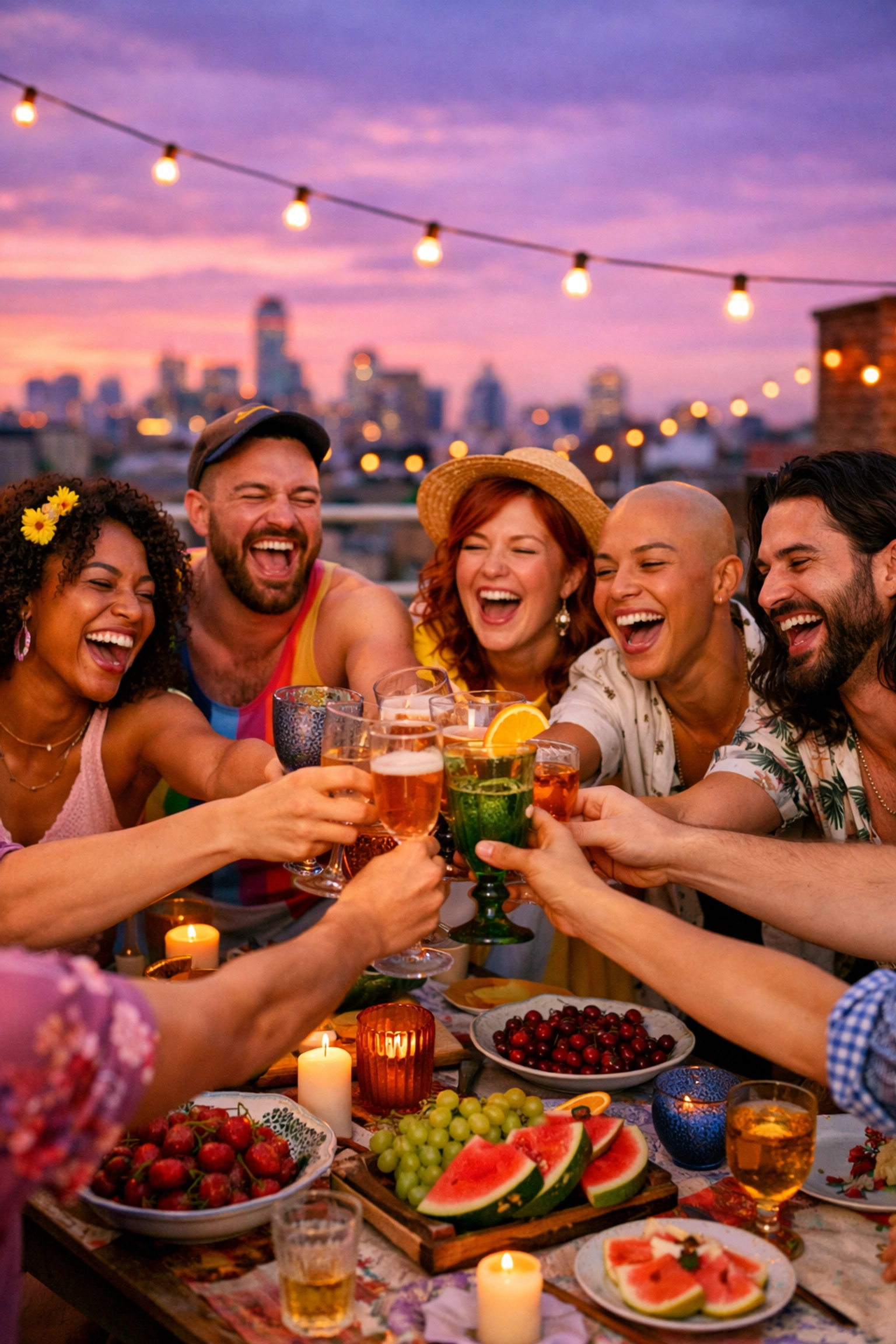
- The Formation of Chosen Family: For many, the "milestone" isn't marriage; it's the moment you realize you’ve built a support system of friends who love you more fiercely than your biological family ever could.
- Relationship Negotiation: In polyamorous or ethically non-monogamous (ENM) dynamics, milestones might include a successful "kitchen table" dinner where all partners feel seen and heard.
These moments are just as valid as a wedding, yet you won't find a Hallmark card for "Congrats on your third year of thriving in your chosen family." Maybe it's time we started making them.
Why MM Romance Themes Still Resonate
You might wonder why gay love stories and steamy MM romance remain so popular if we’re so busy "rejecting tradition." It’s because at the heart of every MM novel isn't just a wedding: it's the journey of being seen.
Whether it’s a forced proximity trope where two rivals have to share a bed or a slow burn that takes years to ignite, these stories prioritize the emotional connection over the legal status. Readers flock to popular gay books because they want to see the struggle and the triumph of queer intimacy. Even if the book ends in a traditional wedding, the "milestone" isn't the ceremony; it's the characters overcoming the internal and external hurdles of being queer in a world that wasn't built for them.

The 2026 Perspective: Choosing Your Own Adventure
As we navigate 2026, the queer community is leading the charge in "Relationship Anarchy." This doesn't mean chaos; it means looking at every component of a relationship and deciding if it works for you.
- Monogamy vs. Polyamory: We’re seeing a massive uptick in couples who choose "monogamish" or fully open structures. For them, a milestone might be a successful boundary-setting conversation rather than a diamond ring.
- Co-parenting and Platonic Partnerships: Who says you have to be in love to raise a child? Queer people have been co-parenting with friends for decades. In 2026, this is becoming a recognized and celebrated way to build a family.
- The "Living Apart Together" (LAT) Movement: Many queer couples are choosing to remain in a committed long-term relationship while maintaining separate residences. For them, "moving in together" isn't the goal: autonomy is.
Finding Yourself in Fiction
If you’re feeling the weight of societal expectations, sometimes the best remedy is to dive into a story that understands you. Whether you’re looking for gay historical romance that shows how our ancestors navigated these same pressures, or gay contemporary romance that mirrors our current world, there is a book for you.
Check out our e-book store to find narratives that challenge the status quo. From gay thriller plots where the stakes are life and death to emotional MM books that deal with the complexities of coming out, we curate stories that celebrate every stage of queer life.
The Verdict: Do They Matter?
So, do traditional milestones really matter for queer couples in 2026?
The answer is: Only if you want them to.
The beauty of being queer is the "Opt-Out" button. We have spent so long outside the box that we have the unique freedom to decide which parts of the box are worth keeping. If you want the big white wedding and the suburban house, go get it! It is a hard-won right. But if you want a life of travel, chosen family, and a series of deep, meaningful "non-traditional" commitments, that is just as much of a success story.
Your milestones aren't defined by a calendar or a social media trend. They are defined by the moments you felt most like yourself.
What do you think? Are you chasing the traditional milestones, or are you building something entirely new? Let us know in the comments or join the conversation on our questions page.
Stay Authentic. Read with Pride.
#QueerLife #LGBTQ2026 #MMRomance #ChosenFamily #RelationshipGoals #ReadWithPride #GayFiction #LifeMilestones #QueerLove
For more reflections on queer life and the best in LGBTQ+ fiction, visit readwithpride.com. Explore our blog for daily deep dives into relationships, tropes, and community.
Follow us for more updates:

Leave a Reply
You must be logged in to post a comment.