

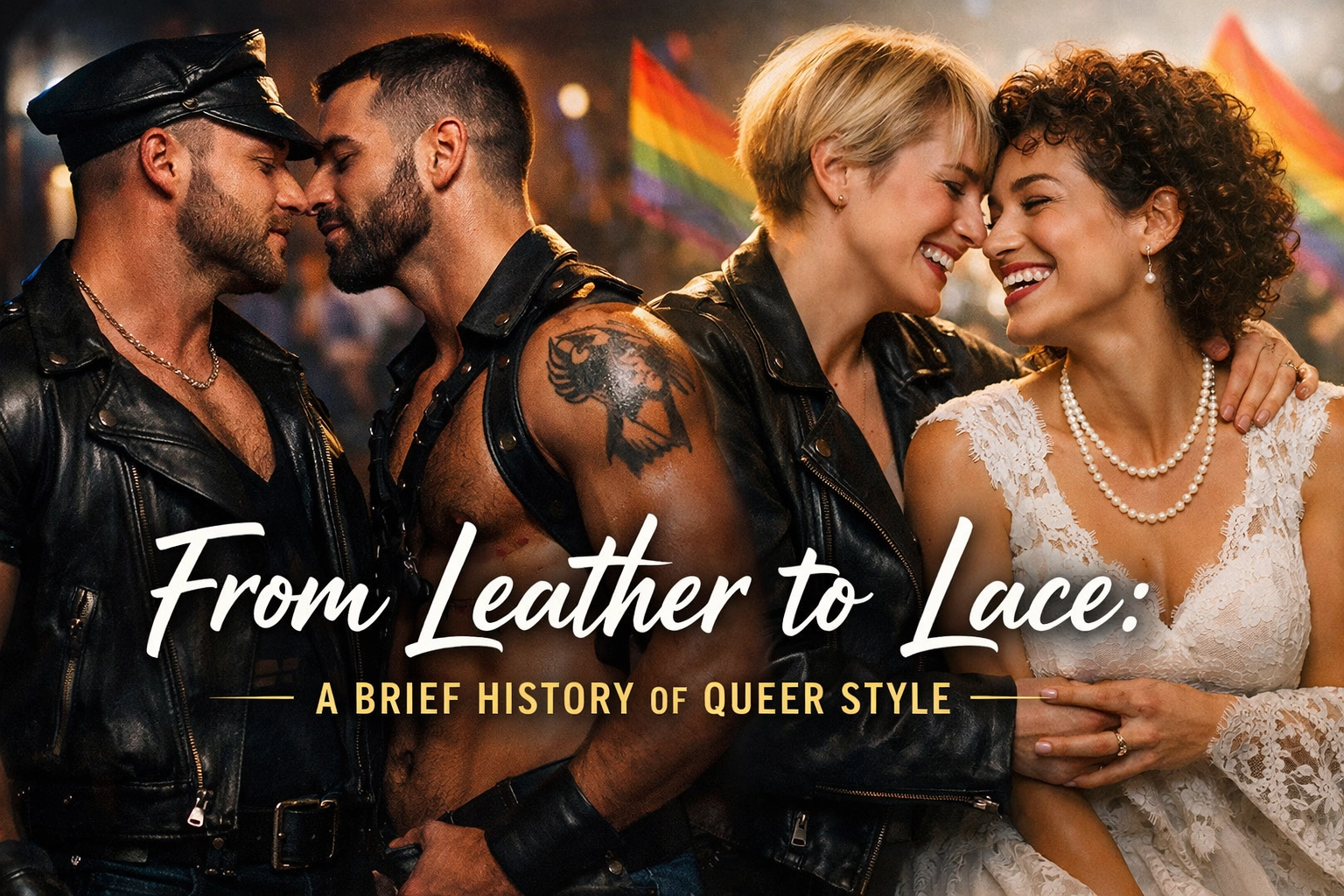
Fashion has always been more than just fabric and thread for the LGBTQ+ community: it's been a language, a rebellion, and a love letter to authenticity all at once. Long before we could openly hold hands in public or see ourselves reflected in mainstream media, queer folks were using clothing to signal identity, find community, and challenge the suffocating gender norms of their time.
If you're a fan of historical MM romance novels, you've probably noticed how authors use clothing details to hint at a character's identity or signal attraction in eras when being openly gay could cost you everything. That's not just creative license: it's rooted in real history. Let's take a walk through the wardrobe of queer resistance, from the first subtle signals to today's unapologetic self-expression.
The Early Days: Androgyny as Revolution (1910s-1930s)
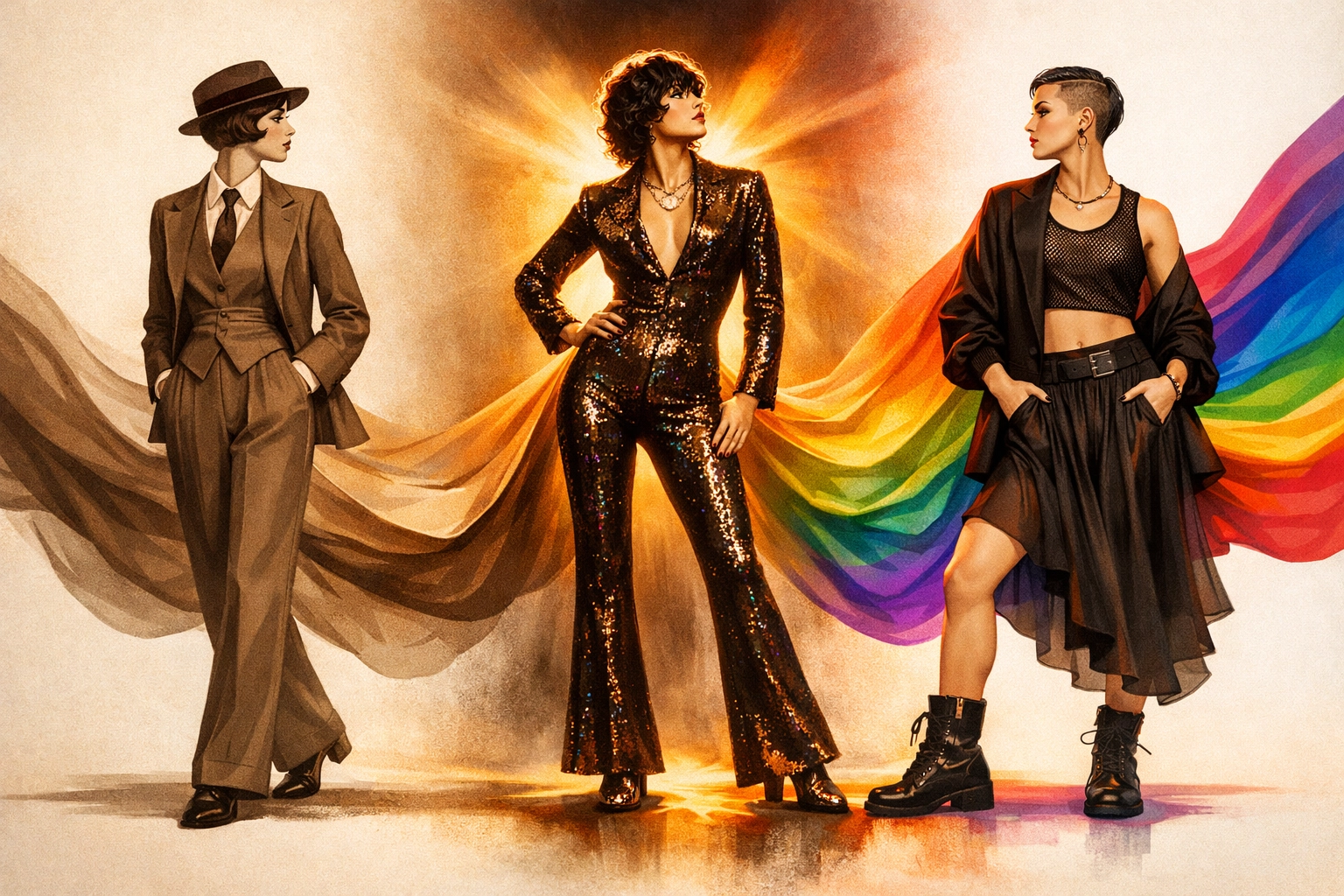
Picture this: It's the 1920s, and a woman walks down the street wearing trousers. Seems pretty unremarkable now, right? Back then, it was a full-on statement. Queer women in the 1910s through 1930s were the original gender-benders, incorporating traditionally masculine clothing into their wardrobes as both personal expression and coded communication.
Short haircuts, tailored suits, and yes, those scandalous trousers became ways for lesbian women to recognize each other and challenge the rigid femininity society demanded. This wasn't just about comfort: it was about carving out space to exist authentically in a world that wanted them invisible.
Interestingly, mainstream fashion eventually caught up. Coco Chanel, who drew heavy inspiration from menswear, helped popularize androgynous fashion for all women. What started as queer subculture gradually became "lesbian chic," laying groundwork that would echo through decades of fashion evolution.
Camp It Up: The Drag Revolution (1940s-1960s)
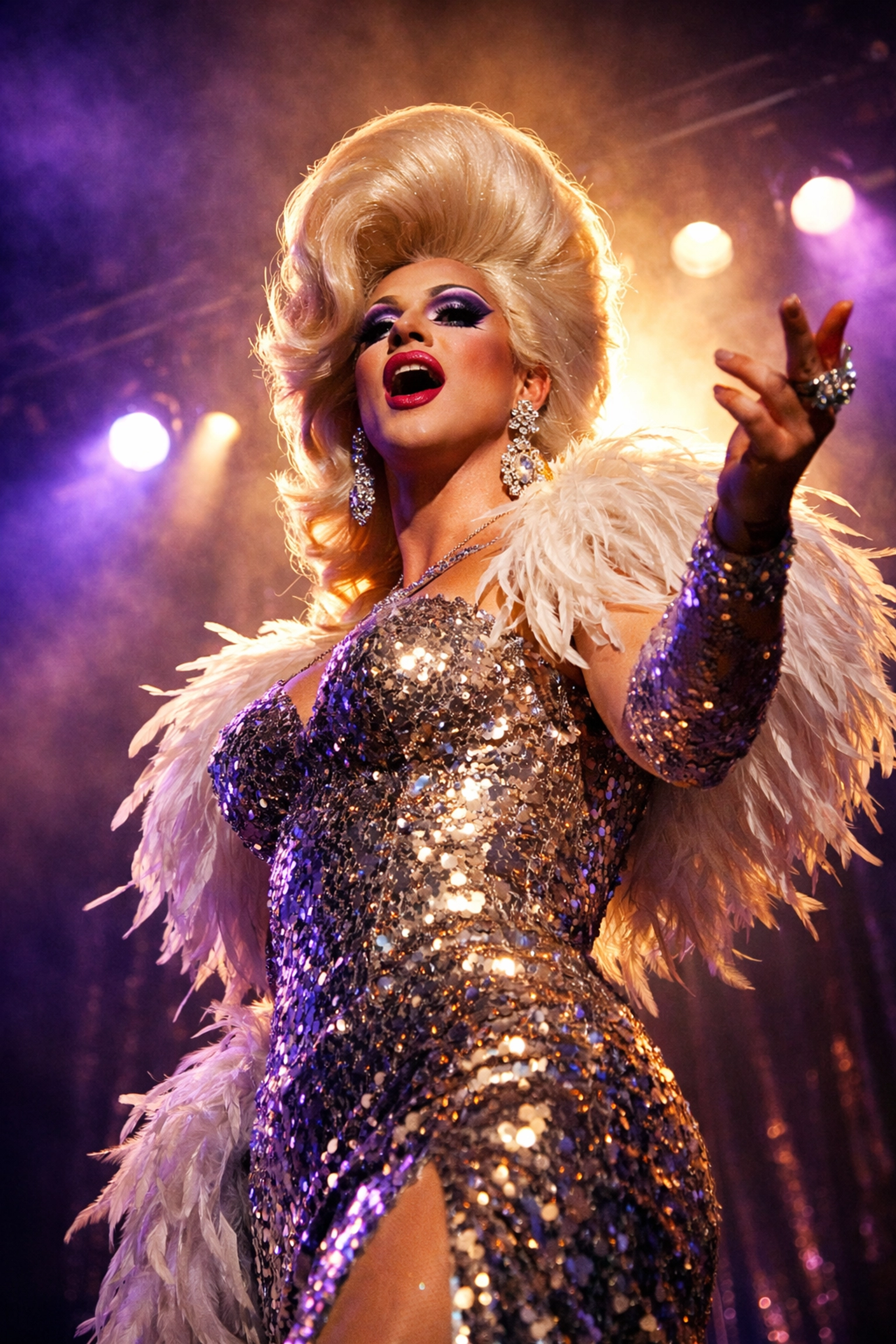
As post-war repression tightened its grip, queer communities got creative: and gloriously flamboyant. Enter: camp aesthetics. Gay men embraced bold, over-the-top fashion featuring sequined outfits, patterns that screamed for attention, and accessories that could probably be seen from space. If society wanted them hidden, they'd respond with visibility cranked to eleven.
Drag culture exploded in the 1950s and 1960s, with performers crafting hyper-feminine personas inspired by Hollywood glamour. These weren't just performances: they were acts of defiance, claiming space in a world that criminalized queer existence.
By 1971, The Cockettes, a psychedelic drag troupe from San Francisco, were performing at major venues, their flamboyant costumes and rebellious sexuality influencing icons like David Bowie and Elton John. Camp wasn't just an aesthetic choice; it was a middle finger wrapped in glitter and delivered with a wink.
High Fashion Gets Queer (1960s-1980s)
The fashion establishment started paying attention: and some designers began explicitly challenging gender boundaries. In 1966, Yves Saint Laurent introduced "le smoking," a tuxedo designed for women. It was sophisticated, powerful, and directly defied the prevailing rules against women wearing pants in formal settings.
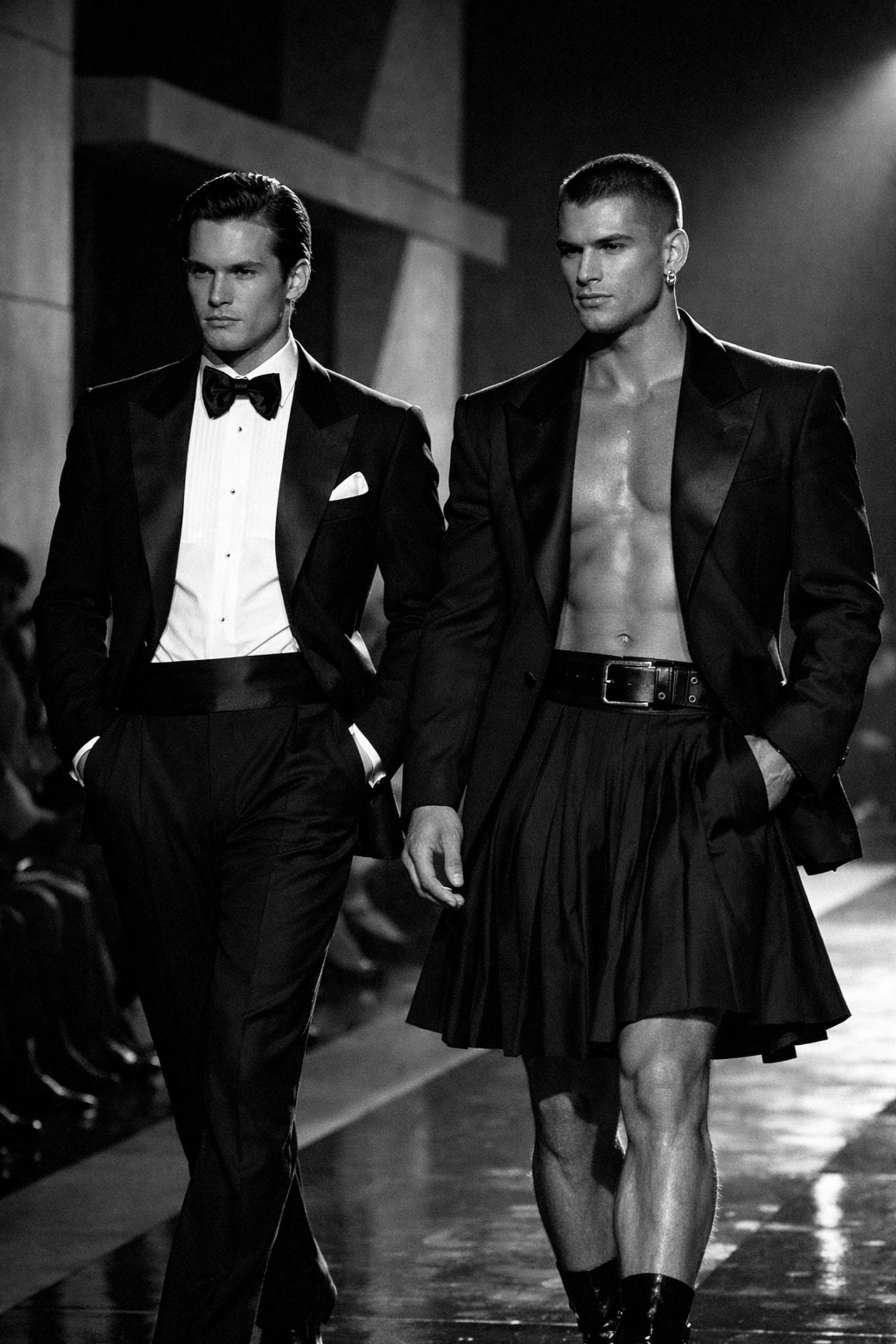
Jean Paul Gaultier took things further in 1984, introducing skirts for men and using the same models to showcase both "male" and "female" collections. The message? Gender is a construct, and fashion is playground equipment.
Calvin Klein's 1982 Times Square underwear billboard featuring a muscular man in tight white briefs was another watershed moment. It wasn't just selling underwear: it was publicly displaying masculine desire and presentation in a way that shifted the cultural conversation about male sexuality and beauty.
Meanwhile, in London, Leigh Bowery was turning his club Taboo (opened in 1985) into a gender-bending laboratory. His performances and costumes were so influential they'd later inspire designers like Alexander McQueen. Queer creativity wasn't just influencing fashion anymore: it was driving it.
Subcultures and Anti-Fashion (1970s-1990s)
Not everyone was interested in high fashion's version of queerness. The 1970s lesbian feminist movement originated an "anti-fashion" approach, intentionally rejecting societal beauty standards through androgynous outfits featuring bowties, suit jackets, and deliberately baggy silhouettes. This wasn't about looking good for the male gaze: it was about dismantling the very idea that women needed to.
The grunge movement of the 1990s, with its ripped jeans and flannel shirts, also became associated with queer subcultures. Club kids took the opposite approach, embracing over-the-top makeup and clothing that was deliberately excessive. Both extremes served the same purpose: subverting mainstream culture and traditional beauty standards on their own terms.
From Margin to Mainstream (2000s-Present)
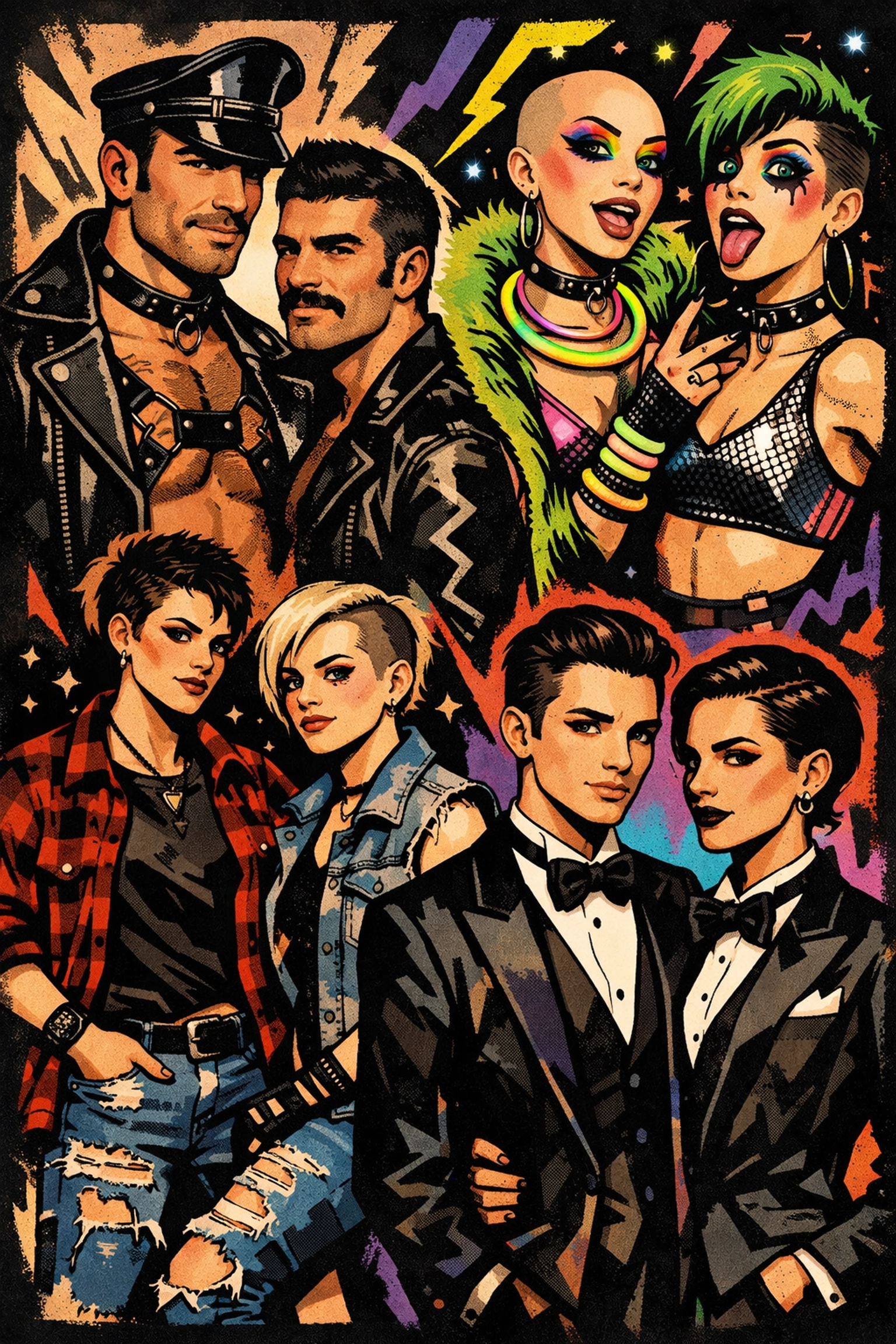
Fast forward to the 21st century, and queer fashion has achieved something remarkable: mainstream visibility without necessarily losing its edge. A 2006 Viktor & Rolf show featured four couples of men in tuxedos waltzing together, a moment that felt both celebratory and poignant in its significance.
Today's queer fashion landscape is gloriously diverse. From leather daddies to soft boys in pastels, from drag queens serving high glamour to non-binary folks mixing masculine and feminine elements with abandon: there's no single "queer aesthetic" anymore. And that's exactly the point.
Fashion brands are finally catching up, with gender-fluid collections becoming more common and queer designers getting the recognition they've always deserved. The handkerchief codes that once signaled specific desires and roles have given way to a more open, fluid approach to self-expression.
The MM Romance Connection
For those of us who love MM romance books and gay romance novels, this history isn't just interesting: it's essential context. When you read historical MM romance set in the 1920s, and a character notices another man's subtle fashion choices, you're witnessing coded communication that really happened. When a contemporary gay romance features a character whose style defies traditional masculinity, that's built on decades of queer folks using fashion as rebellion.
The best LGBTQ+ fiction understands that clothing choices aren't superficial: they're deeply tied to identity, community, and resistance. Whether you're reading a period piece about secret love affairs or a contemporary romance about someone discovering their authentic style, fashion tells part of the story.
The Legacy Continues
Queer fashion history isn't just about looking back: it's about understanding how past generations created the space for today's freedom of expression. Every time someone rocks a look that challenges gender norms, they're building on over a century of queer people who refused to be invisible.
From leather to lace, from coded signals to bold statements, queer style has consistently pushed boundaries and influenced mainstream fashion in the process. The next time you see someone whose style doesn't fit neat categories, remember: they're part of a long, proud tradition of using fashion to say, "This is who I am, and I'm not asking permission."
Want to explore more queer stories and history? Check out our collection of LGBTQ+ books that celebrate authentic queer experiences across every genre and era.
Follow Read with Pride for more queer history, romance recommendations, and community:
#QueerFashion #LGBTQHistory #MMRomance #ReadWithPride #GayRomance #HistoricalRomance #QueerCulture #LGBTQBooks #GayFiction #MMRomanceBooks #QueerStyle #FashionHistory #LGBTQPride #GayBooks #QueerReads #MMNovels #HistoricalMMRomance #GayLiterature #LGBTQReading #AuthenticQueerStories

Leave a Reply
You must be logged in to post a comment.