

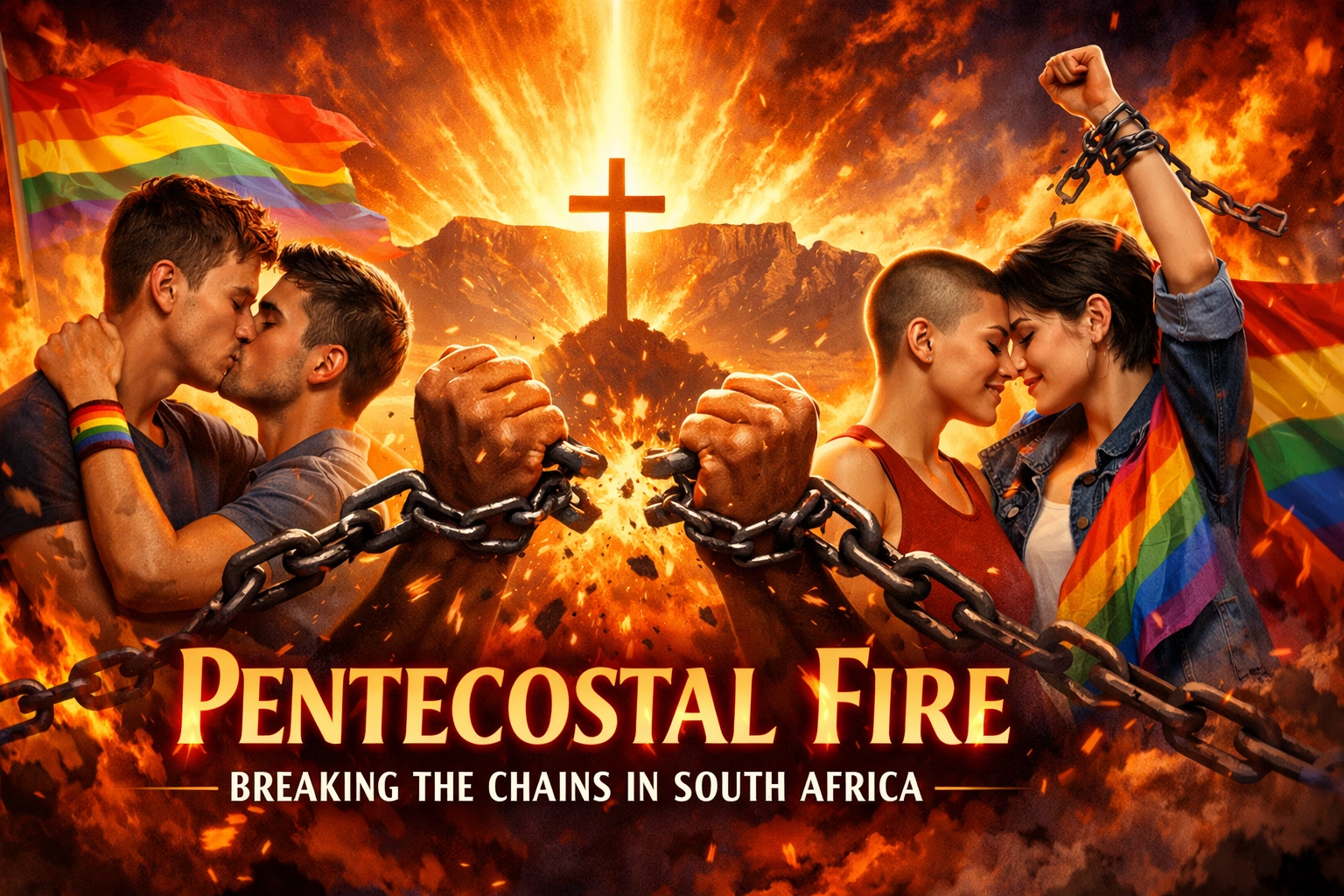
There's something about fire that's both destructive and purifying. In South Africa's Pentecostal churches, fire is everywhere: the fire of the Holy Spirit, the fire of conviction, the fire that's supposed to burn away sin. But for queer South Africans raised in these spaces, that fire has often felt more like a weapon than a blessing.
Let me tell you about breaking free from chains you never asked to wear.
The Promise and the Prison
Pentecostalism swept through South Africa like wildfire itself, offering spiritual freedom to communities that had been marginalized by apartheid. With at least ten million South Africans identifying with some form of Pentecostalism today, it's become one of the most significant religious movements in the country. The appeal was powerful: direct access to God, lay leadership, communities where the poor and excluded could rise to positions of authority.
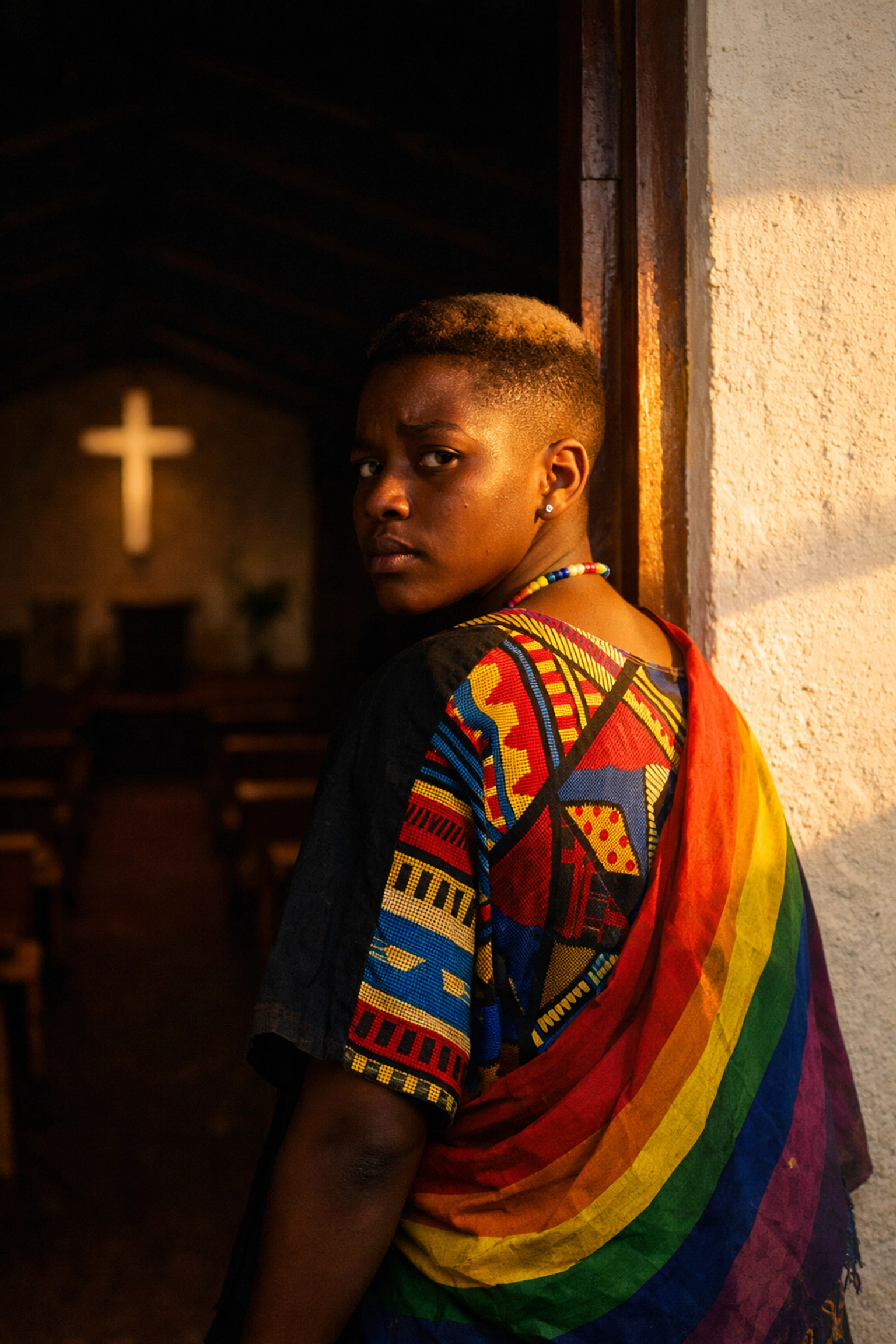
But here's the thing about movements that promise liberation: they sometimes create new prisons while tearing down old ones.
For LGBTQ+ South Africans, the Pentecostal church became a complicated space. On one hand, it offered community, purpose, and spiritual connection. On the other, it demanded you leave parts of yourself at the door. And not just any parts: the parts that define who you love, who you are, who you're meant to become.
The Weight of "Deliverance"
In Pentecostal spaces, being queer isn't just seen as a sin: it's often labeled as demonic possession requiring "deliverance." Prayer sessions designed to cast out the "spirit of homosexuality." Fasting to break "sexual bondage." Testimonies from people claiming they've been "set free" from same-sex attraction, held up as proof that change is possible, necessary, and godly.
The psychological weight is crushing. You're taught that your attractions, your identity, your very essence is not just wrong but evil. That the fire of the Holy Spirit should burn it away. That if you just prayed harder, fasted longer, believed more intensely, you could be "normal."
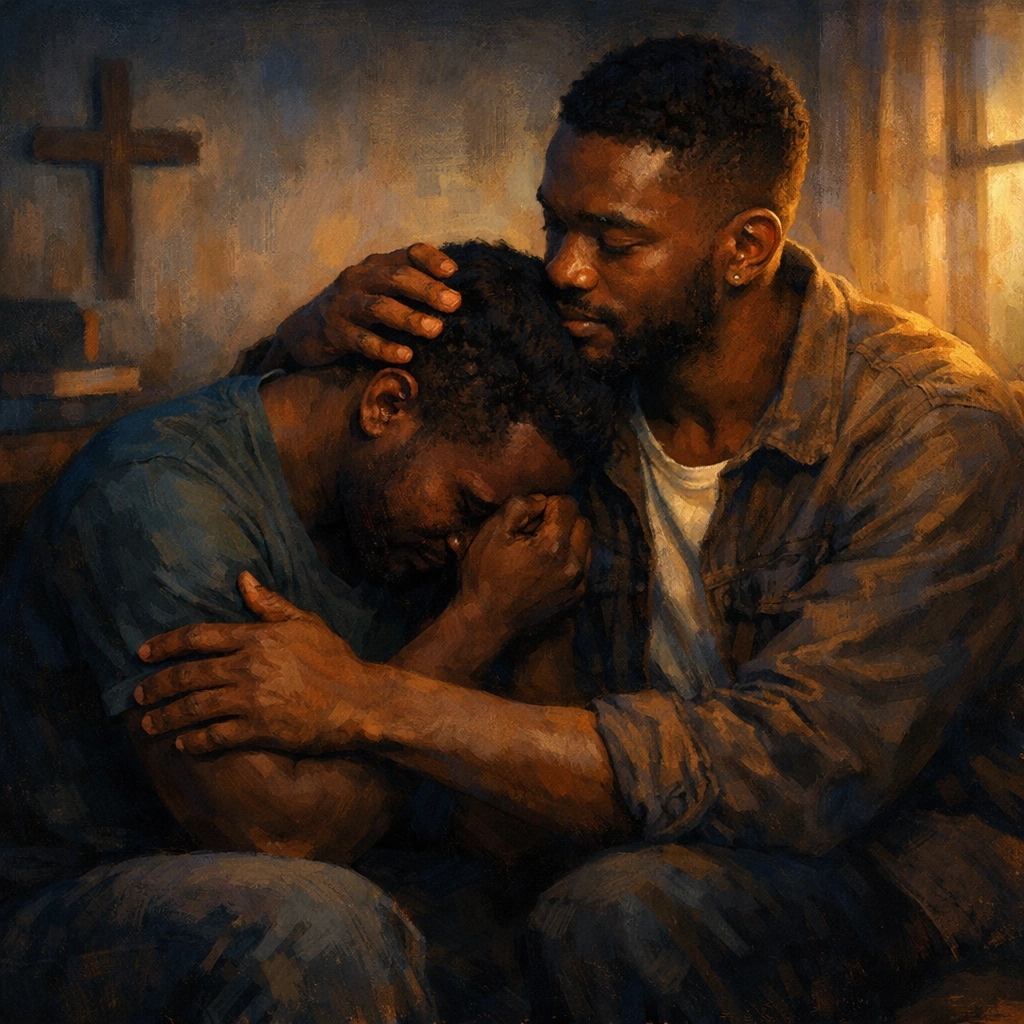
But here's what they don't tell you: you can't pray away who you are. And trying to will break something inside you that's much harder to fix than they claim your queerness is.
The Moment of Breaking
For many queer South Africans in Pentecostal churches, there's a moment: a specific, crystalline moment: when something shifts. Maybe it's the hundredth time you've heard homosexuality condemned from the pulpit. Maybe it's watching another queer friend attempt suicide after a failed deliverance session. Maybe it's falling in love with someone and realizing that what you feel is nothing like the twisted, demonic thing they've described.
That moment is terrifying. Because acknowledging it means choosing between your faith community and your authentic self. It means potentially losing your family, your support system, your entire social world. In South Africa, where community ties run deep and family connections are everything, the cost of coming out can feel impossible to bear.
But staying costs something too. It costs your mental health, your self-worth, your ability to form genuine relationships. It costs you the chance to experience love without shame, to live without constantly monitoring and policing yourself, to breathe without feeling like you're committing a sin with every exhale.
The Path to Freedom
Breaking free from Pentecostal restrictions isn't a single dramatic moment: it's a journey. And like any journey, it's messy, nonlinear, and deeply personal.
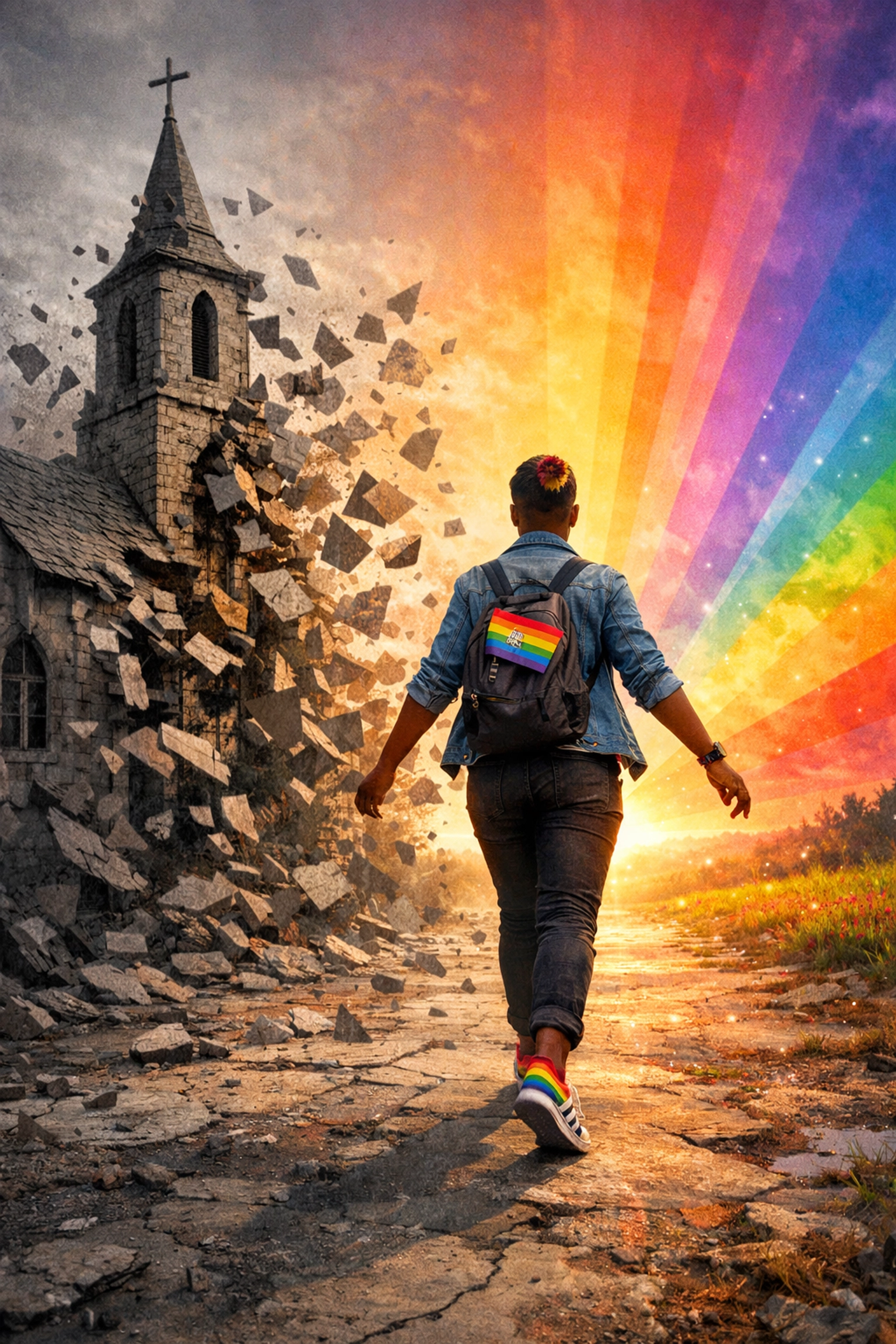
Some people leave their churches entirely, finding spiritual homes in affirming congregations or exploring different faith traditions. Others maintain their Pentecostal faith while seeking out progressive communities that reconcile queerness and Christianity. Still others walk away from organized religion altogether, finding spirituality in community, nature, or simply in the radical act of self-acceptance.
There's no right way to do it. The path that leads to freedom looks different for everyone.
What matters is finding your authentic self underneath the layers of shame, fear, and internalized homophobia. It's learning to distinguish between genuine spirituality and religious trauma. It's discovering that you can be queer and whole, queer and spiritual, queer and worthy: all at the same time.
The South African Context
South Africa's relationship with LGBTQ+ rights is complicated. The country has one of the most progressive constitutions in the world, with same-sex marriage legal since 2006. Yet homophobia remains prevalent, particularly in religious communities and rural areas. The disconnect between legal protection and social acceptance creates a unique tension that queer South Africans navigate daily.
For those leaving Pentecostal spaces, this tension is even more pronounced. You might have constitutional rights, but your family still won't speak to you. You might be legally protected from discrimination, but your former church community spreads rumors and prays for your "return to righteousness."
The journey requires finding new communities: and thankfully, they exist. LGBTQ+ advocacy groups, affirming faith communities, and queer spaces throughout South African cities offer refuge and connection. Online communities connect queer South Africans across the country, sharing stories, resources, and support.
Reclaiming Your Story
Here's the powerful truth they don't want you to know: you get to write your own story. Not your pastor's version, not your family's version, not the version that fits neatly into Pentecostal doctrine. Your version. The authentic one.
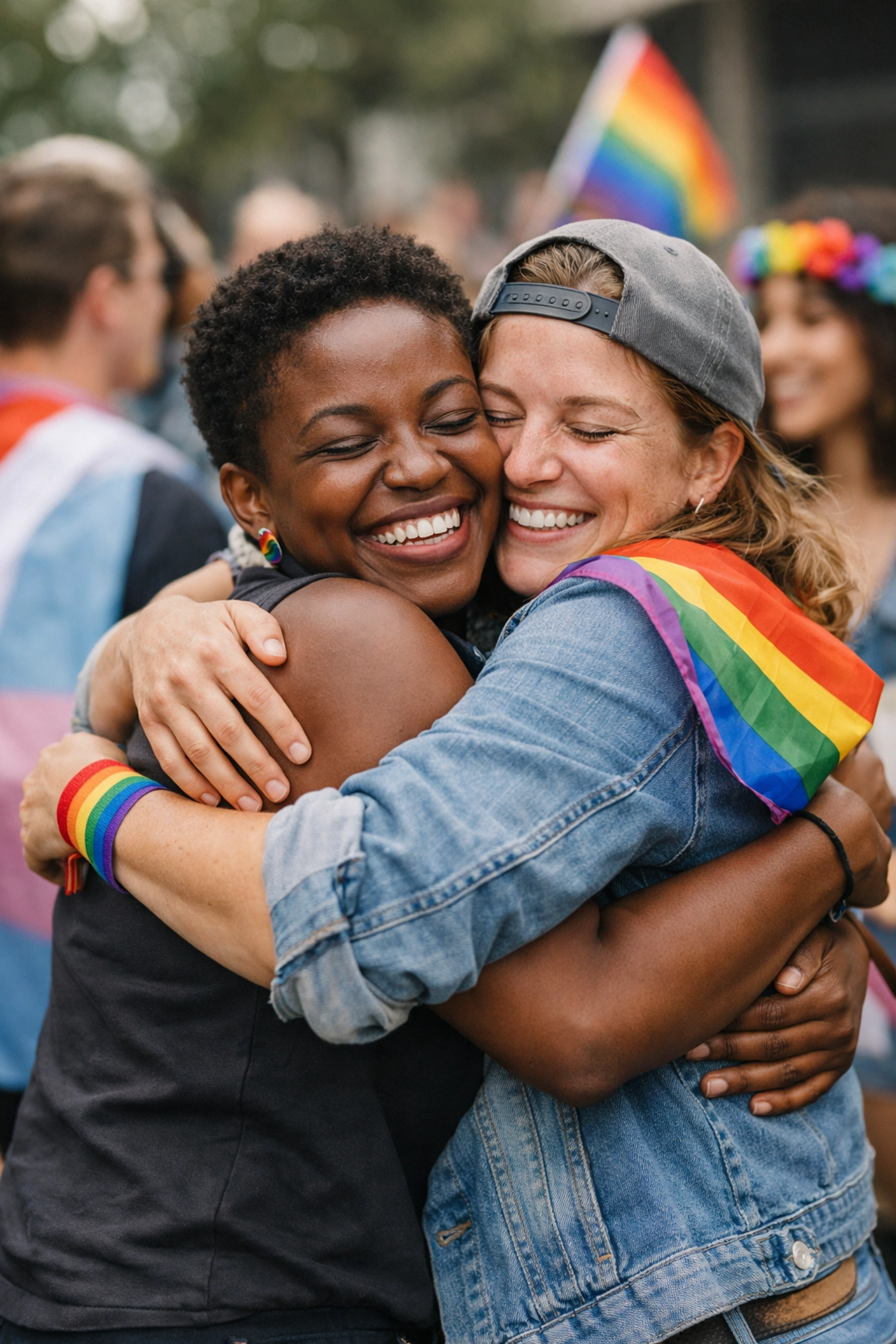
That story might include faith or it might not. It might include forgiveness for those who hurt you, or it might include setting firm boundaries. It might be a story of reconciliation with family or chosen family becoming your everything. It might be loud and proud or quiet and personal.
At Readwithpride.com, we believe in the power of authentic LGBTQ+ representation: stories that reflect the messy, complicated, beautiful reality of queer lives. Stories about breaking free, finding love, building community, and discovering that who you are isn't something that needs fixing.
The Fire That Liberates
Remember that fire we talked about at the beginning? Maybe the real fire isn't the one that burns away who you are. Maybe it's the one that burns away the chains: the shame, the fear, the lies about your worth.
That's the fire of liberation. And it's already burning inside you.
Breaking free from Pentecostal restrictions in South Africa isn't easy. It requires courage, resilience, and often the support of communities that truly see you. But on the other side of that breaking is something profound: the freedom to be yourself, fully and unapologetically.
The chains are real, but so is the possibility of breaking them. Your story doesn't end with restriction and shame. It begins when you choose yourself.
And that, friend, is the most powerful testimony of all.
Connect with us: Facebook | Instagram | X/Twitter
Explore our collection: Browse LGBTQ+ Books
#ReadWithPride #LGBTQRights #QueerSouthAfrica #PentecostalTrauma #ReligiousTrauma #QueerFaith #LGBTQFiction #AuthenticRepresentation #MMRomance #GayRomanceBooks #QueerStories #LGBTQCommunity #SouthAfricanLGBTQ #BreakingFree #ComingOut #GayBooks #LGBTQEbooks #QueerLiterature #SelfAcceptance #PrideMatters

Leave a Reply
You must be logged in to post a comment.