

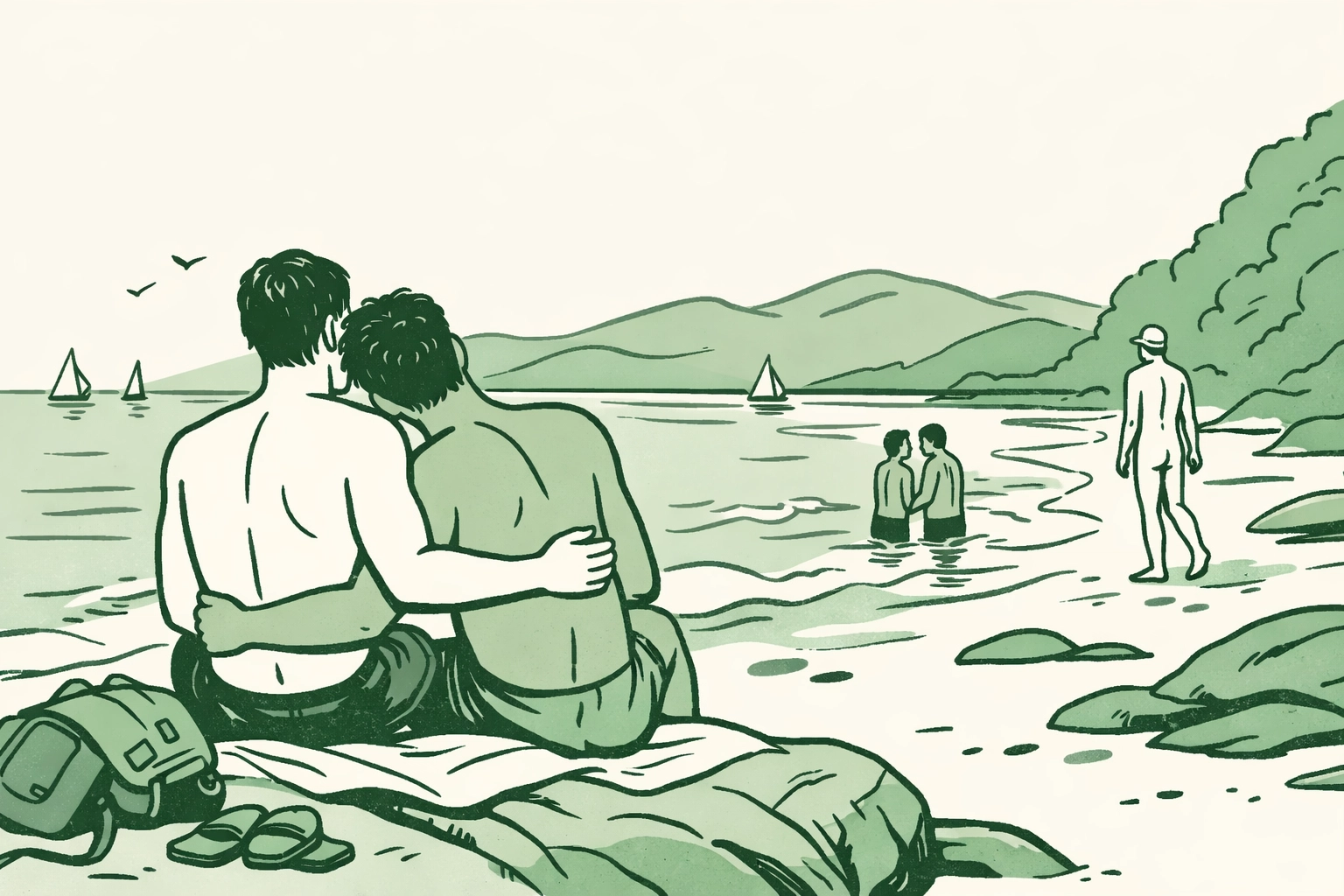
Where Freedom Meets the Pacific
There's something magical about descending those 483 wooden steps down the cliffs of Vancouver's Point Grey. Each step takes you further from the city's expectations, its dress codes, its judgments. By the time your feet hit the sand at Wreck Beach, you've left more than your clothes behind: you've shed the weight of conformity itself.
Canada's only legally designated clothing-optional beach isn't just a place to sunbathe naked. It's a seven-kilometer stretch of resistance, community, and radical acceptance where bodies of every shape, size, age, and gender come together in their most vulnerable state and find, paradoxically, their greatest strength.
The Body Politics of Bare Skin
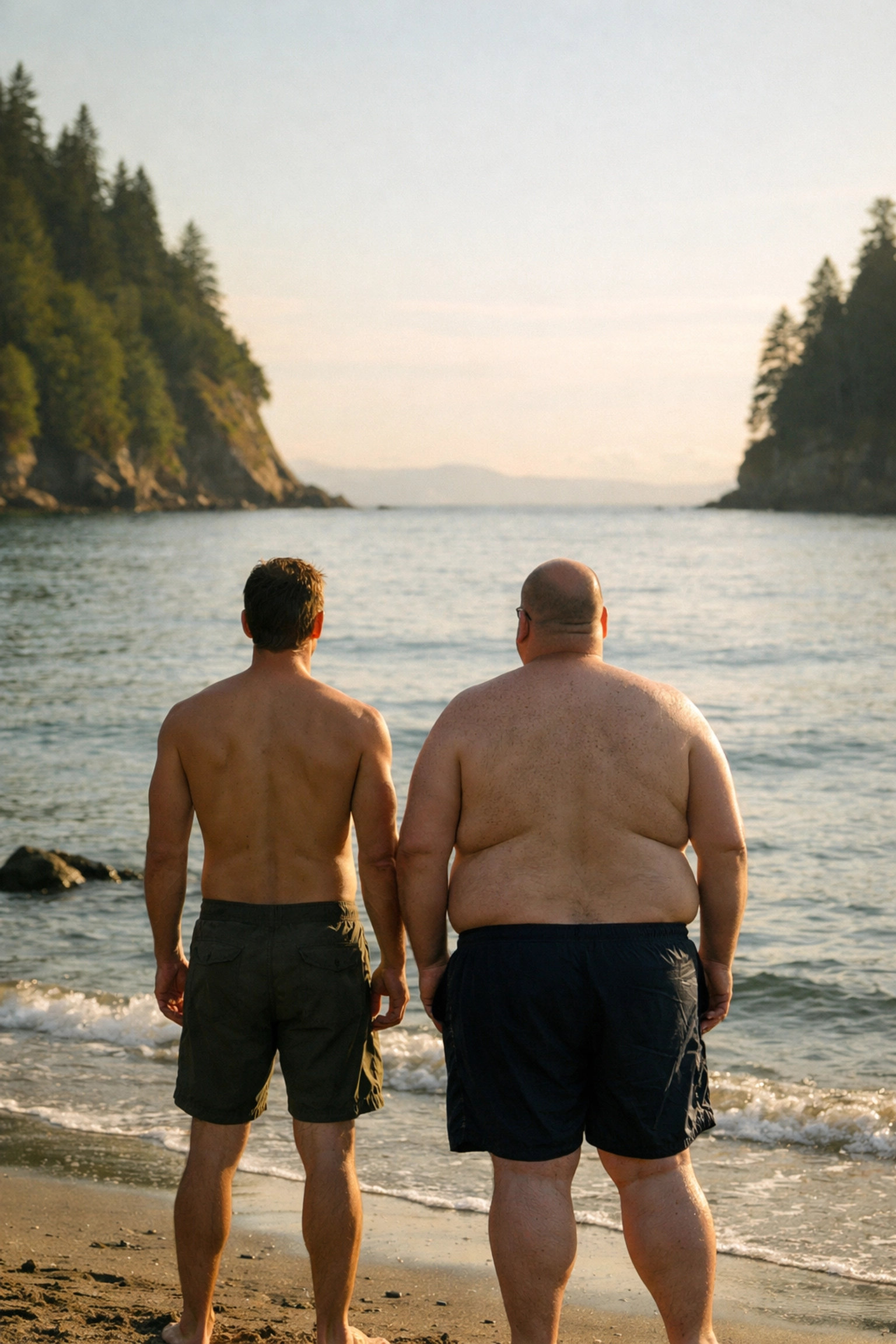
Wreck Beach doesn't discriminate. Whether you're twenty-two with abs that could cut glass or seventy-two with skin that tells stories of decades lived fully, you belong here. The beach has become a sanctuary for the LGBTQ+ community precisely because it offers what society often denies us: the freedom to exist without apology.
On any given summer day, you'll find gay couples walking hand-in-hand along the shoreline, lesbian friends sharing laughter over driftwood fires, and queer folks of all identities simply being: no performance required, no armor necessary. The unofficial motto seems to be: "Your body is yours, and it's perfect as it is."
This philosophy resonates deeply with the themes explored in The Private Self, which honors the journey of self-acceptance at your own pace. Wreck Beach accelerates that journey by showing you, in flesh and bone, that beauty exists in authenticity, not conformity.
A Community That Polices Itself
What makes Wreck Beach truly special isn't just its legal status: achieved in 1991 after decades of activism: but its self-governing community. The regulars here have created something rare: a space that protects itself through collective care rather than external authority.
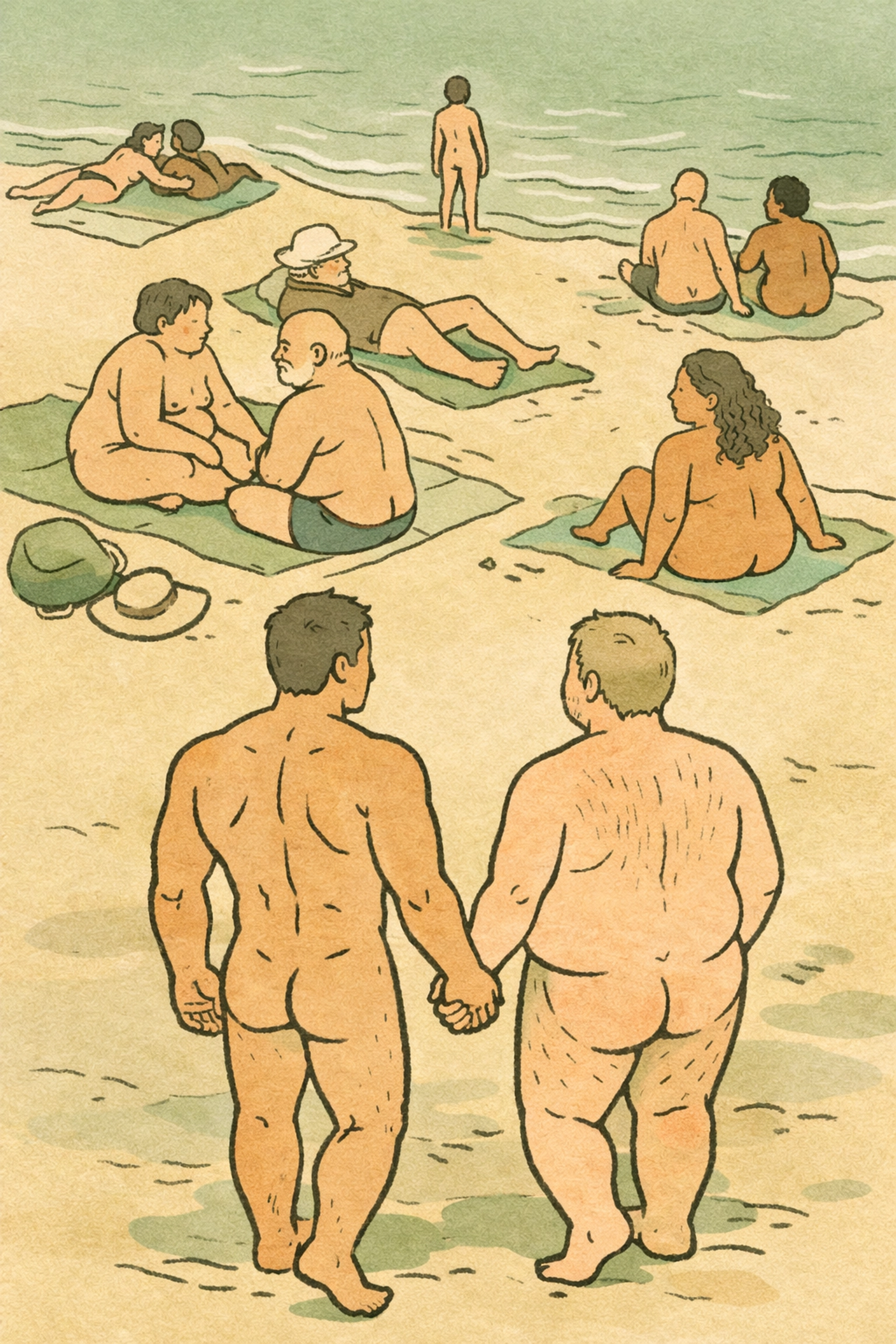
The Wreck Beach Preservation Society, established in 1977, continues to organize everything from environmental cleanups to the legendary Bare Buns Run. This isn't passive nudism; it's active community building. When problems arise: unwanted photographers, aggressive behavior, dealers crossing lines: the community addresses them directly, maintaining the safe, inclusive atmosphere that makes Wreck Beach a refuge.
For many LGBTQ+ visitors, this self-governance mirrors the chosen families and protective communities we've built throughout queer history. It's reminds us that safety often comes from within our communities, not from institutions that historically excluded us.
The Geography of Liberation
Location matters. Wreck Beach sits at the western edge of the University of British Columbia campus, hemmed in by cliffs and forest that create natural privacy. This geography has protected it since the 1930s, when people first discovered this hidden haven.
The descent down those hundreds of stairs serves as a ritual transition. You're not just walking to a beach; you're entering a different world with different rules. The climb back up? That's the price of freedom: a small physical challenge that ensures this space remains dedicated to those who truly want to be here.
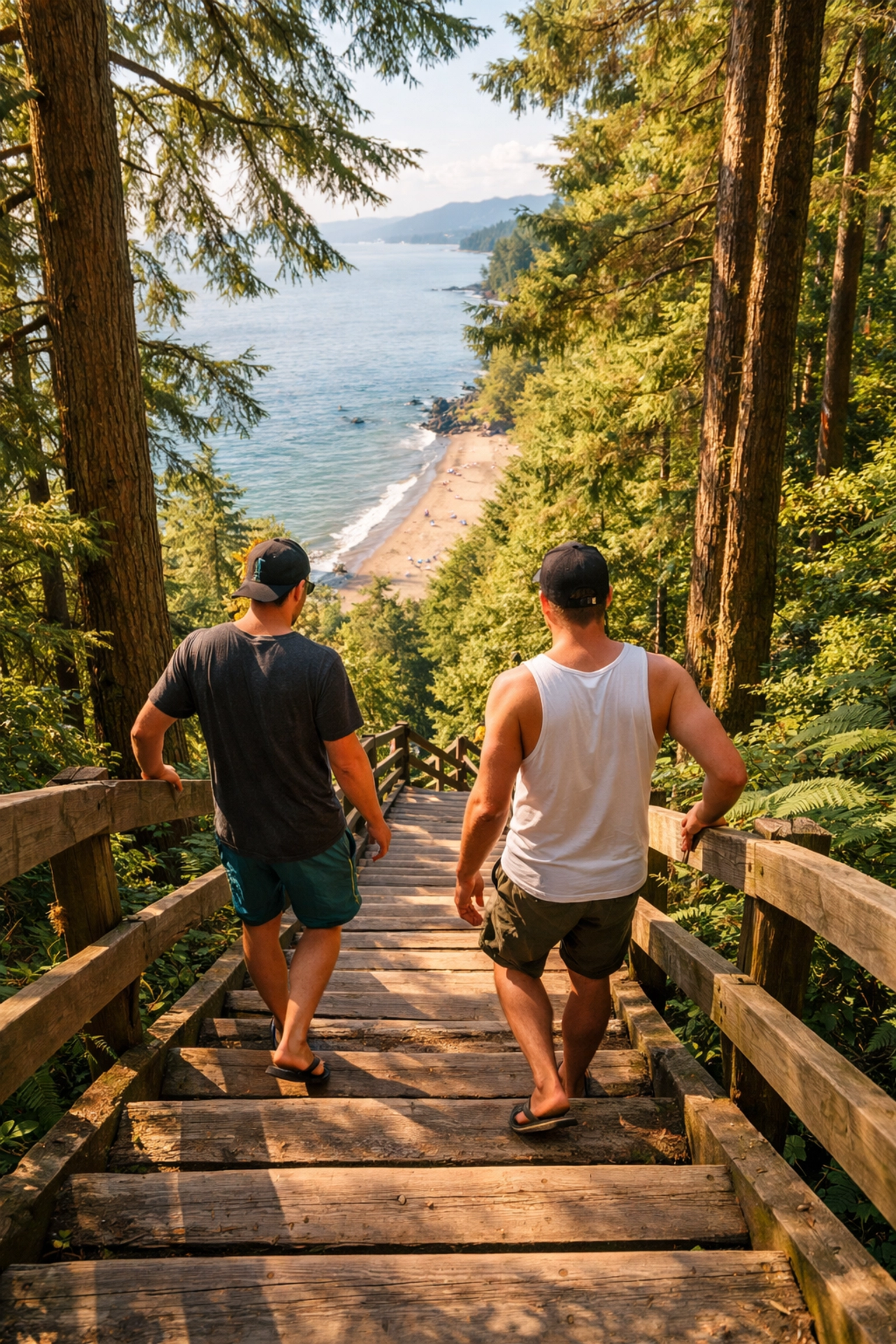
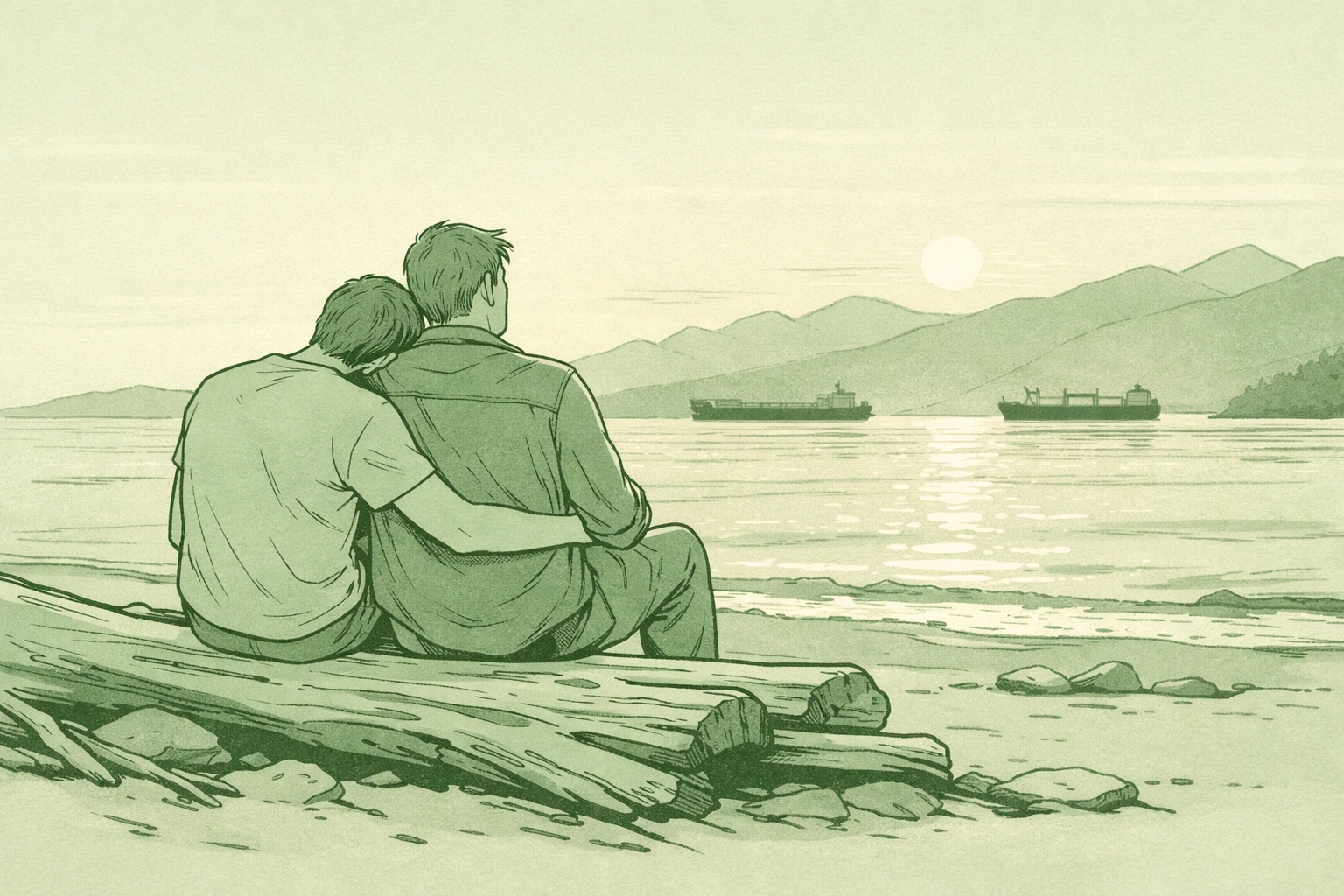
The beach faces northwest, catching late afternoon sun that turns the water golden. Mountains rise across the bay. Freighters drift past on their way to port. It's stunningly beautiful, and your appreciation of that beauty isn't diminished by swim trunks or bikinis: it's enhanced by the feeling of sun and wind on every inch of skin.
The Vendors of Wreck Beach
Part of Wreck Beach's charm is its informal economy. Walk the beach and you'll encounter vendors selling fresh fruit, grilled food, homemade jewelry, and cold drinks. These aren't corporate concessions; they're individuals who've become part of the beach's fabric, often as naked as their customers.
There's something wonderfully equalizing about buying a mango smoothie from someone whose only uniform is their birthday suit. Commerce stripped of pretense, transactions at their most human level. The LGBTQ+ community has always understood the power of creating alternative economies and spaces outside mainstream structures: Wreck Beach embodies that principle perfectly.
Bodies as Landscapes
Here's what Wreck Beach teaches you: bodies aren't problems to be solved. They're landscapes to be inhabited, celebrated, lived in fully. The gay community, in particular, has complicated relationships with body image: gym culture, apps that reduce us to statistics, the pressure to perform masculinity or femininity in specific ways.
At Wreck Beach, you see bodies doing what bodies do: swimming, walking, resting, playing volleyball, napping in the sun. You see scars and stretch marks. You see evidence of surgeries, transitions, aging, living. And you see that none of it diminishes anyone's right to take up space, to feel pleasure, to belong.
This celebration of diverse bodies echoes the themes in Beyond Boundaries, which explores how we can embrace all aspects of ourselves, including those society tells us to hide. At Wreck Beach, hiding becomes impossible: and in that impossibility, we find freedom.
The Politics of a Nude-In
Wreck Beach's legal status didn't happen by accident. In 1970, the counter-culture newspaper Georgia Straight organized a "nude-in" that drew 3,000 people. The action led to the beach being designated a "no-harm, no-foul zone," effectively decriminalizing nudity there.
This history matters. It reminds us that our freedoms: as LGBTQ+ people, as nudists, as anyone existing outside mainstream norms: are won through visibility and collective action. Every time we descend those stairs, we're participating in an ongoing act of resistance against body shame, sexual repression, and conformity.
Sunset at the Edge of Everything
As afternoon shifts to evening at Wreck Beach, the crowd typically gathers near the main access stairs. Someone might have a guitar. There's usually drumming. People share food, stories, joints, laughter. The sun sinks toward the Pacific, painting everything in shades of amber and rose.
In these moments, you understand what community really means. Not people who look alike or love alike or believe alike, but people who've chosen to show up, literally and figuratively: without armor, creating temporary family from shared vulnerability.
For those exploring themes of connection, nature, and authentic self-expression, The Nudist Travel Guide to Europe extends this philosophy across the Atlantic, offering pathways to similar experiences of liberation.
Your Invitation to Freedom
Wreck Beach isn't for everyone, and that's okay. It requires a willingness to be seen, to see others, to sit with whatever discomfort arises when we strip away the costumes we use to navigate the world. But for those ready to take that plunge, literally and metaphorically: it offers something increasingly rare: a space where you can be completely, unapologetically yourself.
The 483 stairs back up might leave you breathless, but you'll carry something new with you: the memory of freedom, the knowledge that spaces of radical acceptance exist, and maybe: just maybe: a little more love for the body you live in.
Visit Read with Pride for more LGBTQ+ stories celebrating authenticity, freedom, and the courage to be yourself. Explore our complete collection at dickfergusonwriter.com.
Follow us on social media:
Instagram: @dickfergusonwriter
X/Twitter: @DickFergus94902
Facebook: Dick Ferguson Writer
Website: www.readwithpride.com
#WreckBeach #NudistTravel #LGBTQTravel #BodyPositivity #GayTravel #QueerTravel #ClothingOptional #VancouverBC #MMRomance #ReadWithPride #GayRomance #QueerFiction #LGBTQBooks #GayBooks #InclusiveSpaces #NaturalLiving #BeachLife #CanadianPride #GayLiterature #QueerCommunity

Leave a Reply
You must be logged in to post a comment.