

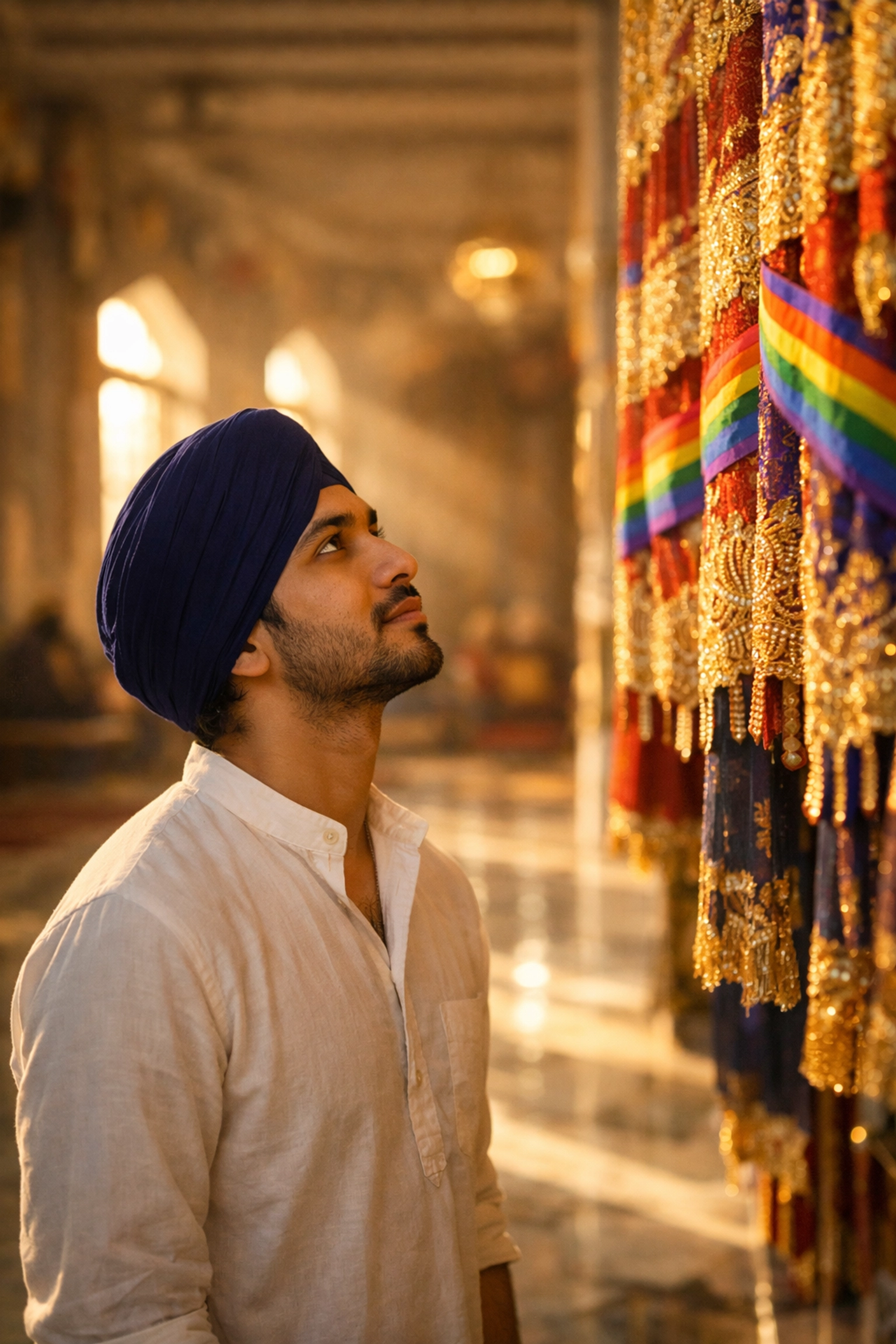
The first time Aman saw rainbow ribbons woven into the fabric decorations at the gurdwara, he thought he was imagining things. The colors caught the late afternoon light streaming through the high windows, casting fractals of hope across the marble floor where he'd knelt since childhood.
It was Pride Month in Birmingham, and the city was draped in its annual celebration of love in all its forms. But here? In the place where tradition felt as solid as the walls themselves? Aman hadn't expected the two worlds to collide.
When Two Identities Meet
Growing up Sikh and gay in the UK means navigating two communities that sometimes feel like they're speaking different languages. For Aman, twenty-six and still figuring out how to be both without apologizing for either, the gurdwara represented comfort and complication in equal measure. The langar hall where everyone ate together regardless of status, that felt right. The prayers that centered on universal love and equality, those resonated deeply. But the whispers when he brought up Pride at a family gathering? Those stung.
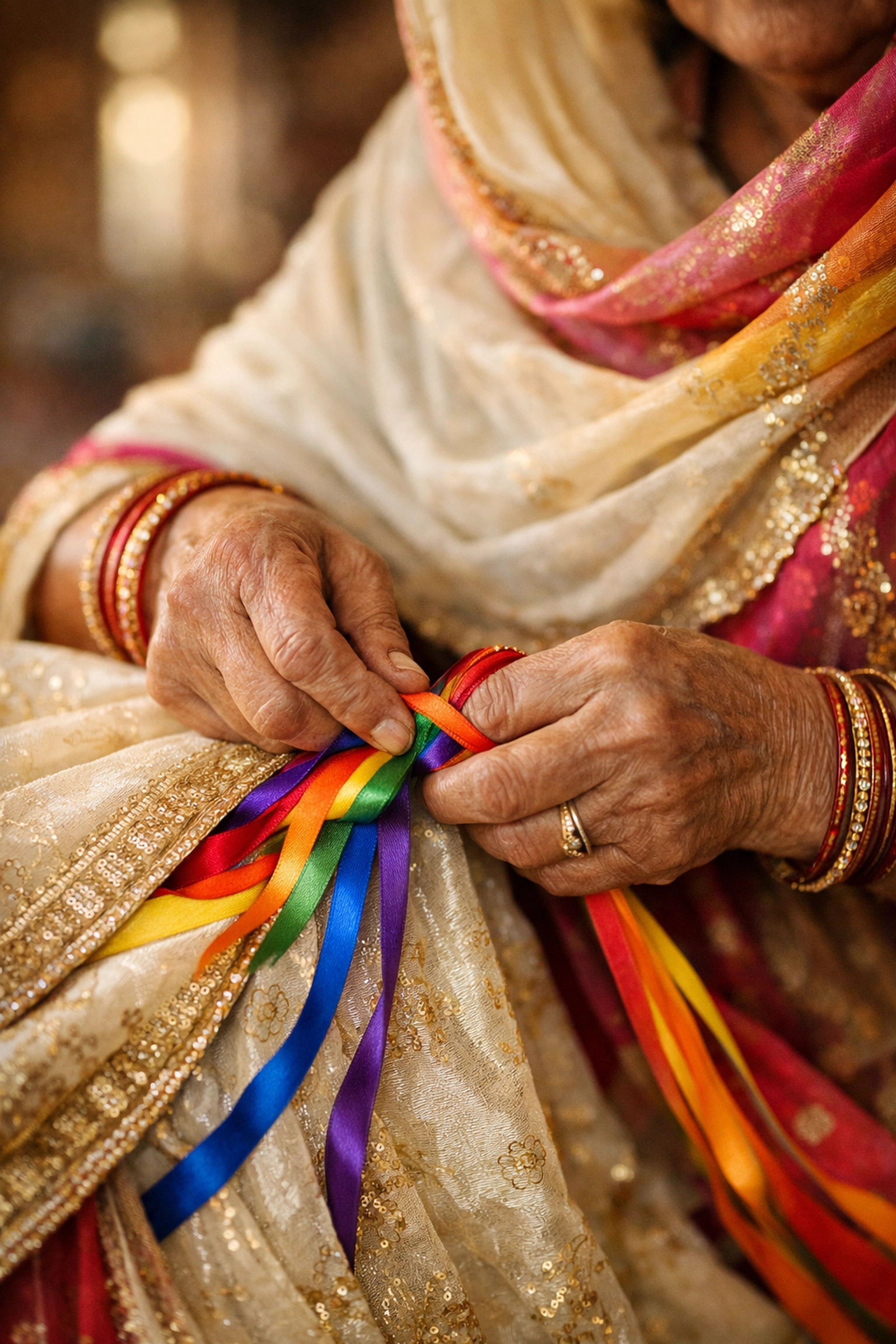
The rainbow ribbons weren't an official decoration. They'd been carefully woven into the fabric draping by someone's gentle, deliberate hands. Aman later learned it was Biji Harpreet, the seventy-two-year-old grandmother everyone called "Biji" who'd been coming to this temple since it opened in 1983.
"My grandson lives in San Diego," she told Aman later, pressing a warm samosa into his hand. "He wears a rainbow turban during Pride. He says it's his way of showing the world that being Sikh means standing up for everyone's dignity. So I thought, why should he be the only one?"
The Weight of a Turban, The Lightness of Truth
Sikh values have always centered on equality and justice. The langar tradition, where everyone sits on the floor together to eat, regardless of caste, wealth, or status, emerged from a radical commitment to breaking down barriers. The turban itself represents dignity, spirituality, and the courage to stand out. So when Jiwandeep Kohli in San Diego designed his rainbow turban, he wasn't departing from Sikh values, he was embodying them.
For Aman, seeing those ribbons felt like permission he didn't know he was waiting for. Permission to be wholly himself in a space that had always felt like home, even when parts of him stayed hidden.
"I spent years thinking I had to choose," Aman admitted to Biji Harpreet over chai after the service. "Like I could be Sikh or I could be gay, but not both. Like my identity was this either-or equation."
Biji laughed, the sound rich and warm. "Beta, Waheguru made you exactly as you are. The Guru Granth Sahib teaches us that the divine light exists in everyone. Not everyone except you. Everyone."
Finding Community in Unexpected Places
The UK Sikh community, like any faith community, isn't a monolith. There are progressive gurdwaras where discussions about LGBTQ+ inclusion happen openly, and there are more conservative spaces where those conversations are still forming. Aman's gurdwara in Birmingham fell somewhere in between, not hostile, but not explicitly welcoming either. The rainbow ribbons changed something subtle but significant.
Over the following weeks, other small gestures appeared. A poster for a Sikh LGBTQ+ support group went up on the community board. During a kirtan service, the granthi spoke about Guru Nanak's teachings on universal love, and for the first time, Aman felt like the message included him specifically, not just theoretically.
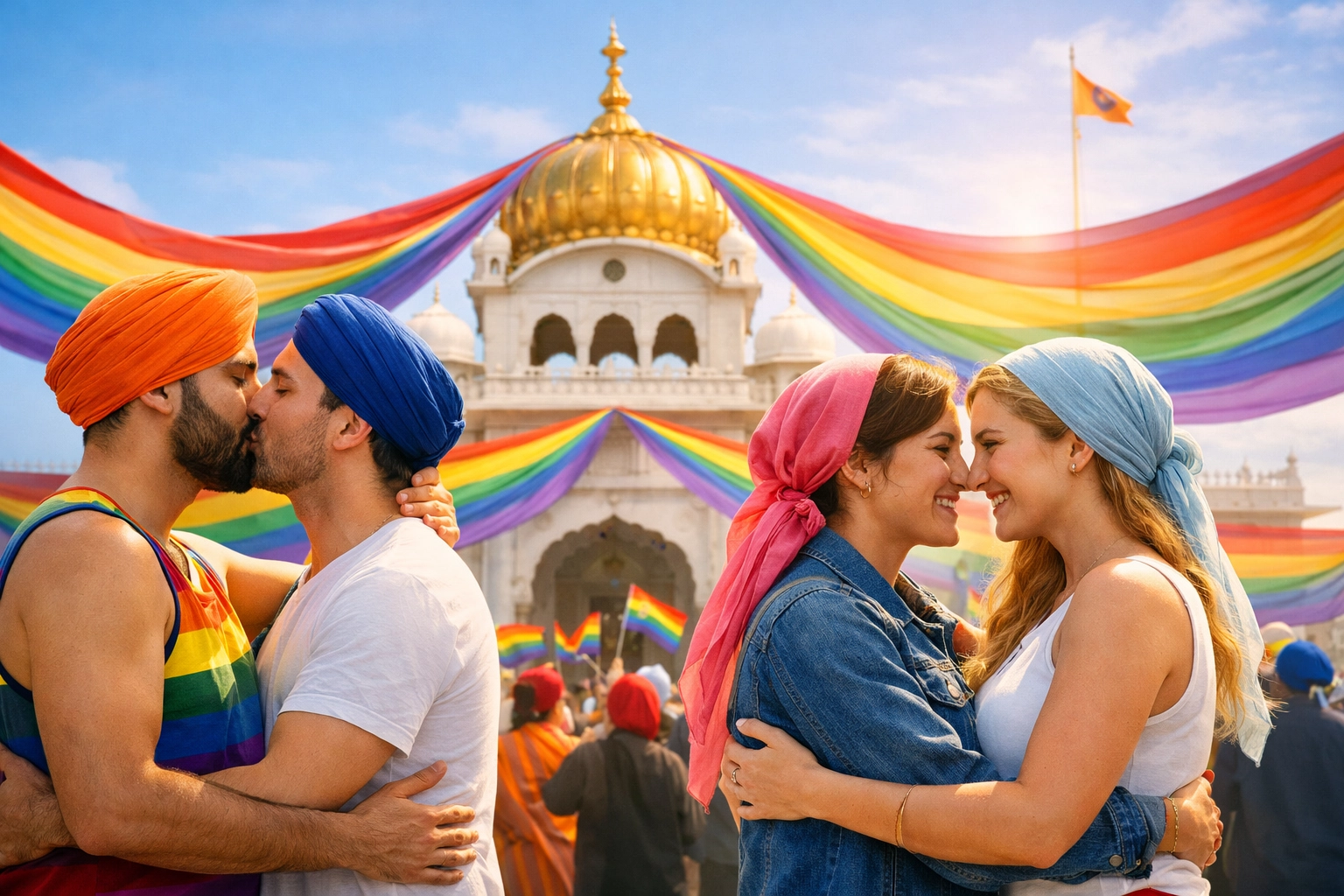
When Pride month arrived, three members of the youth group showed up to the Birmingham Pride parade wearing rainbow turbans inspired by Jiwandeep Kohli's design. Aman watched from the sidelines that first year, too nervous to join. But seeing those turbans, symbols of his faith waving proudly in a sea of rainbow flags, made his chest tight with something that felt like belonging.
The Bridging of Worlds
What makes authentic queer narratives so powerful is their specificity. This isn't a generic "coming out" story or a vague tale of acceptance. It's about the particular intersection of being Sikh and queer in Birmingham in 2026, about rainbow ribbons in a gurdwara and what they represent to someone who thought those worlds couldn't coexist.
The LGBTQ+ publishing world, including platforms like Read with Pride, has increasingly recognized the importance of these intersectional stories. MM romance and gay fiction that explores characters with rich cultural backgrounds, complex faith journeys, and authentic family dynamics resonates because it reflects the beautiful complexity of real lives.
By the following Pride season, Aman had joined the gurdwara's youth committee. They organized a talk about Sikhism and LGBTQ+ inclusion, inviting speakers from the Sikh LGBTQ+ community to share their experiences. The langar hall was packed. Some attendees came with questions, others with concerns, and many with open hearts ready to learn.
Biji Harpreet sat in the front row, her dupatta decorated with, you guessed it, rainbow ribbons.
The Symbolism of Celebration
Ribbons in Sikh tradition often represent celebration, marking joyous occasions like weddings and festivals. The rainbow ribbons at the gurdwara became their own kind of celebration, of identity, of inclusion, of the courage it takes to show up as your whole self.
For Aman, they represented something even more personal: the end of compartmentalization. He'd spent years being "Sikh Aman" at the temple and "Gay Aman" in other spaces, never letting the two fully meet. The ribbons said what he'd been afraid to say: these identities don't compete. They complement. They complete.
Moving Forward with Pride
Today, Aman volunteers with a UK-based organization that supports LGBTQ+ Sikhs and their families. He speaks at universities and community centers about the intersection of faith and identity. And yes, he wears a rainbow turban to Pride now, the fabric carefully pleated each morning with the same reverence his grandfather taught him.
The rainbow ribbons still appear at the Birmingham gurdwara during Pride month, now officially part of the decoration committee's plans. They're a small gesture, maybe, but small gestures create space for bigger conversations. And bigger conversations create space for people like Aman to exist fully, authentically, without apology.
The stories we tell about faith and queerness matter. They matter because young Sikh kids who are just beginning to understand their sexuality need to see that these identities can coexist beautifully. They matter because parents navigating their child's coming out need models of acceptance rooted in religious values. They matter because the LGBTQ+ community is gloriously diverse, and that diversity deserves to be celebrated in all its forms.
Whether you're looking for MM romance books that explore cultural identity, gay fiction that centers faith journeys, or simply stories that affirm the beautiful complexity of queer lives, authentic narratives make all the difference. At readwithpride.com, we believe every love story deserves to be told: and read: with pride.
Follow our journey:
- Facebook: @ReadWithPride
- Instagram: @read.withpride
- Twitter/X: @Read_With_Pride
#ReadWithPride #LGBTQFiction #MMRomance #GayRomance #QueerNarratives #SikhPride #IntersectionalQueerness #LGBTQBooks #GayFiction #PrideMonth2026 #AuthenticStories #QueerRepresentation #MMRomanceBooks #GayLoveStories #LGBTQLiterature #QueerFaith #InclusiveCommunities #GayRomanceBooks #LGBTQReading #DiverseVoices

Leave a Reply
You must be logged in to post a comment.