

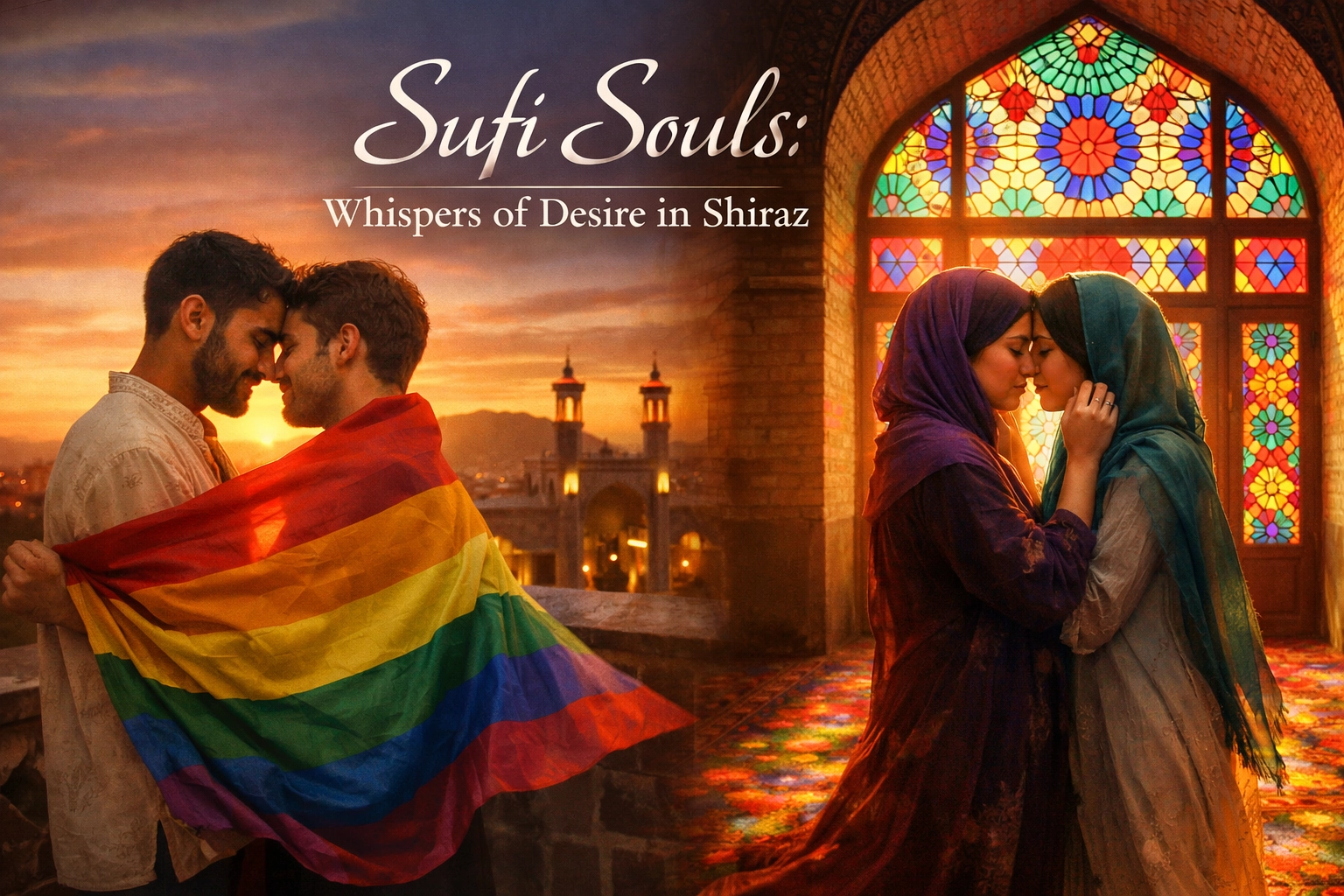
There's something achingly familiar about Sufi poetry if you've ever loved someone you couldn't have. That slow burn of longing. The way desire becomes its own kind of prayer. The beloved who remains just out of reach, transforming every moment into exquisite torture.
Welcome to Shiraz, where poets spent lifetimes perfecting the art of yearning, and where the line between sacred and profane love blurred into something beautifully ambiguous.
The Poetry of What Cannot Be Said
In 14th century Shiraz, Hafez Shirazi wove ghazals that still make Iranians weep six centuries later. His verses pulse through Persian homes like heartbeats, quoted as proverbs, whispered as wisdom. But here's the thing about Hafez, his poetry operates on multiple levels simultaneously. The beloved he addresses? Could be God. Could be a person. Could be wine. Could be freedom itself.

This wasn't evasion. It was genius.
When you live in a world where certain desires can't be spoken aloud, you learn the language of metaphor. You become fluent in longing. The tavern becomes a sanctuary. Wine transforms into ecstasy. The beloved's face reflects divine mystery. And suddenly, you're writing some of the most influential poetry in human history, verses so rich with possibility that readers across centuries find their own truths reflected back.
Sound familiar, MM romance readers? We know something about reading between the lines. About finding ourselves in stories that weren't explicitly written for us. About the power of subtext and the electricity of what remains unspoken.
The Tradition of Divine Longing
Before Hafez, there was Baba Kuhi of Shiraz (980-1050), who retreated to a mountain cave north of the city, spending years in contemplative prayer. Legend says anyone who kept vigil at his tomb for forty consecutive nights would receive the gift of poetry, immortality, and their heart's desire.
Hafez himself supposedly took up that challenge as a young baker, keeping watch night after night. But somewhere in those forty nights, his desire shifted, from earthly love to something that transcended the physical world entirely.
Or did it?
The beauty of Sufi mysticism is that it refuses neat categories. The ecstatic union with the divine that poets like Hafez describe mirrors the language of human passion so precisely that separation becomes impossible. When Hafez writes of the beloved's lips or the intoxication of presence, he's describing spiritual rapture, but he's using the vocabulary of desire we all recognize.

Saadi Shirazi (1210-1291), another Shiraz literary giant, distinguished himself by writing for ordinary people rather than elite audiences. His Gulistan and Bustan offered hope and education to the masses, packaging wisdom in accessible language. But even Saadi's more straightforward prose carries undercurrents of longing that resonate with anyone who's ever had to hide part of themselves.
Then there's Ruzbihan Baqli, the mystic whose tomb rests in central Shiraz, whose language was described as transcendent, "like a rose that dissolves when grasped." That image captures something essential about queer desire in hostile spaces: the way love becomes vapor, there and not-there, real but ungraspable, existing in the space between what can be shown and what must remain hidden.
Slow Burn as Spiritual Practice
If you're a fan of slow burn MM romance, you already understand what made Shiraz's poets legendary. That exquisite tension. The way anticipation becomes its own form of pleasure. How a single meaningful glance can sustain you for chapters.
The best slow burn romance mirrors Sufi mysticism's approach to desire, it makes the yearning itself sacred. Every stolen moment matters. Every brush of hands carries weight. The journey toward union becomes as significant as the destination, maybe more so.
Think about your favorite slow burn MM romance books. The ones where two characters circle each other for what feels like forever. Where the author makes you ache for them to finally admit what everyone can see. Where that first real kiss arrives like revelation.
That's the Sufi tradition alive in contemporary fiction.

When Hafez writes about the beloved's absence as a form of presence, he's describing what slow burn romance does so well, making desire visible through its very denial. The space between "I want you" and "I can have you" becomes charged with meaning. Every moment of restraint amplifies what comes next.
For queer readers, there's additional resonance. How many of us have lived our own slow burns? Recognizing attraction we couldn't act on. Falling for friends we couldn't tell. Learning to read subtle signals because explicit ones weren't safe. The slow burn isn't just a trope, it's lived experience translated into narrative.
Finding Your Own Shiraz
You don't have to travel to Iran (and shouldn't, honestly, it's extremely dangerous for LGBTQ+ people) to experience what made Shiraz's poets extraordinary. You can find that same tradition of longing, that same exquisite tension, in contemporary MM romance novels.
Look for books tagged "slow burn" or "friends to lovers" where the emotional journey matters as much as the physical one. Stories where desire builds like pressure, where every interaction adds another layer, where the characters' internal struggles mirror their external circumstances.
Read with Pride offers exactly these kinds of stories, gay romance books that honor the complexity of desire, that understand how yearning itself can be beautiful, that know the difference between slow burn and just… slow.
The best gay fiction operates on multiple levels, just like Hafez's poetry. You can read for the romance, sure. But there's also something deeper happening: reflections on identity, community, belonging, the courage it takes to love authentically in a world that doesn't always make space for that love.
The Language of Longing
What Shiraz's poets understood: what the best MM romance books understand: is that longing has its own language. A vocabulary of glances and silences. A grammar of what gets said versus what gets meant. A syntax of touch that says more than words ever could.
When you read Hafez now, even in translation, you can feel him reaching across centuries with that fundamental human truth: desire transforms us. The beloved: whoever or whatever they represent: becomes the mirror in which we finally see ourselves clearly.
That's what we're doing when we seek out LGBTQ+ fiction and queer fiction that speaks to our experiences. We're looking for mirrors. For reflections of our own desires, our own journeys, our own slow burns toward self-acceptance and love.
The Modern Mystics
Today's gay authors writing MM romance are, in their own way, continuing the tradition Shiraz's poets established. They're creating spaces where desire doesn't have to be coded, where the beloved can be explicitly queer, where the slow burn leads somewhere tangible and real.
But they're also maintaining that sense of poetry in prose. The best MM contemporary romance captures that same quality of yearning made visible. The ache of wanting. The electricity of almost. The way love: when it finally arrives: feels like coming home to yourself.
If you're searching for slow burn MM romance recommendations, start with stories that understand pacing isn't just about structure: it's about emotional truth. Look for books where characters have reasons for their hesitation beyond plot contrivance. Where the journey toward love involves genuine transformation. Where every step forward matters because every step forward costs something.
That's the legacy of Shiraz. That's what Hafez and Saadi and Baba Kuhi understood. That's what makes both Sufi mysticism and slow burn romance so devastatingly effective: they both recognize that desire deferred becomes desire distilled. Longing intensified. Love made somehow more real through its very impossibility-made-possible.
Discover stories of longing, desire, and love that burns slow and deep at Readwithpride.com. Follow us on Facebook, Instagram, and X/Twitter for daily recommendations.
#MMRomance #SlowBurnRomance #GayRomanceBooks #LGBTQFiction #QueerFiction #ReadWithPride #GayBooks #MMBooks #SufiPoetry #GayLoveStories #LGBTQRomance #2026GayBooks #MMNovels #QueerReads #GayLiterature #PersianPoetry #LongingAndDesire

Leave a Reply
You must be logged in to post a comment.