

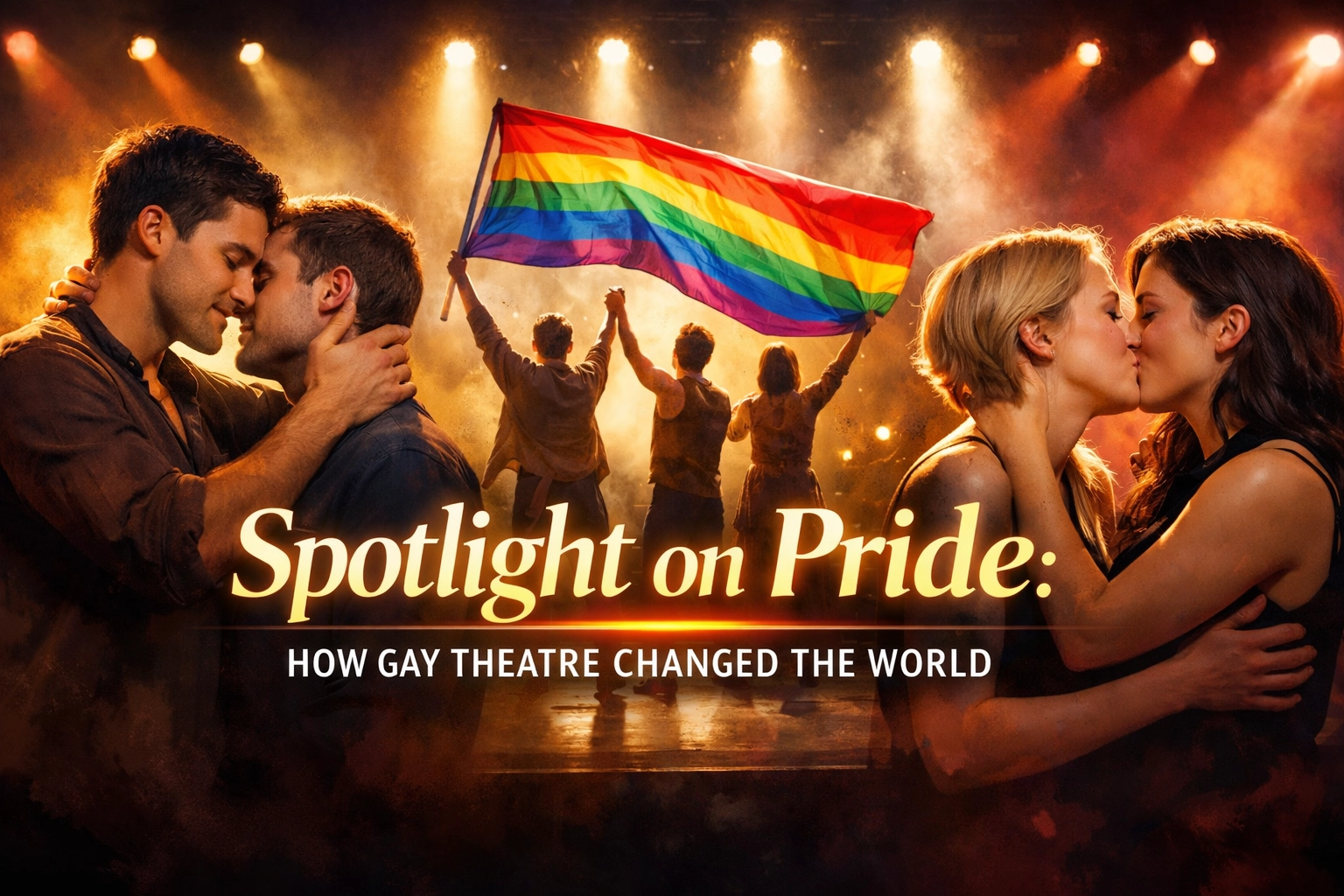
There's something magical about the theatre. The lights dim, the curtain rises, and suddenly you're transported into someone else's story: their pain, their joy, their truth. But for decades, one truth was forbidden from the stage: the authentic lives of LGBTQ+ people.
When gay theatre finally broke through the silence in the 1960s, it didn't just change what happened on stage. It sparked a revolution that transformed culture, politics, and the very fabric of the gay rights movement. Let's pull back the curtain on this incredible story.
The Dark Ages: When Love Was a Crime On Stage
Picture this: It's 1927 in New York City, and Mae West has just written a play called The Drag. It's bold, it's provocative, and it features actual gay characters. The result? She gets arrested. The play gets censored. And Broadway enacts the "padlock bill," making it literally illegal to show homosexual subject matter on stage.
For nearly four decades, this wasn't just censorship: it was erasure. The 1934 Hays Code extended these restrictions to Hollywood, creating a massive cultural blackout. When gay characters did appear in rare instances, they were villains, tragic figures, or destined for suicide. The message was clear: queer lives weren't worthy of celebration or even honest representation.
Imagine growing up never seeing yourself reflected in art, never hearing your story told, never witnessing your love validated in public. That was the reality for generations of LGBTQ+ people. Theatre: one of humanity's oldest forms of storytelling: had been weaponized against an entire community.
1964: The Year Everything Changed
Fast forward to a tiny coffee shop in Greenwich Village called Caffe Cino. In 1964, two one-act plays premiered that would shatter decades of silence: Lanford Wilson's The Madness of Lady Bright and Robert Patrick's The Haunted Host.
These weren't coded metaphors or tragic cautionary tales. They were real stories about uncloseted gay people living their lives. Wilson's play ran for over two hundred performances to packed houses: people were starving for authentic representation, and suddenly, here it was.
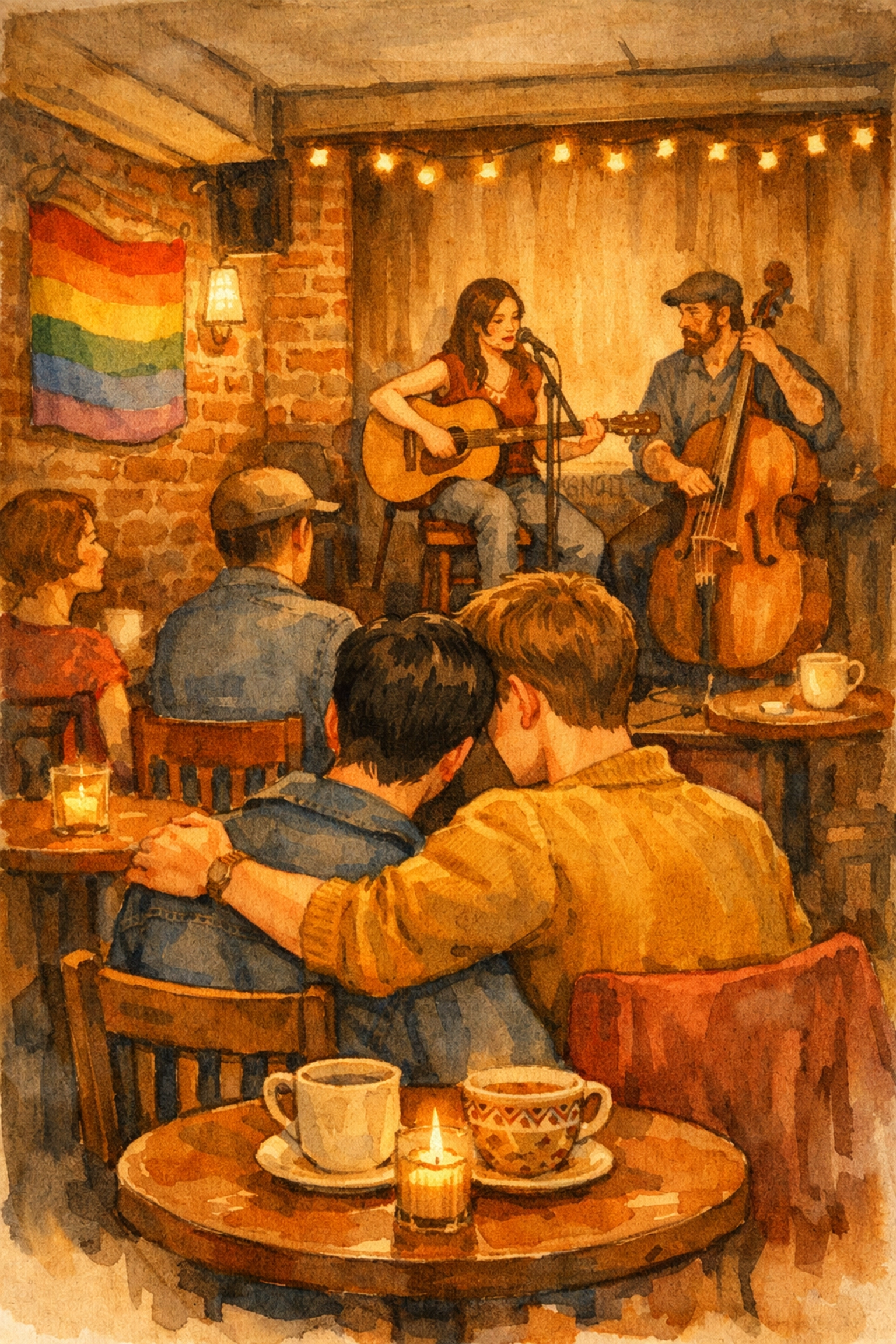
But Caffe Cino was more than a venue. It became a sanctuary, a community hub where gay artists could collaborate, create, and find camaraderie. For audiences seeing these plays, it was a revelation. They watched their hidden lives reflected publicly for the first time, and something shifted. Theatre became a ritual space where queer people could envision themselves as part of a larger culture, a shared community.
This wasn't just entertainment. It was the birth of gay consciousness: the realization that "we exist, we matter, and our stories deserve to be told." Some of these playwrights, like Doric Wilson, went on to become pioneers in the Gay Liberation Front and Gay Activist Alliance. Theatre and activism became inseparable.
The Post-Stonewall Explosion
When the Stonewall Riots erupted in June 1969, they didn't just spark political activism: they ignited a creative explosion on stage. Suddenly, playwrights like Larry Kramer, Harvey Fierstein, and Mart Crowley were creating works that confronted identity, sexuality, and survival with unprecedented boldness.
The Boys in the Band (1968) offered audiences an unfiltered glimpse into the lives of gay men: flaws, humor, pain, and all. Martin Sherman's Bent (1979) shocked the world by portraying gay persecution in Nazi concentration camps, bringing a hidden chapter of history into the spotlight.
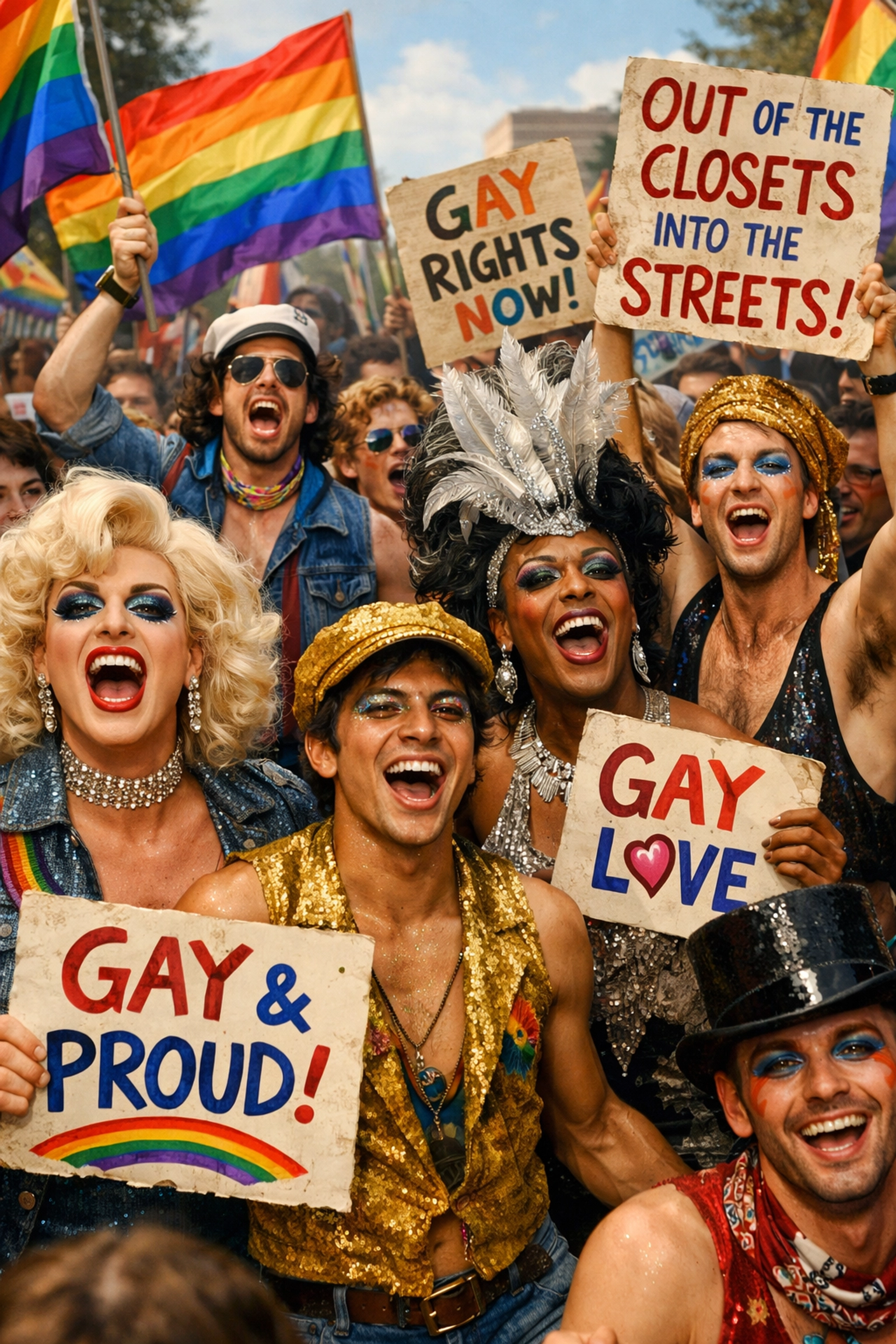
These weren't plays asking for permission or apologizing for existence. They were declarations: We're here, we're queer, and we're not going anywhere.
When Theatre Became a Lifeline: The AIDS Crisis
The 1980s brought devastation. As the AIDS epidemic ravaged the gay community, theatre became more than art: it became a vital means of processing grief, raising awareness, and demanding action when governments turned their backs.
Larry Kramer's The Normal Heart (1985) was a desperate political wake-up call wrapped in heartbreak. It forced audiences: and public officials: to confront what they'd been ignoring. Tony Kushner's Angels in America blended personal anguish with sweeping political critique, creating a masterpiece that still resonates today. William Hoffman's As Is captured the raw fear and tenderness of living through a plague.
Then there was La Cage aux Folles (1983), which achieved something remarkable: a man sang a heartfelt love song to another man on a Broadway stage. That anthem, "I Am What I Am," became the soundtrack for LGBTQ+ protests, marches, and celebrations for generations.
Theatre didn't just document the AIDS crisis: it helped people survive it by creating spaces for mourning, resistance, and hope.
The Ripple Effect: Changing Hearts and Minds
Here's the thing about theatre that makes it so powerful: it's communal. You can't look away. You're sitting in a dark room with strangers, collectively witnessing someone's truth. That shared experience has the power to crack open hearts and shift perspectives in ways that statistics and political speeches never could.
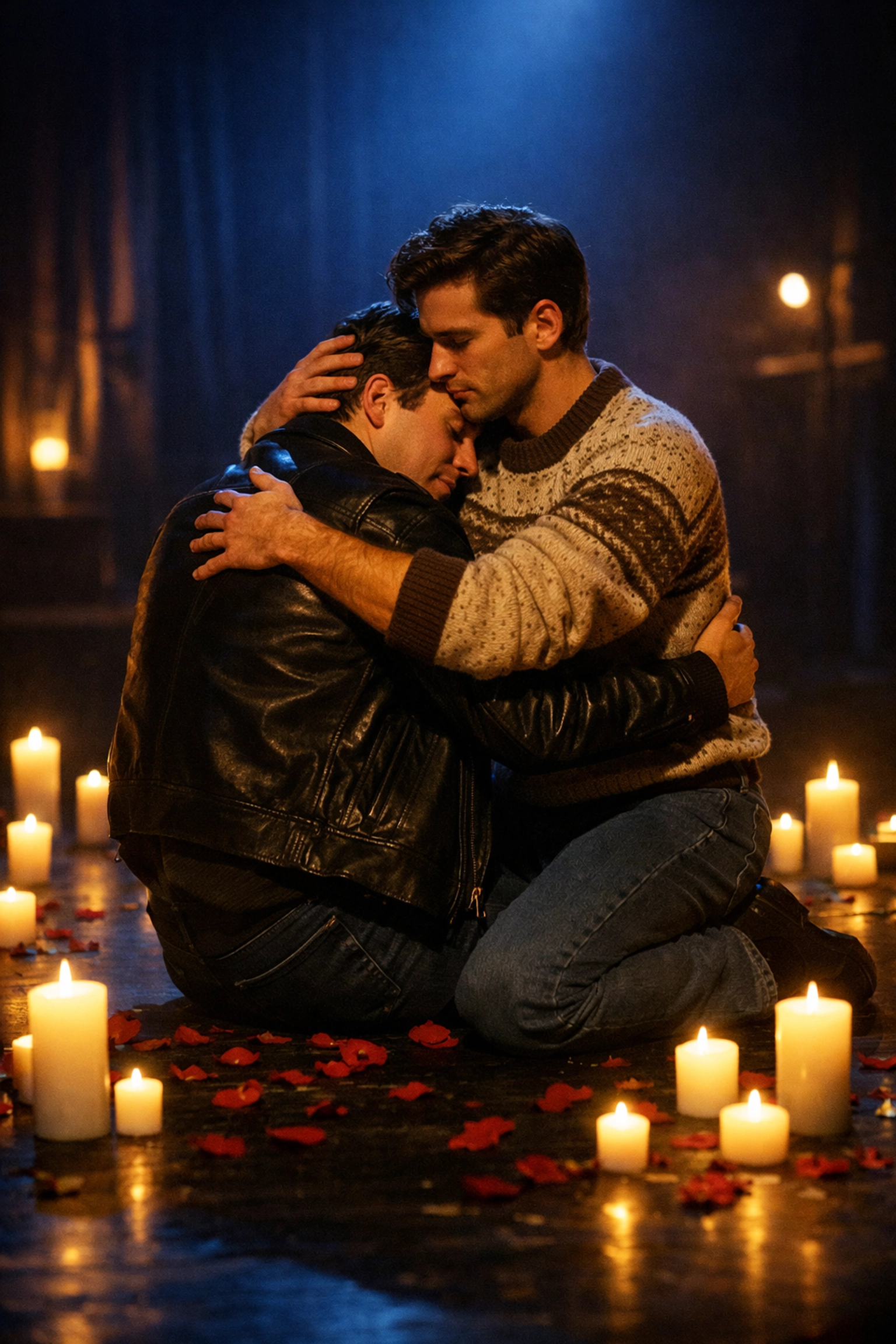
Gay theatre didn't just entertain: it challenged societal norms and transformed public discourse. It gave visibility to a community that had been criminalized and closeted. Remember, in many places during this era, gay people could be arrested for simply existing in public. Theatre said: "Not only do we exist, but our stories matter, our love is real, and we demand to be seen."
The artists who created this work paved the way for stronger queer communities and political movements. They showed that representation isn't just about feeling good: it's about survival, dignity, and changing the world.
The Legacy Lives On
Today, we see openly LGBTQ+ stories across every medium, from Broadway blockbusters to streaming series. But it all traces back to those brave artists who refused to be silent, who transformed coffee shops and small theatres into launching pads for revolution.
At Read with Pride, we celebrate these stories and the courage it took to tell them. While we focus on LGBTQ+ fiction and MM romance books, we recognize that every queer love story: whether on stage, screen, or page: stands on the shoulders of those theatrical pioneers.
Looking for your next great read that captures the same authenticity and emotion as these groundbreaking plays? Explore our collection of gay romance novels and queer fiction that continue the tradition of telling our stories without apology.
Curtain Call
Gay theatre didn't just change the world: it helped create the one we live in today, where LGBTQ+ people can see themselves reflected in art, where our love stories are celebrated, and where new generations of artists continue pushing boundaries.
The revolution that started in a tiny Greenwich Village coffee shop in 1964 is still unfolding. Every authentic queer story told is an act of resistance, a declaration of love, and a promise to future generations: Your story matters. You matter.
Ready to experience more LGBTQ+ stories? Check out our curated collection of MM romance books and gay fiction that celebrate queer love in all its beautiful forms.
Follow us for more LGBTQ+ content and book recommendations:
#ReadWithPride #GayTheatre #LGBTQHistory #QueerArt #MMRomance #GayRomanceBooks #LGBTQFiction #QueerTheatre #GayLiterature #TheatreHistory #LGBTQActivism #GayRights #QueerCulture #MMBooks #GayFiction #LGBTQCommunity #Pride2026 #QueerStories #GayLoveStories #TheatreRevolution

Leave a Reply
You must be logged in to post a comment.