

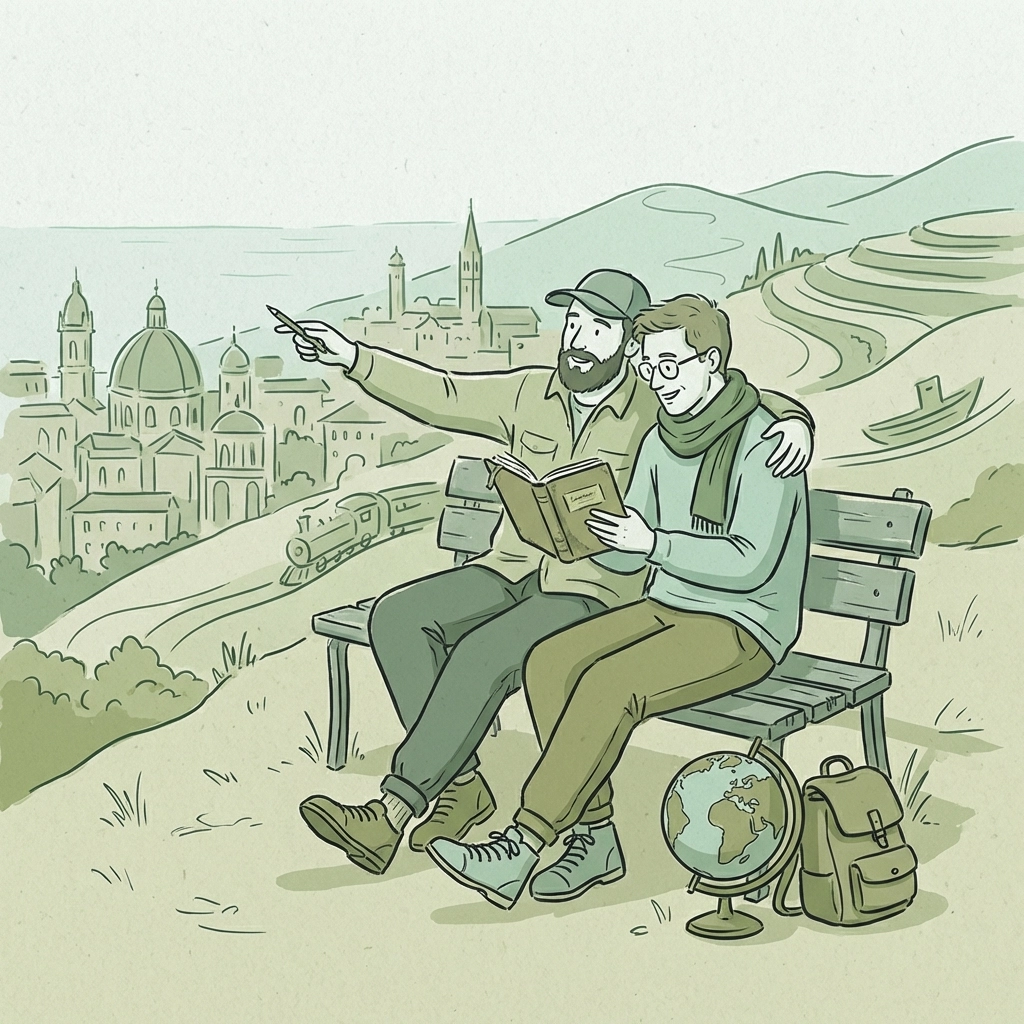
SPECIAL OFFER: Explore transformative LGBTQ+ stories at Read with Pride. Browse our complete collection at dickfergusonwriter.com/collections/all.
Breaking the Everest Story : And Gender Barriers
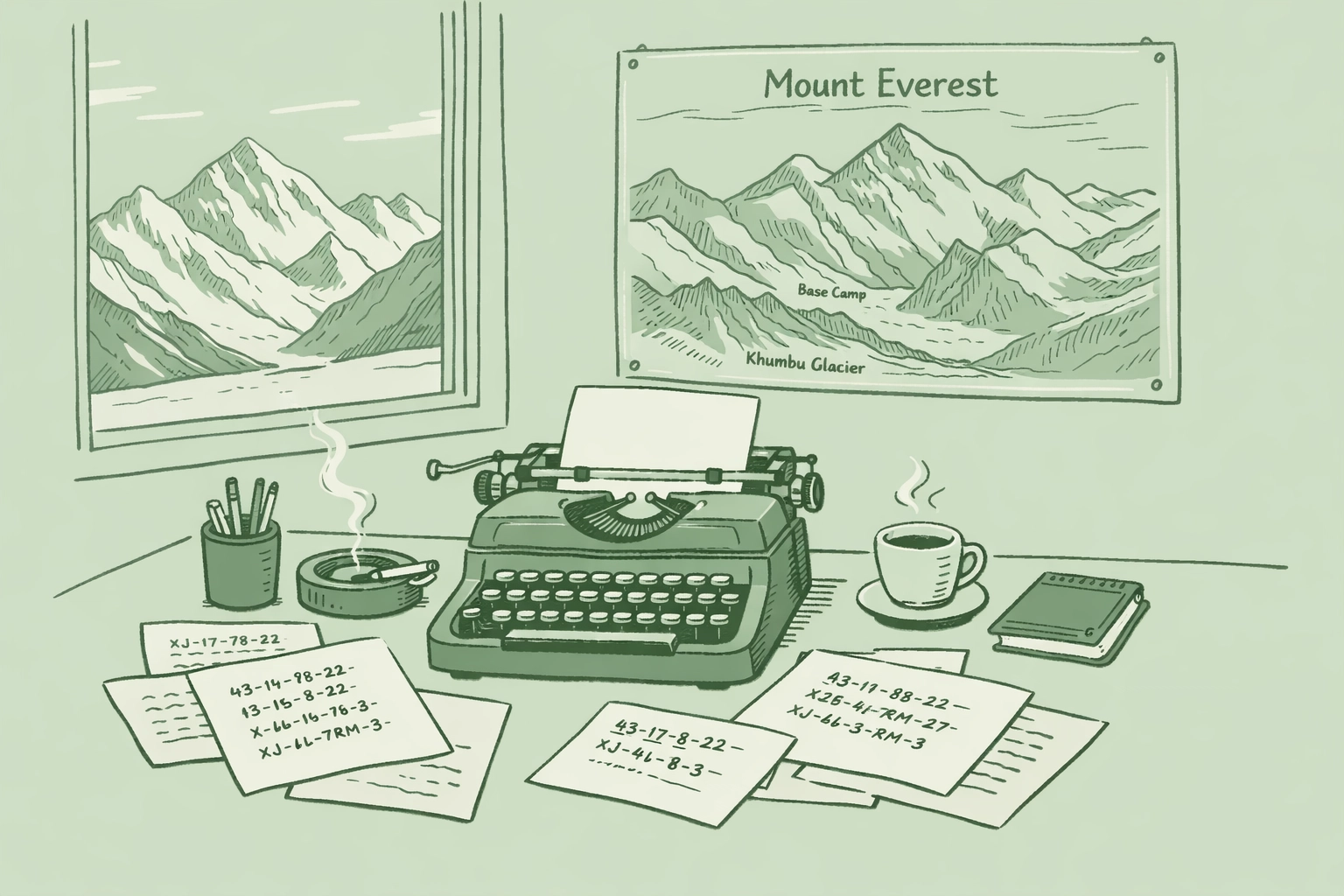
Jan Morris (1926–2020) didn't just climb mountains as a journalist: she moved them. At 26, she cracked the code that brought news of Edmund Hillary and Tenzing Norgay's Everest summit to The Times on the eve of Queen Elizabeth II's coronation in 1953. But her most remarkable ascent came two decades later when she became one of the first public figures to transition gender and document the experience in her groundbreaking memoir Conundrum (1974).
This Welsh historian, travel writer, and literary giant produced over forty books across 73 years, fundamentally reshaping how writers approached histories of empire, urban portraiture, and personal identity. Her work remains essential reading for anyone interested in queer literature, transgender history, and literary excellence.
Recommended: The Private Self: A Guide to Honoring Your Truth in Your Own Time offers contemporary perspectives on living authentically.
From James to Jan: A Public Transition
Morris began her gender transition in the mid-1960s, when public discussion of transgender identity was virtually nonexistent. She published under her birth name, James, until 1972, when she underwent gender reassignment surgery in Casablanca. Her 1974 memoir Conundrum documented this journey with literary grace and unflinching honesty.
The book became a bestseller, offering readers an intimate window into transgender experience at a time when such narratives were extraordinarily rare. Morris wrote: "I was three or perhaps four years old when I realized that I had been born into the wrong body, and should really be a girl."
Conundrum stood alongside Christine Jorgensen's autobiography as pioneering transgender literature, but Morris brought a distinctive literary sensibility to the subject. Her prose was neither clinical nor apologetic: it was simply truthful, elegant, and deeply human.
The Empire Trilogy and Literary Prowess
Before and after her transition, Morris established herself as one of Britain's finest historians and writers. Her three-volume history of the British Empire: Pax Britannica (1968), Heaven's Command (1973), and Farewell the Trumpets (1978): represented what she called the "intellectual and artistic centerpiece" of her life.
The Times ranked her the fifteenth greatest post-war British writer. Her 1960 book Venice earned widespread acclaim and a Heinemann award. In 1985, she surprised the literary establishment when Last Letters from Hav, an imagined travelogue of a fictional city-state, reached the Booker Prize shortlist.
Morris explicitly resisted the label "travel writer," insisting she wrote about "place," people, and history rather than journeys. Her style was exuberant and sensual, fusing history, biography, opinion, and observation in distinctive ways that transcended genre.
Browse more: Discover gay fiction and LGBTQ+ novels exploring identity and history at dickfergusonwriter.com.
How Transition Transformed Her Writing
Morris continued writing prolifically after her transition, and scholars have noted subtle shifts in her literary voice. Her post-transition work displayed increased empathy, emotional range, and attention to the interior lives of her subjects. She became more personally present in her prose without sacrificing her signature elegance.
Late in life, Morris stated: "Fact or fiction? As an old pro of the writing game, I don't recognise the distinction." This blurring of boundaries reflected her lived experience: a life that challenged rigid categorizations of gender, genre, and identity.
Her writing about Venice, Trieste, and other beloved places took on new dimensions after transition. She returned to familiar subjects with fresh perspective, demonstrating how personal transformation enriches artistic vision.
Personal Life and Partnership
Morris's personal story included complexities beyond her transition. She married Elizabeth Tuckniss in 1949, and they had five children together. After Morris's transition and gender reassignment surgery, British law forced them to divorce. However, they remained partners, living together in Wales.
In 2008, following the passage of civil partnership legislation in the UK, they formalized their relationship again: this time as Jan and Elizabeth. Their enduring partnership of over six decades challenged conventional narratives about gender, marriage, and love.
This aspect of Morris's life resonates with contemporary discussions of queer relationships and the fluidity of partnership beyond traditional categories.
Recognition and Legacy
Morris received numerous honors throughout her career:
- Fellowship of the Royal Society of Literature
- Election to Gorsedd Cymru (the Welsh bardic order)
- Golden PEN Award for a Lifetime's Distinguished Service to Literature
- CBE (Commander of the Order of the British Empire)
She declined a damehood, preferring to remain simply "Jan Morris, writer."
Her influence extends beyond literature into transgender visibility and advocacy. By living openly and writing honestly about her experience, Morris helped normalize transgender identity decades before contemporary movements gained momentum.
Essential reading: Beyond the Closet Door: A Gay Man's Coming Out Plan offers guidance for modern LGBTQ+ journeys.
Why Jan Morris Matters Today
Morris died on November 20, 2020, at age 94, leaving behind an extraordinary literary legacy. Her work remains relevant for multiple reasons:
For LGBTQ+ readers: Morris provided early, dignified representation of transgender experience in mainstream literature. Conundrum continues to offer insight and solace to those navigating gender identity.
For writers: Her genre-defying approach to place, history, and memoir demonstrates the power of personal perspective in non-fiction. She proved that subjectivity strengthens rather than weakens historical writing.
For historians: Her Empire trilogy remains essential reading for understanding British imperialism with nuance, empathy, and literary craft.
For general readers: Morris wrote with joy, curiosity, and humanity. Her books transport readers not just to places, but into ways of seeing and experiencing the world.
Further Exploration
Morris's complete works span history, memoir, travel writing, and fiction. Essential titles include:
- Conundrum (1974) : Her transition memoir
- Venice (1960) : Her breakthrough literary portrait
- The Pax Britannica trilogy (1968-1978) : Her magnum opus on empire
- Last Letters from Hav (1985) : Her Booker-shortlisted fiction
- Trieste and the Meaning of Nowhere (2001) : Late-career meditation on place and identity
Browse transgender fiction, LGBTQ+ memoirs, and queer literature at Read with Pride. Find more MM romance, gay novels, and LGBTQ+ ebooks at dickfergusonwriter.com/collections/all.
Follow us on social media:
Instagram: @dickfergusonwriter
X/Twitter: @DickFergus94902
Facebook: Dick Ferguson Writer
Website: www.readwithpride.com
#JanMorris #TransgenderHistory #LGBTQLiterature #QueerFiction #TransgenderAuthors #Conundrum #ReadWithPride #LGBTQBooks #QueerLiterature #TransVisibility #MMRomance #GayFiction #LGBTQEbooks #TransgenderMemoir #QueerHistory #LiteraryFiction #BritishWriters #WelshAuthors #GenderIdentity #TransLegacy

Leave a Reply
You must be logged in to post a comment.