

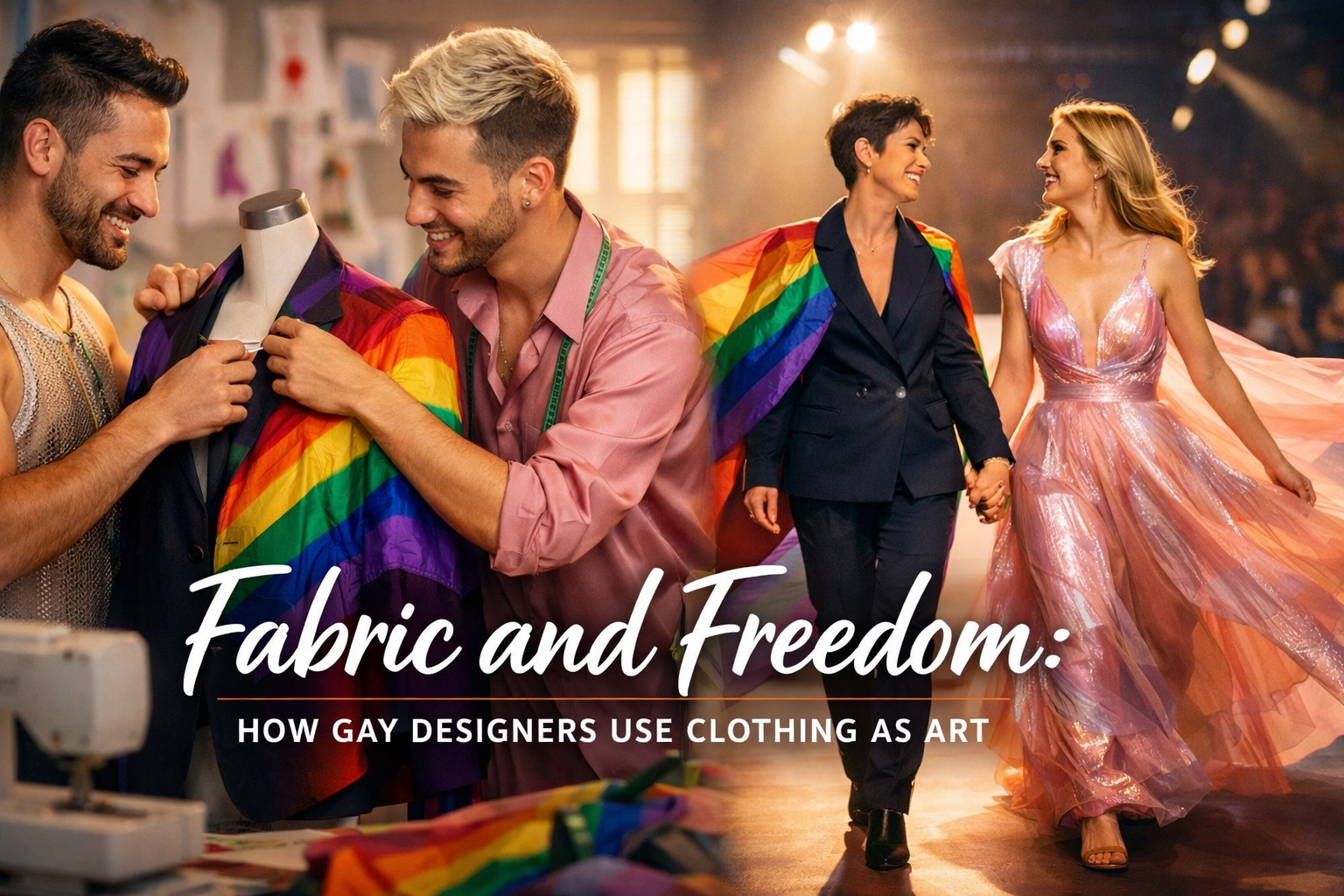
Let's be real: clothing has never been just about covering our bodies. For LGBTQ+ designers, fabric becomes a language, a protest, a love letter, and a middle finger to convention: all stitched together with thread and audacity. When you're creating from a place where your very existence challenges the status quo, every seam becomes a statement, every drape a declaration of identity.
When Fashion Becomes Defiance
The history of gay designers revolutionizing fashion reads like the best kind of rebellious MM romance novel: full of bold moves, societal pushback, and ultimately, transformative change. Take Yves Saint Laurent's legendary 'Le Smoking' tuxedo for women in 1966. This wasn't just a pretty design; it was a power play. Saint Laurent took traditionally masculine garments: symbols of influence and authority: and reimagined them for women, essentially saying, "Why should men have all the fun?"
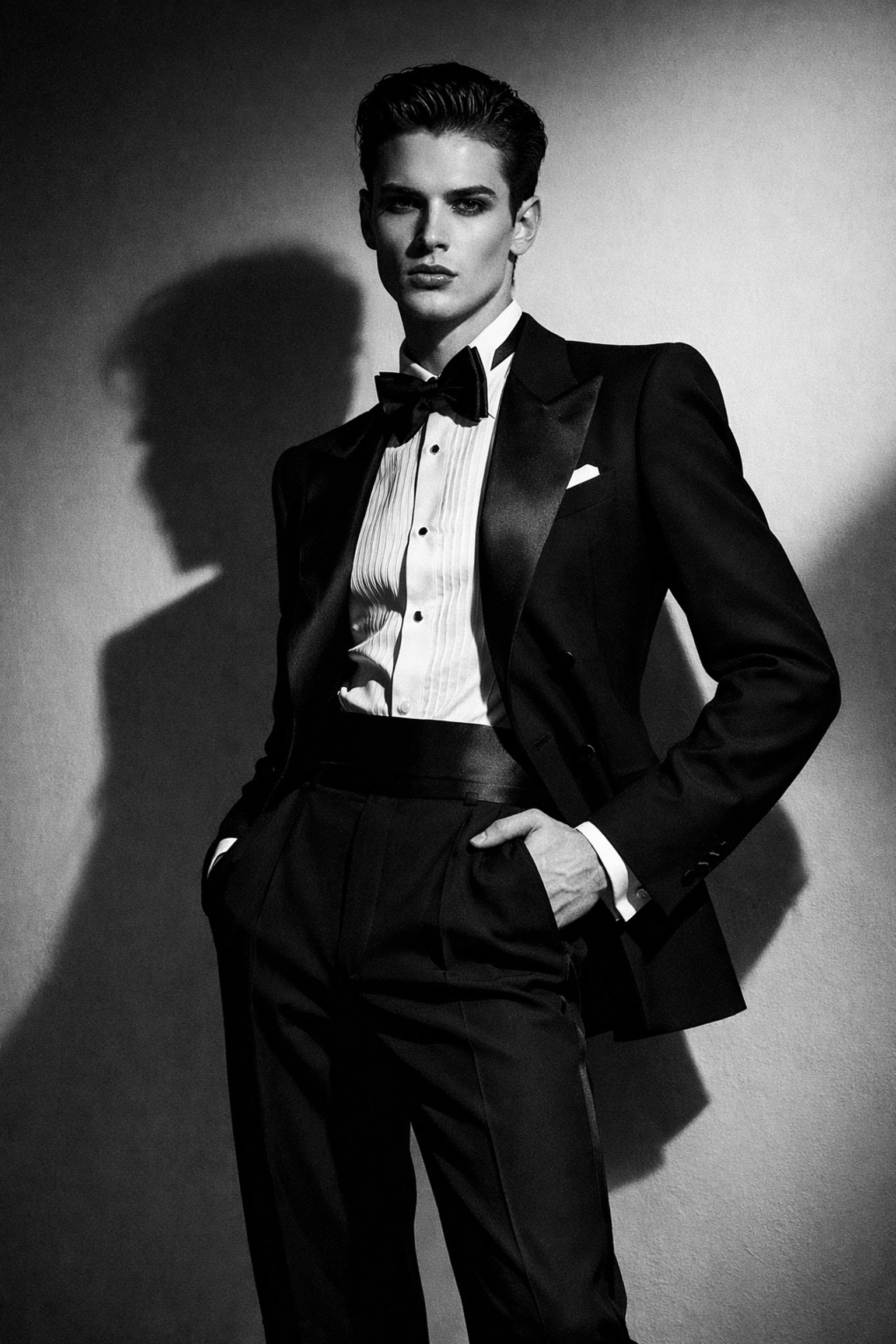
This pioneering work of androgynous style didn't just change fashion; it challenged who got to wear power and how. It's the kind of gender-bending that makes our queer hearts sing, proving that clothing can be as much about dismantling hierarchy as it is about looking fabulous while doing it.
Fast forward to today, and designers like Neil Grotzinger are flipping the script again with his brand NIHL. He's bringing intricate beadwork, hand-applied embellishments, and delicate details: typically reserved for women's fashion: into menswear. It's a beautiful rejection of toxic masculinity, asking a simple but radical question: Why can't men embrace beauty, vulnerability, and artistry through their clothing?
Fabric as Canvas, Fashion as Fine Art
Christopher John Rogers has become a force in contemporary fashion by treating fabric the way a painter treats canvas: with bold experimentation and zero apologies. He gravitates toward the fabrics that make others nervous: unusual colors, strange textures, materials that demand attention rather than whisper for it. "I love pushing the limits of fabric and color and exploring fantasy," Rogers has said, and boy, does it show.
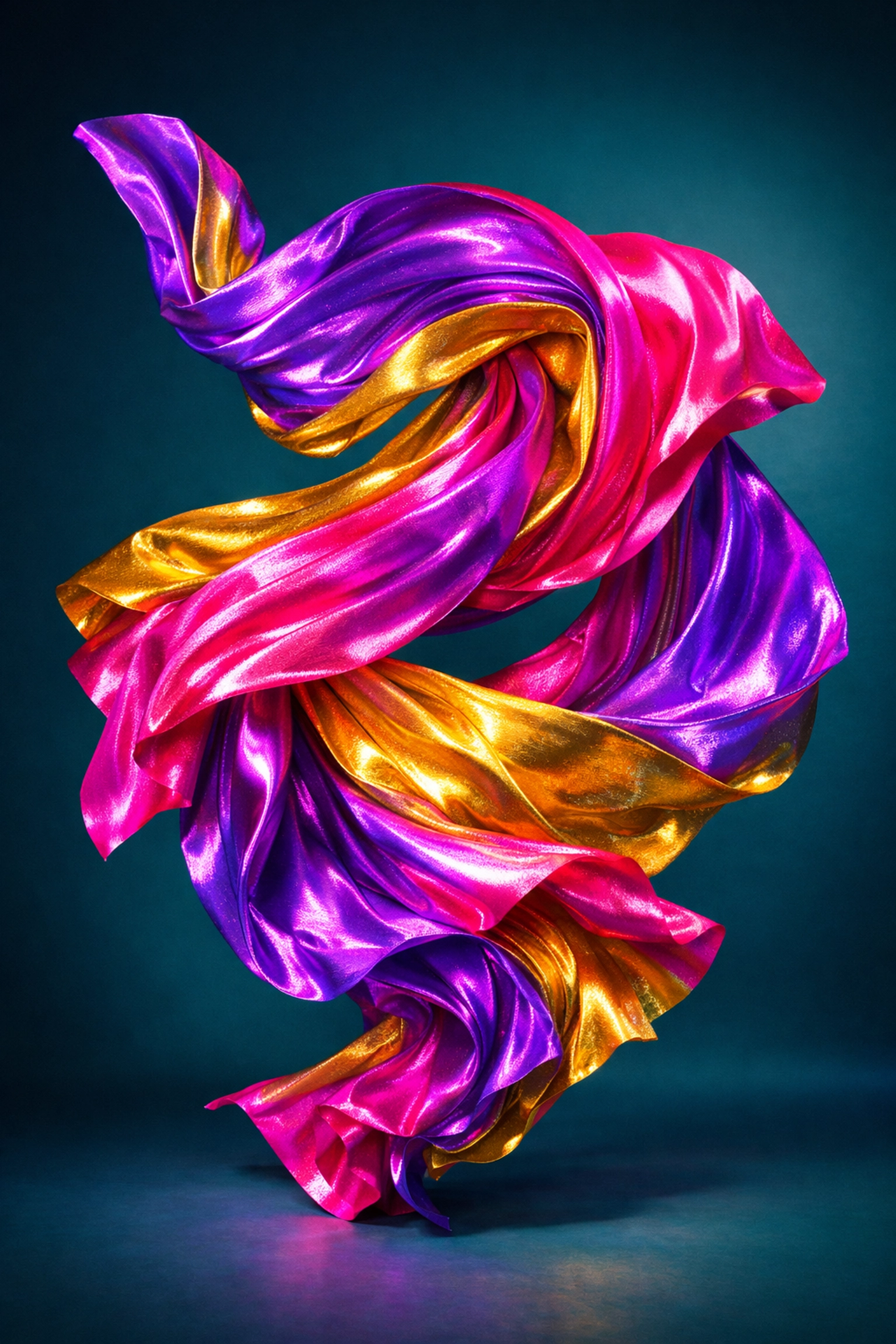
But here's what makes his approach so compelling: he never forgets that these are clothes people need to actually wear and live in. "I'm not a costume designer, so I really want people to function and live in the clothes we make." It's this balance between artistic vision and real-world wearability that separates truly great designers from those who create beautiful but impractical museum pieces.
This philosophy mirrors what we love about the best gay romance books and MM fiction: they push boundaries and explore fantasy while remaining grounded in authentic human experience. Just as Rogers makes wearable art, the best LGBTQ+ fiction creates stories that are both aspirational and achingly real.
Celebrating Queerness Through Textiles
Some designers explicitly center queer identity in their work, creating fashion that doesn't just include LGBTQ+ perspectives but radiates from them. Hana Holquist's work explores a specifically queer expression of femininity, pushing high-femme aesthetics into surreal territory. Her designs create what she calls a "feminine fantasy" that exists completely outside heteronormative frameworks, exploring female homoeroticism through fashion.
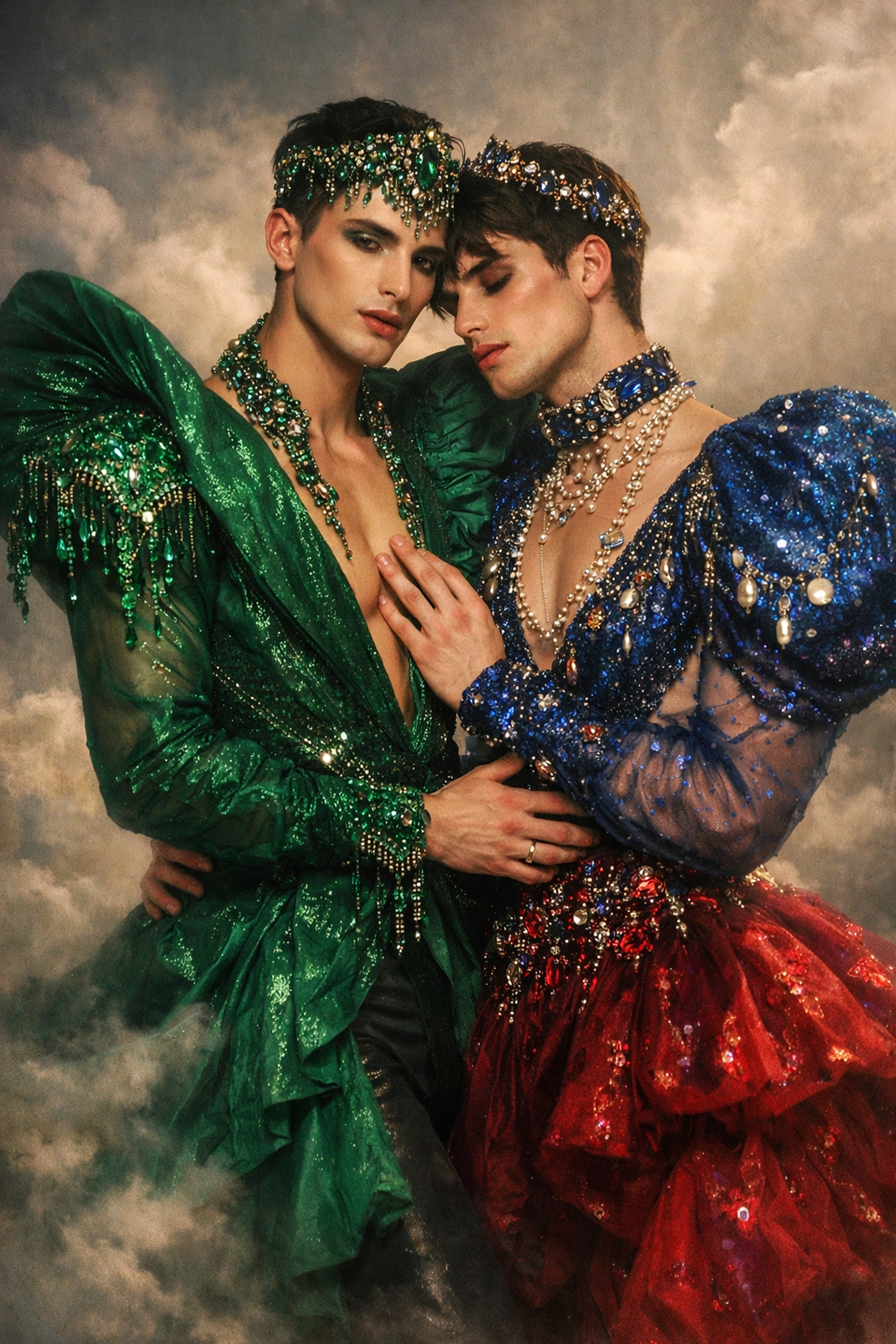
Then there's NO SESSO, which made history as the first brand founded by a trans person to show on the official New York Fashion Week calendar. Co-founder Pierre Davis put it perfectly: the mission is to "put people on a platform so they can see themselves in mainstream fashion." Representation matters in fashion just as it matters in literature: which is why we're so passionate about promoting gay fiction and queer authors at Read with Pride.
Fashion as Social Commentary
The most powerful designers use their work to address intersectional issues, proving that fashion can be both beautiful and politically engaged. South African designer Aniewi Mnisi artfully confronts ideas of gender and race within his cultural context, deliberately shooting campaigns in the communities where he grew up. His reasoning? "The reality of queerness belongs in those spaces."
This act of making queerness visible in unexpected places: in traditional communities, in conservative settings, in spaces where LGBTQ+ identity is often erased: is revolutionary. It's fashion as documentation, as activism, as a refusal to be hidden.
The Bigger Picture: Art as Liberation
What connects all these designers is their understanding that fashion isn't frivolous: it's fundamental to how we present ourselves to the world and how we see ourselves in the mirror. For LGBTQ+ people who've spent lifetimes being told we're "too much" or "not enough," clothing becomes a way to write our own narratives on our own bodies.
The freedom these designers express through fabric mirrors the freedom we seek in all creative expression, whether that's through MM romance novels, visual art, or performance. It's about claiming space, refusing invisibility, and insisting that our stories: told through any medium: matter.
Where Fashion Meets Fiction
At Read with Pride, we see these same themes playing out in the gay romance books and LGBTQ+ ebooks we celebrate. The best MM contemporary romance explores identity, challenges social norms, and imagines worlds where queer people aren't just tolerated but celebrated. Just as these designers use fabric to tell stories, authors use words to create universes where love and identity can flourish without apology.
Whether you're reading a steamy enemies to lovers MM romance or admiring a boundary-pushing fashion collection, you're engaging with art that refuses to be confined by convention. Both mediums ask us to imagine differently, to see possibility where others see limitation, to find beauty in authenticity rather than conformity.
Wearing Your Truth
The revolution happening in fashion: where gay designers use clothing as art, activism, and identity expression: reminds us that creativity is inherently political when you're creating from a marginalized perspective. Every bold color choice, every gender-defying silhouette, every piece that centers queer beauty is a small act of resistance against a world that often wants us to blend in and shut up.
But we've never been good at either of those things, have we?
These designers show us that fashion can be a form of armor and vulnerability simultaneously: protecting us while revealing our truest selves. That's the kind of transformation we're here for, whether it's stitched into fabric or written into the pages of the best MM romance books of 2026.
Want more stories celebrating LGBTQ+ creativity and expression? Follow us on Instagram, Facebook, and Twitter/X for daily doses of queer joy, book recommendations, and creative inspiration. Discover your next favorite gay romance series at ReadwithPride.com.
#LGBTQFashion #GayDesigners #QueerArt #FabricAndFreedom #MMRomance #GayRomanceBooks #LGBTQBooks #ReadWithPride #QueerCreativity #FashionAsArt #MMFiction #GayFiction #QueerAuthors #LGBTQReading #PrideInFashion #AuthenticExpression #GenderBending #FashionActivism #QueerIdentity #LGBTQCommunity

Leave a Reply
You must be logged in to post a comment.