

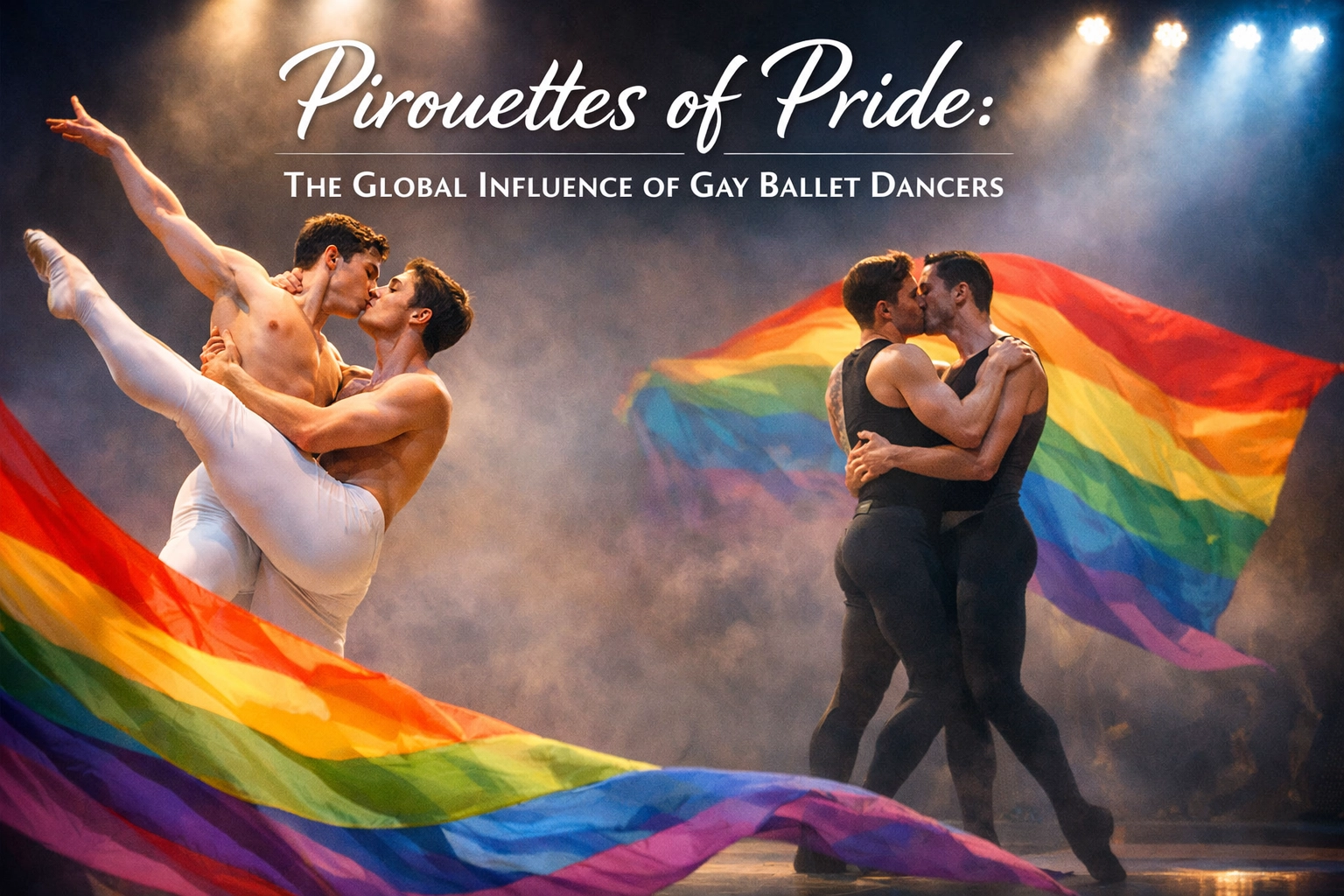
Let's get real for a moment: ballet and queerness have been dancing together since day one. While the tutus twirled and the orchestra swelled, gay men have been the backbone, the creative force, and the beating heart of classical ballet for centuries. Yet for far too long, they had to perform their artistry while hiding their authentic selves offstage.
Times have changed: and thank goodness for that. The global influence of gay ballet dancers has fundamentally transformed not just who gets to dance, but what stories ballet can tell and how beautifully those stories can reflect the full spectrum of human love and desire.
The Hidden History: Ballet's Queer Foundations
Here's something that might surprise absolutely no one: some of ballet's most legendary figures were queer. Composer Pyotr Tchaikovsky gave us Swan Lake and The Nutcracker: works that remain cornerstones of classical ballet. Choreographers Frederick Ashton and Jerome Robbins revolutionized how movement could tell stories. And dancers? Vaslav Nijinsky's electrifying performances and Rudolf Nureyev's defection from the Soviet Union captivated the world.
But here's the catch: these artists created magic while living under the shadow of anti-homosexuality laws, social persecution, and eventually, the devastating AIDS epidemic. The 1980s and 1990s claimed brilliant talents including Nureyev himself, along with dancers Kelvin Coe and Dominique Bagouet. The crisis didn't just take lives: it slowed the progress of queer representation in ballet to a heartbreaking crawl.
These artists could bring passion, romance, and raw emotion to the stage, but only in carefully coded ways. They made audiences weep over heterosexual love stories while their own love remained unspeakable. That's not just tragic: it's a massive artistic limitation.
The Breakthrough Moment: When Swans Became Revolutionary
Rudolf Nureyev's 1984 adaptation of Swan Lake for the Paris Opera Ballet planted the first seeds of change. He crafted what critics called a "latently homosexual" Prince Siegfried, though the Swan remained traditionally female. It was subtle, coded: but it was something.
Then came 1995, and everything exploded open.
Matthew Bourne's Swan Lake didn't just push boundaries: it obliterated them. Bourne replaced the delicate female swans with a fierce, all-male corps. His Prince falls in love with a decidedly masculine Swan, and the chemistry? Electric. Raw. Unapologetically queer.
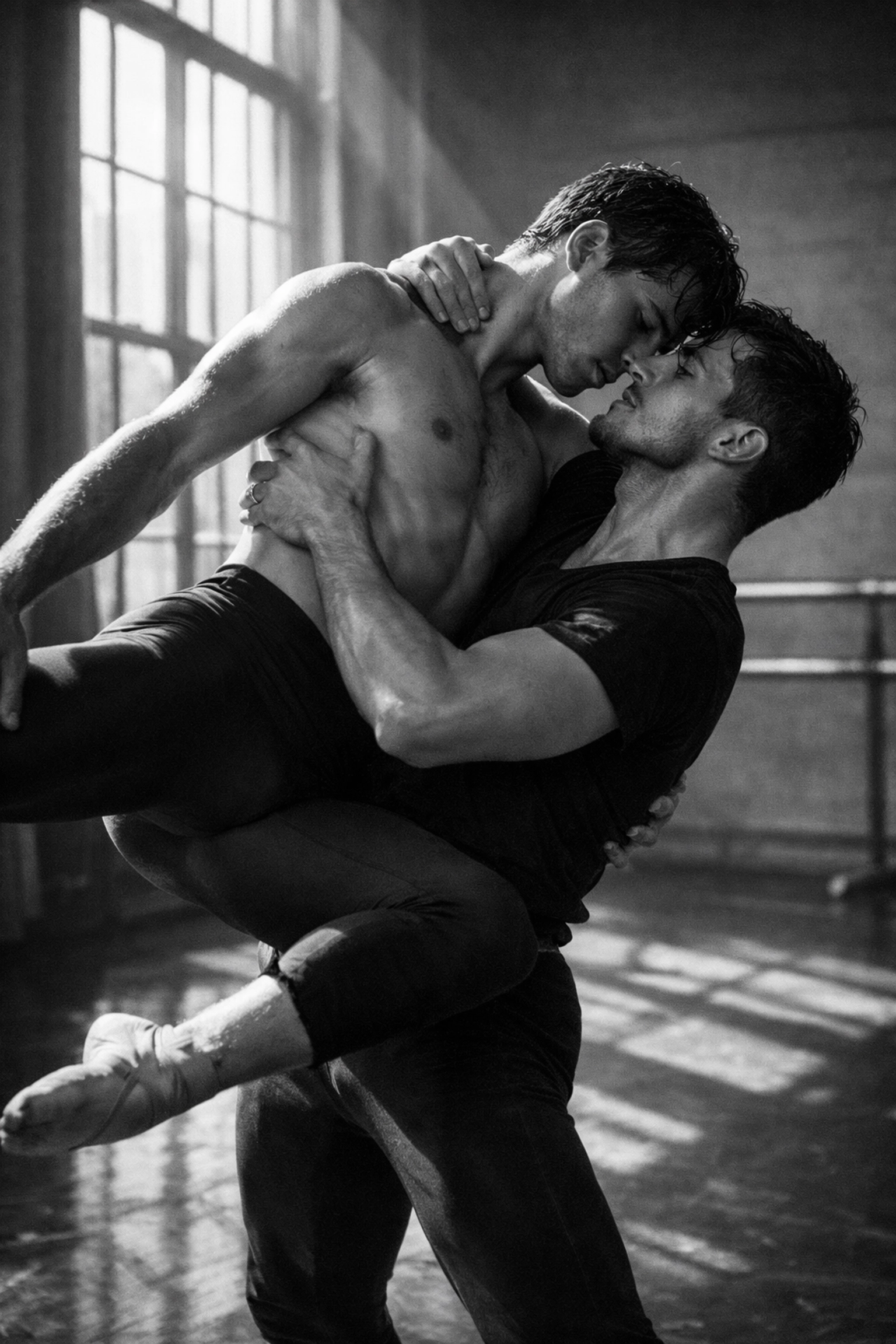
The production became the longest-running ballet on both the West End and Broadway, won a bucketload of awards, and achieved genuine icon status. But more importantly, it became a catalyst. Gay men who'd grown up loving ballet but feeling like they had to perform straightness along with their arabesques suddenly saw themselves. They could dance as themselves, love as themselves, create as themselves.
Bourne's Swan Lake proved that intimate male partnerships could be both artistically stunning and commercially successful. Revolutionary? Absolutely. Long overdue? Hell yes.
The New Generation: Out, Proud, and Leading the Way
Fast forward thirty years from Bourne's premiere, and the landscape has transformed exponentially. Today, some of ballet's biggest names are openly gay: and they're not just dancing, they're leading.
David Hallberg serves as Artistic Director of the Australian Ballet. William Bracewell and Marcelino Sambé are celebrated principals. These aren't dancers hiding in the shadows; they're running the show, making the decisions, and commissioning the work that will shape ballet's future.
And that leadership matters. In 2024, Hallberg commissioned openly gay choreographer Christopher Wheeldon to create the Australian Ballet's first full-length narrative ballet in two decades. The American Ballet Theatre brought Christopher Rudd's Touché: which features a same-sex kiss: into its mainstage repertory in 2021.
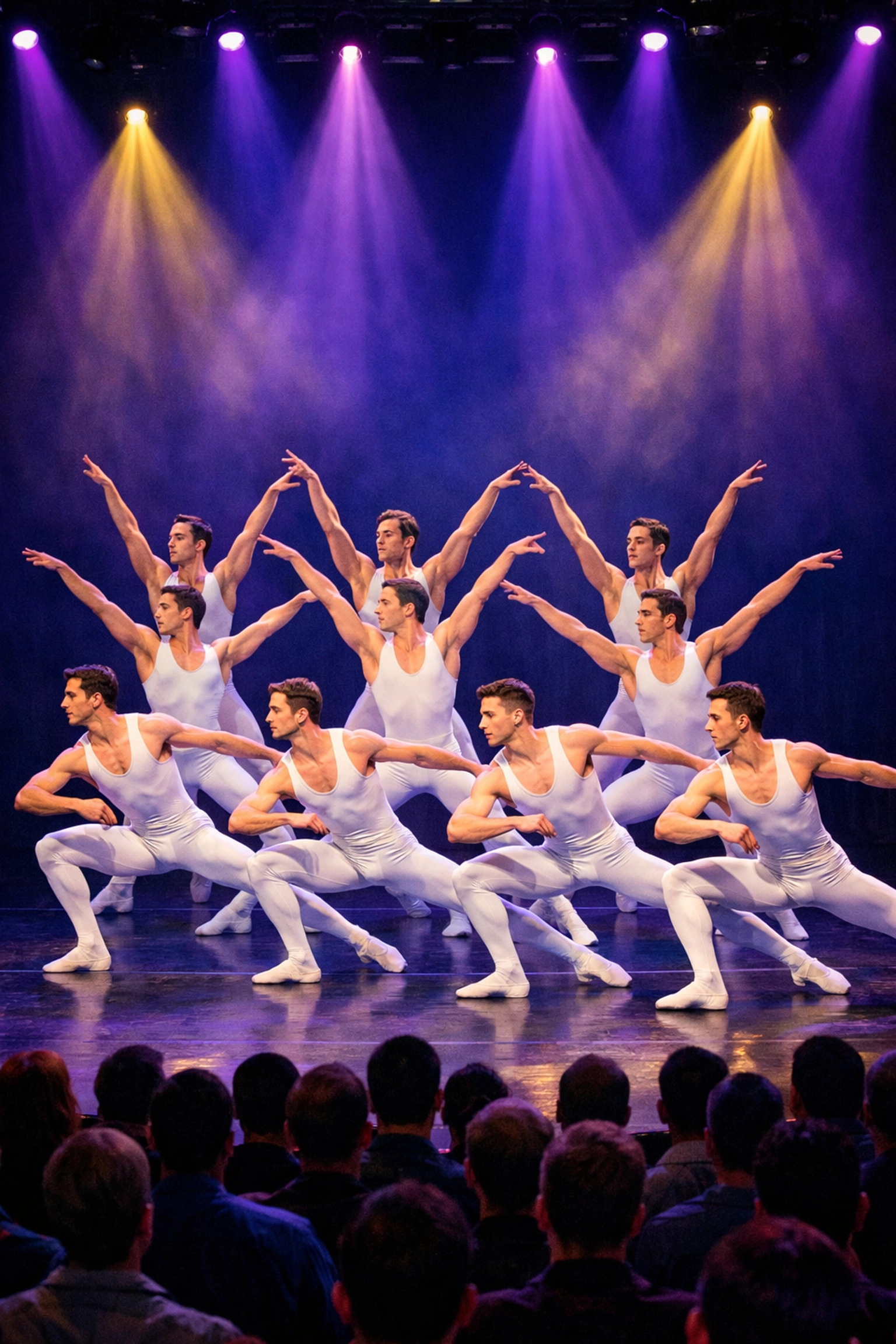
These aren't one-off experimental pieces tucked away in black box theatres. This is major companies, mainstage productions, prime-time performances. This is gay romance getting the full orchestral treatment it deserves.
Beyond the Binary: The Work That Remains
Here's where we need to keep it real: while gay male representation has advanced significantly, ballet still has work to do. The #QueerTheBallet initiative emerged to amplify LGBTQ+ voices that remain underrepresented: particularly queer women, transgender, and nonbinary dancers.
Ballet's traditional gender binary runs deep. Pointe shoes for women, strong lifts for men, romantic pas de deux that assumes heterosexuality. Breaking out of those boxes requires more than just allowing gay men to exist openly: it requires reimagining the entire structure.
Queer women in ballet continue facing isolation. Trans and nonbinary dancers struggle against systems that want to slot them into rigid categories. The path that gay male dancers have forged is important and inspiring, but it can't be the only path forward.
The real challenge now? Embedding queer narratives deeper into ballet's canonical repertory. We need more commissions, more investment, more risk-taking from artistic directors willing to expand beyond the established hierarchies.
Why This Matters for All of Us
If you're reading this at Read with Pride, you already know that representation matters. Whether it's MM romance books, gay fiction, or LGBTQ+ ebooks, seeing ourselves reflected in art validates our experiences and expands what's possible.
Ballet isn't separate from that. When young queer kids see David Hallberg leading one of the world's great ballet companies, when they watch two men dance a passionate duet without irony or tragedy, it changes what they believe they can become.
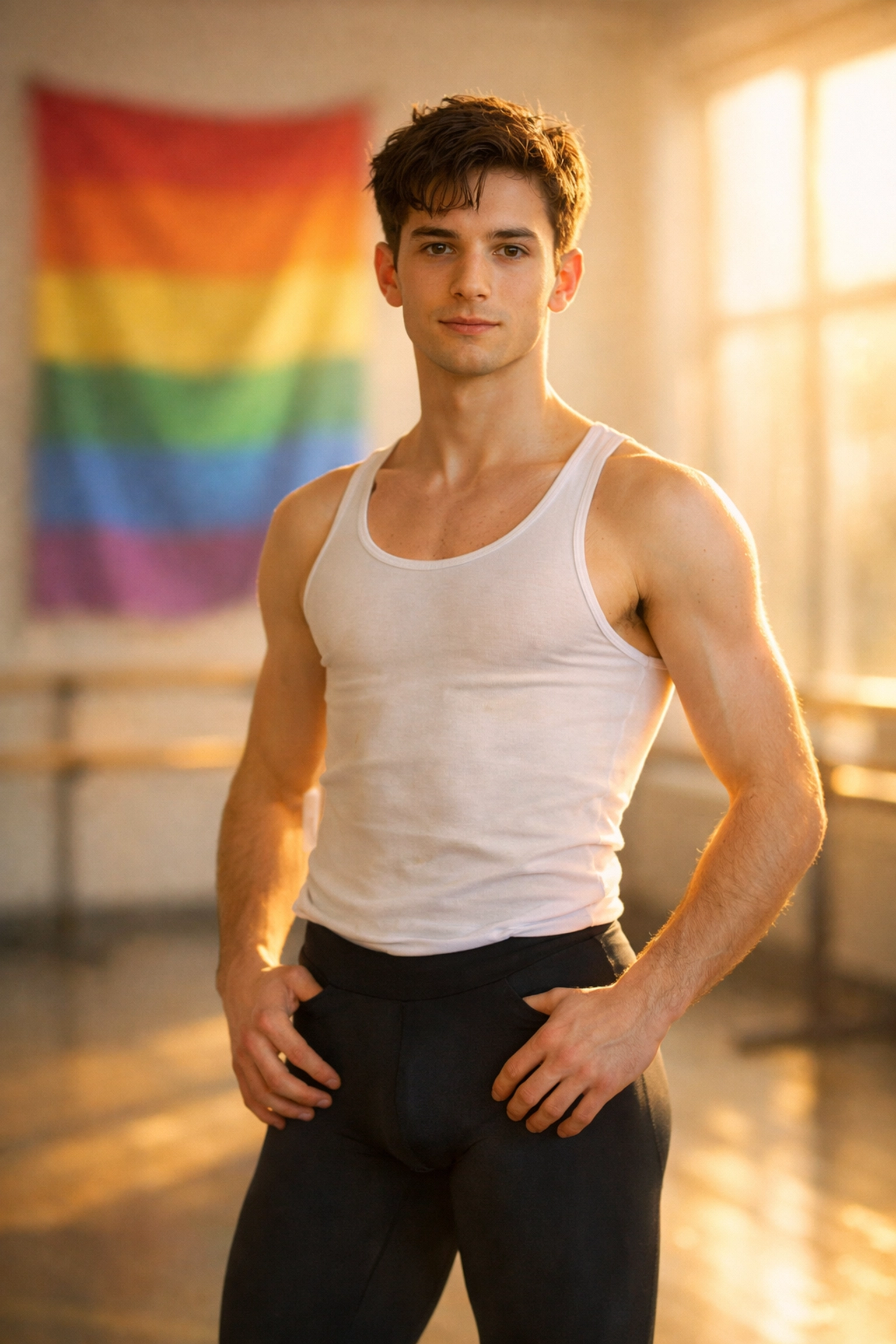
The global influence of gay ballet dancers extends beyond the stage. It's about cultural permission: permission to be fully yourself in spaces that once demanded you hide. It's about artistic evolution: expanding what stories get told and how they're told. And it's about leadership: ensuring that the next generation doesn't have to fight the same battles.
The Dance Continues
The journey from Nureyev's subtle coding to today's openly queer leadership represents genuine progress. But progress isn't an endpoint: it's a pirouette that keeps turning.
Every time a ballet company commissions a work with queer characters, every time a gay dancer gets promoted to principal, every time a trans performer takes the stage in a role that honors their identity, ballet becomes more expansive, more truthful, and more beautiful.
The art form that once forced its queer artists into shadows is slowly becoming a spotlight for LGBTQ+ excellence. And that? That's worth celebrating.
So here's to the dancers who paved the way while hiding themselves. Here's to the artists who broke barriers by being unapologetically out. And here's to the next generation who'll continue transforming what ballet can be.
The music's still playing. The stage is set. And the dance: beautifully, defiantly queer: goes on.
Want more stories celebrating LGBTQ+ excellence? Check out our collection of gay romance novels and MM fiction at Read with Pride, where every story honors authentic queer love.
Follow us for more LGBTQ+ content:
📘 Facebook
📷 Instagram
🐦 Twitter/X
#GayBallet #LGBTQArts #QueerDancers #BalletHistory #ReadWithPride #MMRomance #LGBTQFiction #QueerRepresentation #PrideInArts #GayPerformers #ClassicalBallet #QueerTheBallet #LGBTQCommunity #GayRomanceBooks #QueerExcellence #DanceHistory #BestLGBTQBooks2026 #GayLiterature

Leave a Reply
You must be logged in to post a comment.