

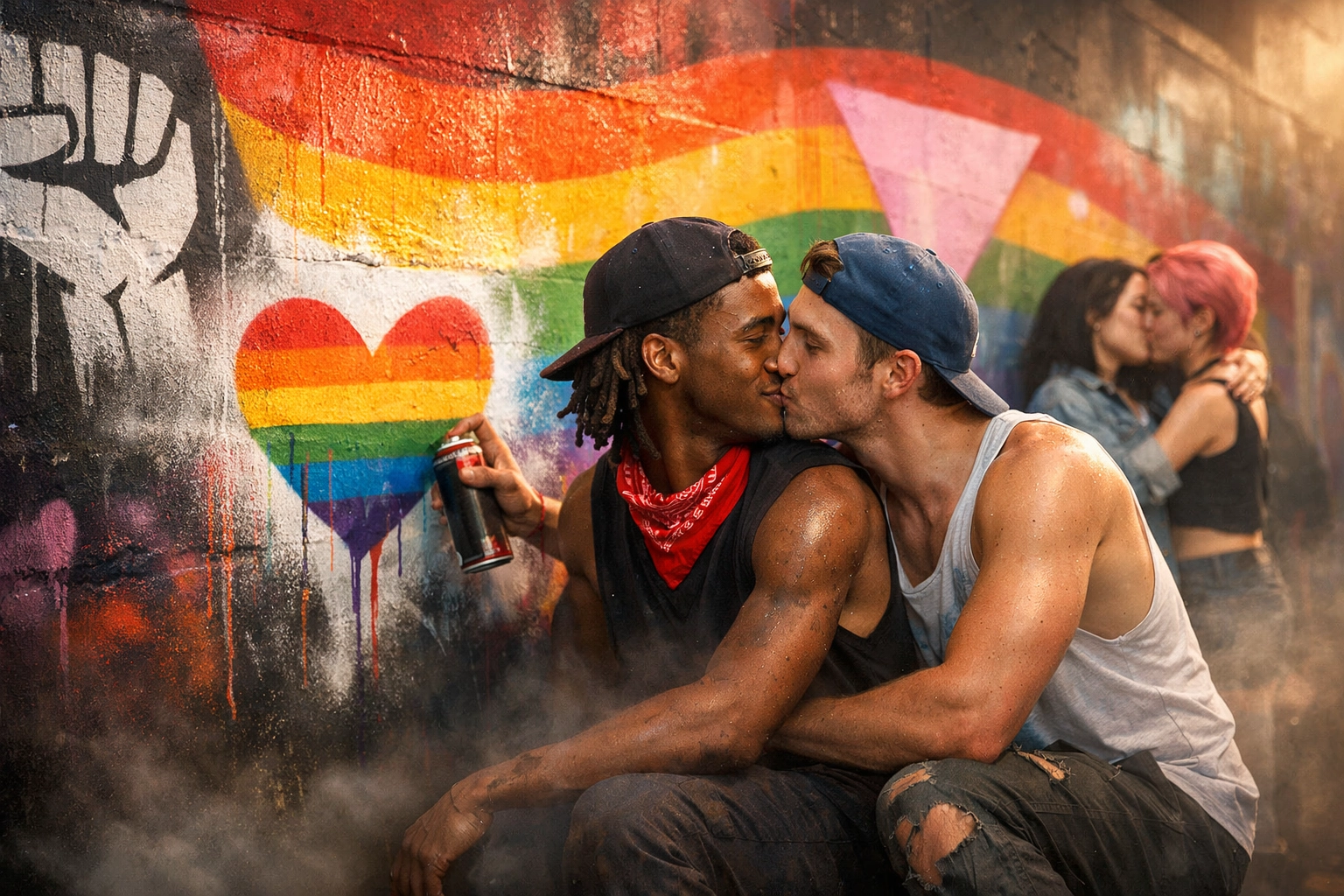
Walk through any major city and you might catch a glimpse of it, a stenciled couple holding hands on a brick wall, a rainbow-hued mural reclaiming a forgotten alley, a wheat-pasted portrait of a drag icon staring boldly into the street. This is queer street art, and it's so much more than pretty pictures on concrete. It's resistance. It's reclamation. It's a middle finger to invisibility wrapped in spray paint and solidarity.
For decades, LGBTQ+ artists have been taking to the streets with cans, stencils, and sheer audacity, transforming cold urban landscapes into vibrant declarations of existence. This isn't just about making cities look cooler (though that's definitely a perk). It's about carving out space in a world that's tried to erase us, claiming territory where we've been told we don't belong, and creating visual love letters to our community in the most public way possible.
When Graffiti Got a Queer Makeover
The story of gay urban art doesn't start with Instagram-worthy murals or commissioned pieces. It starts with a 20-year-old gay street youth named Tommy Lanigan-Schmidt, who in 1968 decided to launch a calculated spray paint stencil campaign on 4th Street in New York's East Village. While most people were just trying to survive being queer in the '60s, Tommy was out here covering the street with white-stenciled text reading "OBJECT ART," challenging every boundary between street culture and high art.
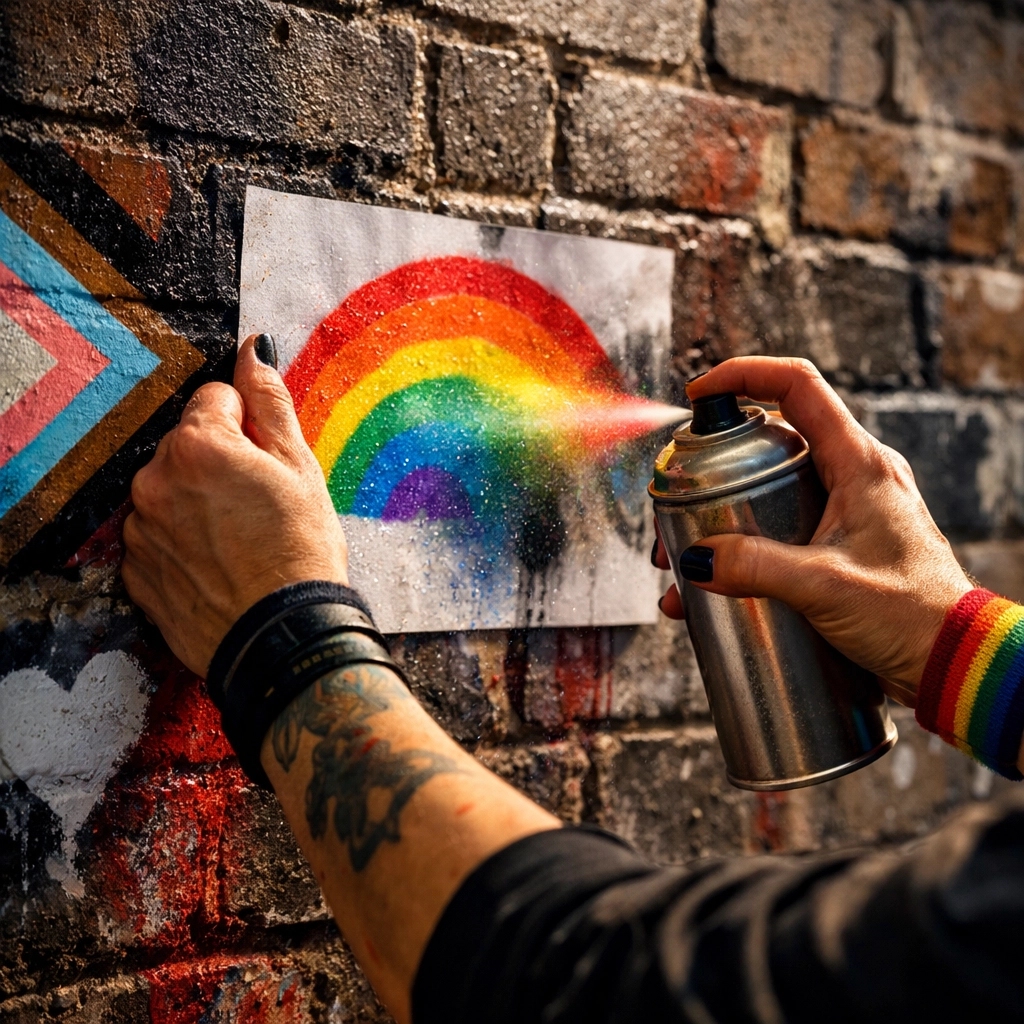
Think about that for a second. This was before Stonewall. Before Pride parades were a thing. And here's this young queer artist using the streets as his canvas, merging activism with artistic innovation, and basically saying, "Yeah, I'm gay, I'm here, and I'm going to make you think about art whether you like it or not." Tommy wasn't just making graffiti: he was reshaping its entire history and proving that queer artists could own public space.
The momentum continued building through the decades. By the 1980s, the AIDS crisis had transformed queer activism into a matter of life and death, and street art became a crucial tool for visibility and protest. ACT UP's iconic imagery flooded city walls, turning grief and rage into powerful visual statements. And then there was Keith Haring, whose work responded to 1980s New York street culture with a distinctly queer lens. In 1989, he created one of his last major works on the second floor of the Lesbian, Gay, Bisexual & Transgender Community Center: a fitting tribute from an artist who understood that art could save lives by creating community and demanding attention.
The Modern Street Art Revolution
Fast forward to the 2000s, and queer street art exploded into something even more deliberate, more confrontational, and honestly? More fabulous. Artists like Jeremy Novy started placing queer images throughout Milwaukee, Chicago, New Orleans, Atlanta, San Francisco, and Los Angeles: not just for aesthetic purposes, but as a direct response to the rampant homophobia baked into graffiti culture itself.
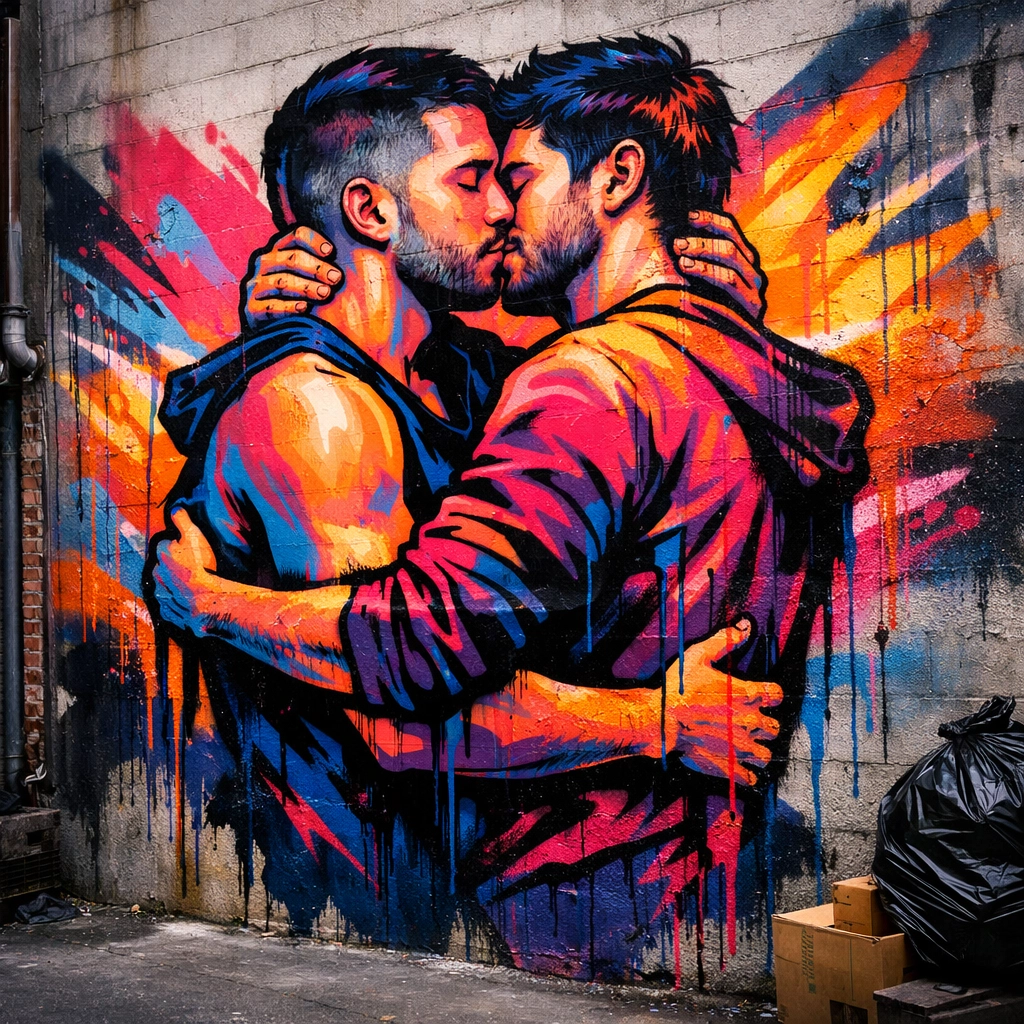
Novy's work is unapologetically queer: rainbow-colored Care Bears, stencils of drag icon Divine, and sexualized portrayals of intimate male relationships splashed across urban landscapes. As he put it, he's "talking about queer history but in a modern way, by using a can of spray paint and a stencil." It's guerrilla history lessons meets visual activism, and it's brilliant.
What makes this work so powerful is its refusal to be polite. While mainstream LGBTQ+ acceptance was pushing for assimilation: "We're just like you!": artists like Aluminum Shoe (operating since 1996) were using street art to challenge that narrative entirely. They weren't interested in fitting in. They were interested in being seen, being loud, and being unapologetically queer in public space.
Other collectives like PRVTDNCR and Bodega Vendetta created provocative visual interventions celebrating queer sexuality and desire without apology. Artists like Paul Le Chein pushed boundaries with work that made some people uncomfortable: and that was exactly the point. Comfort has never been the goal. Visibility has.
Why Every Sticker Matters
Here's something many people don't get about queer street art: it's inherently political, even when it seems playful. A sticker of two male wrestlers kissing isn't just cute (though it is). It's a confrontation against institutional power. It's a challenge to authorities that have historically policed, criminalized, and punished gay culture. Every wheat-paste, every mural, every stencil is an act of defiance that says, "You don't get to decide where we exist."
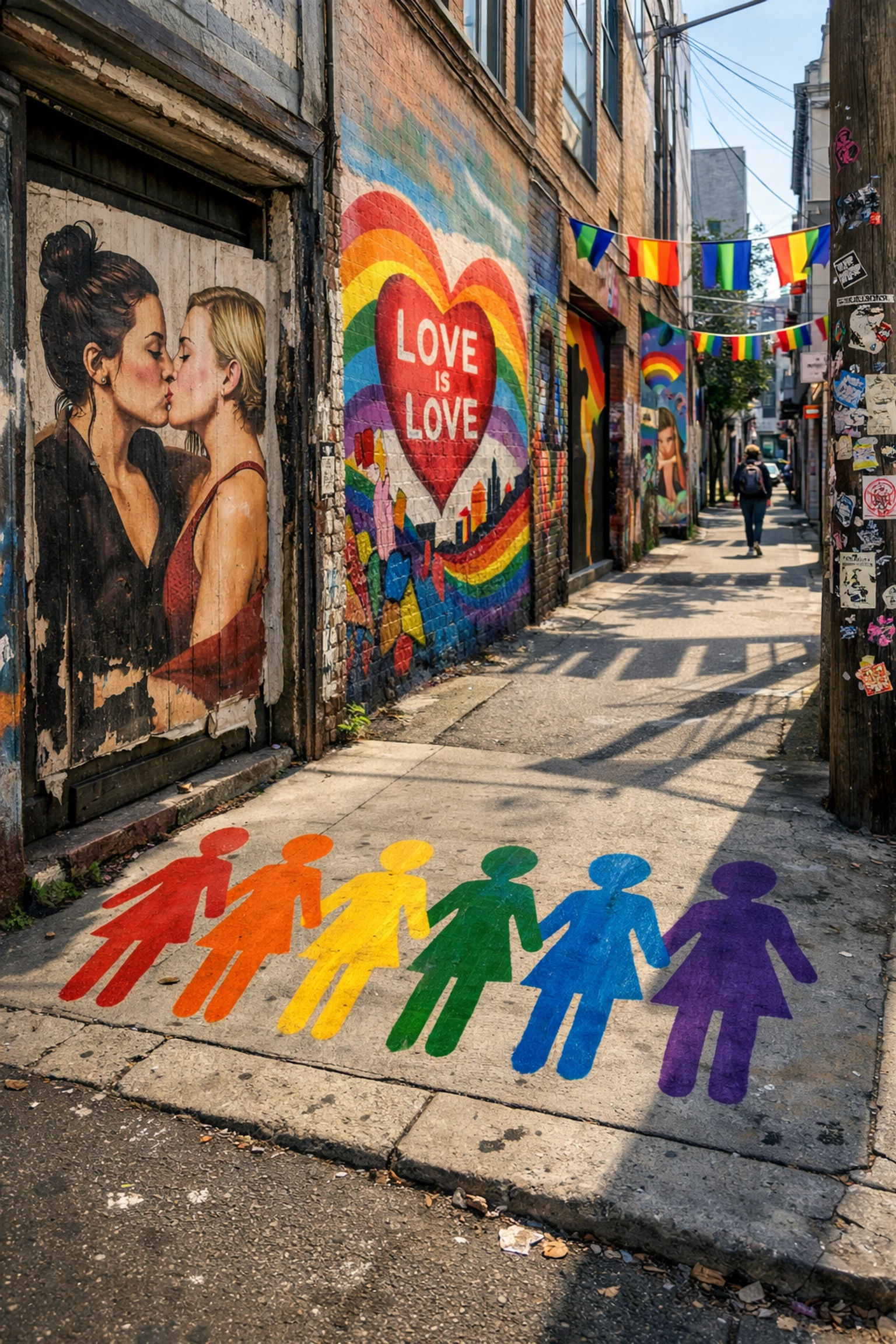
Think about what cities have meant for LGBTQ+ people historically. We've been pushed to the margins, told to keep our lives behind closed doors, made invisible in public spaces. Street art flips that script entirely. It transforms those cold, impersonal urban environments into hotspots of identity and community. It creates visibility in spaces where we've been rendered invisible. It's territorial reclamation with a spray can.
The solidarity aspect of this work runs deep. When a mural of George Michael was vandalized in Australia, the community's response wasn't just outrage: it was action. People overrote the vandalism with messages of love and acceptance, turning an act of hate into a collective expression of support. That's the power of queer street art: it doesn't just exist in isolation. It builds community, creates conversation, and reminds us that we're not alone.
From Berlin to Bangkok: A Global Movement
What started in New York's East Village has spread worldwide. From the vibrant street art scenes in Berlin's Kreuzberg district to the guerrilla murals appearing in São Paulo, from the queer stencils popping up in Melbourne to the bold installations in Bangkok: LGBTQ+ artists are using urban spaces everywhere to tell our stories.
Each city brings its own flavor. In Berlin, where queer history runs deep, street art often references historical activism and the ongoing fight for rights. In more conservative regions, queer street art takes on added significance, becoming even more daring acts of visibility in places where LGBTQ+ people still face severe discrimination.
The beauty of this movement is that it's constantly evolving. New artists are picking up spray cans, experimenting with techniques, incorporating digital elements, and finding fresh ways to make statements. Social media has amplified the reach: a mural in San Francisco can inspire an artist in Tokyo, creating global conversations about queer existence and resistance.
The Stories Behind the Spray Paint
At Read with Pride, we're all about celebrating LGBTQ+ creativity in every form: whether it's MM romance books, gay fiction, or the incredible visual art that transforms our streets. Just like the queer love stories and gay romance novels we champion tell important narratives, street art tells the stories that mainstream institutions have tried to ignore.
These aren't just anonymous artists making pretty pictures. They're historians documenting our community's resilience. They're activists demanding visibility. They're romantics creating public love letters. They're troublemakers refusing to be erased. And honestly? We're here for all of it.
Keep Looking Up (And Down, And Sideways)
The next time you're walking through your city, pay attention. Look for the queer street art hiding in plain sight. Notice the stenciled couples, the rainbow imagery, the bold statements on brick walls. Each piece represents an artist who decided that silence wasn't an option, that invisibility wasn't acceptable, and that public space belongs to all of us.
Queer street art reminds us that our stories deserve to be told loudly, colorfully, and without permission. It proves that creativity and resistance go hand in hand. And it shows that even in a world that's tried to keep us hidden, we'll find ways to be gloriously, defiantly visible.
Whether you're reading LGBTQ+ fiction, supporting queer authors, or simply appreciating the art around you, remember: every act of queer visibility matters. Every story counts. Every splash of paint on a city wall is part of our collective history.
Stay visible. Stay proud. And keep your eyes open for the spray-painted solidarity all around you.
Connect with us and discover more LGBTQ+ stories:
🌈 Visit Readwithpride.com
📘 Facebook
🐦 Twitter
📸 Instagram
#QueerStreetArt #LGBTQArt #GayUrbanArt #ReadWithPride #QueerArtists #StreetArtSolidarity #LGBTQCreativity #GayBooks #MMRomance #QueerFiction #GayRomanceBooks #LGBTQPride #UrbanArtActivism #QueerVisibility #GayLoveStories #PrideInArt

Leave a Reply
You must be logged in to post a comment.