

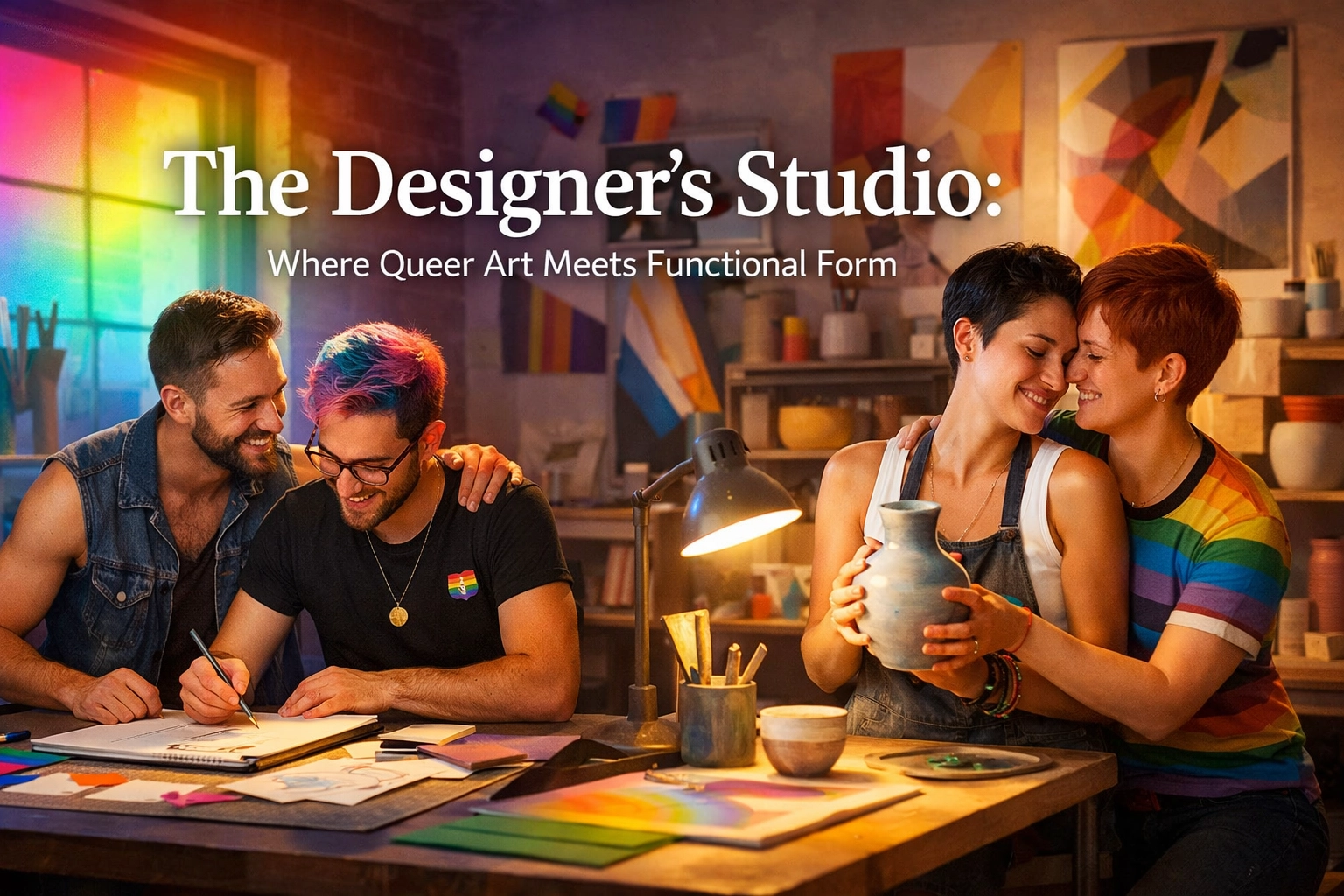
There's something quietly revolutionary happening in design studios across the globe. It's not just about creating beautiful objects or functional furniture, it's about infusing everyday items with queer energy, storytelling, and unapologetic authenticity. Welcome to the world where LGBTQ+ designers are transforming spaces, objects, and experiences through a lens that's been too long overlooked in mainstream design circles.
Beyond the Binary: What Makes Queer Design Different?
Let's get real for a second. Traditional design has often been… well, straight. Not just in terms of the people creating it, but in its approach, rigid categories, clear boundaries, masculine or feminine, art or function. Pick a lane and stay there.
Queer design says "nah, we're good" and proceeds to blur every line in sight.
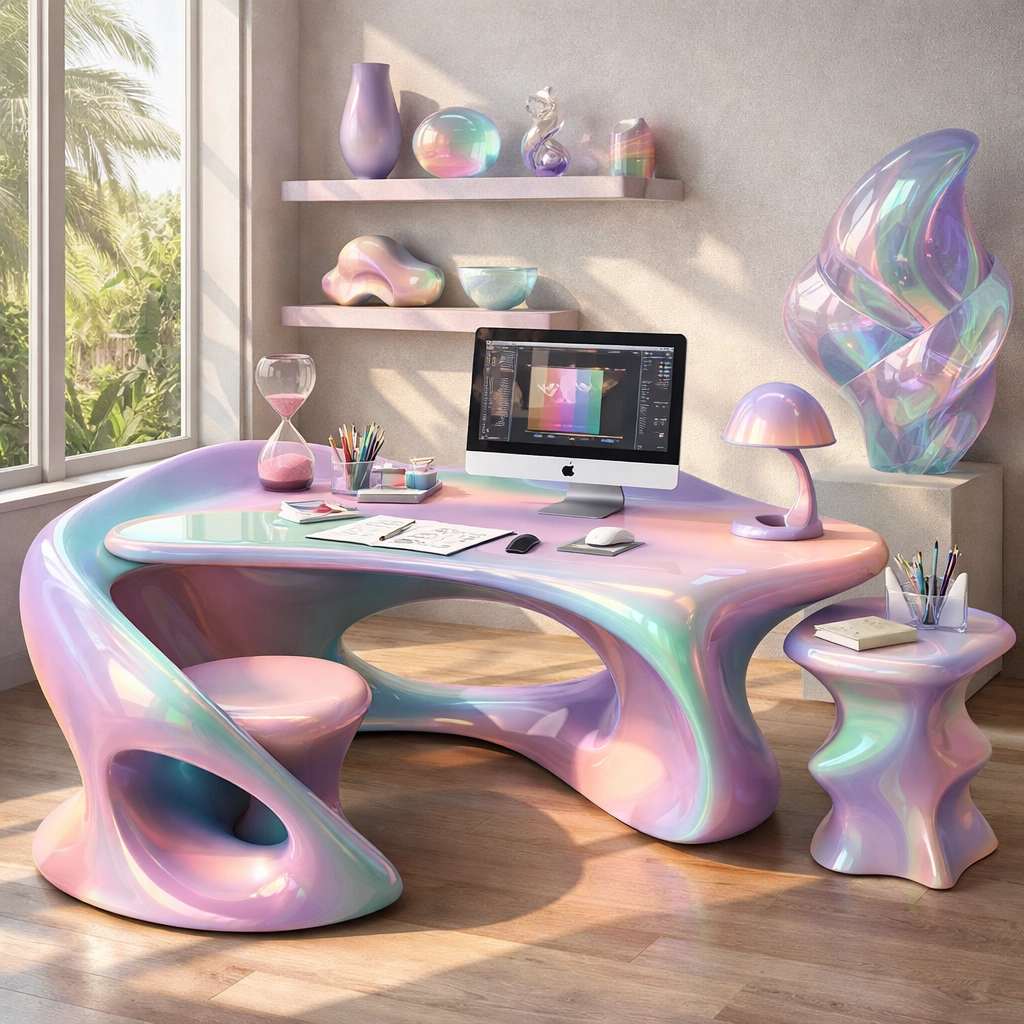
At its core, queer design isn't about slapping rainbows on everything (though we do love a good rainbow). It's about thinking beyond categories and embracing fluidity. It's furniture that's both sculpture and seating. It's textiles that tell stories of gender exploration. It's glass work that captures the complexity of queer intimacy. The energy of the work matters more than what shelf it belongs on at the design store.
Studio S II, co-founded in 2020 by designers Erica Sellers and Jeremy Silberberg, exemplifies this philosophy perfectly. Operating as both a functional design studio and a curatorial space, they've created an environment where different kinds of artists and objects coexist in ways that would make traditional designers clutch their mood boards in confusion. And honestly? That's the point.
The Exhibition That Changed the Conversation
When "Design Dysphoria" opened its doors as an inaugural exhibition, it wasn't just another gallery show. Co-curated by Grace Whiteside, Liz Collins, and Studio S II, it centered work by women, trans, and non-binary designers whose creations actively refuse to stay in their assigned categories.
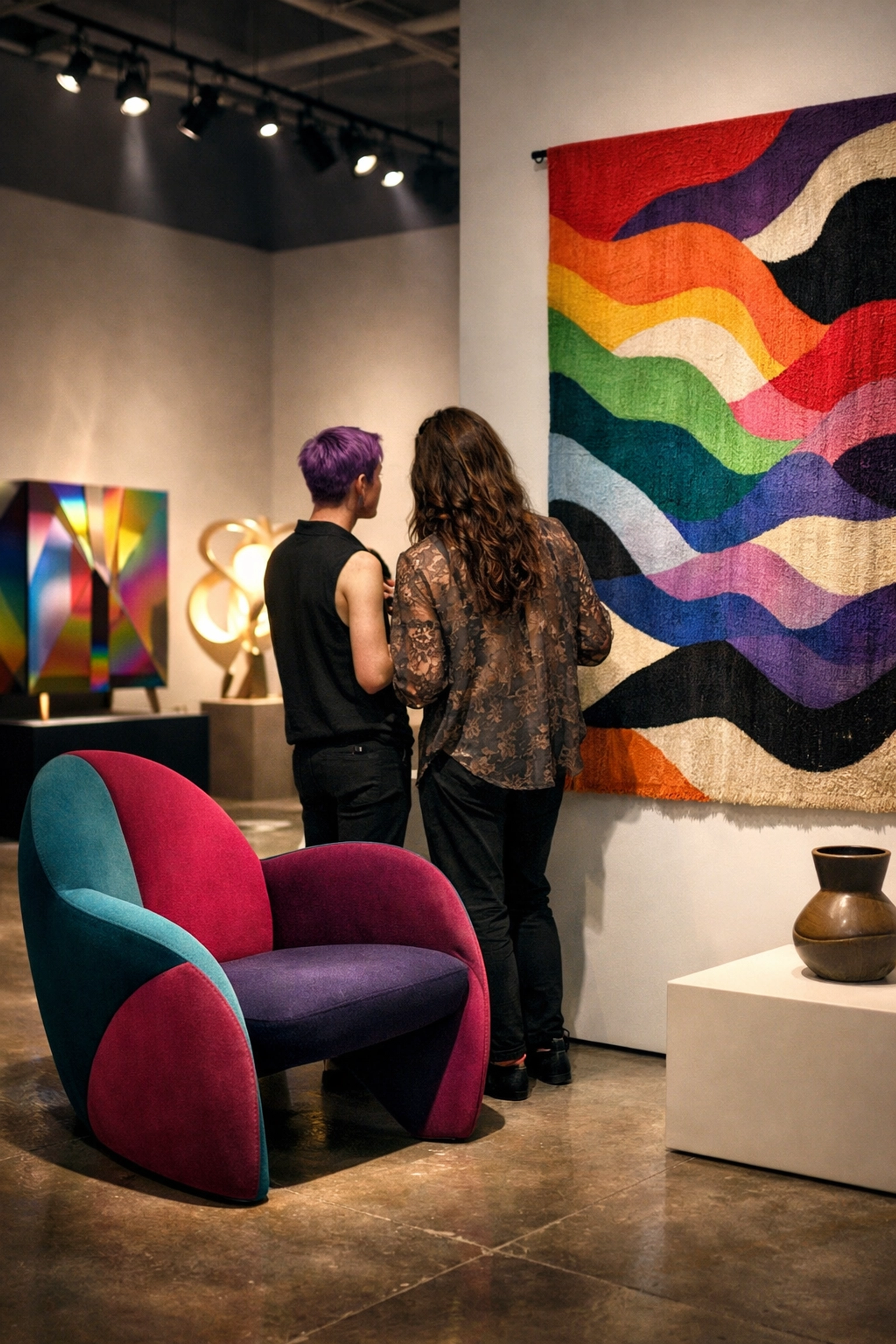
The name itself, "Design Dysphoria", is brilliant in its subversion. It takes a term often associated with gender identity struggles and reframes it as a design principle: the discomfort with assigned categories, the desire to exist outside rigid classifications, the liberation found in rejecting what others think you should be.
This isn't design for design's sake. Every piece carries weight, intention, and narrative. A ceramic bowl becomes a meditation on hands that create and nurture. A textile artwork explores the fabric of queer community. Glass pieces capture light and identity in ways that feel both fragile and unbreakable, much like queer existence itself.
From Studio to Social Movement
The beauty of this movement is that it's building infrastructure while creating art. Platforms like Queer Design Club, founded in 2019 by Rebecca Booker and John Voss, operate as networking directories and communities for LGBT+ designers. It's not just about showcasing work, it's about connection, mentorship, and creating space for voices that have historically been shut out of design conversations.
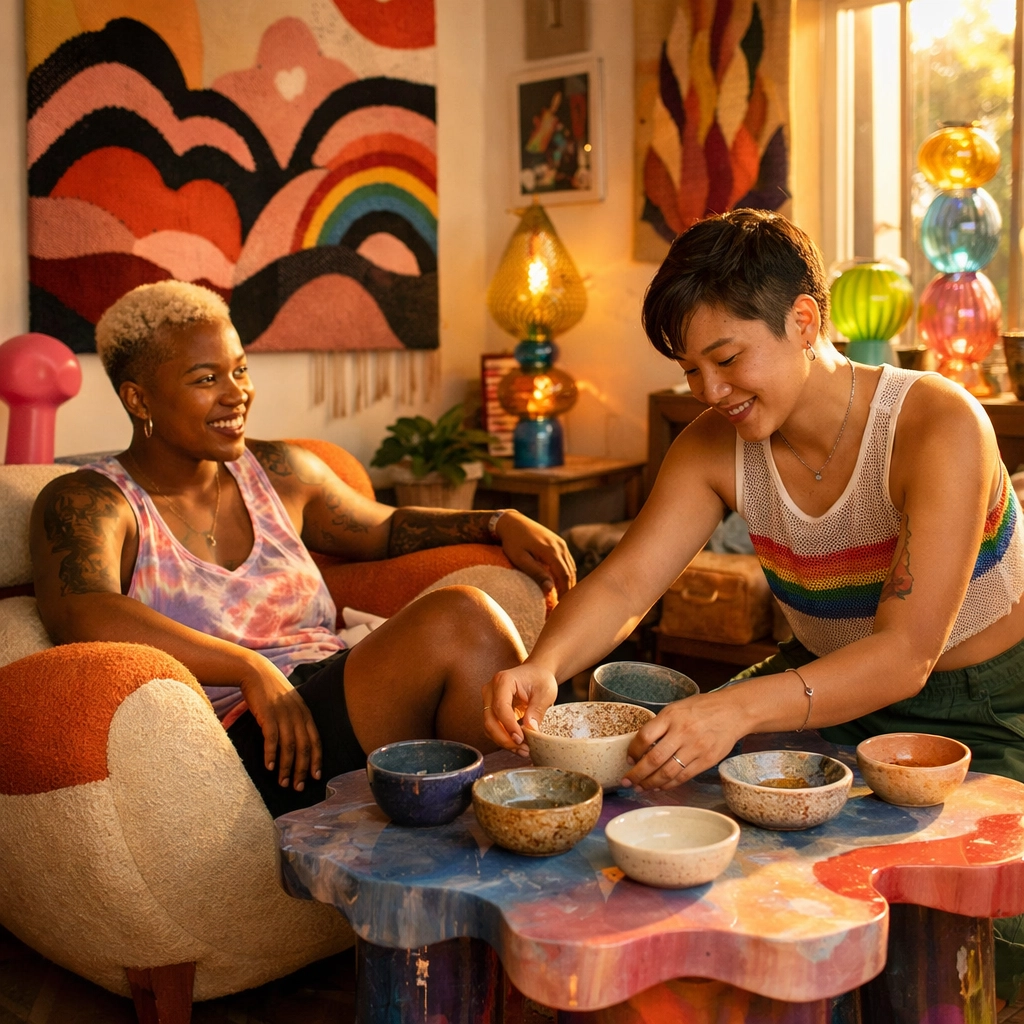
Then you've got ventures like QueerCraft, producing gaming accessories and collectibles that blend queer aesthetics with everyday functionality. Because why shouldn't your dice set or gaming controller reflect your identity? Why shouldn't the objects you interact with daily feel like they were made for you, not in spite of you?
These aren't niche markets or passion projects, they're the vanguard of a design revolution that recognizes LGBTQ+ people aren't just consumers but creators with unique perspectives that enrich the entire field.
The Personal Is Functional
What makes queer functional design so compelling is how it transforms the ordinary into the meaningful. A chair isn't just a place to sit, it's a statement about who gets to take up space and how. Tableware isn't just about eating, it's about gathering, community, chosen family sharing meals.
Many queer designers explicitly focus on reclaiming space and celebrating identity through their work. They're asking questions like: What does gender-neutral design actually look like beyond just making everything gray? How can furniture facilitate different kinds of intimacy and relationships? What stories can we tell through the objects that fill our homes?
The answers are as diverse as the queer community itself. Some designers create pieces that are overtly political, embedding activism into every curve and angle. Others explore subtlety, objects that feel queer in ways that are hard to articulate but instantly recognizable to those who know.
Where Art and Function Kiss and Make Up
Here's where it gets really interesting: queer designers are masters at the intersection. They're equally comfortable in galleries and living rooms, creating pieces that function as both art objects and everyday items. A textile piece might hang on a wall as fine art one day and be worn as a garment the next. Ceramic work serves food and serves looks simultaneously.
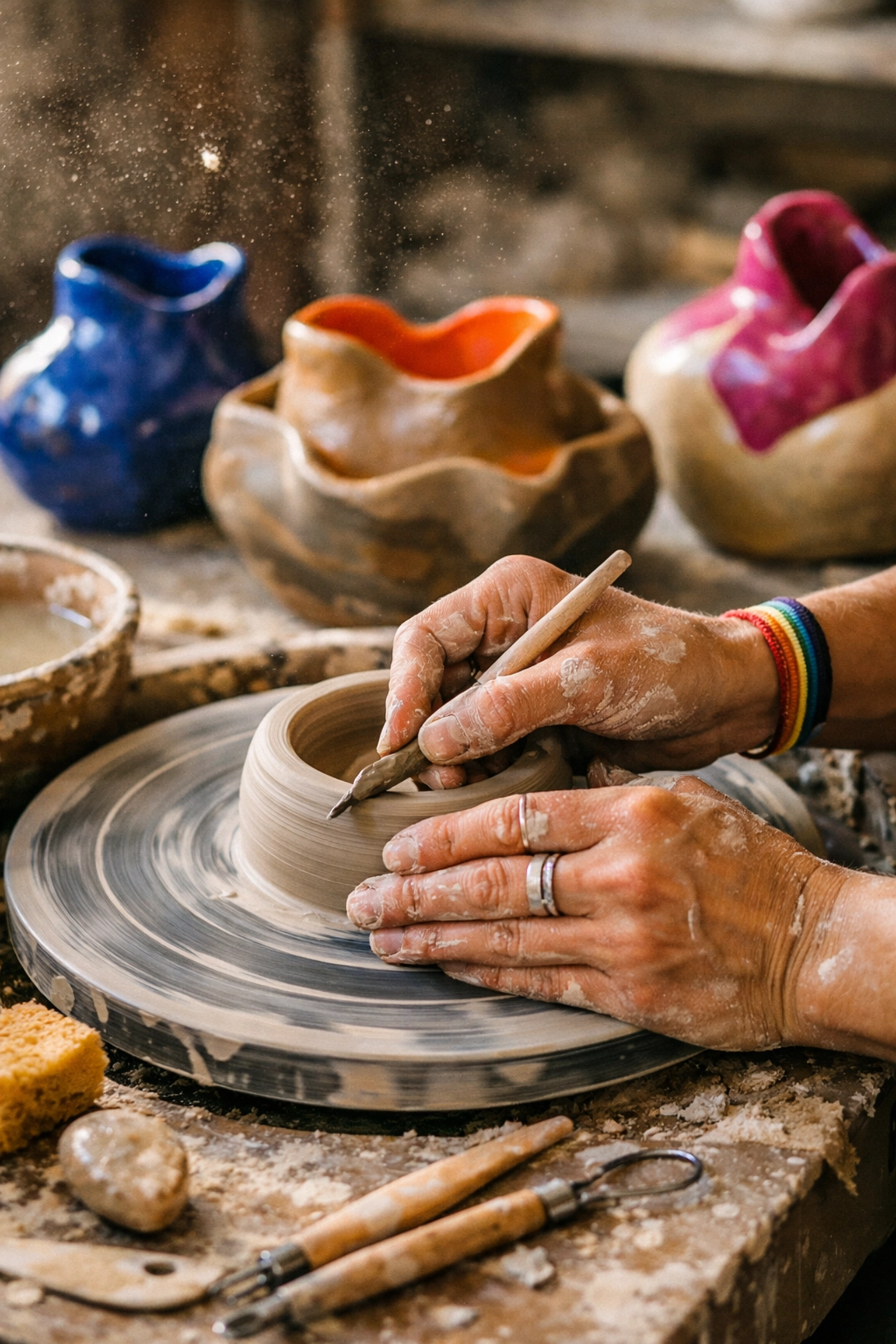
This refusal to choose between artistic expression and practical function mirrors the queer experience itself, we've never fit neatly into one box, so why should our furniture? Why should our homes look like everyone else's when our lives, relationships, and identities break every mold they've tried to squeeze us into?
The work coming out of queer design studios often explores themes of gender, intimacy, and identity through materials and form. Glass pieces might play with transparency and refraction as metaphors for visibility and perception. Furniture design might challenge assumptions about body types, relationship structures, or how we use domestic space.
The Read with Pride Connection
At Read with Pride, we celebrate all forms of queer creativity and storytelling. While we're passionate about LGBTQ+ fiction and MM romance books, we recognize that queer narratives exist everywhere, in the novels we publish, yes, but also in the design of the spaces where you curl up to read them.
The same authentic voice that makes great gay romance novels resonate is present in queer design work. It's about truth-telling, whether through words or wood, characters or ceramics. It's about creating things that reflect our real lives, our actual desires, our genuine aesthetics: not sanitized versions meant to make straight audiences comfortable.
Building Tomorrow's Studios Today
The infrastructure for queer design is growing rapidly. More galleries are hosting exhibitions focused on LGBTQ+ designers. More design schools are incorporating queer theory into their curricula. More consumers are actively seeking out queer-made products because they want their purchasing power to support authentic queer voices.
This matters because representation in design isn't just about seeing rainbow flags (though we do love our flags). It's about young queer people seeing that they can build careers creating beautiful, functional, meaningful objects. It's about queer elders being able to furnish their homes with pieces that reflect a lifetime of experience. It's about all of us having access to design that understands us.
The Future Is Fluid
As we move through 2026 and beyond, expect to see queer design continue expanding its influence. The boundaries between art, design, craft, and function will keep blurring. More studios will open. More platforms will emerge. More people will discover that the objects in their lives can be as queer as they are.
Because ultimately, that's what this movement is about: permission. Permission to create outside established categories. Permission to design for bodies, relationships, and lives that don't fit templates. Permission to make things that are unapologetically, fabulously, authentically queer.
So next time you're furnishing your space, consider supporting queer designers. Choose pieces that tell stories, that challenge assumptions, that make you feel seen. And if you're a creative yourself, remember that your perspective matters: in fiction, in design, in every form of making and building.
The designer's studio is where queer art meets functional form, and honey, the results are absolutely stunning.
Explore more LGBTQ+ stories and creative voices at Read with Pride
Follow us:
- Facebook: https://www.facebook.com/profile.php?id=61586883027069
- Twitter: https://x.com/Read_With_Pride
- Instagram: https://www.instagram.com/read.withpride/
#QueerDesign #LGBTQArt #ReadWithPride #QueerCreatives #FunctionalArt #LGBTQDesigners #QueerAesthetics #DesignRevolution #LGBTQ2026 #QueerArtists #AuthenticDesign #QueerCommunity #LGBTQPride #QueerStories #InclusiveDesign #QueerMakers #GayDesign #TransDesigners #NonBinaryArt #QueerFunctionalDesign

Leave a Reply
You must be logged in to post a comment.