

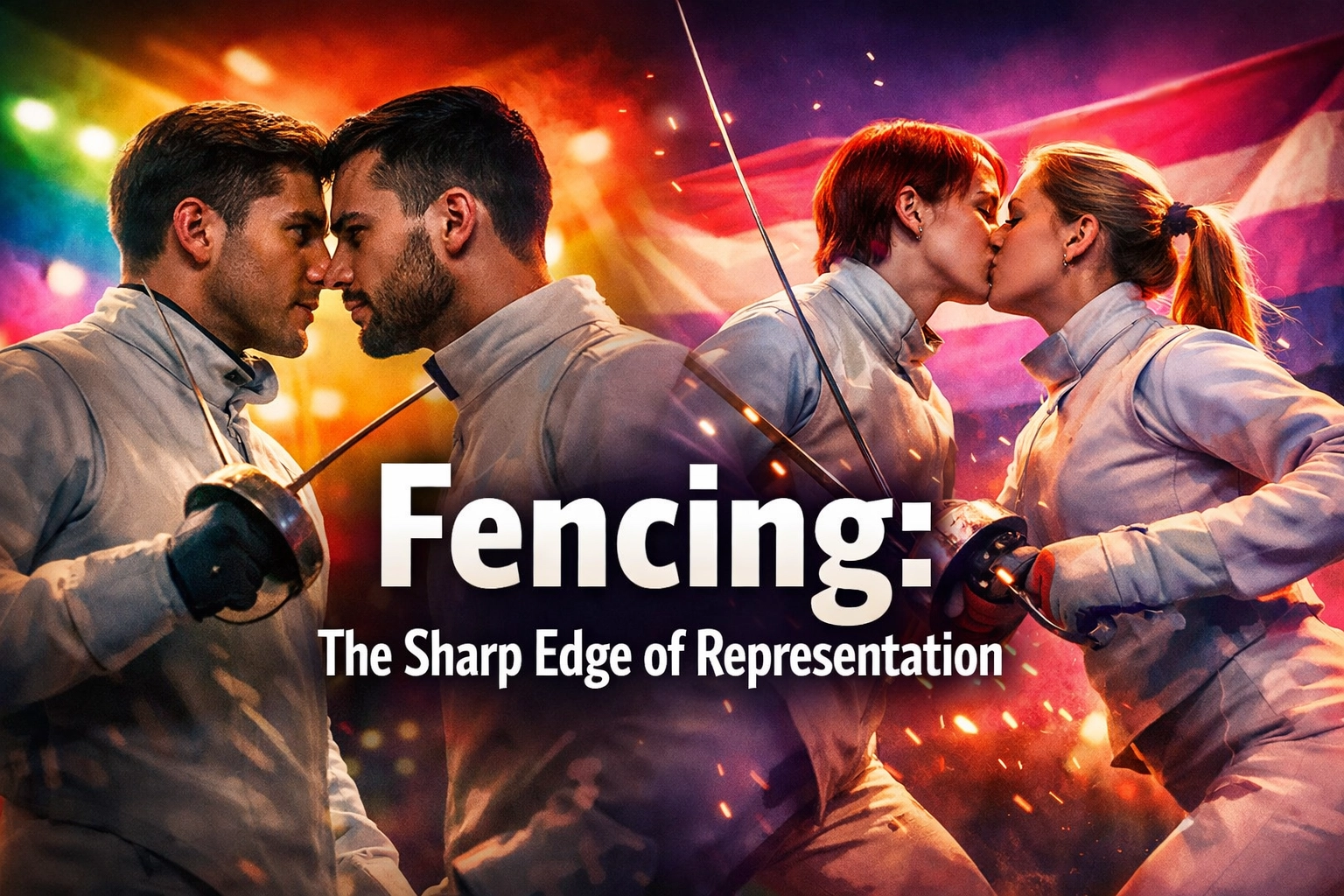
There's something undeniably sexy about fencing. Maybe it's the elegant footwork, the sharp precision, or the way those uniforms somehow manage to be both mysterious and form-fitting. Or perhaps it's the fact that for centuries, fencing has been wrapped up in images of nobility, honor, and those delicious historical tropes we love so much in MM romance books, duels at dawn, secret training sessions, forbidden rivalries that turn into something much more heated.
But behind the romantic sheen, fencing has a complex history with representation. Like many elite sports, it's had to reckon with its exclusionary past while carving out space for a more diverse future. And honestly? That journey mirrors a lot of what we see in gay romance novels and LGBTQ+ fiction, the struggle for visibility, the breaking down of barriers, and the triumph of finally seeing yourself reflected in spaces that once felt impossibly closed off.
The Gentleman's Game (And All Its Baggage)
Let's get real about fencing's past. This wasn't just a sport, it was deliberately crafted as an exclusive club for the wealthy and privileged. American fencing masters in particular marketed it as "the ultimate gentleman's game," creating a mythos that kept the riff-raff (read: anyone who wasn't white, male, and loaded) firmly on the outside looking in.
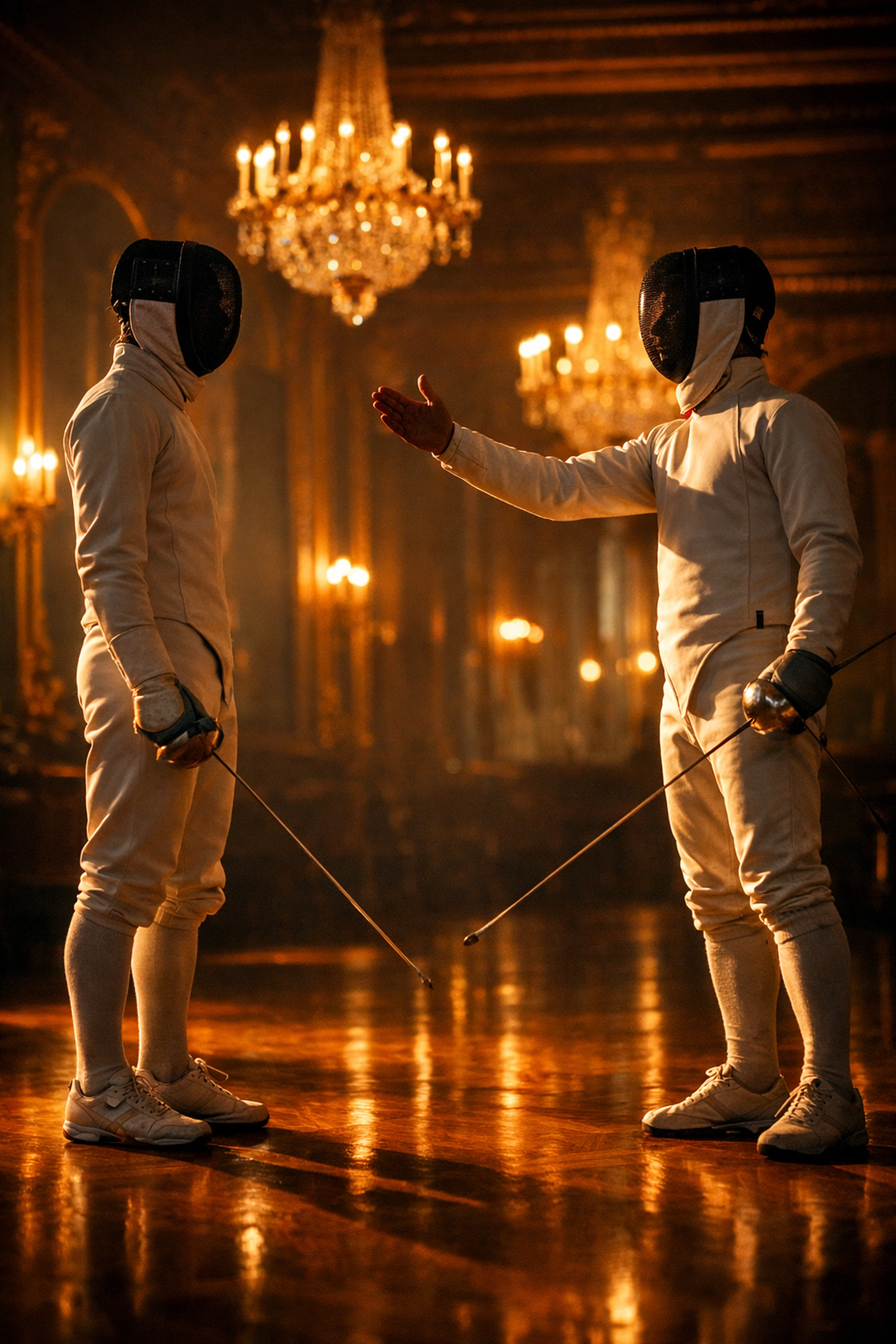
This wasn't accidental. The sport's power brokers actively worked to maintain racial and class hierarchies, embedding discrimination into fencing's very identity. Women were allowed to participate, sure, but often their involvement was framed around looking graceful rather than being fierce athletes. Sound familiar? It's the same gatekeeping we've seen in publishing, where LGBTQ+ fiction and queer authors had to fight tooth and nail for recognition.
But here's where it gets interesting. Those historical noble tropes, the aristocratic duelist, the heir with a secret to protect, the rivalry between two skilled swordsmen that crackles with unspoken tension, they weren't just fantasy. Fencing really was the domain of nobility, with all the drama, honor codes, and yes, occasionally homoerotic undertones that makes for brilliant gay historical romance.
Behind The Mask: Where Identity Disappears
Here's what makes fencing genuinely radical, though: once you put on that mask and uniform, all the usual identity markers vanish. You can't tell if your opponent is rich or poor, Black or white, male or female, gay or straight. All that matters is skill, strategy, and respect for the blade.

Think about that for a second. In a sport historically built on exclusion, the actual act of fencing creates equality. The moment you salute your opponent and the bout begins, it's just two people testing each other's mettle. No assumptions, no prejudices, just pure athletic connection.
This became beautifully symbolic when Ibtihaj Muhammad became the first U.S. Olympic athlete to compete wearing a hijab at the 2016 Rio Games. She fenced sabre, and while her religious identity was visible to the world, on the strip, behind her mask, she was simply a world-class athlete. The same principle applies to LGBTQ+ fencers, the sport's structure creates a space where sexual orientation and gender identity become irrelevant to competitive success.
The Romance of Steel and Honor
Now, let's talk about why fencing shows up so often in our favorite MM romance books. There's something inherently romantic about the sport, the grace, the danger, the intensity of two people locked in a dance of blades. It's physical without being brutish, intellectual without being cold, and it requires both opponents to be perfectly attuned to each other's movements.
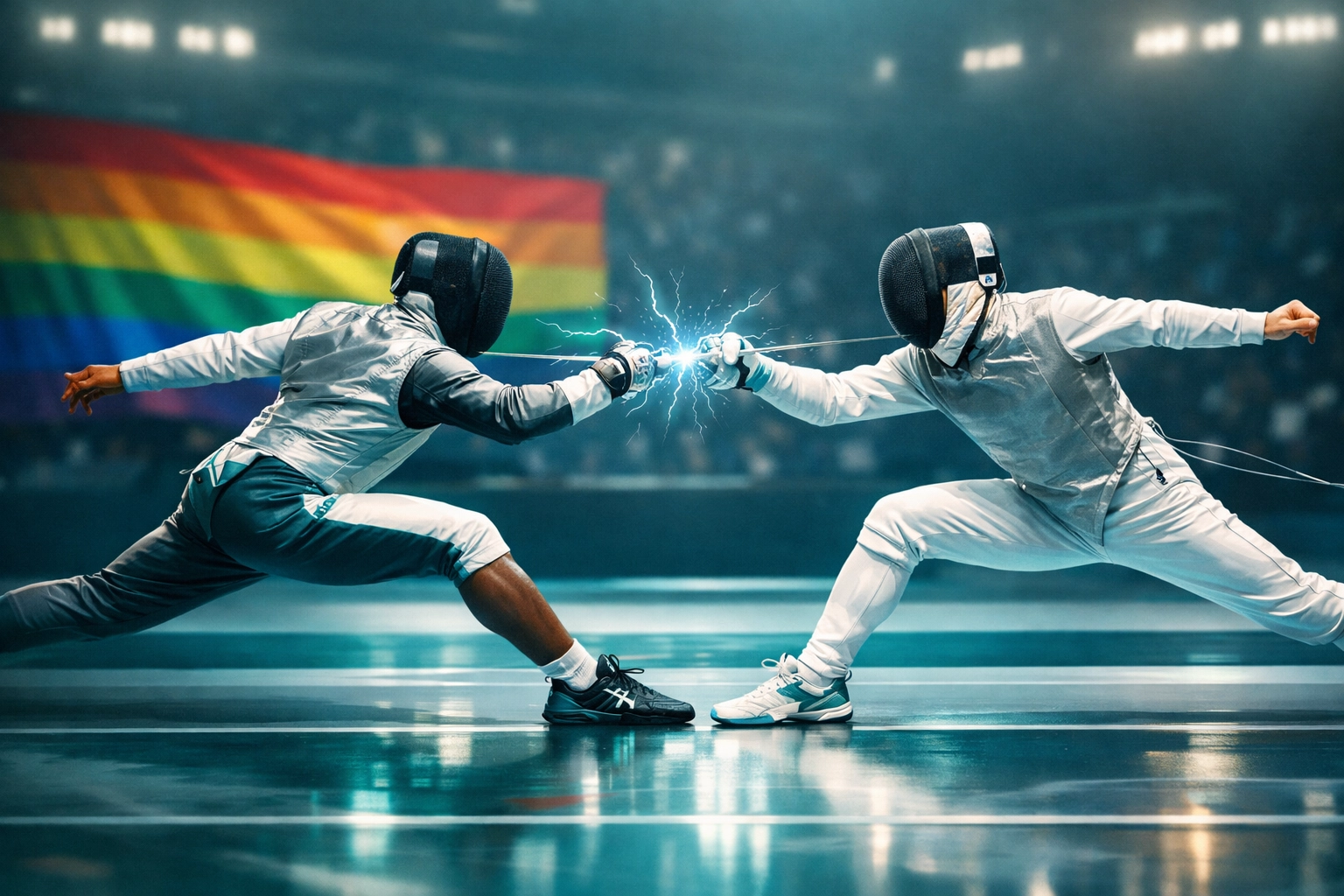
Those classic romance tropes practically write themselves. The enemies to lovers arc where two rival fencers can't stand each other until that moment when rivalry transforms into something else entirely. The forced proximity of training together, bodies close, breathing hard, awareness building with every practice session. The mentor/student dynamic with all its delicious power imbalance and eventual leveling of the playing field.
And let's not forget the historical settings. A fencing master in Regency England teaching a young lord the art of the blade? A secret midnight duel to defend someone's honor? Two competitors at a European tournament who can't keep their eyes, or hands, off each other? This is the stuff gay fantasy romance and MM historical romance dreams are made of.
Representation On The Modern Strip
Today's fencing world looks dramatically different from its exclusionary past. While the sport still battles with accessibility issues (equipment isn't cheap, and clubs aren't everywhere), there's growing recognition that fencing belongs to everyone who wants to pick up a blade.
We're seeing more fencers of color, more women dominating in competitions, and yes, more openly LGBTQ+ athletes representing at every level. The sport that once aggressively marketed itself as white and elite is slowly but surely becoming something more representative of the actual diversity in our communities.
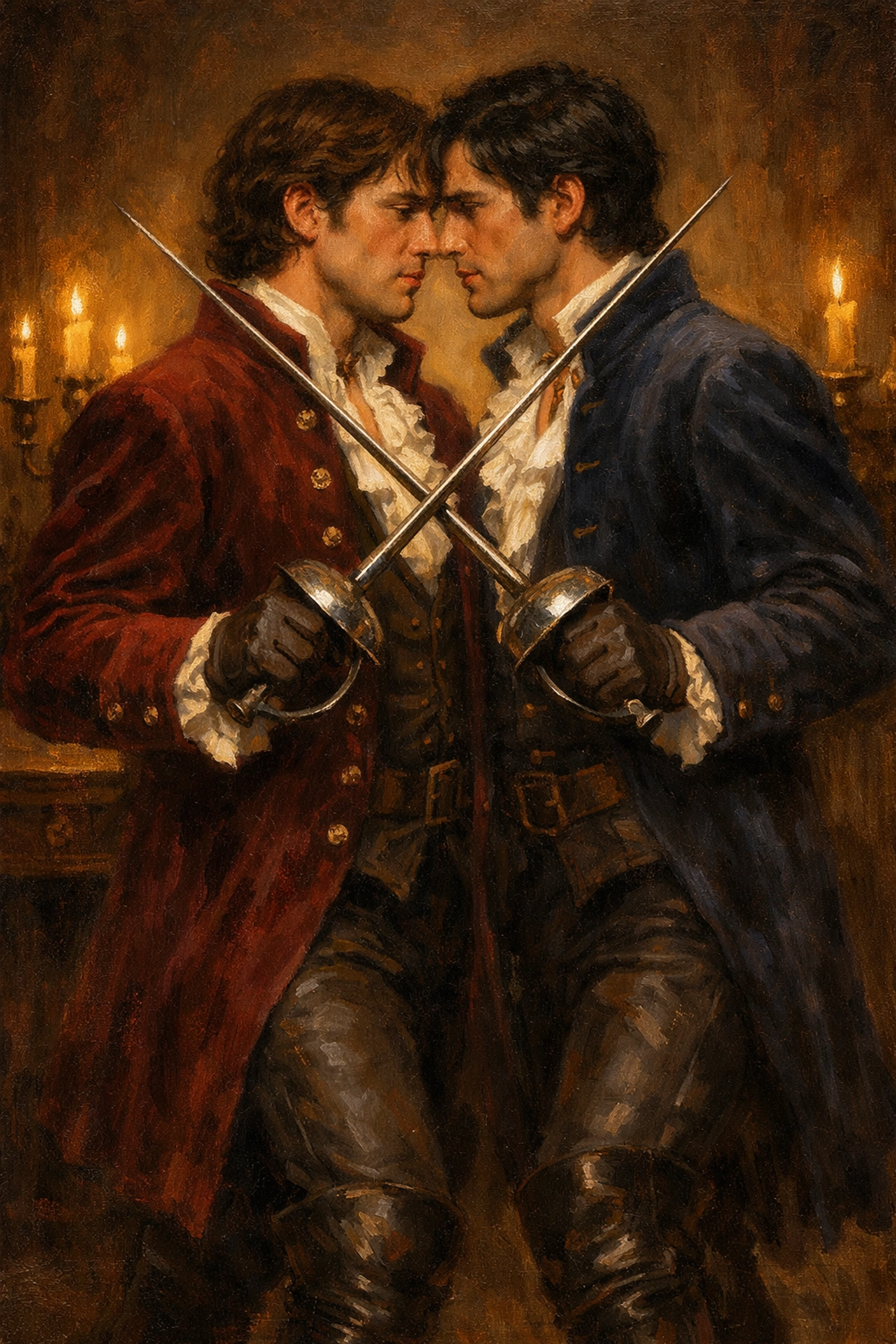
This shift matters because representation in sports: like representation in LGBTQ+ books: tells people they belong. When you can see someone like you succeeding, excelling, being celebrated for their skill and dedication, it opens doors. It says: this space is yours too.
Reading Between The Parries
So what does all this have to do with curling up with a great gay romance book from Read with Pride? Everything, actually.
Sports romance is huge in the MM romance world, and fencing brings something special to the table. It's got the athleticism and competition of any sports romance, but with added elegance, historical weight, and those gorgeous tropes about honor and skill. Whether you're into contemporary MM romance with modern athletes or historical gay fiction featuring noble duelists, fencing delivers.
Plus, reading about representation: in sports, in literature, in any space that matters: reminds us why diverse stories are so crucial. Every time an LGBTQ+ athlete succeeds, every time a queer author publishes a book that speaks to our experiences, every time we see ourselves in the media we consume, we're rewriting the narrative that once said we didn't belong.
The Point (Pun Intended)
Fencing's journey from exclusive gentleman's club to increasingly diverse sport mirrors the broader fight for LGBTQ+ representation everywhere. It's a reminder that progress isn't linear, that barriers are meant to be broken, and that sometimes the most restrictive spaces can become the most unexpectedly inclusive.
And while real-world representation matters enormously, there's something powerful about fiction too. The gay novels and MM fiction we read shape how we see ourselves and what we believe is possible. They let us imagine worlds where LGBTQ+ characters aren't just present but central, where love stories get to be sweeping and romantic, where the dashing fencer doesn't just win the bout: he gets the guy too.
So whether you're picking up a blade yourself or picking up the latest gay romance novel featuring a competitive fencer, remember: representation is always the sharp edge that cuts through exclusion. And that's something worth celebrating.
Looking for MM romance books featuring athletic heroes, historical duels, or just swoon-worthy love stories? Check out Read with Pride's collection for your next great read.
Follow us for more LGBTQ+ content:
#MMRomance #GayRomance #LGBTQBooks #ReadWithPride #SportsRomance #FencingRepresentation #GayFiction #QueerLiterature #MMBooks #GayRomanceBooks #LGBTQRepresentation #DiversityInSports #MMHistoricalRomance #GayContemporaryRomance #2026GayBooks

Leave a Reply
You must be logged in to post a comment.