

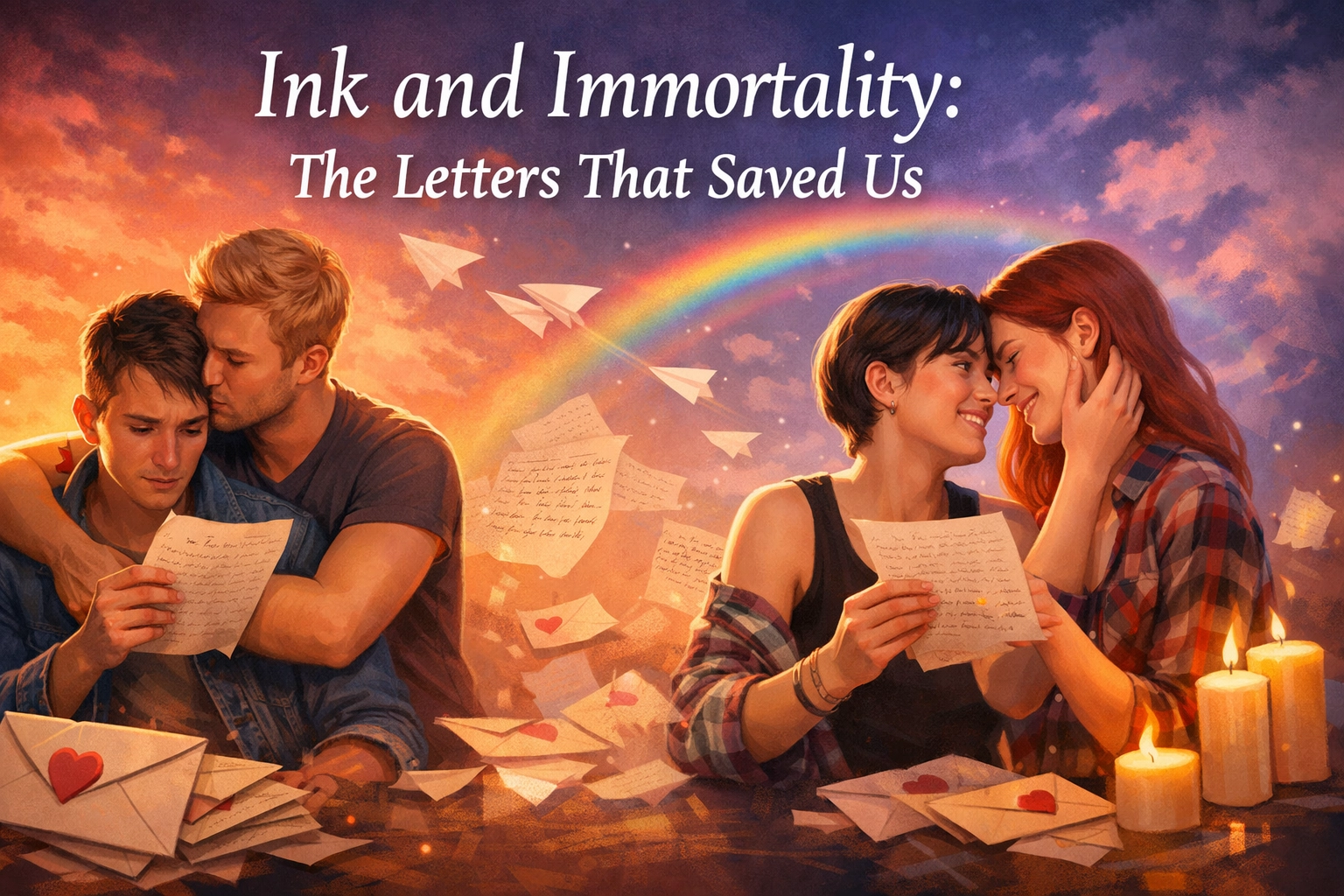
There's something achingly beautiful about a love letter written in wartime. The paper might be yellowed now, the ink faded, but the words, God, the words still burn with the same desperate intensity they did decades ago. When two men loved each other during times when that love could get them court-martialed, imprisoned, or worse, every letter became an act of defiance. Every carefully coded phrase was a rebellion. Every envelope sealed was hope folded into paper.
When Silence Was Survival
During World War II, gay servicemen existed in a paradox: fighting for freedom while hiding their own truths. The military didn't just discourage homosexuality, it criminalized it. Yet love, as it always does, found a way. It whispered between the lines of seemingly innocent correspondence. It hid in plain sight, disguised as "brotherhood" and "comradeship" to anyone who didn't know how to read the subtext.
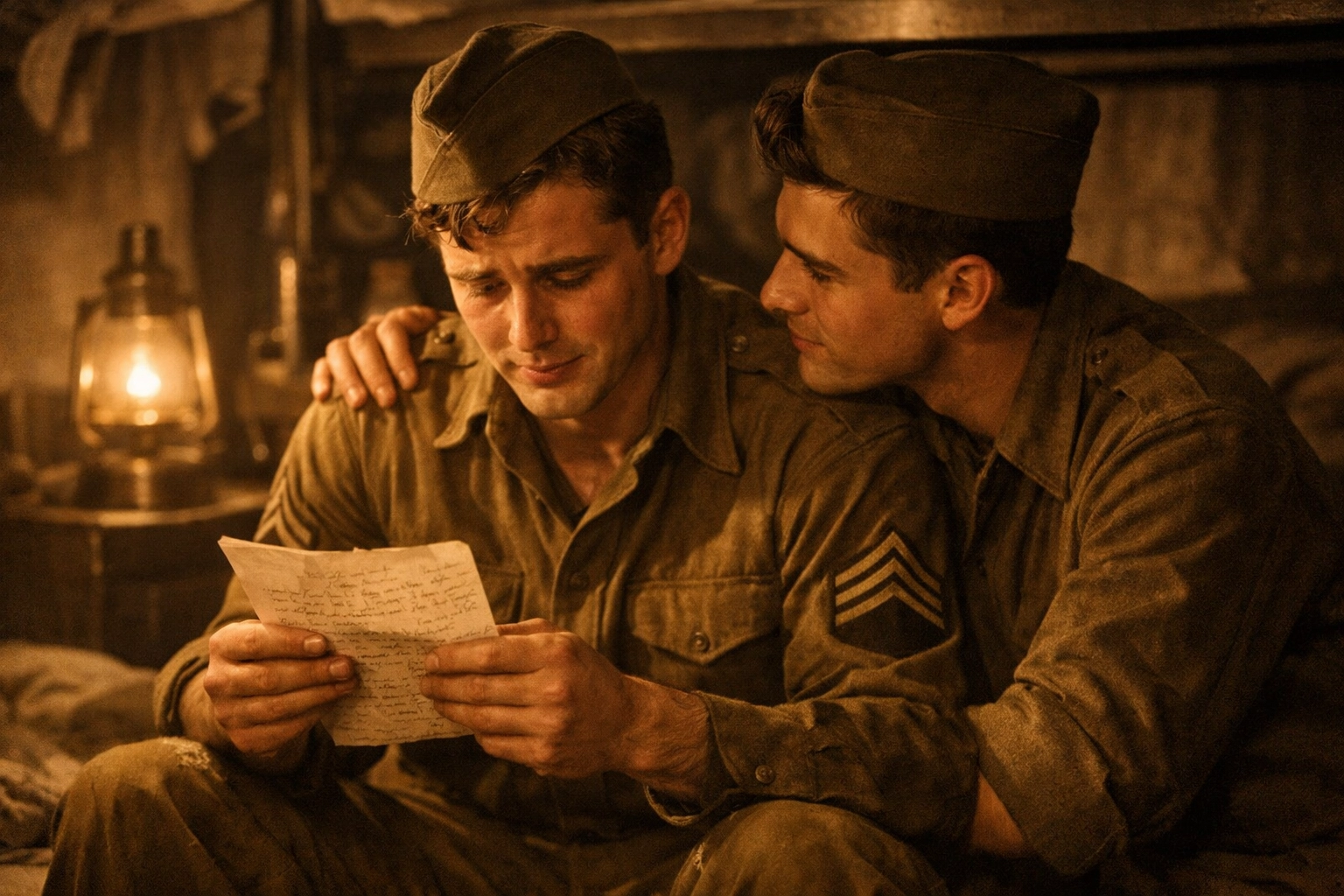
Letters were lifelines. They were the only way to say "I love you" when those three words could destroy everything. Some men developed elaborate codes, references to books they'd both read, inside jokes, nicknames that meant everything and nothing. One letter might mention missing "that spot by the river where we talked about Whitman" when what it really said was "I miss your touch, your kiss, the weight of your body against mine."
Emily Dickinson once wrote, "A letter always seemed to me like immortality." For gay lovers separated by war, letters weren't just immortal, they were proof of existence. In a world that demanded they erase themselves, these written words insisted: We are real. This love is real.
The Weight of Words
What makes wartime correspondence between male lovers so powerful is the stakes. Every letter carried risk. Military censors read everything. One careless phrase could mean discovery, discharge, imprisonment. Yet men wrote anyway, compelled by a force stronger than fear.
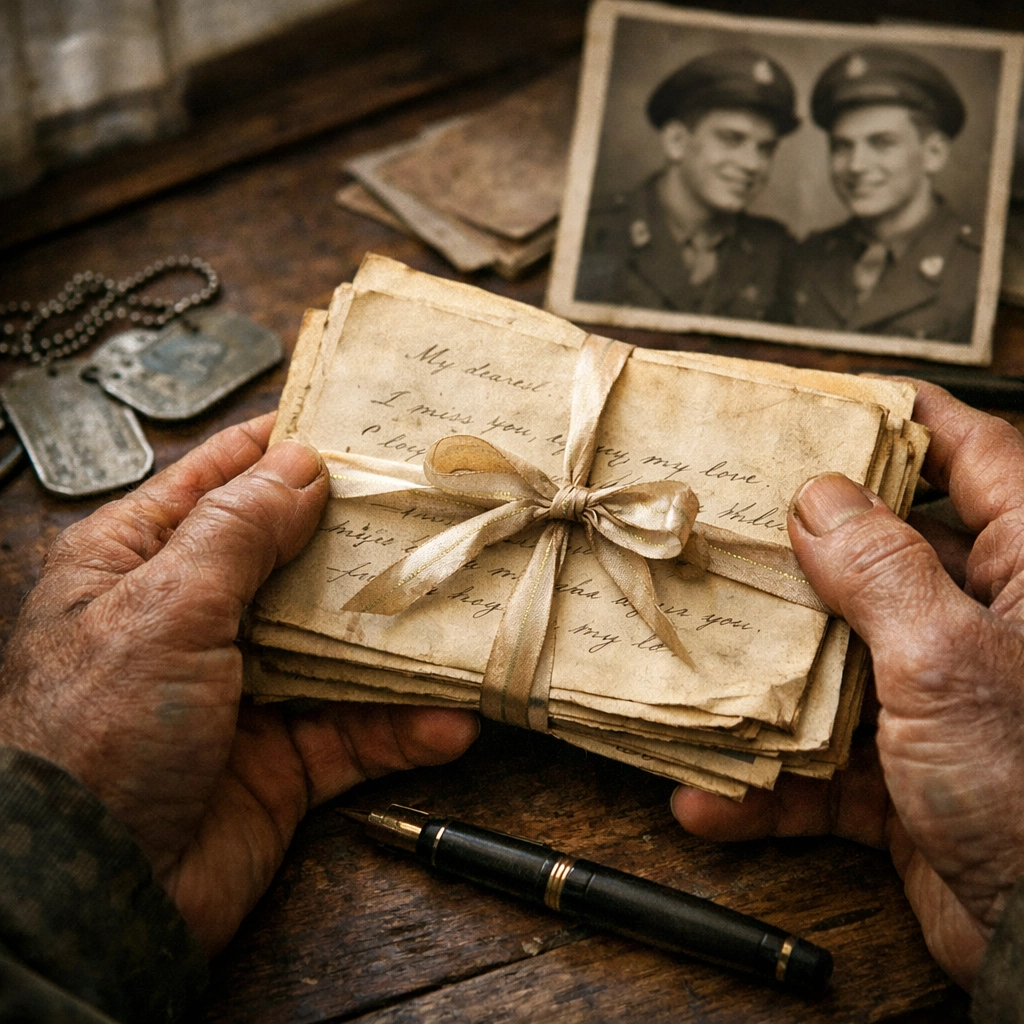
They wrote about longing that couldn't be spoken. They wrote about futures they might never see. They wrote knowing each letter might be their last, that death could come before the next sunrise. This urgency transformed ordinary prose into poetry, casual updates into confessions that still take our breath away generations later.
Consider what it meant to receive such a letter. You're in a foxhole, surrounded by mud and fear and the constant thunder of artillery. Your hands shake as you open the envelope, from exhaustion, from cold, from the terror of what you might find inside. But then you read his words, and for a moment, you're transported. You're back in that small apartment you shared. You're dancing in the kitchen to music from the radio. You're alive and whole and loved.
Letters didn't just sustain morale. They sustained identity. They reminded men who they were beyond their uniforms, beyond the roles they had to play. In those private pages, they could be vulnerable, tender, afraid. They could be themselves.
Hidden in Plain Sight
The beauty of wartime letters between men lies partly in their necessary discretion. Historians call it "reading between the lines," but for the couples themselves, it was a language of survival. They became masters of implication, experts in subtext.
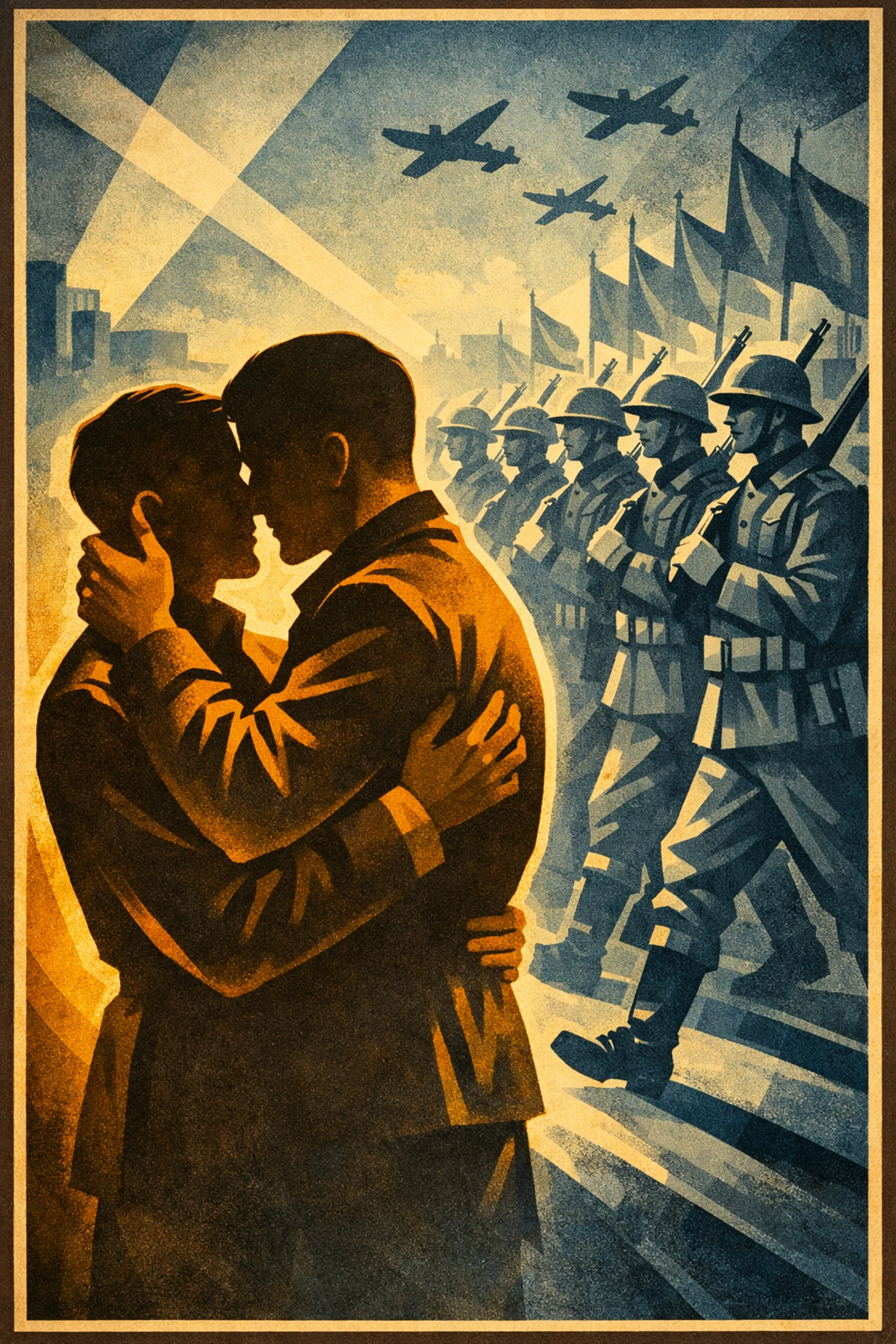
"Thinking of you, old chap" might mean "I dream of you every night." "Remember that weekend in London?" could translate to "I remember every kiss, every whispered promise, every moment our bodies spoke what our mouths couldn't say." "Stay safe, my friend" was simply "Please don't die. Please come back to me. I can't imagine a world without you in it."
This coded language created an intimacy all its own. To understand these letters required not just reading the words but knowing the man who wrote them: his humor, his fears, his way of seeing the world. It was a language built for two, indecipherable to outsiders, precious as gold to those who held the key.
The Letters That Survived
Not all letters made it home. Some burned in bombings. Some were confiscated by commanding officers who recognized the truth beneath the careful wording. Some were destroyed by the writers themselves, afraid of discovery. But some survived: hidden in attic trunks, tucked between book pages, preserved by men who couldn't bear to destroy the only evidence of the love that had sustained them.
These surviving letters are treasures. They're primary sources for historians studying queer history. They're proof that LGBTQ+ people have always existed, have always loved, have always found ways to connect despite persecution. They're time capsules of emotion, "fossils of feeling" that preserve exact sentiments from decades past.
When we read them today, we're not just reading history: we're witnessing love in its purest, most desperate form. We're seeing ourselves in men who lived generations ago, recognizing our own desires and fears reflected back across time.
Love Stories Worth Remembering
This is why historical MM romance resonates so deeply with modern readers. When you pick up a gay romance novel set during wartime, you're not just reading fiction: you're connecting with real experiences, real courage, real love. The best historical gay romance books honor these truths while giving us the happy endings history often denied.
At Read with Pride, our historical MM romance collection celebrates these stories. From soldiers writing secret letters across battlefields to coded correspondence that kept hope alive through the darkest times, these gay love stories remind us that queer people have always existed, have always loved fiercely, have always found ways to survive and thrive.
Whether you're drawn to gay historical romance for the sweeping emotion, the against-all-odds love stories, or the glimpse into how our community has fought for the right to love openly: these books offer something profoundly moving. They're reminders that every generation of LGBTQ+ people has had to be brave, has had to create their own language of love, has had to fight for their right to exist.
Writing Our Own History
Today, we have the freedom to love openly (though the fight continues). We can text "I love you" without fear. We can be photographed together, hold hands in public, build lives that don't require hiding. But we owe a debt to those men who could only love through carefully worded letters, who risked everything to keep their love alive across miles of war-torn countryside.
Their letters saved them. The words kept love alive when everything else was dying. The ink preserved what memory might have lost. And now, decades later, their courage inspires the gay romance novels, MM fiction, and queer literature that fills our shelves and screens.
When you read a historical MM romance, remember you're part of a tradition that stretches back through decades of secret letters, coded language, and love that refused to be silenced. You're honoring men who wrote by candlelight in bombed-out buildings, who sealed envelopes with shaking hands, who found immortality in ink.
Their letters saved them. Their stories save us. And through the gay books and LGBTQ+ fiction we read and write today, we ensure their love: and ours: truly is immortal.
Discover more powerful love stories in our historical MM romance collection at readwithpride.com.
Follow us for more LGBTQ+ romance content:
📘 Facebook
🐦 Twitter/X
📸 Instagram
#ReadWithPride #MMRomance #GayRomance #LGBTQBooks #HistoricalRomance #GayHistoricalRomance #MMHistoricalRomance #QueerFiction #GayLoveStories #MMBooks #GayRomanceBooks #LGBTQFiction #GayLiterature #WarTimeLoveStories #QueerHistory #MMRomanceBooks #GayNovels #LGBTQPride #QueerLove #HistoricalMMRomance #BestMMRomance2026

Leave a Reply
You must be logged in to post a comment.