

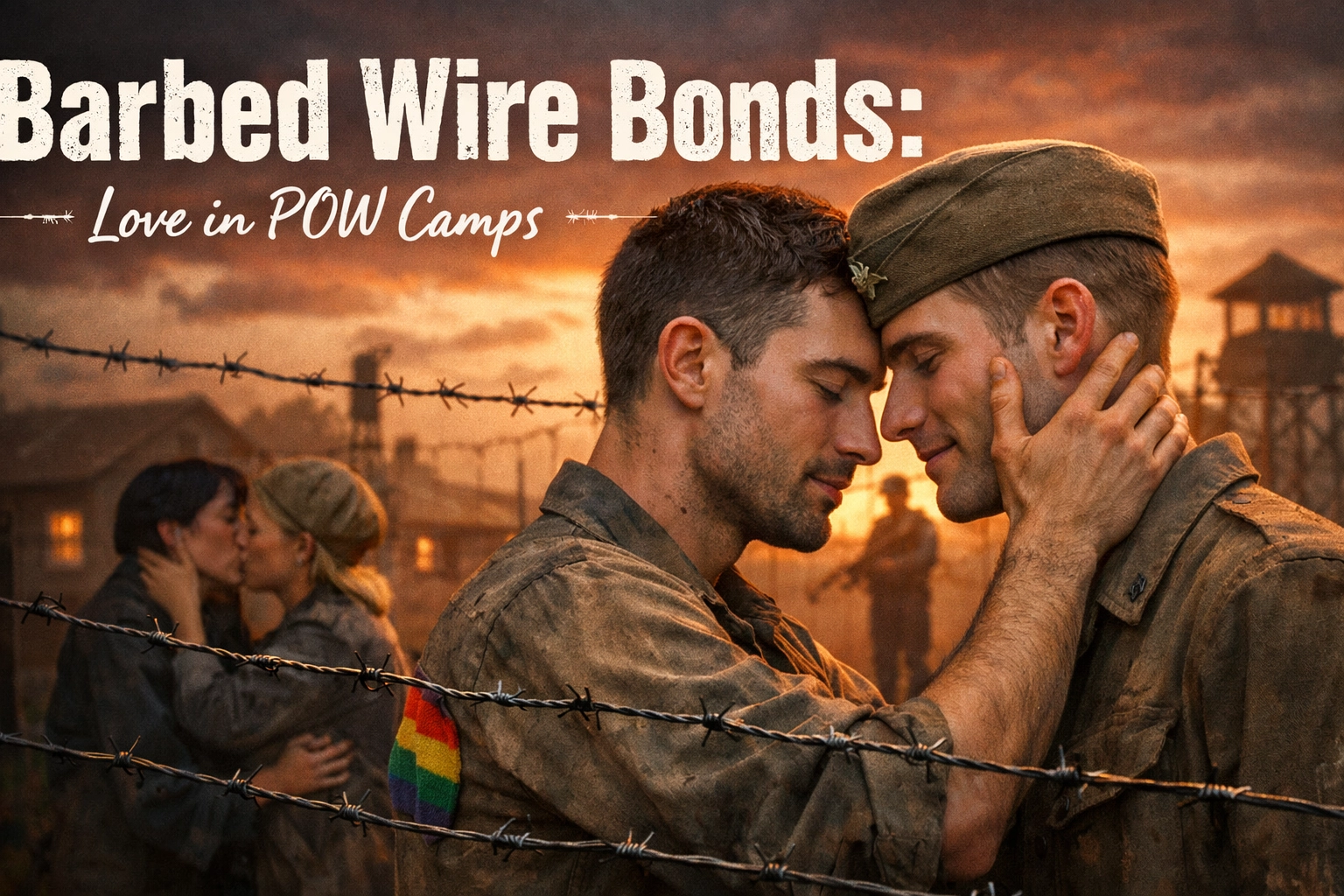
History has a way of hiding the most human stories behind its biggest headlines. When we talk about prisoner of war camps during the world wars, we hear about survival, resilience, and eventual liberation. What we don't hear about nearly enough? The intimate connections that formed behind barbed wire: the friendships that became something more, the glances that held entire conversations, the love that refused to die even in the darkest places.
Let's be real: the historical record is frustratingly silent on queer relationships in POW camps. Not because they didn't exist, but because in a time when simply surviving was an act of defiance, documenting forbidden love wasn't exactly priority number one. Still, human nature doesn't change just because you're behind enemy lines. Where there are people, there's connection. And where there's connection, there's love.
When Humanity Survived the Inhumane
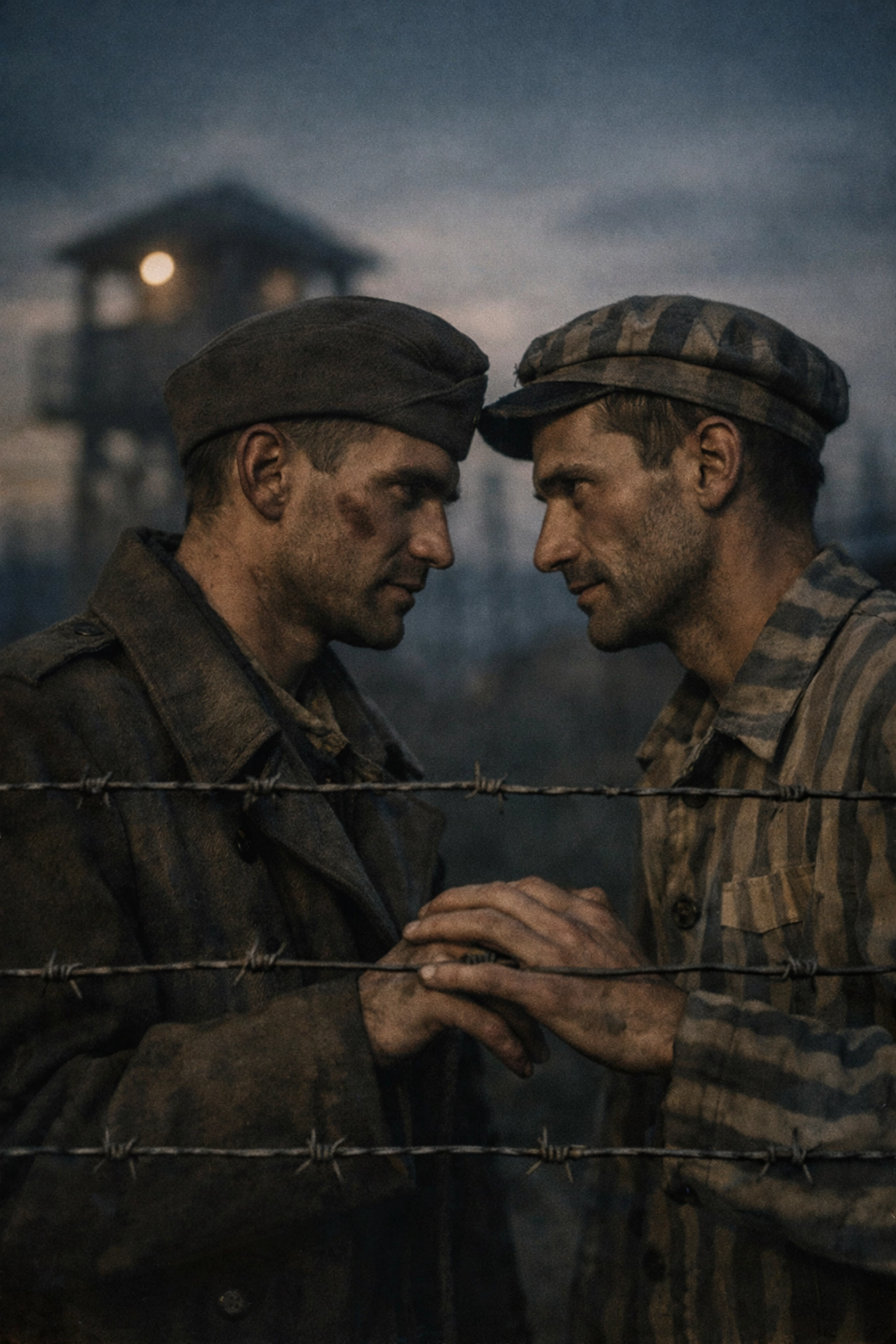
POW camps during World War I and II were places designed to contain, control, and often break men. Overcrowding, malnutrition, forced labor, and the constant psychological weight of captivity created an environment where hope seemed like a luxury. Yet prisoners found ways to hold onto their humanity: through education programs, theatrical performances, sports, and yes, through connection with one another.
In this context, relationships formed out of necessity and proximity. Men shared bunks, rations, secrets, and fears. They saw each other at their absolute worst and somehow still found reasons to care. For queer men in these camps, the situation was complicated by an extra layer of danger. The same codes of masculinity that governed military life didn't magically disappear behind barbed wire. But neither did the fundamental human need for intimacy, comfort, and love.
The camps themselves varied wildly. German POW camps in Britain saw prisoners organizing elaborate educational systems and recreational activities. British prisoners in German camps faced harsher conditions but still created underground newspapers and theatrical productions. In the Pacific theater, conditions were often brutal beyond imagination. Yet across all these experiences, one constant remained: the bonds between prisoners became lifelines.
Love in the Margins
Here's the thing about forbidden love: it finds a way. Always has, always will. In POW camps, where every aspect of life was monitored and controlled, relationships had to exist in stolen moments. A hand that lingered too long during roll call. Shared cigarettes in the exercise yard. Letters written in code that guards couldn't decipher. Notes passed during work details.
These relationships weren't just about physical desire: though that was certainly part of it. More often, they were about finding someone who understood, who could make the unbearable slightly more bearable. A confidant who knew your fears. A protector who had your back during the most vulnerable moments. A reason to survive when everything else screamed that survival wasn't worth the effort.
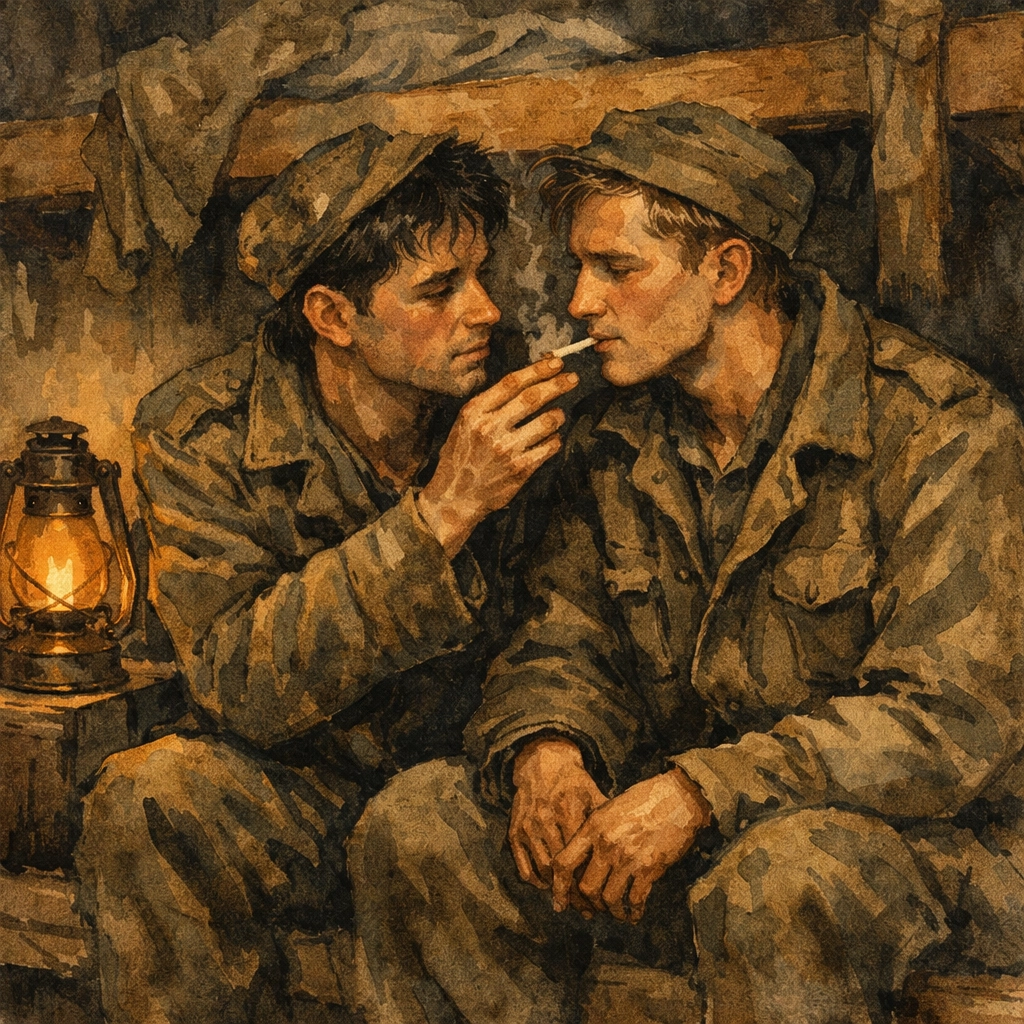
The risks were enormous. Military codes of conduct didn't become more lenient just because you were captured. In fact, POW camps often maintained strict hierarchies and enforcement of military discipline among prisoners. Being discovered meant punishment, isolation, or worse. For many queer men, the camp represented a double imprisonment: physically captured by the enemy, emotionally trapped by their own side.
Yet relationships persisted. They had to. Because at the end of the day, humans are wired for connection. We need it like we need food and water. Take that away, and you're not just imprisoning someone's body: you're breaking their spirit. Some prisoners understood this instinctively and protected those relationships fiercely, creating pockets of acceptance within the broader camp structure.
Different Camps, Different Stories
The experience of queer POWs varied dramatically based on where they were held and which nation ran the camp. British and Commonwealth camps, while still enforcing military discipline, generally provided better conditions and more recreational freedom. This meant more opportunities for connection, but also more surveillance.
German Stalag camps varied wildly. Some were run with strict Prussian efficiency, others descended into chaos as the war turned against Germany. In camps where resources were scarce and survival was the only priority, relationships took on a different character: more about shared hardship than romance, though the lines often blurred.
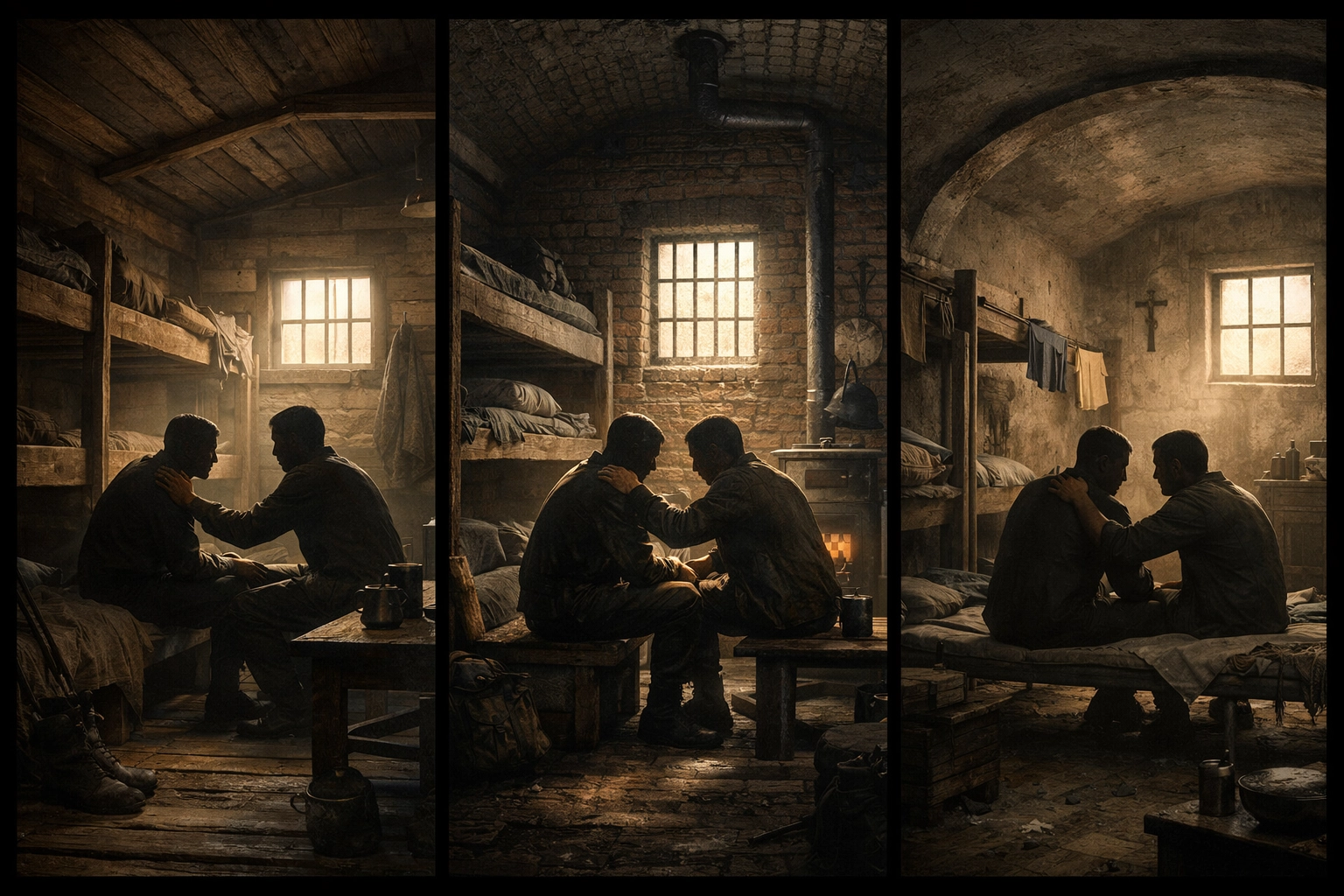
Italian POW camps, particularly before Italy's surrender in 1943, were known for slightly more relaxed conditions. Prisoners sometimes interacted with local populations, creating opportunities for connection that extended beyond the camp boundaries. These interactions: between prisoners, between prisoners and guards, between prisoners and civilians: formed a complex web of relationships that defied easy categorization.
In the Pacific theater, conditions were harshest of all. Japanese POW camps saw systematic brutality, forced labor, and mortality rates that far exceeded European camps. Yet even here, evidence suggests that bonds formed between prisoners: Americans, British, Australian, Dutch: bonds that sustained men through unimaginable horror. The fact that we have fewer accounts of these relationships doesn't mean they didn't exist. It means the men who survived had even more reasons to keep silent.
What We Don't Know Could Fill Libraries
Here's where we need to get honest: most of what we "know" about queer relationships in POW camps is speculation based on broader patterns of human behavior and occasional glimpses in memoirs, letters, and oral histories. The official record is almost completely silent. This silence itself tells us something important.
After the war, survivors faced intense pressure to present their experiences in ways that fit acceptable narratives. Heroic resistance. Stoic suffering. Brotherhood and camaraderie: but strictly platonic, of course. Men who had experienced same-sex relationships in camps faced a choice: remain silent, or risk being branded as "unnatural" on top of whatever trauma they'd already endured.
This erasure continues to this day. Historical research into POW experiences focuses on survival rates, treatment conditions, and repatriation processes. Personal relationships: especially queer ones: rarely make it into academic studies. What we're left with is a massive gap in the historical record, one that gay historical romance helps to fill, not by claiming to be documentary history, but by imagining what the human experience might have been.
Finding Truth in Fiction
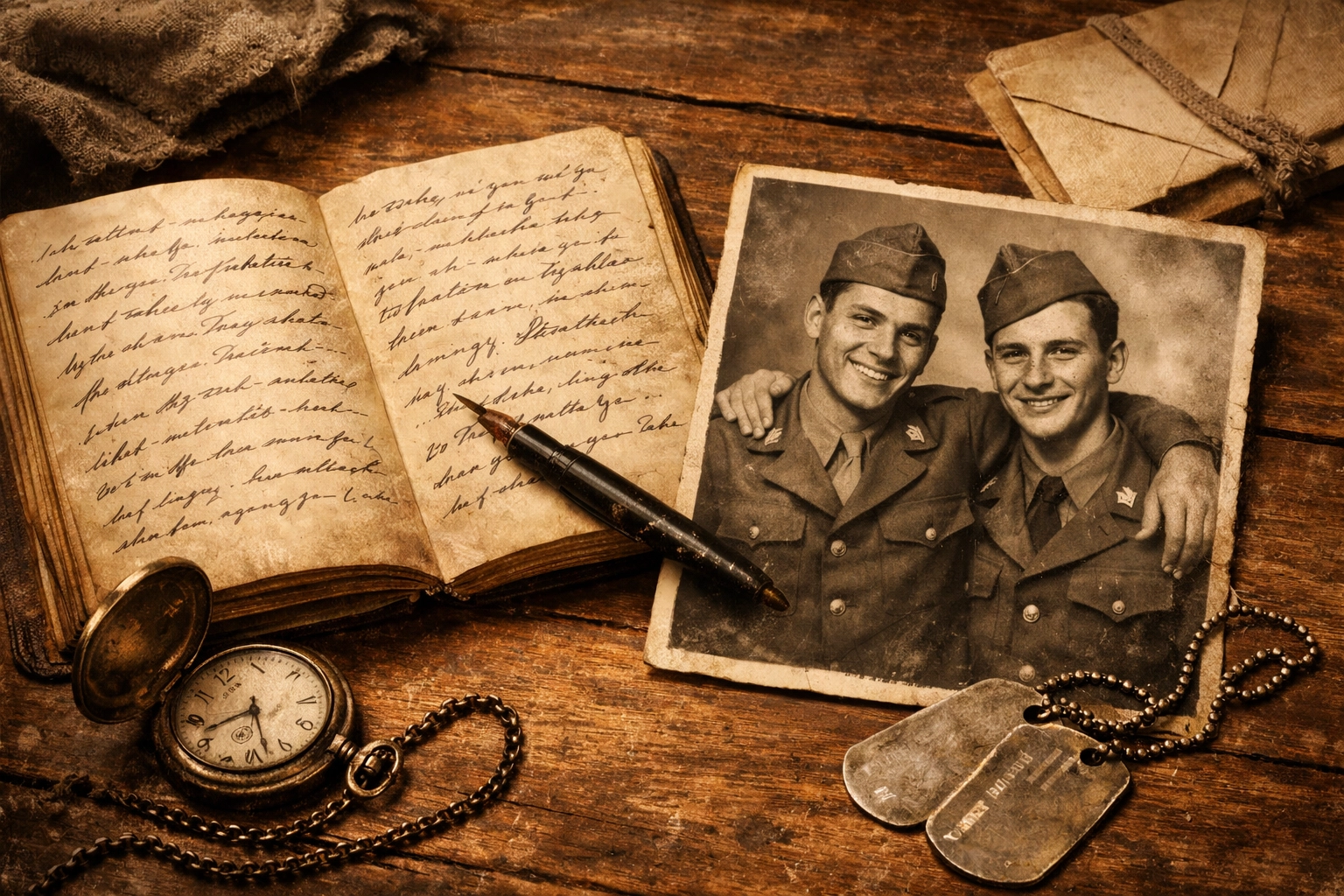
This is where MM historical romance becomes crucial. While academic historians struggle with sparse evidence and institutional reluctance to address queer history, fiction writers can explore the emotional truth of these experiences. They can ask "what if?" and follow that question into the spaces between documented facts.
What if a British officer and his German captor found common ground? What if two American airmen shot down over Europe found comfort in each other during their darkest hours? What if a medic and his patient discovered that healing comes in many forms? These stories matter because they acknowledge that queer men existed in these spaces, that they loved, that they survived or didn't survive, and that their experiences deserve to be remembered and honored.
Read with Pride's collection of historical MM romance includes stories set during wartime that explore these themes with sensitivity and authenticity. These aren't just romance novels with historical window dressing: they're attempts to recover lost narratives, to give voice to experiences that have been systematically erased.
The beauty of historical gay romance books is that they can go where academic history can't or won't. They can explore the interior emotional lives of characters, imagine the specific challenges queer men faced, and create happy endings where history often provided none. This isn't disrespecting history: it's honoring it by filling in the human details that official records overlooked.
Why These Stories Matter Now
In 2026, we're blessed to live in a time when LGBTQ+ fiction can be published openly, when MM romance books top bestseller lists, and when queer love stories are recognized as valid and valuable. But that makes it even more important to remember the men who loved in secret, in danger, in impossible circumstances.
Their stories remind us that queer love isn't new. It isn't a modern invention or a trend. It's always existed, even in the darkest chapters of human history. Even behind barbed wire. Even under threat of punishment. Even when the whole world seemed designed to stamp it out.
Reading these stories: whether historical accounts or historical romance fiction: connects us to that legacy. It reminds us why Pride matters, why visibility matters, why we can never take our freedoms for granted. Every MM novel about wartime love is, in some way, an act of resistance against the erasure that queer men in POW camps faced both during and after their captivity.
If you're drawn to historical gay romance, to stories of love against impossible odds, to narratives that recover what history tried to erase, explore the collection at Readwithpride.com. These stories honor the men who loved in secret and survived to tell no tales: by imagining what those tales might have been.
Connect with our community on Facebook, Instagram, and Twitter/X for more discussions about queer historical fiction, MM romance recommendations, and the ongoing project of recovering our hidden histories.
Because every love story matters. Even the ones: especially the ones: that history tried to forget.
#ReadWithPride #MMRomance #HistoricalRomance #GayRomance #LGBTQBooks #QueerFiction #WWIIHistory #POWHistory #GayHistoricalRomance #MMHistoricalRomance #QueerHistory #GayBooks #LGBTQFiction #MMBooks #GayLoveStories #HistoricalMMRomance #QueerLove #GayFiction #MMNovels #ReadWithPride2026

Leave a Reply
You must be logged in to post a comment.