

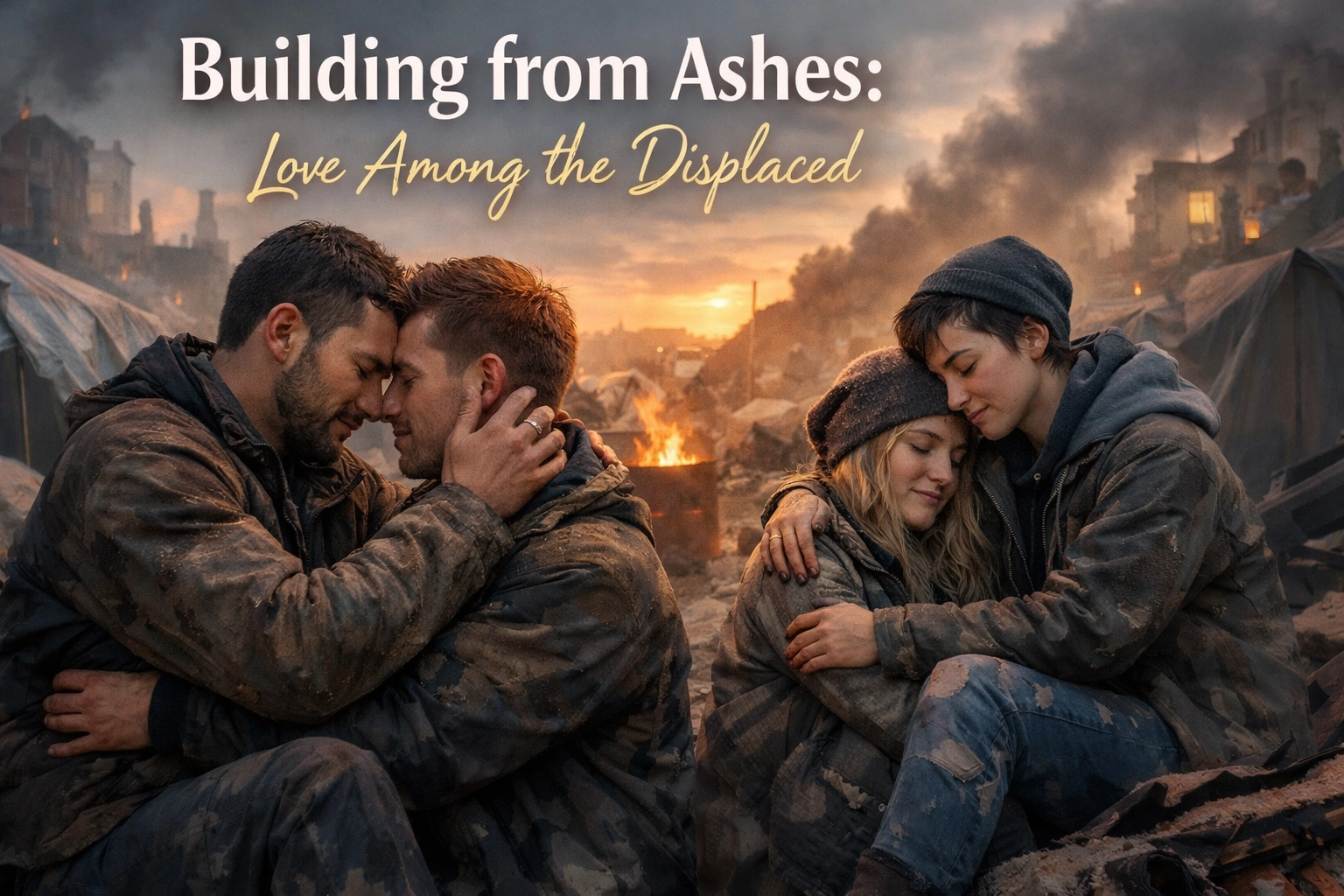
The war was over. Cities lay in ruins, millions were displaced, and the world was trying to piece itself back together: one shattered fragment at a time. But for gay men who had found love in the chaos of war, the aftermath brought a different kind of battle: finding each other again in a world that had been completely torn apart.
This is the story of love among the displaced, of searching through refugee camps and rubble-strewn streets, of holding onto hope when everything else had been destroyed. It's a chapter of history that doesn't get told often enough, but it's one that resonates deeply in the world of MM romance and gay historical fiction.
The Displaced Persons Crisis
When World War II ended in 1945, Europe was drowning in a humanitarian crisis. An estimated 11 million displaced persons: DPs, as they came to be known: wandered the continent. Some had been forced laborers in Nazi Germany. Others were concentration camp survivors. Still more were refugees fleeing the advancing Soviet army or ethnic cleansing in newly redrawn borders.
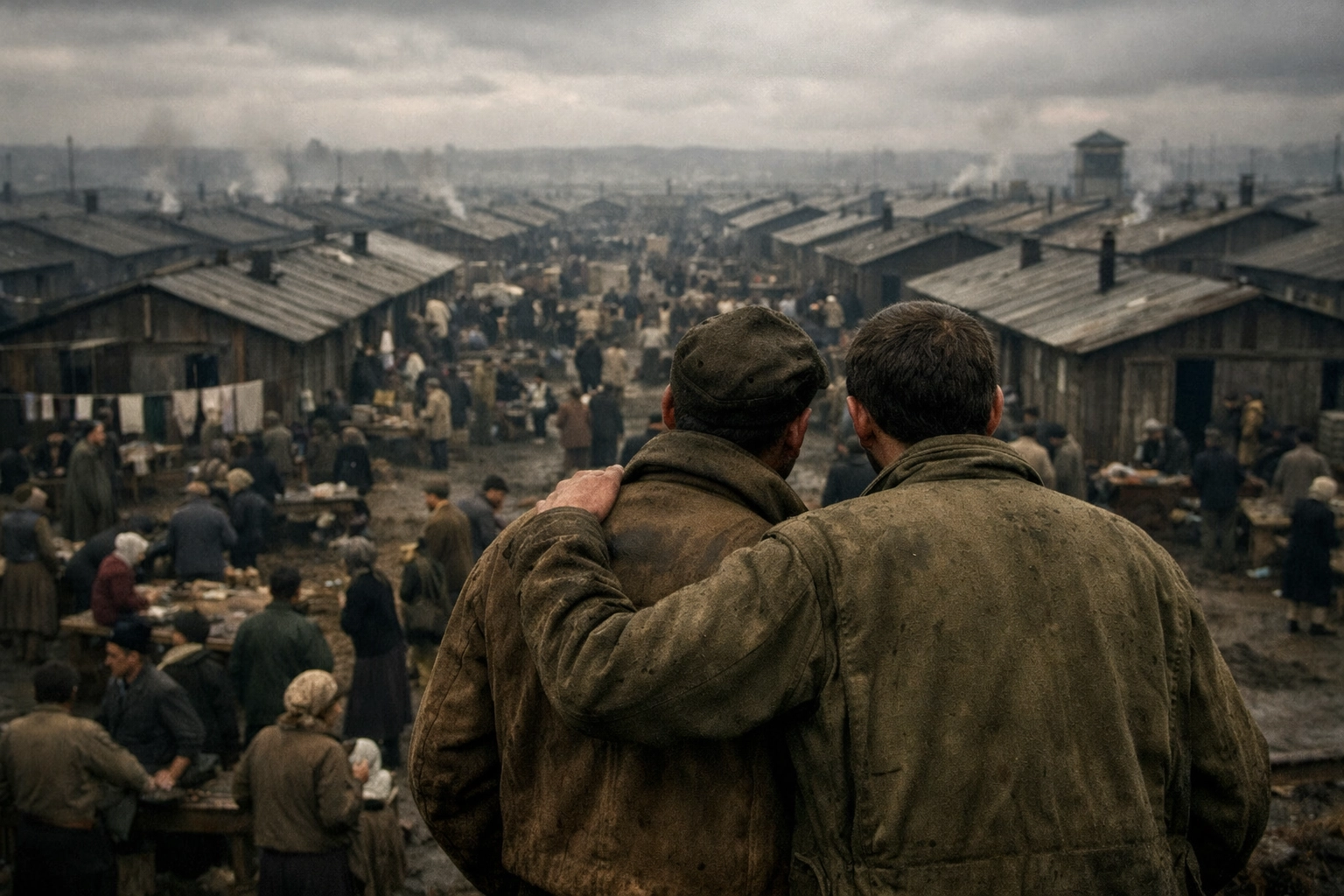
The Allied forces established DP camps across Germany, Austria, and Italy. These temporary settlements became home to hundreds of thousands of people who had nowhere else to go. Families searched desperately for missing relatives. Children looked for parents. And lovers: including gay men who had found connection during the war: searched for the partners they'd been separated from in the final chaotic days of fighting.
But finding someone in this chaos? It was like searching for a single page torn from a book and scattered across a continent.
When Your Love Isn't Recognized
Here's the thing that makes this story even more heartbreaking: gay relationships weren't acknowledged by the relief organizations managing the DP camps. While the Red Cross helped families reunite and wives search for husbands, two men trying to find each other had no official support system. No registry. No recognition.
Many gay men had spent the war years in a strange paradox. Military service had brought some men together in ways civilian life never had: the intensity of war, the closeness of barracks, the knowledge that tomorrow might never come. Some had found love in unexpected places: in foxholes, in field hospitals, in the quiet moments between battles.
But when the war ended and the paperwork began, those relationships didn't exist on any official form.
A soldier couldn't list his lover as next-of-kin. A displaced person couldn't request help finding his partner through official channels. These relationships existed in the margins, and after the war, many feared they'd stay there forever.
The Underground Network
But here's where hope enters the story. Gay men have always been resourceful. Where official channels failed, informal networks emerged.
In the DP camps, word would spread quietly: "There's a man in the British sector asking about someone named Ernst." "I heard someone at the relief station mention Dachau: could it be him?" These whispered conversations happened in corners, in long lines for rations, during the rare moments of privacy.
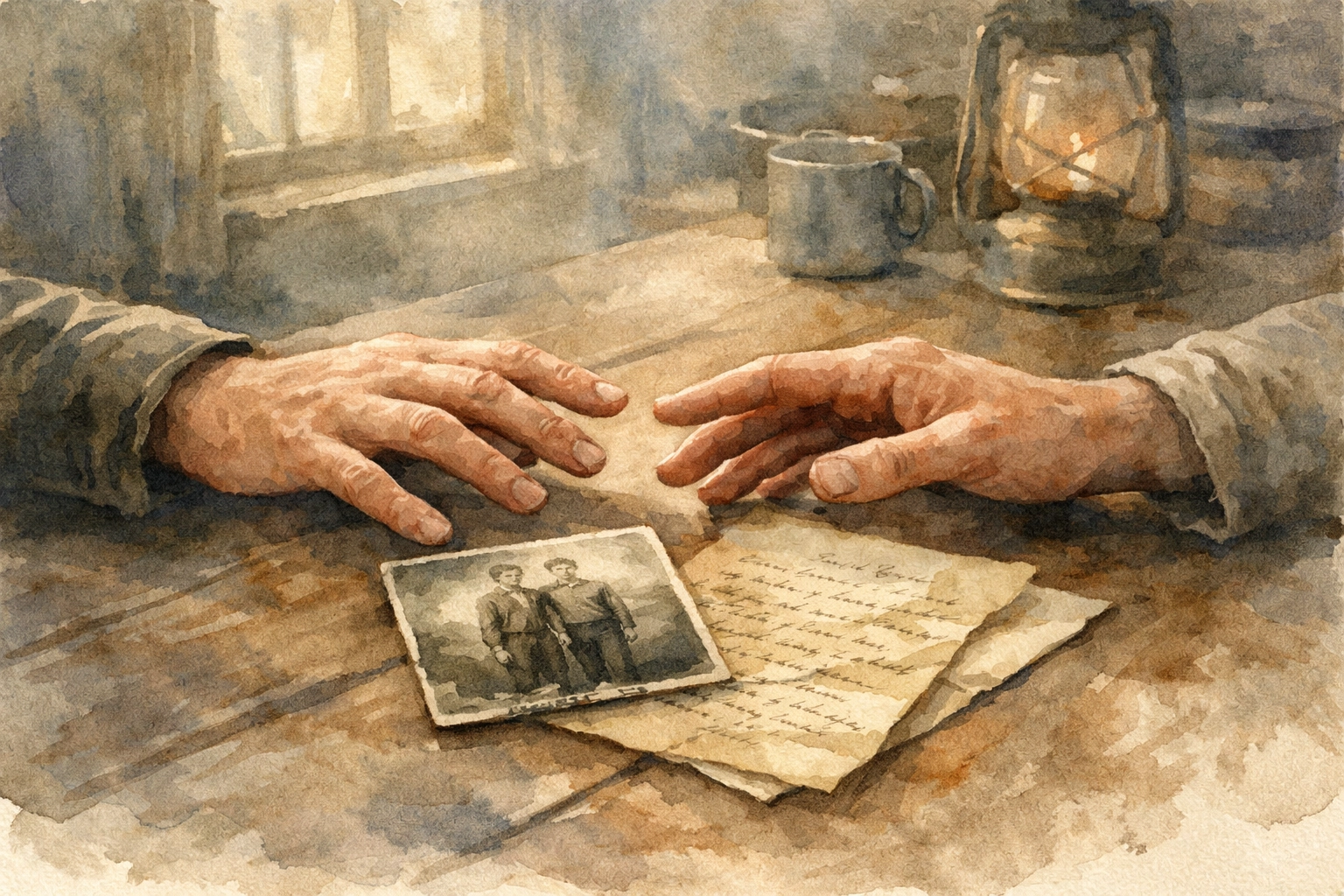
Some men traveled between camps with photographs hidden in their pockets: images they'd managed to hold onto through everything. Others wrote letters to multiple camps, hoping against hope that someone might know something.
The journey to reunite wasn't just physical: it was emotional and psychological. Many survivors carried trauma that made connection difficult. The war had taught them to hide, to be invisible, to never fully trust anyone. Now they had to learn to be vulnerable again, to hope again, to love openly: even if that "openness" was still carefully guarded.
Rebuilding Lives, Rebuilding Love
For those lucky enough to find each other again, the next challenge was figuring out how to build a life together. Post-war Europe offered both opportunities and obstacles.
Some men emigrated together to countries with larger, more established gay communities: places like the United States, Britain, or Australia. They'd pose as friends, as business partners, as roommates. The war had given them practice in deception, and now they'd use those skills for survival in a different kind of battle.
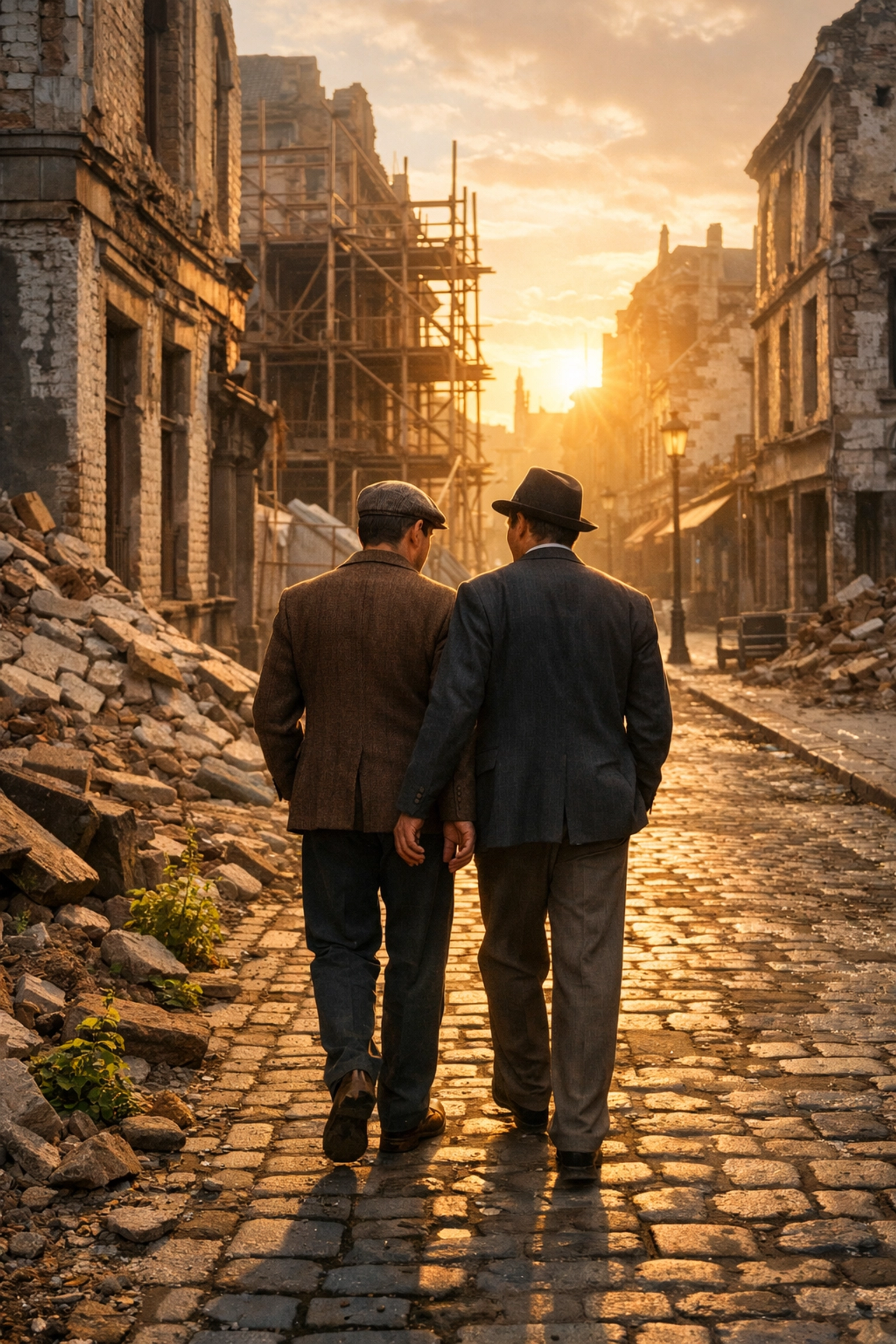
Others stayed in Europe, settling in bombed-out cities that needed rebuilding. There was something poetic about it: men who had been broken themselves, helping to rebuild broken cities, all while quietly reconstructing their own relationships.
The post-war period saw the emergence of gay communities in major cities. In Paris, Berlin (though divided), London, and Amsterdam, small networks of gay men found each other. They created spaces: bars, clubs, private social circles: where they could exist more freely. For men who had survived the war and the displacement that followed, these communities became lifelines.
The Stories We Tell Today
This history matters. It matters because these stories of resilience, hope, and love need to be remembered. It matters because when we read gay romance books and MM historical romance today, we're connecting with a tradition of queer storytelling that stretches back through decades of silence and erasure.
The displaced persons of 1945 didn't have the freedom to tell their stories openly. Many took their secrets to the grave. But today's LGBTQ+ fiction writers are filling in those silences, imagining those untold love stories, giving voice to the experiences that were never officially recorded.
Read with Pride specializes in exactly these kinds of stories: MM romance novels that don't shy away from history's difficult moments but instead find the love, hope, and humanity within them. Our historical MM romance collection includes narratives set in war-torn Europe, stories of soldiers and survivors, and tales of love that refused to die even when the world was falling apart.
Why These Stories Resonate
There's something powerful about reading gay historical romance set in periods of displacement and rebuilding. These stories remind us that love has always existed, even in the darkest times. They show us that queer people have always found each other, even when the entire world seemed designed to keep them apart.
The themes in these narratives: searching, hoping, rebuilding, creating chosen family when biological family is lost: these resonate with modern LGBTQ+ experiences too. Many of us know what it's like to search for our community, to rebuild ourselves after trauma, to create families of choice.
When you read a gay love story set among displaced persons in 1945, you're not just reading history. You're reading about resilience that echoes through generations.
Find Your Next Historical Romance
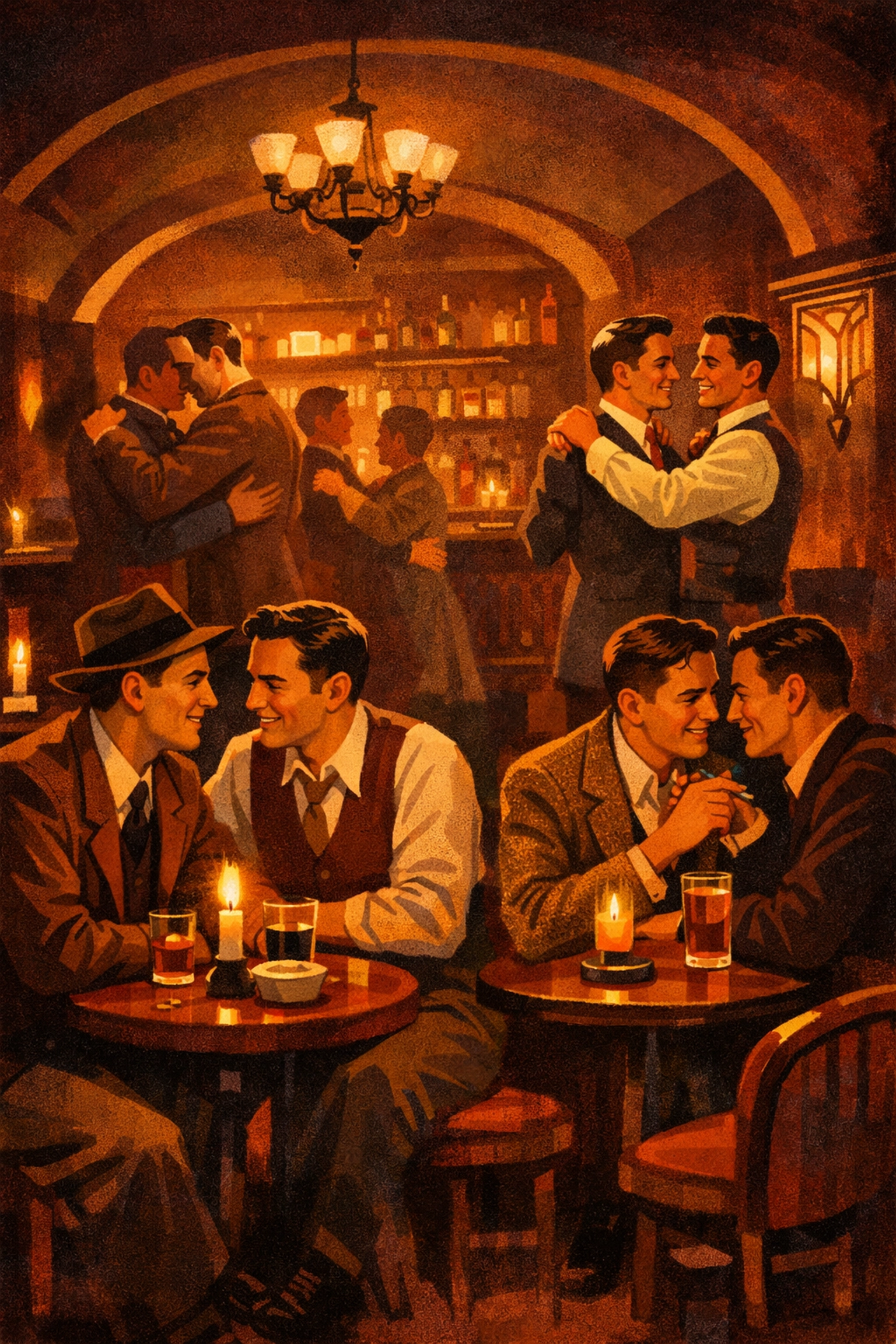
If stories of love surviving against impossible odds speak to you, explore the historical MM romance books available at Read with Pride. From war-torn Europe to the rebuilding years that followed, these gay romance novels capture the courage, hope, and enduring power of love.
Whether you're drawn to slow-burn romances set in DP camps, stories of soldiers finding each other after years apart, or narratives about building new lives in unfamiliar cities, there's a story waiting for you.
Because the best MM historical romance doesn't just transport us to another time: it reminds us that love, hope, and the will to survive have always been part of our community's story.
Discover more heartfelt gay fiction and MM romance books at Readwithpride.com. Follow us on Facebook, Instagram, and Twitter/X for daily recommendations, new releases, and LGBTQ+ reading community conversations.
#MMRomance #GayHistoricalRomance #LGBTQBooks #ReadWithPride #GayRomanceBooks #QueerFiction #HistoricalMMRomance #WWIIRomance #GayLoveStories #MMNovels #LGBTQFiction #GayBooks #DisplacedPersons #PostWarRomance #MMHistoricalFiction #GayRomanceReaders #2026GayBooks #LGBTQHistory #MMBooks #GayFiction

Leave a Reply
You must be logged in to post a comment.