

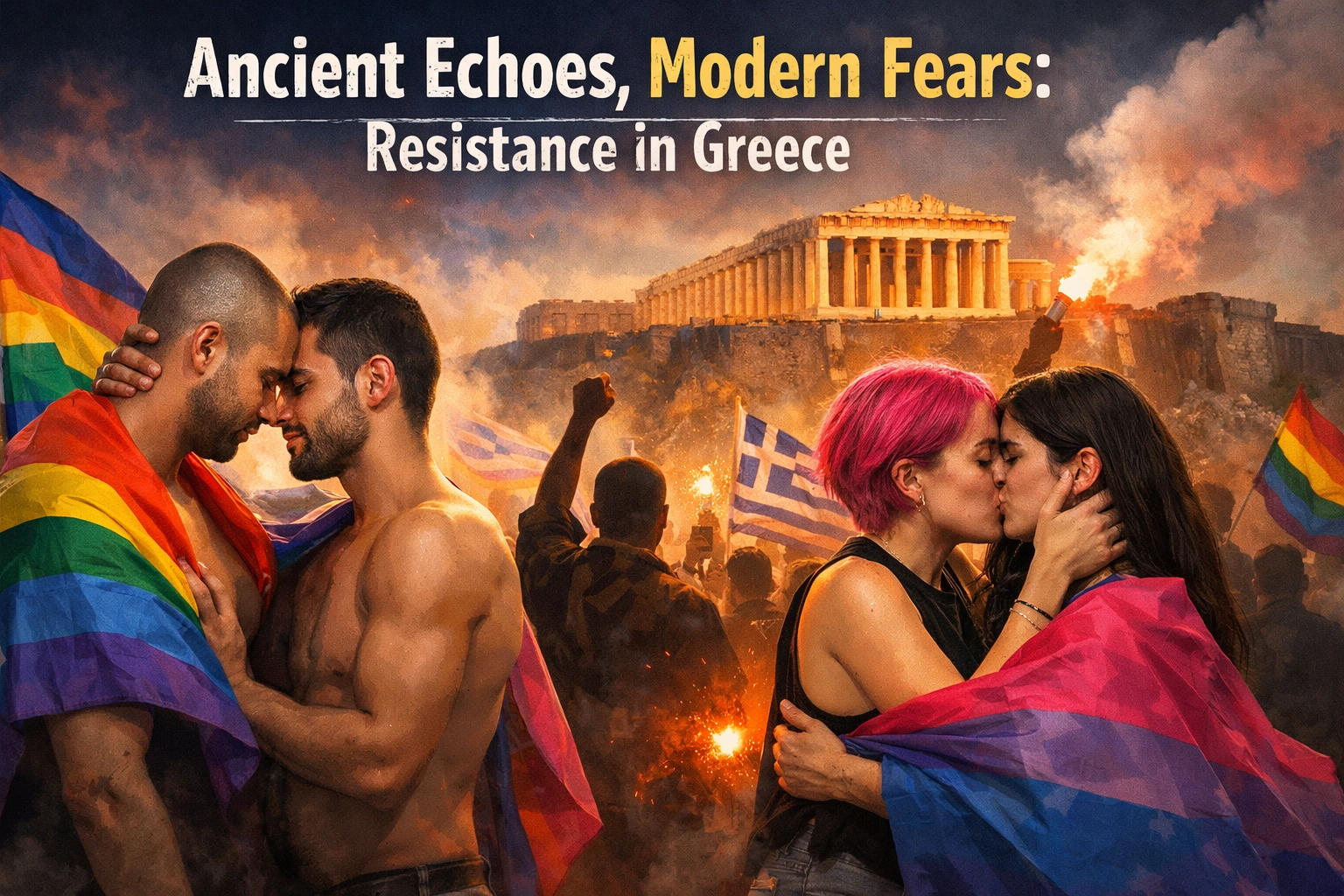
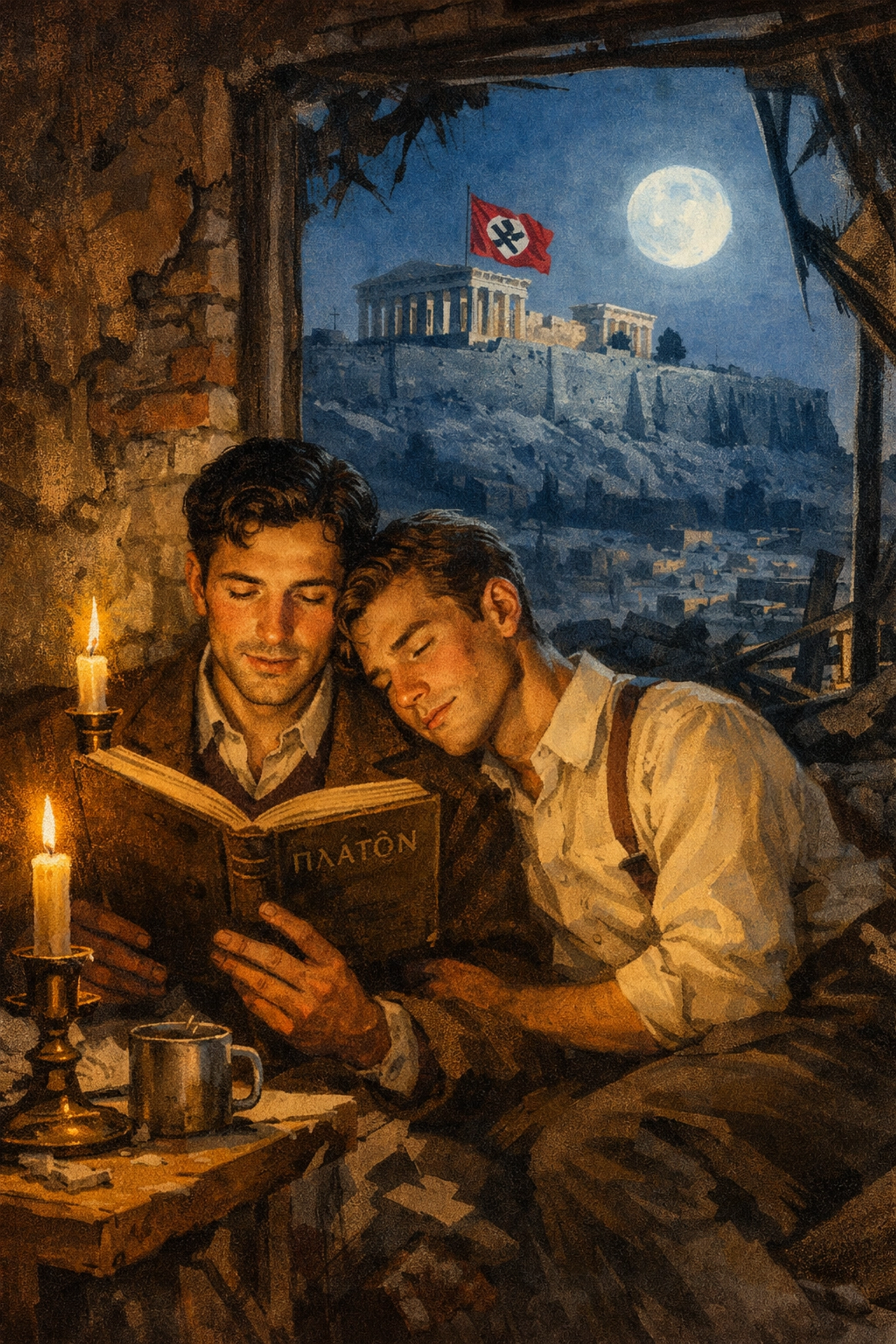
There's something profoundly ironic about Greece during World War II. Here was a country that gave the world Achilles and Patroclus, Sacred Band of Thebes, and symposiums where love between men was celebrated in philosophy and poetry: suddenly occupied by forces that would persecute those same expressions of love with brutal efficiency. The Nazis didn't just occupy Greece in 1941; they tried to erase centuries of complexity from a land where ancient echoes of male bonds still whispered through every ruin.
When Apostolos Santas and Manolis Glezos climbed the Acropolis on May 30, 1941, to tear down the swastika banner, they weren't just striking a symbolic blow against the occupation. They were reclaiming a space that had stood for thousands of years as a testament to Greek identity: including identities that didn't fit into the rigid boxes the Axis powers demanded.
The Weight of History in a Brutal Present
Imagine being a gay man in occupied Greece. You're living on land where Plato once wrote about love transcending gender, where the walls around you once echoed with stories of heroes whose relationships with other men were documented and celebrated. Yet now, those same streets are patrolled by soldiers who would arrest, torture, or execute you for the same feelings your ancestors considered noble.
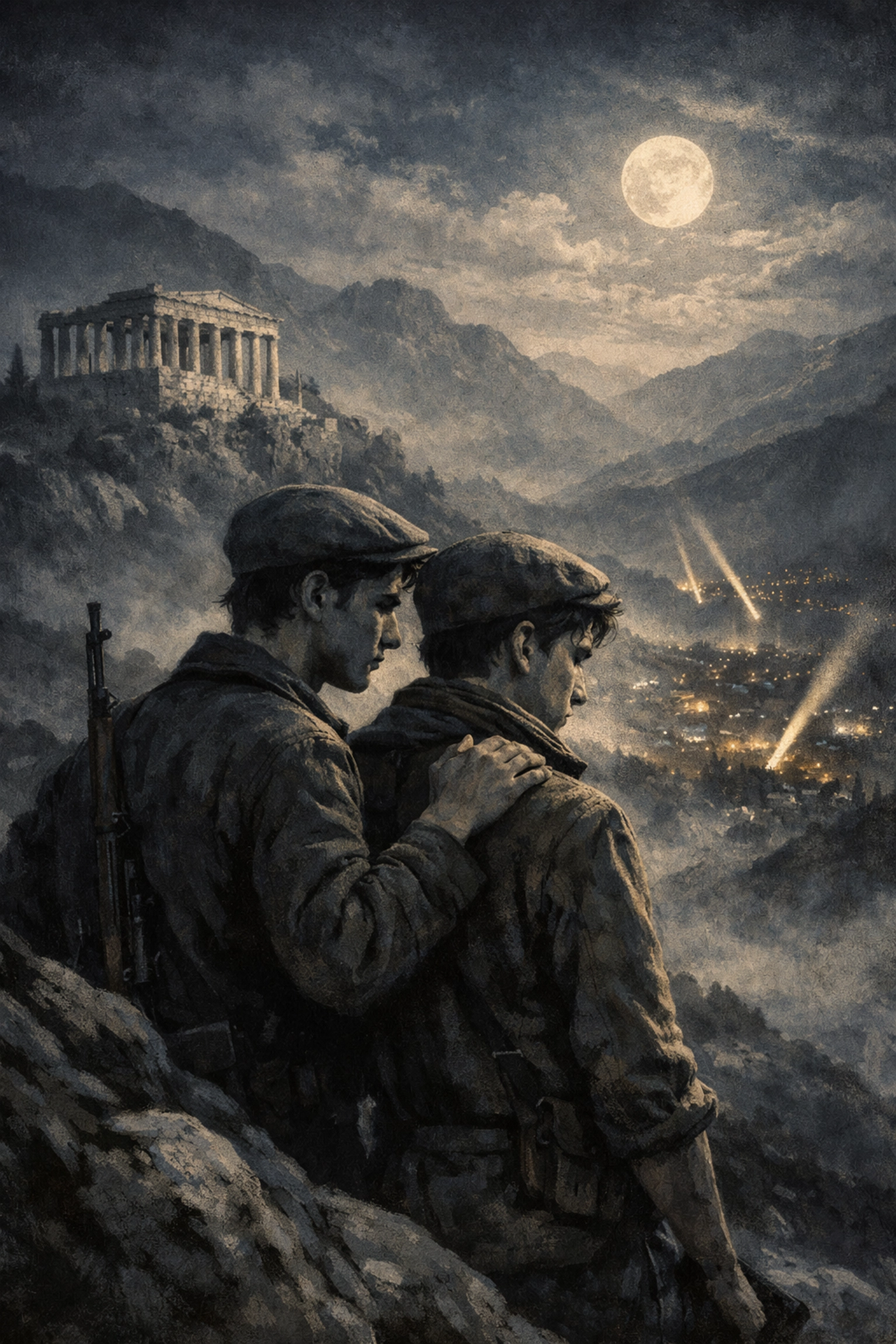
The Greek resistance movements: EAM/ELAS formed by February 1942, Napoleon Zervas's EDES, and smaller cells throughout the countryside: brought together Greeks from all walks of life. In the mountains and villages of Central Greece, where Aris Velouchiotis led his fighters, identities became fluid in ways that might have made ancient Greeks nod in recognition. When you're fighting for survival, when 300,000 of your countrymen are dying from starvation engineered by occupiers, the person standing beside you with a rifle matters more than who they love.
But let's not romanticize it too much. Even in resistance, even among comrades, gay men still faced internal dangers. The Communist-controlled EAM had its own orthodoxies, and rural Greek society in the 1940s wasn't exactly hosting pride parades. Safety existed in moments, in glances, in the quiet spaces between combat operations.
Love in the Liberated Zones
Here's where history gets interesting. The resistance created liberated zones: autonomous communities governed by elected village committees and mass meetings. These weren't just military victories; they were experiments in new social structures. When German and Bulgarian forces weren't actively destroying villages and displacing nearly a million people, these zones operated as spaces where pre-war social hierarchies temporarily collapsed.
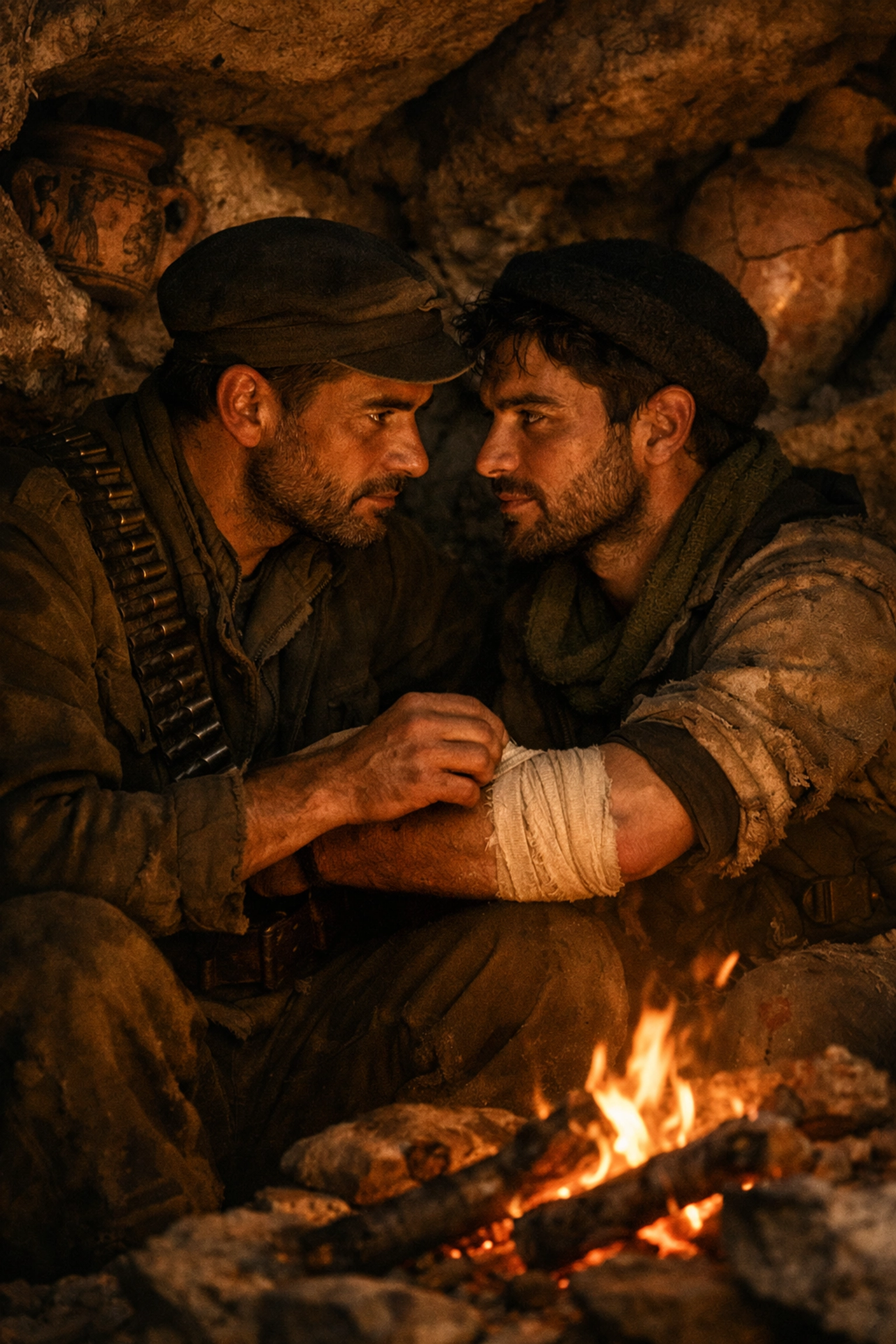
Did this create opportunities for queer relationships? Historical records from this period aren't exactly filled with coming-out stories (documenting your sexuality during wartime occupation isn't typically a survival priority), but logic suggests that chaos creates cracks in rigid social structures. When peasant smallholders and rural laborers were fighting shoulder-to-shoulder against occupation, viewing the struggle as liberation from both foreign invaders and pre-war corruption, the old rules became… negotiable.
The November 25, 1942 sabotage of the Gorgopotamos railway bridge: where ELAS and EDES briefly set aside their ideological differences to strike a joint blow with British Special Operations Executive forces: represents something powerful. It was the only significant cooperation between the two major groups before tensions tore them apart. But for that moment, the common enemy mattered more than differences.
Translate that to personal relationships. A fighter from Athens and a shepherd from Crete, both men, both drawn together in the intensity of resistance work. The ancient ruins around them once celebrated such bonds; the current danger makes every connection potentially final. That's the fertile ground where the best historical MM romance stories grow.
Modern Fears Through an Ancient Lens
Fast forward to 2026, and we're still writing stories about this period because the tension resonates. The fear of being discovered. The weight of history saying one thing while current society says another. The intensity of relationships formed under impossible circumstances.
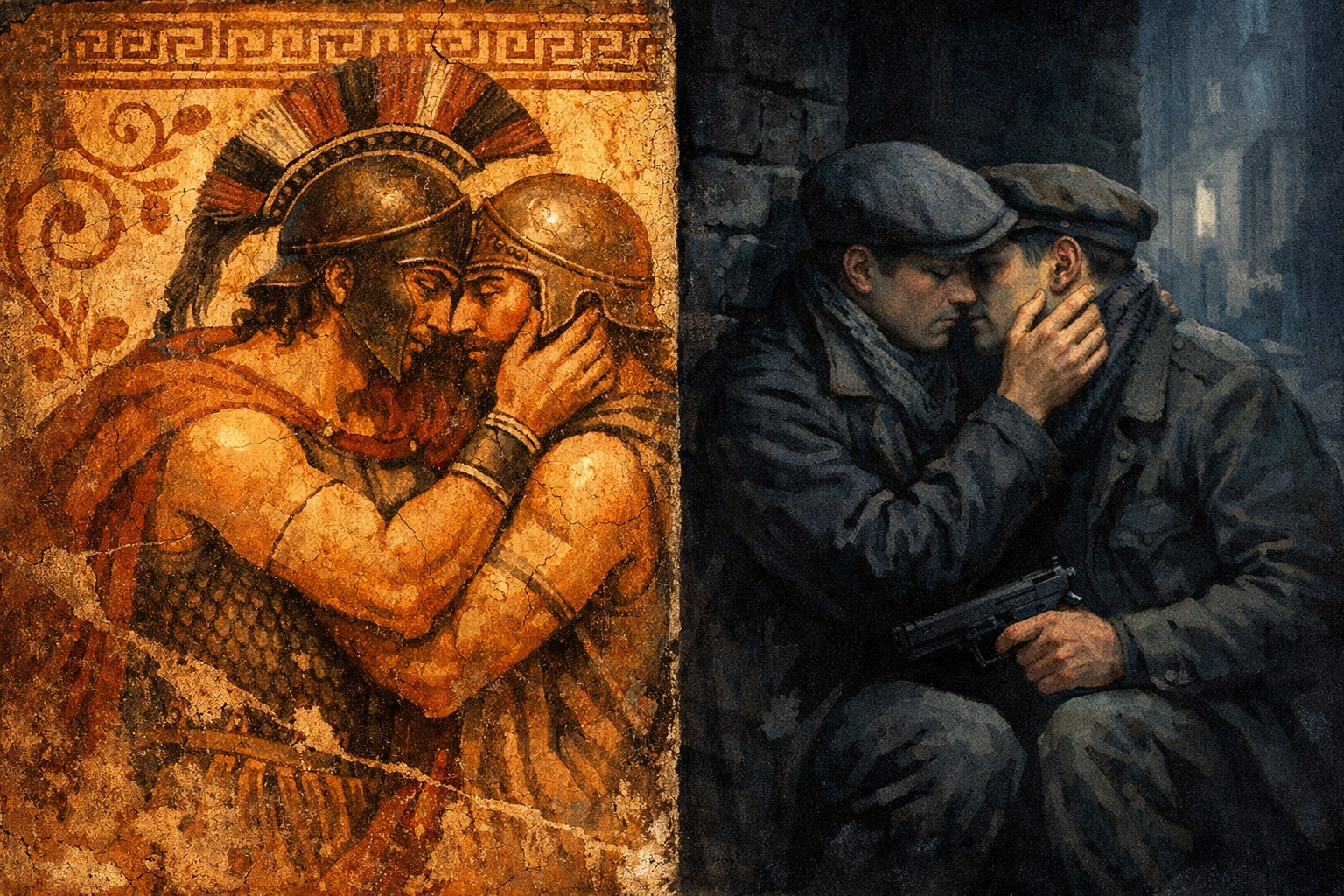
Gay romance novels set in occupied Greece tap into something primal: the contrast between ancient acceptance and modern persecution, between the ideal of heroic male bonds and the reality of having to hide them. When you're reading MM historical romance set in this period, you're not just getting a wartime love story: you're getting layers of irony, tragedy, and hope all wrapped together.
The best LGBTQ+ fiction set in this era doesn't shy away from the contradictions. It shows characters aware of their country's history, perhaps taking strength from it, while navigating immediate dangers from both occupiers and their own communities. It's the kind of complex, authentic storytelling that Readwithpride.com champions: stories that honor both history and the human heart.
Why This Period Matters for MM Romance
Greek resistance during WWII offers everything a compelling gay love story needs:
High stakes: Literally life or death, both from enemy forces and potential discovery
Forced proximity: Resistance cells, mountain hideouts, shared dangerous missions: all the tropes romance readers love with genuine historical backing
Historical complexity: The irony of fighting for freedom while unable to be free yourself creates delicious emotional tension
Rich setting: From Athens to rural villages, from ancient ruins to mountain passes, Greece offers stunning backdrops
Moral ambiguity: Not all resistance fighters were heroes, not all collaborators were villains, and navigating that complexity makes characters real
The approximately 300,000 Greeks who died from occupation-engineered starvation, the million displaced from destroyed villages, the constant threat of reprisals: these weren't abstract horrors. They were the daily reality that shaped every decision, every relationship, every stolen moment of connection.
Finding These Stories Today
If you're craving MM romance books that tackle this specific historical moment, you're in luck. The growing gay historical romance genre has authors diving deep into underexplored periods, and occupied Greece is finally getting attention. These aren't your grandfather's war stories: they're intimate, emotionally complex narratives that center queer experiences in a time when being queer could be a death sentence.
Read with Pride's historical MM romance collection features titles that explore wartime relationships across different conflicts and countries. While you're searching for stories specific to Greece, you'll find similar themes of resistance, forbidden love, and the weight of history in various settings. The best MM romance doesn't just tell you about love: it makes you feel the specific pressures and freedoms of its historical moment.
Looking for 2026 releases? Authors are increasingly recognizing that gay fiction readers want depth, authenticity, and historical settings that haven't been done to death. Greek resistance offers all of that while connecting to broader conversations about identity, belonging, and what it means to fight for a freedom you might not personally receive.
The Echo Continues
Standing in modern Greece, you can still see the scars. Buildings pockmarked from bullets. Villages that were never rebuilt. Monuments to resistance fighters whose full stories we'll never know: including, undoubtedly, men who loved men and died without anyone recording that essential part of who they were.
But in MM novels and gay romantic fiction, we can imagine those stories back into existence. We can honor the probability that among those resistance fighters, among those who climbed mountains and sabotaged railways and died in German reprisals, there were men who loved men. Men who found moments of connection and tenderness amid horror. Men who looked at ancient ruins and thought, "My ancestors understood this love. Someday, the world will again."
That's the power of LGBTQ+ romance: it reclaims silenced histories and tells the stories that official records erased.
Ready to explore more historical queer fiction? Check out Read with Pride for our growing collection of MM historical romance titles. From ancient Rome to WWII resistance, we're building a library that honors the complexity and courage of LGBTQ+ lives throughout history.
Follow us on Facebook, Twitter/X, and Instagram for updates on new releases and historical deep dives.
#MMRomance #GayHistoricalRomance #LGBTQFiction #GayRomanceBooks #HistoricalMMRomance #QueerFiction #ReadWithPride #GayBooks #WWIIHistory #GreekResistance #MMNovels #GayLiterature #LGBTQBooks #HistoricalRomance #GayRomance2026

Leave a Reply
You must be logged in to post a comment.