

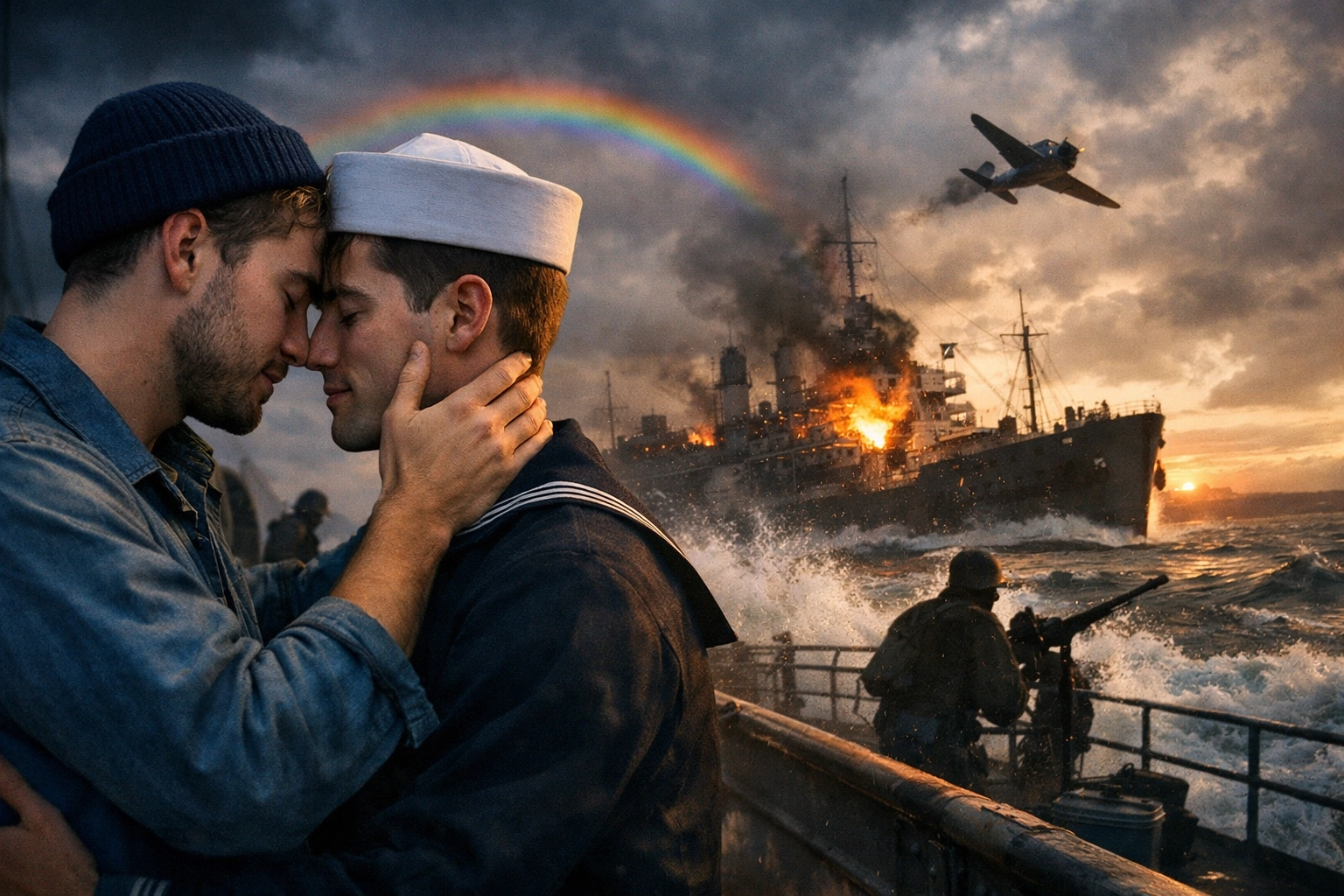
When we think about World War II love stories, we usually picture the classic goodbye kiss on a train platform or the tearful reunion when soldiers came home. But some of the most profound connections forged during the war happened in places history books rarely mention, aboard merchant ships crossing the Atlantic, where the ocean kept secrets better than any closet ever could.
The Forgotten Heroes of the High Seas
The merchant marines were the unsung lifeline of the Allied war effort, transporting troops, ammunition, food, and fuel across oceans swarming with German U-boats. These weren't military personnel in the traditional sense, they were civilian sailors who volunteered to keep the supply lines open, knowing full well they were signing up for one of the deadliest jobs of the war.
The statistics are staggering: one in 26 mariners died in the line of duty, a higher casualty rate than any other service branch. About 8,300 mariners were killed at sea, 12,000 wounded, and 733 merchant ships were sunk by enemy attacks. They faced U-boats, mines, kamikaze attacks, and the relentless North Atlantic itself.
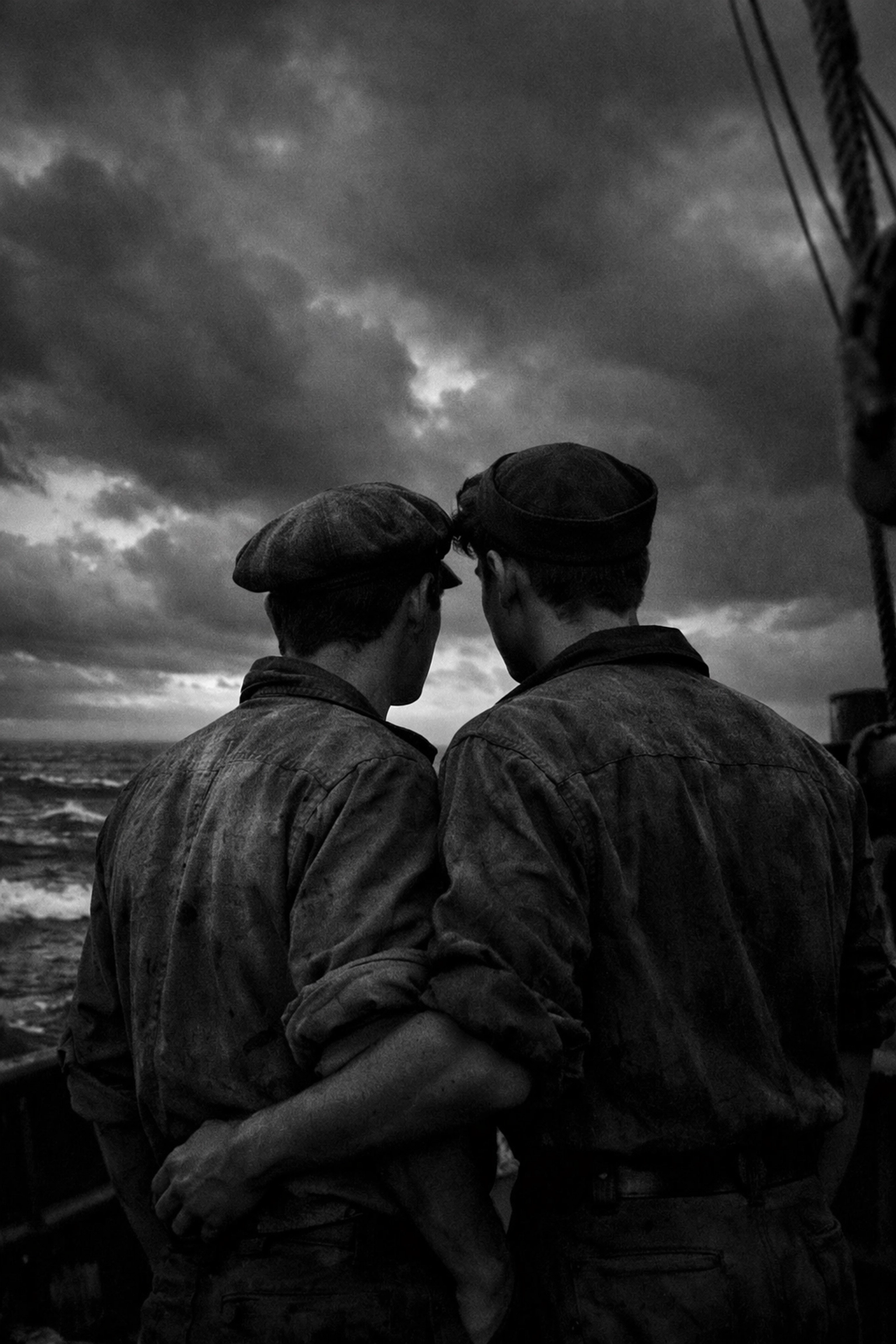
And they did it all while living in tight quarters, sharing cramped bunks, and forming bonds that went far beyond ordinary friendship.
Where the Ocean Kept Their Secrets
Life aboard a merchant vessel was rugged, dangerous, and isolating. Ships could be at sea for weeks, sometimes months. The crew became your entire world, your brothers, your family, and sometimes, quietly and carefully, something more.
For gay men during the 1940s, the merchant marine offered something paradoxical: freedom within constraint. Yes, homosexuality was illegal and deeply stigmatized. Yes, discovery could mean discharge, imprisonment, or worse. But the isolation of the sea, the shared danger, and the raw human need for connection created spaces where relationships could exist in ways they never could on land.
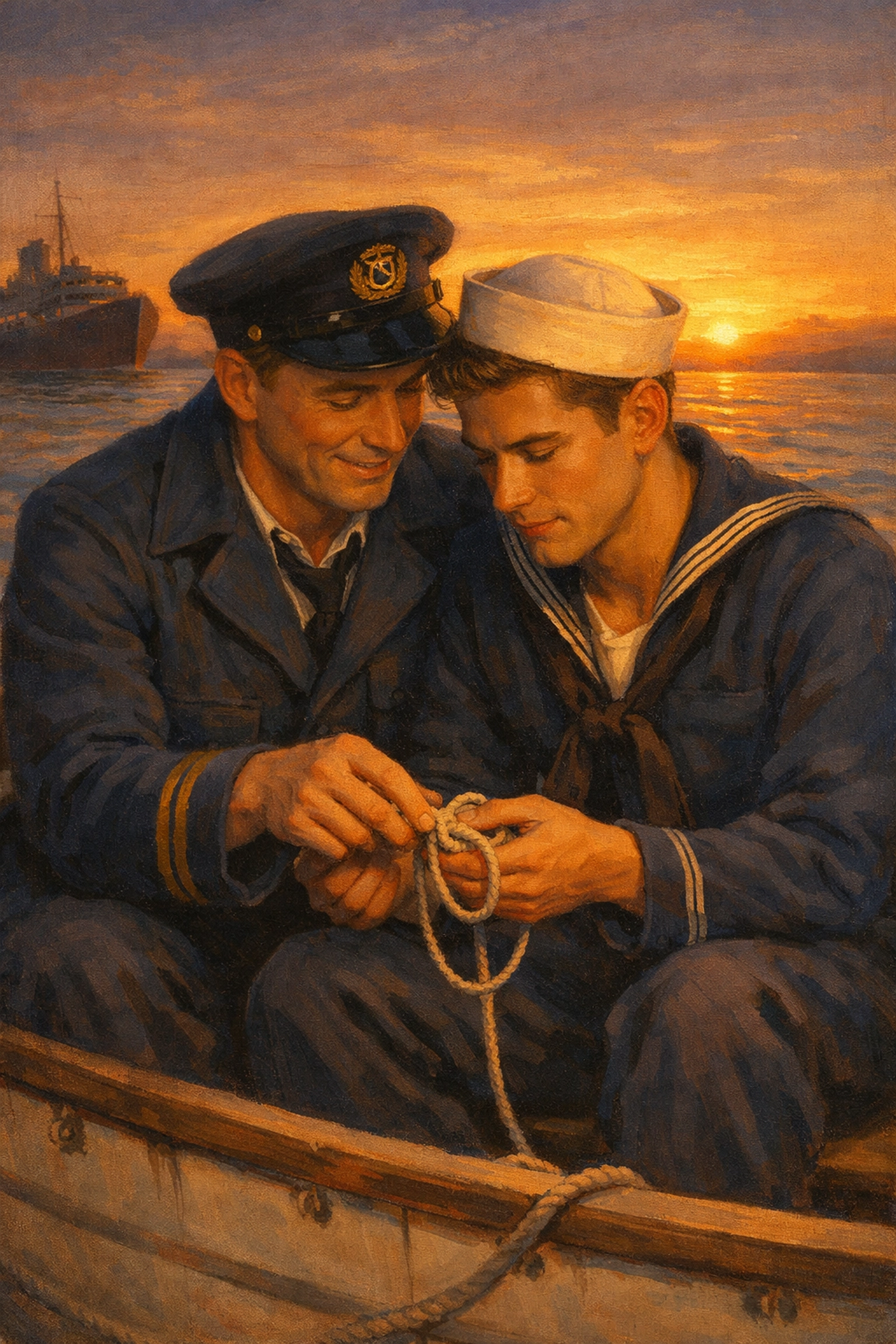
In officer's quarters after midnight watches, in engine rooms where the thunder of machinery drowned out whispered conversations, in lifeboats where two men might huddle together during drills, these were the stolen moments where love found a way.
Brothers in Arms, Partners in Silence
The research tells us about convoy battles and casualty rates, but it doesn't tell us about Jack and Tommy sharing a cigarette on deck under the stars, shoulders touching in a way that said everything they couldn't speak aloud. It doesn't mention how Carlos taught his bunkmate Roberto to read English during their off-hours, their heads bent close over books in the dim light, fingers occasionally brushing in ways that felt like electricity.
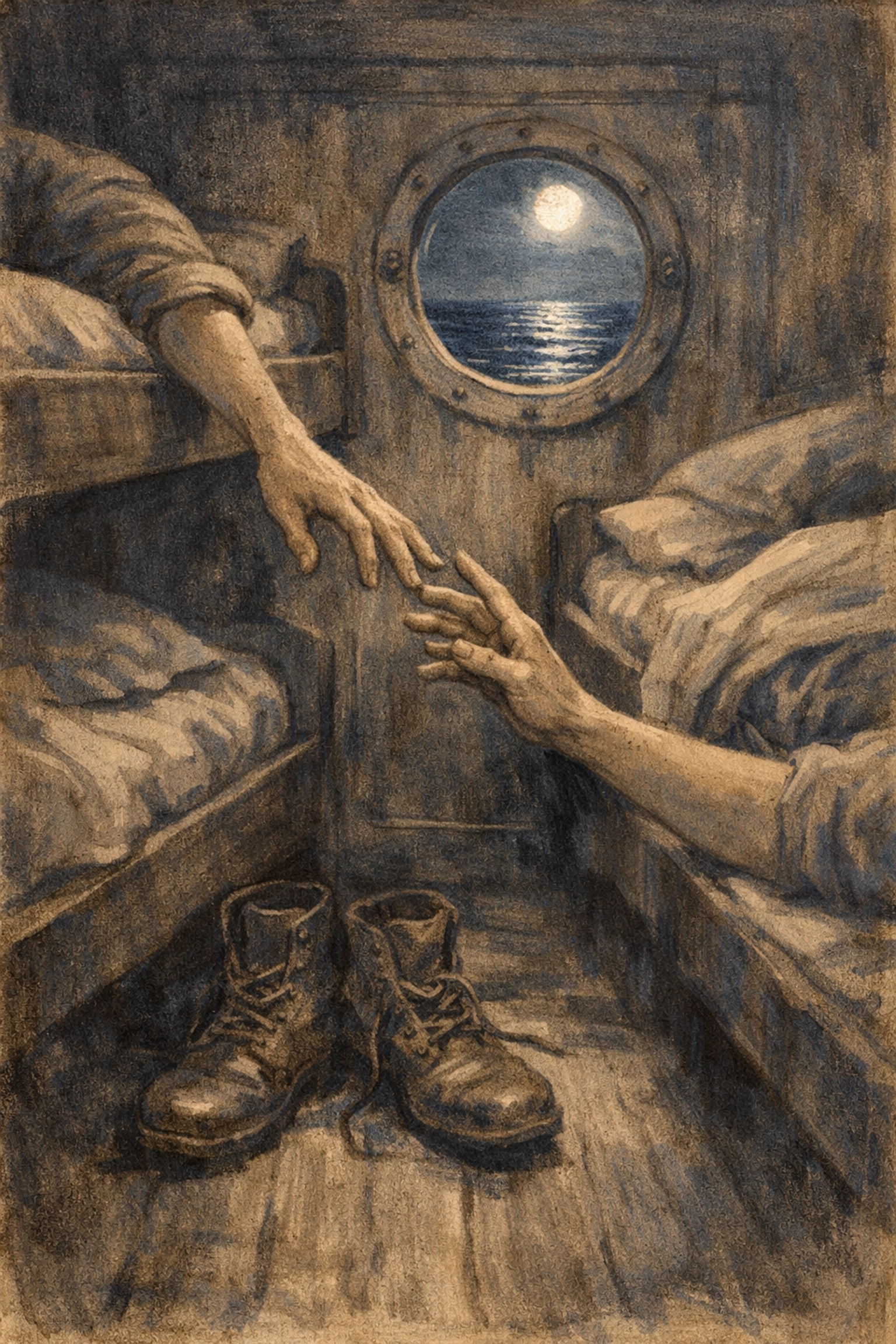
The historical record is frustratingly silent about these relationships, but absence of evidence isn't evidence of absence. We know LGBTQ+ people have always existed. We know that same-sex relationships flourished in other all-male wartime environments. The merchant marine, with its unique combination of civilian status and military danger, created its own culture, one where a man's ability to do his job mattered more than whispered rumors.
When a torpedo struck and the ship was going down, you grabbed the hand of whoever was closest. You fought your way into lifeboats together. You shared body heat in freezing waters. And if the man whose life you saved or who saved yours happened to be the same one who made your heart race during quiet moments on deck, well, war had a way of clarifying what truly mattered.
The D-Day Volunteers Nobody Talks About
In June 1944, about 2,700 merchant ships participated in the first wave of the Normandy invasion. Among them were approximately 1,000 American merchant mariners who volunteered for Operation Mulberry: a suicide mission to sail obsolete ships through mined waters to be deliberately sunk as artificial harbors at Omaha and Utah beaches.
Think about that level of courage. These men volunteered to sail ships they knew would be their coffins, all to give Allied troops a fighting chance at liberation.
How many of those volunteers went knowing they'd never have the chance to build a life with someone they loved? How many had someone special waiting on another ship, in another port? How many made peace with their unspoken feelings as they sailed toward certain death?
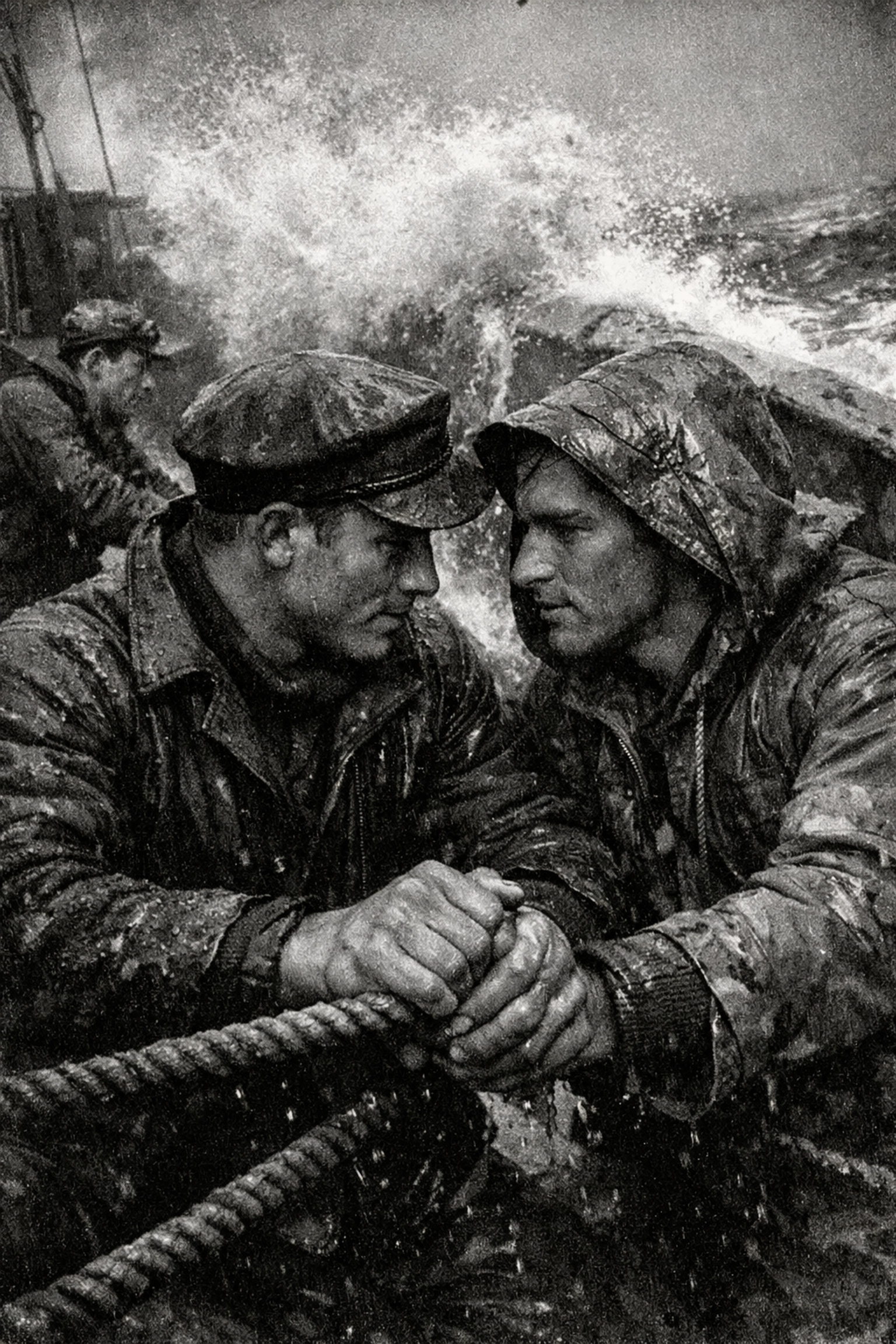
The Forgotten Service, The Invisible Love
After the war ended, merchant mariners came home to a country that barely acknowledged their service. President Roosevelt promised them benefits similar to the GI Bill, but Congress never delivered. They became known as "the forgotten service," fighting for decades to receive official veteran status.
If the merchant marines as a whole were forgotten, imagine how completely erased the gay mariners were. No military records to document their relationships. No veterans' groups where they could share their true stories. No widows' benefits for the partners they couldn't legally acknowledge. They simply disappeared into history, their love stories sinking beneath the waves alongside the 733 ships that never made it home.
Why These Stories Matter Today
This erasure is exactly why historical MM romance matters so much. These stories give voice to the love that existed in the shadows: the relationships that were real and profound but went unrecorded. Gay historical romance doesn't invent these connections; it acknowledges what was always there.
At Read with Pride, our historical MM romance collection honors these forgotten relationships. We publish gay romance books that explore love during wartime: stories of merchant mariners, soldiers, pilots, and civilians who found connection despite the danger and discrimination they faced.
These aren't just gay love stories about the past. They're about resilience, authenticity, and the enduring human need for connection. They're about men who risked everything: not just from enemy fire, but from a society that criminalized their existence: and loved anyway.
Finding Your Next Historical Romance
Whether you're drawn to the rugged danger of life at sea, the tension of forbidden wartime romance, or the quiet heroism of love in impossible circumstances, MM historical romance offers rich, emotional storytelling that centers queer experiences.
Our collection features gay fiction that spans from World War I through the Cold War, exploring how LGBTQ+ people navigated love, identity, and survival during history's darkest hours. These MM novels combine meticulous historical research with the emotional depth and steam readers crave.
Looking for stories about merchant mariners specifically? Try searching our catalog for gay romance novels featuring sailors, naval officers, and wartime settings. You'll find everything from slow-burn romances between crewmates to passionate encounters in port cities where men could briefly let their guards down.
The Ties That Bind Us
The merchant marines faced rough seas and kept quiet about their most precious ties. They died at higher rates than any other service branch. They came home to no recognition, no benefits, no acknowledgment of their sacrifice.
But they loved. Despite everything, they loved.
That's the story worth telling. That's the legacy worth honoring. And that's why we keep publishing LGBTQ+ fiction that refuses to let these relationships stay submerged beneath the waves of history.
Explore our collection of MM romance books today and discover the love stories that survived against all odds: then and now.
Find your next great read at www.readwithpride.com
Follow us for more LGBTQ+ book recommendations and historical deep dives:
📘 Facebook
🐦 Twitter/X
📸 Instagram
#MMRomance #GayRomance #HistoricalRomance #LGBTQBooks #GayHistoricalRomance #MMHistoricalRomance #QueerFiction #GayLoveStories #WWIIHistory #MerchantMarines #ReadWithPride #GayBooks #LGBTQFiction #MMNovels #GayRomanceBooks #HistoricalMMRomance #QueerHistory #GayLiterature #LGBTQReading #MMBooks2026

Leave a Reply
You must be logged in to post a comment.