

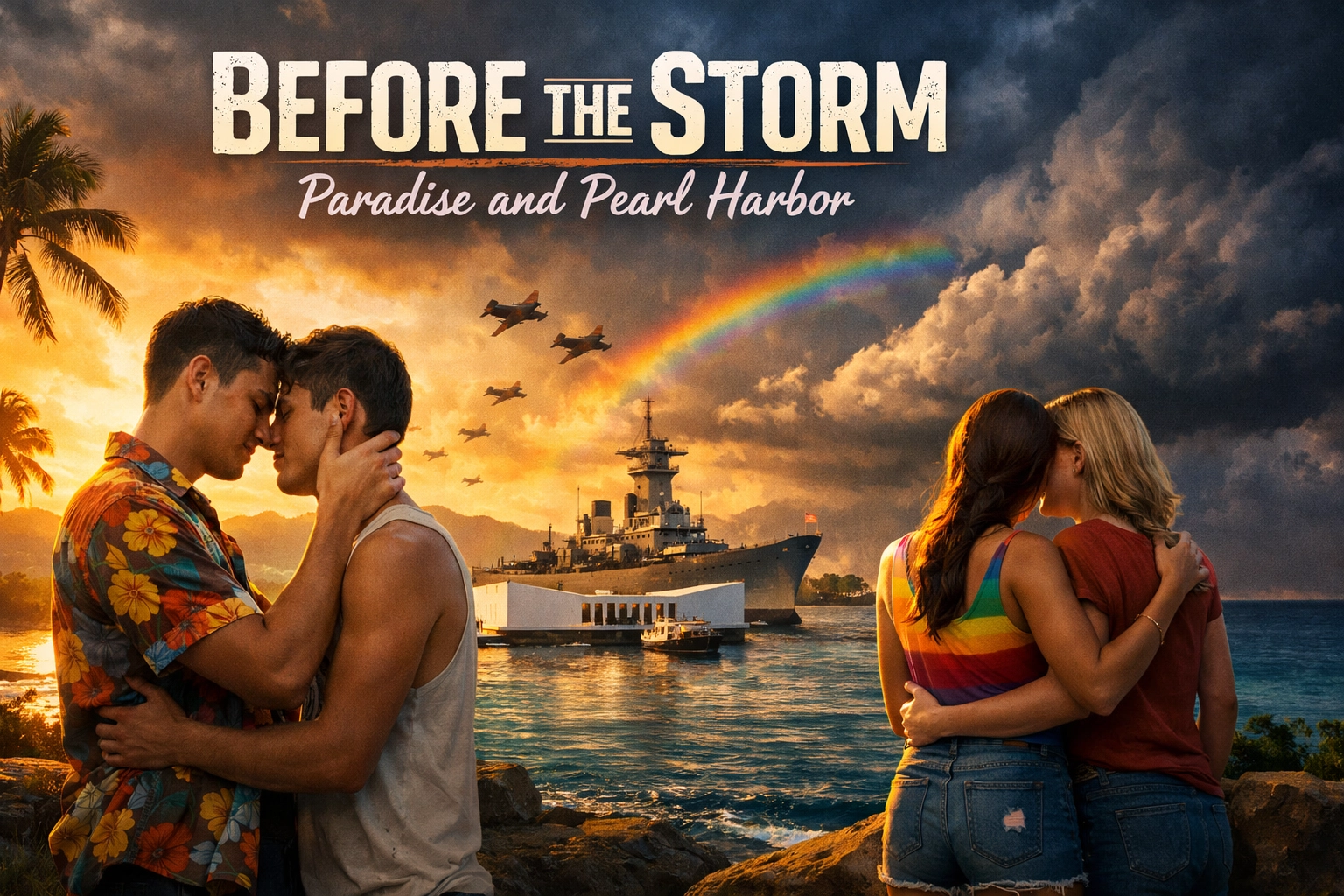
December 6, 1941. Hawaii.
The sun sets over Waikiki Beach in shades of tangerine and gold, palm trees swaying in the warm trade winds. Sailors and servicemen fill the streets of Honolulu, laughing, drinking, enjoying their Saturday night liberty. For two men among the thousands stationed at Pearl Harbor, this tropical paradise offered something beyond duty and military discipline, it offered each other.
But paradise, as they'd learn just hours later, was about to burn.
The Calm Before Everything Changed
Hawaii in 1941 wasn't just a military outpost, it was a dream posting. While much of the world was already engulfed in war, the Hawaiian Islands felt like another universe entirely. Service members stationed there enjoyed warm weather year-round, stunning beaches, and a multicultural society that, while still bound by the prejudices of the era, offered glimpses of something more open than the mainland.
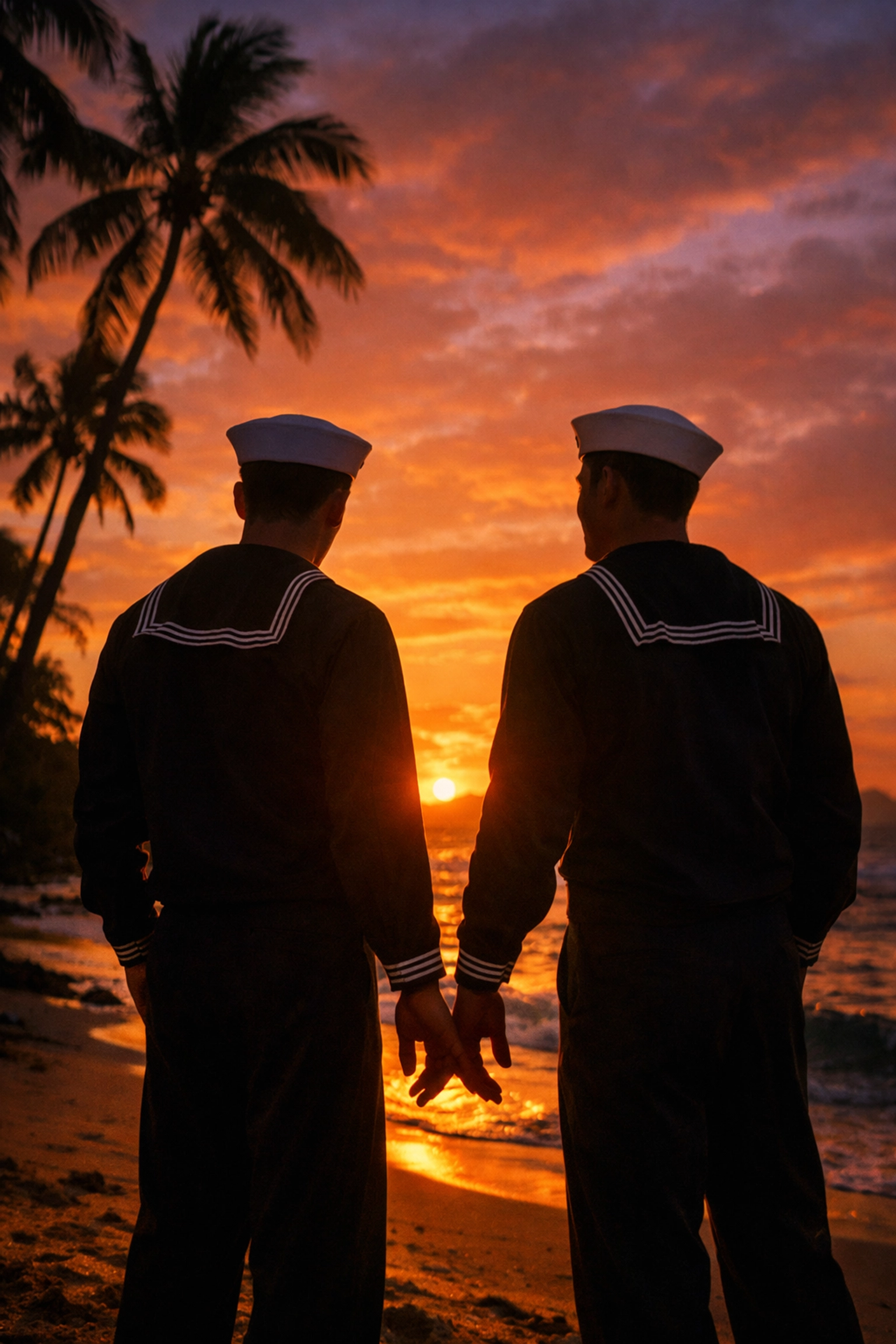
For gay servicemen, Hawaii represented a complicated kind of freedom. Yes, the military's strict codes against homosexuality were just as enforced here as anywhere else. Getting caught meant dishonorable discharge, prison time, and social ruin. But the distance from home, the tropical languor, the mixing of cultures and people from across the Pacific: it all created tiny pockets of possibility.
Late-night meetings on secluded beaches. Coded language in crowded bars. Glances that lasted just a heartbeat too long. The men who found each other in those moments before Pearl Harbor existed in a strange liminal space: between duty and desire, between paradise and peril.
Behind the Uniform
The military in 1941 was an overwhelmingly masculine space, which paradoxically made it easier and harder for gay men to exist within it. Sharing barracks, showering together, the casual physical intimacy of military life: these were all considered normal. A hand on a shoulder. Arms slung around each other in group photos. Men falling asleep exhausted against each other after long watches.
Within these sanctioned forms of male closeness, deeper connections could sometimes form, carefully disguised. Two sailors who always seemed to volunteer for the same shore leave. A pilot and his crewmate who'd grab beers together every Friday at the same out-of-the-way bar. Friendships that looked, from the outside, like typical military brotherhood.
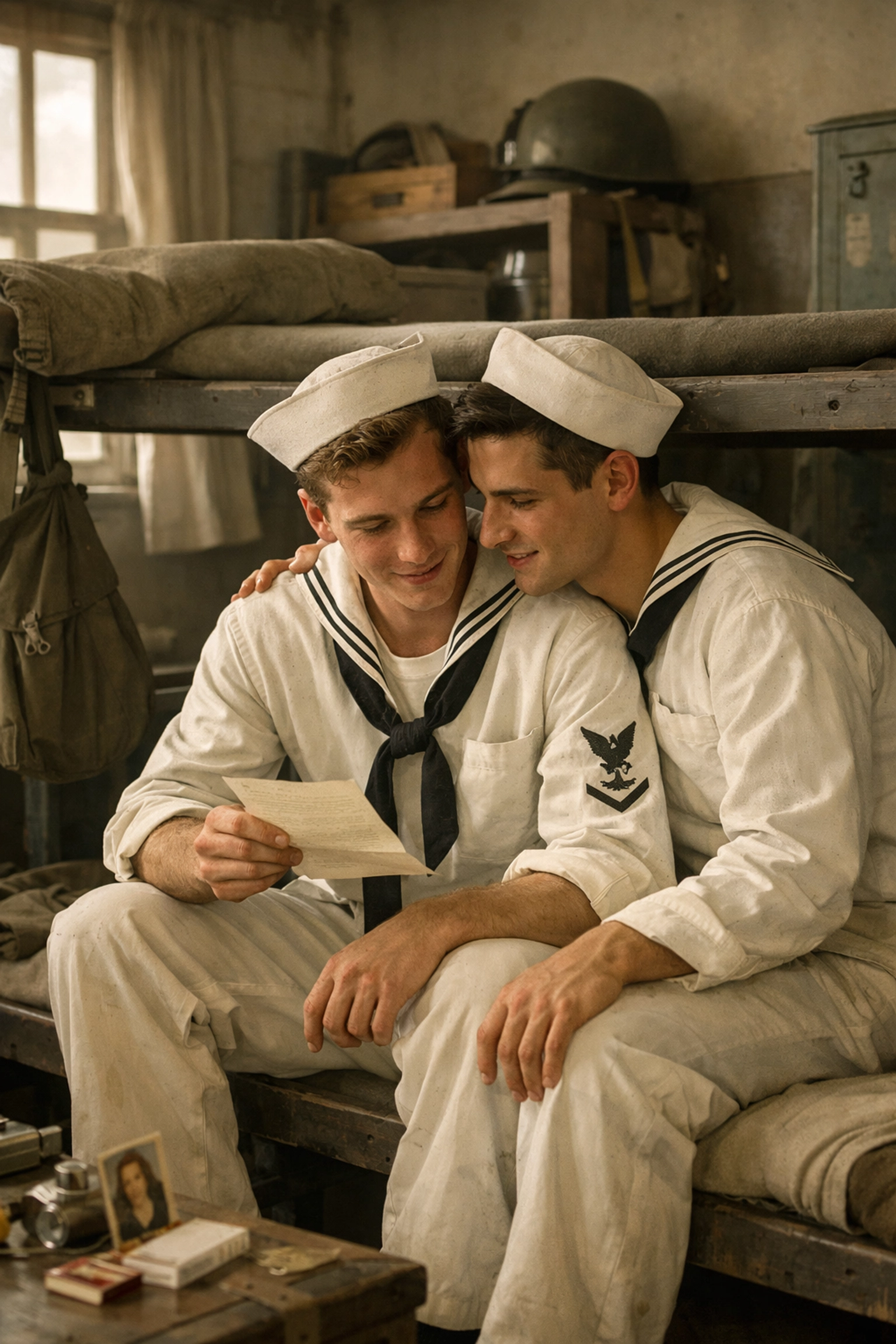
But maintaining this double life required constant vigilance. The military police were always watching. Fellow servicemen could turn informant. One wrong move, one careless moment of tenderness, and everything could fall apart. The men who loved other men in uniform learned to read rooms, to speak in coded language, to find each other through the most subtle of signals.
In Hawaii, some found each other through the local YMCA, through certain bars in Honolulu's Chinatown, through the elaborate underground networks that existed even then. They created their own secret geography of safe spaces within paradise.
December 6th: The Last Night
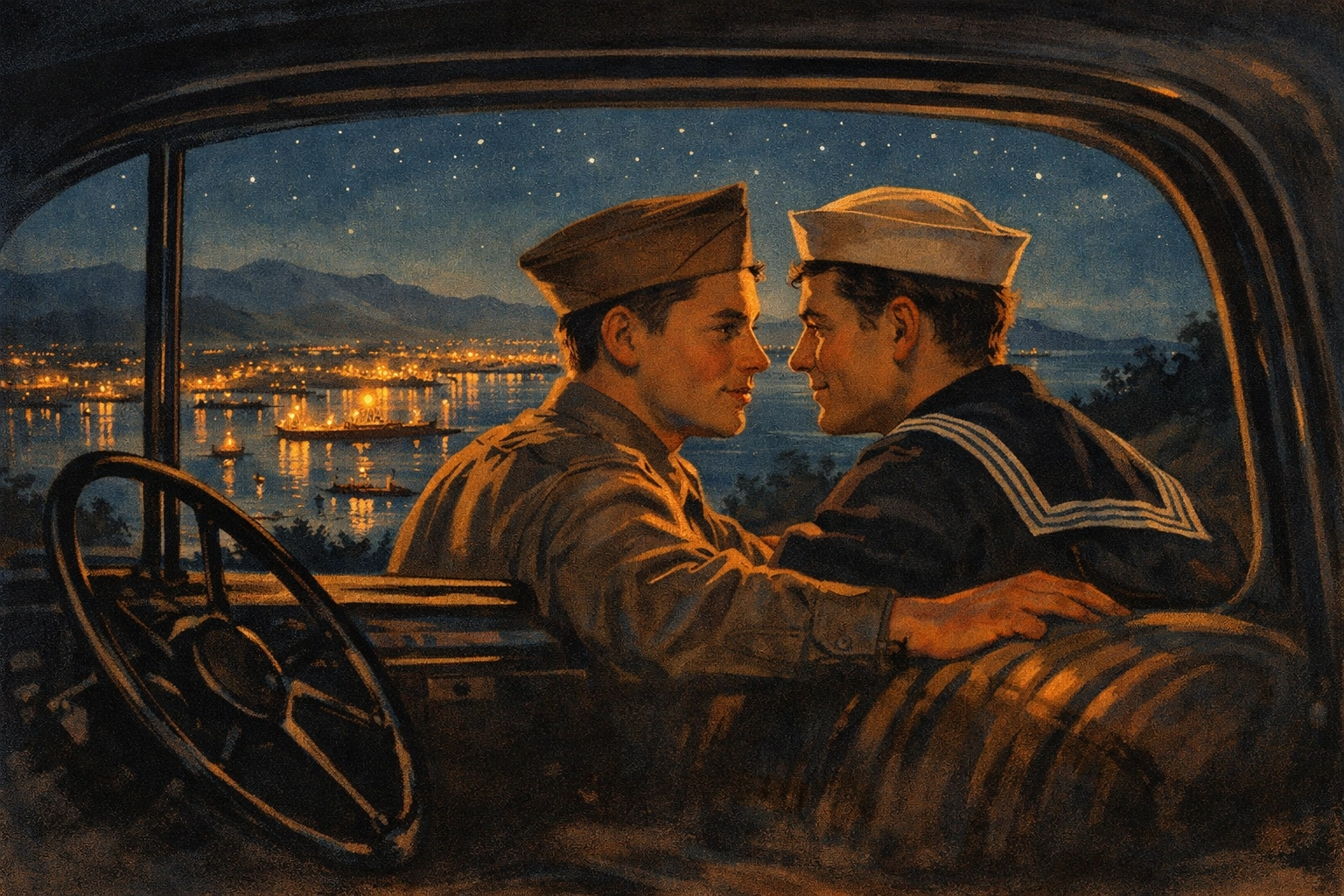
Imagine it. The night before Pearl Harbor. Two servicemen: let's call them what they were, because they deserve that dignity: two men in love, stealing a few precious hours together. Maybe they walked along a quiet stretch of beach, far from the barracks. Maybe they sat in a borrowed car on a hillside overlooking the harbor, talking about everything and nothing.
The battleships were all in port that weekend: the Arizona, the Oklahoma, the California, the West Virginia. The harbor was crowded with vessels, crews enjoying their weekend liberty. Everything felt routine. Peacetime routine.
These two men probably didn't talk about the future much. When you're living a secret life, you learn to stay present. Tomorrow is uncertain. Next week is a luxury. But maybe that night, with the Hawaiian stars bright overhead and the sound of distant music drifting from Honolulu, they let themselves imagine. What it might be like after the war. After their service was done. If they could find someplace they could just… be.
At 7:55 AM the next morning, the first bombs fell.
When Paradise Burned
The attack on Pearl Harbor lasted just under two hours. In that time, 2,403 Americans died, including 68 civilians. Nearly 1,200 more were wounded. Eight battleships were damaged or destroyed. The Arizona sank in nine minutes, taking 1,177 men with her.
In the chaos and carnage, love stories ended before they'd barely begun. Some men died in each other's arms, though history would never record it that way. Others were separated in the aftermath, shipped to different theaters of war, never to reconnect. Some survived only to face the cruel irony of being discharged for homosexuality later in the war, after surviving hell itself.
The paradise was gone. What replaced it was years of brutal Pacific warfare, where survival itself was the only certainty.
Why These Stories Matter
Historical MM romance gives us a way to honor these hidden lives. While we may never know the specific names or stories of every gay serviceman at Pearl Harbor that day, we know they existed. Statistics alone tell us that. They were there. They loved. They died.
At Read with Pride, our historical MM romance collection explores these overlooked corners of history. These aren't just stories about the past: they're about reclaiming narratives that were deliberately erased, relationships that were systematically denied, and love that persisted despite everything.
Gay historical romance books do important work. They remind us that LGBTQ+ people have always existed, even when history books pretended otherwise. They give faces and names and beating hearts to the statistics. They let us imagine the private moments between the public historical events.
Finding These Stories Today
If you're drawn to historical MM romance, especially stories set during wartime, you're not alone. There's something powerful about reading love stories that unfold against the backdrop of humanity's darkest moments. They remind us that even in war, even in fear, even when loving someone could cost you everything: people still loved.
The best gay romance novels set during WWII don't shy away from the historical reality. They acknowledge the danger, the secrecy, the constant fear of discovery. But they also celebrate the resilience, the stolen moments of joy, the quiet acts of resistance that loving someone "forbidden" represented.
At Read with Pride, you'll find MM romance books that span different war eras and conflicts, each exploring what it meant to be queer when the world was telling you that was impossible. From the trenches of WWI to the battleships of WWII to the complicated conflicts that followed, these stories of gay love and survival deserve to be told.
Before Your Own Storm
We all face our own "before the storm" moments: those times when everything feels calm, possible, suspended in amber. For the men at Pearl Harbor on December 6, 1941, tomorrow was unimaginable. But they lived that last night of peace as fully as they could, loving as fully as they dared.
That's what the best historical gay fiction captures: not just the big historical moments, but the small, human ones. The last peaceful night. The stolen kiss. The promise made knowing tomorrow is uncertain.
Explore more stories of love against impossible odds in our MM historical romance collection at ReadwithPride.com. Because every love story, especially the ones history tried to hide, deserves to be remembered.
Follow us for more LGBTQ+ stories and book recommendations:
Facebook | Instagram | X/Twitter
#MMRomance #HistoricalRomance #GayRomance #PearlHarbor #LGBTQ #WWIIHistory #ReadWithPride #HistoricalMM #GayHistoricalFiction #QueerHistory #MLMRomance #GayBooks #LGBTQBooks #MMRomanceBooks #WarTimeRomance #MilitaryRomance #HistoricalGayFiction #MMHistoricalRomance #QueerRomance #GayLoveStories

Leave a Reply
You must be logged in to post a comment.