

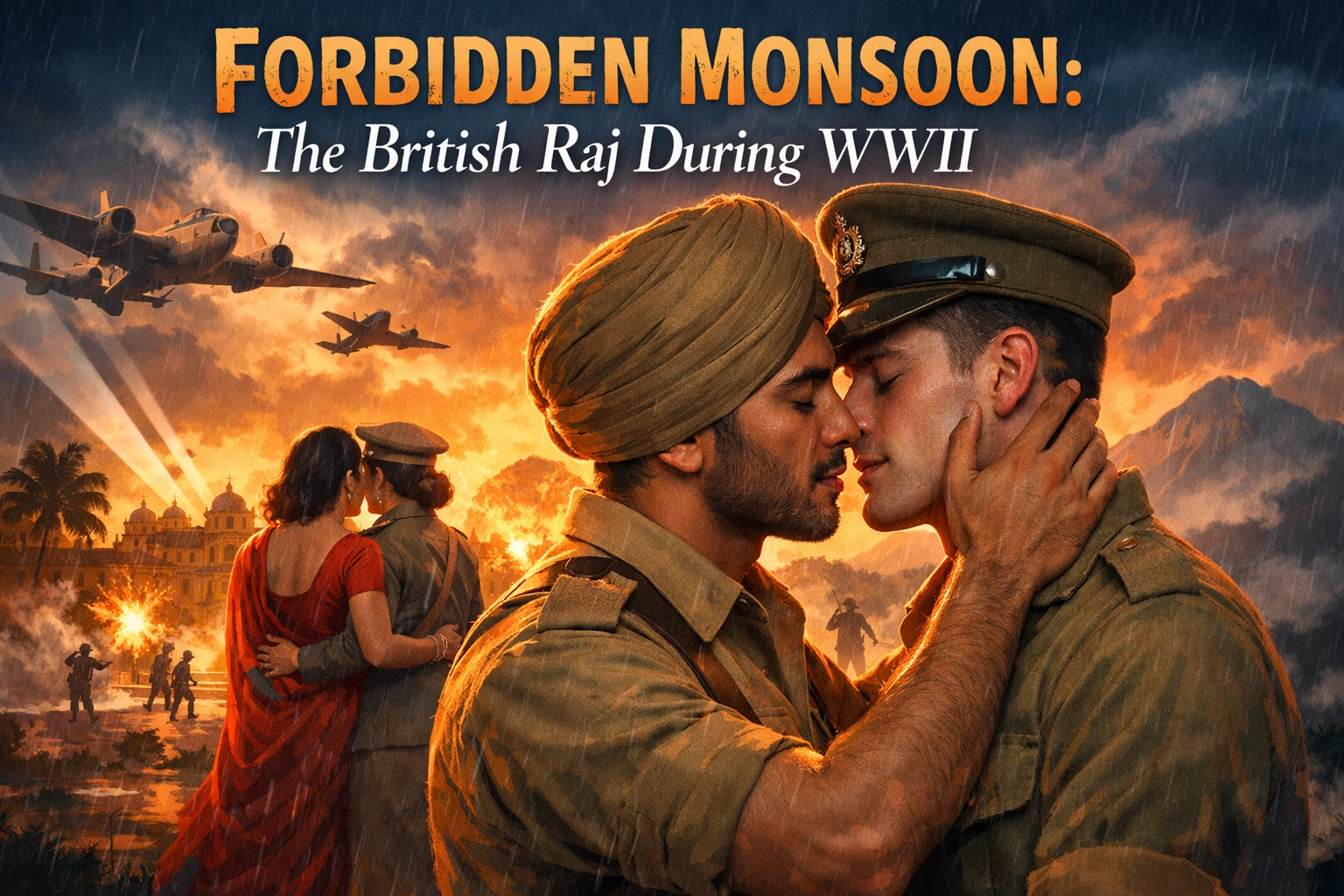
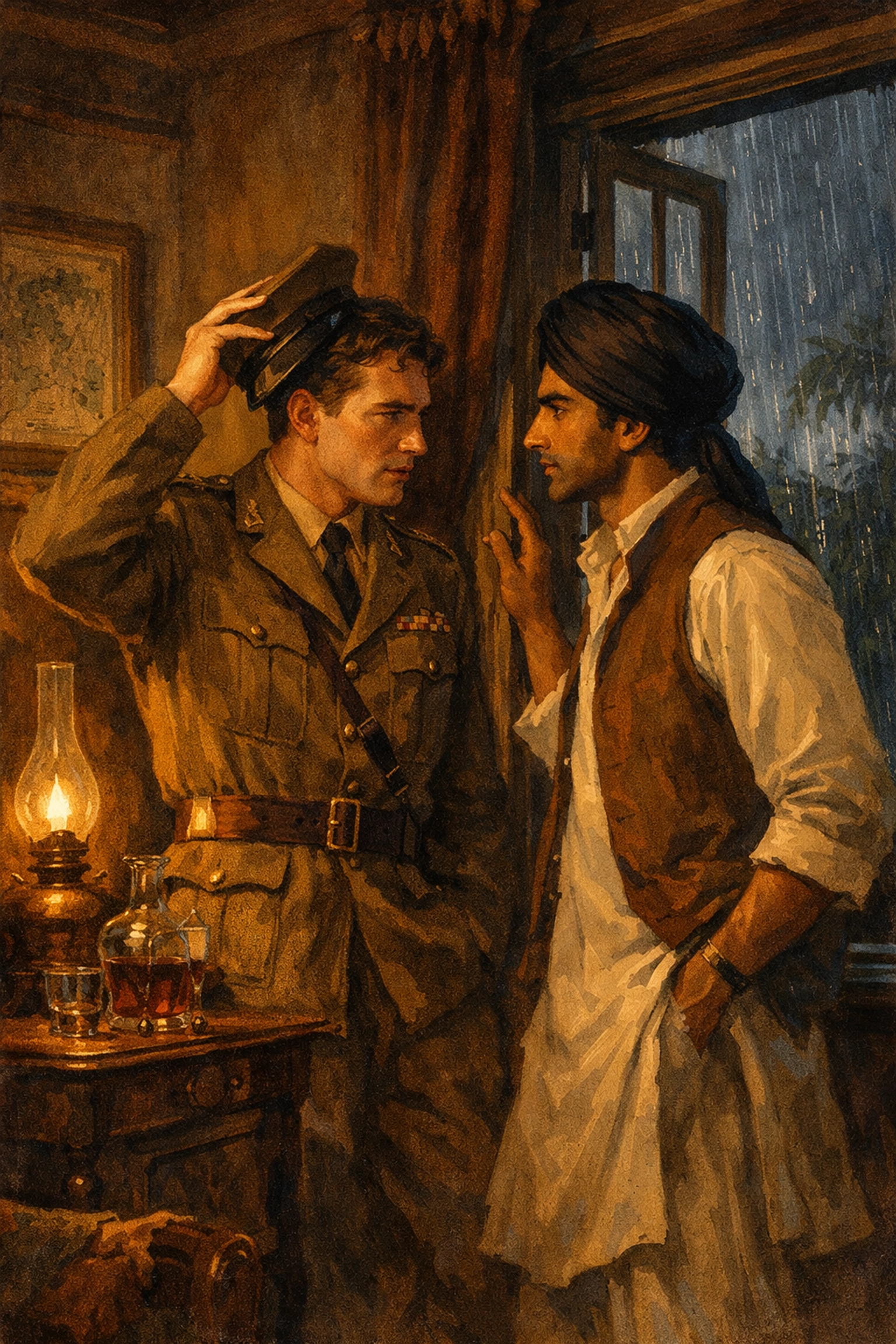
Imagine this: It's 1942, the monsoon rains are beating down on Calcutta's colonial streets, and somewhere in a dimly lit room, two men risk everything for stolen moments together. One wears the crisp uniform of a British officer; the other, the simple cotton of a local clerk. Their love isn't just forbidden by the rigid social hierarchy of the British Raj, it's criminalized, dangerous, and absolutely unforgettable.
Welcome to one of history's most complex and fascinating periods for gay romance, a time when love between men had to hide in the shadows of empire, war, and tradition.
The British Raj at War: A World Turned Upside Down
When Britain declared war on Nazi Germany in September 1939, India, still under colonial rule, was automatically pulled into the conflict. By 1942, the threat was no longer distant. Japanese forces were advancing rapidly through Southeast Asia, pushing toward India's eastern borders. The British military implemented scorched-earth policies in Bengal, including the infamous "boat denial" initiative that confiscated approximately 45,000 rural boats to prevent Japanese use.
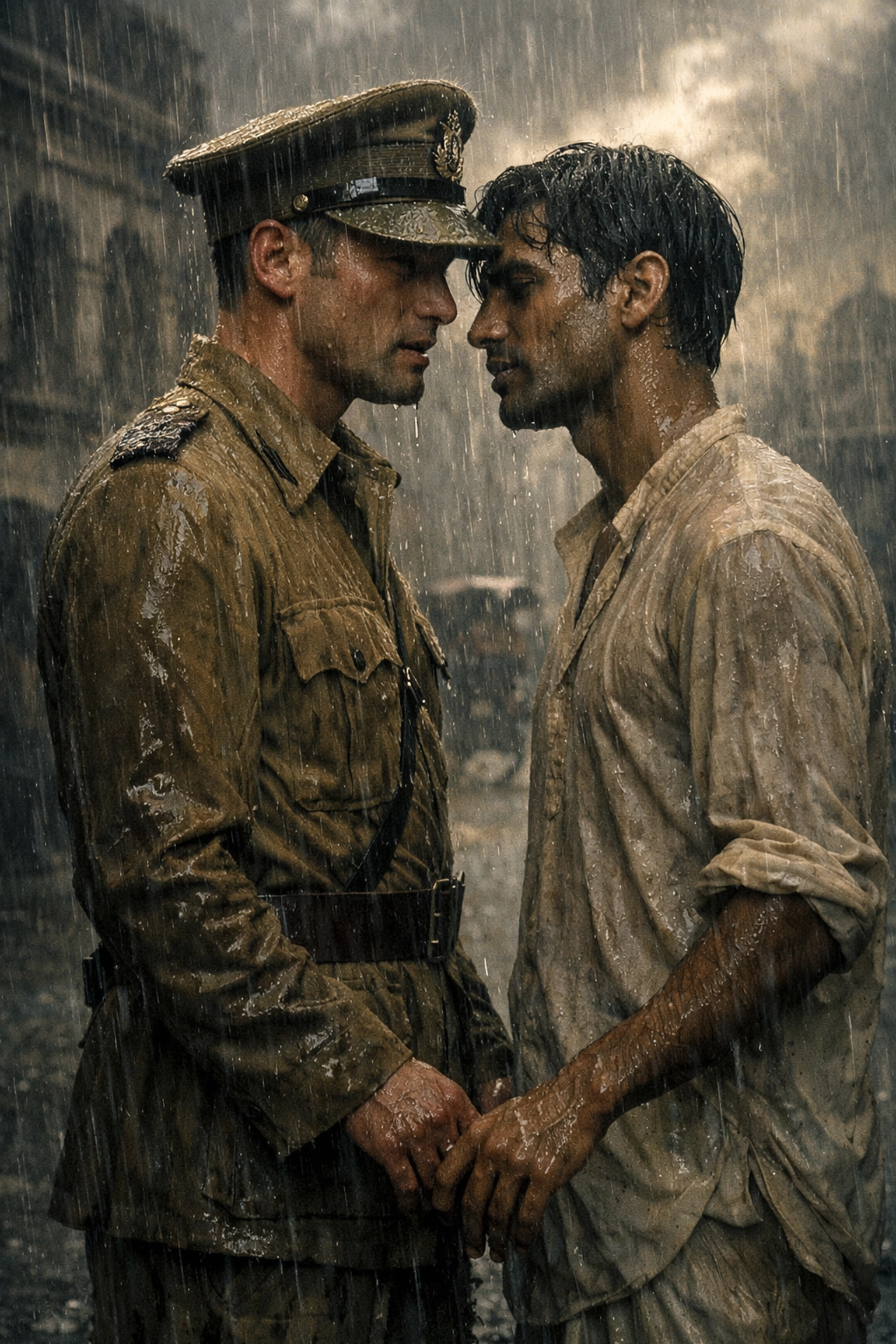
But here's what the history books often miss: war doesn't just change borders and battle lines. It changes people. It creates opportunities for connections that peacetime would never allow. When the world is falling apart, when death feels closer than tomorrow's sunrise, people grab onto love wherever they can find it, even if society says it's wrong.
For gay men in the British Raj during WWII, this was both the worst and best of times. The worst because colonial law still enforced Section 377 of the Indian Penal Code, criminalizing "carnal intercourse against the order of nature." The best because wartime chaos created cracks in the rigid social order, cracks where love could bloom.
Love Across the Divide
Picture Captain James Thornton, a British quartermaster stationed in Calcutta, managing supply lines as the monsoon turns roads into rivers. He's efficient, respected, married to a woman back in Surrey he barely remembers. Then there's Arjun Das, an Anglo-Indian translator working for the military administration, caught between two worlds, belonging to neither.
Their first meeting? Purely professional. A misplaced shipment of medical supplies during the 1943 Bengal famine, when an estimated 800,000 to 3.8 million people were dying. But something in Arjun's eyes, a mixture of anger and exhaustion and something else James can't quite name, makes him look twice.
These weren't just stories of romance; they were stories of survival. MM historical romance captures this tension beautifully, the way desire and danger intertwine, the way love becomes both escape and risk.
The Monsoon: Nature's Cover and Curse
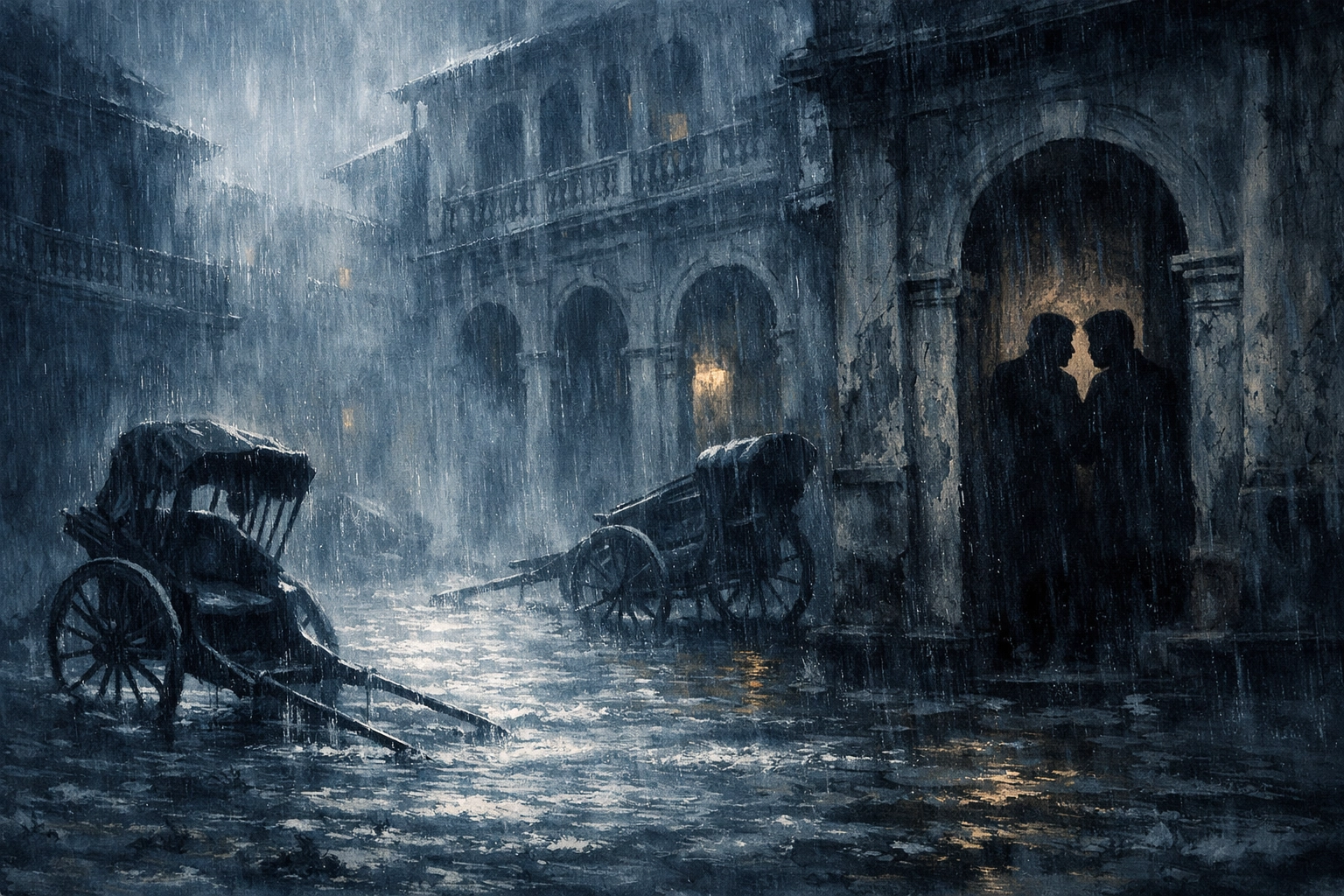
The monsoon season fundamentally shaped life in wartime India. From May through September, torrential rains flooded streets, washed away trails, and turned military operations into muddy nightmares. British forces learned to fight through conditions they'd previously considered impossible, standing firm in places like Kohima and Imphal when conventional wisdom said to retreat.
But for men in love with other men, the monsoon offered something else: cover.
The rain became an accomplice. It emptied streets, created noise that masked whispered conversations, gave excuses for being drenched and disheveled. A British sergeant and an Indian soldier could huddle together in a makeshift shelter, ostensibly waiting out the storm. A pilot grounded by weather could visit his lover's cramped quarters without raising suspicion.
The monsoon also served as a powerful metaphor in gay historical romance, that inevitable force of nature that mirrors forbidden desire. You can't stop it. You can't control it. You can only surrender to it or be swept away.
The Reality of Different Worlds Colliding
The British Raj operated on strict hierarchies, British above Indian, white above brown, officer above enlisted, man above woman. But homosexual desire didn't respect these boundaries. That's what made it so dangerous and so revolutionary.
A relationship between a British officer and an Indian man wasn't just gay, it was crossing racial and colonial lines. It challenged the very foundation of the Raj's power structure, which depended on maintaining rigid separation and British superiority. If a white officer could love an Indian man as an equal, what did that say about the entire colonial project?
These relationships existed in extreme secrecy. Discovery meant court-martial for the British partner, imprisonment for both, social death, and potentially physical violence. The stakes were impossibly high, which is exactly what makes these stories so compelling in MM romance books.
The Language of Coded Love
Gay men in the British Raj developed elaborate codes and signals, ways to recognize each other and communicate desire without words. A certain way of adjusting a necktie. Lingering eye contact. Specific phrases that seemed innocuous to outsiders but screamed "I see you" to those in the know.
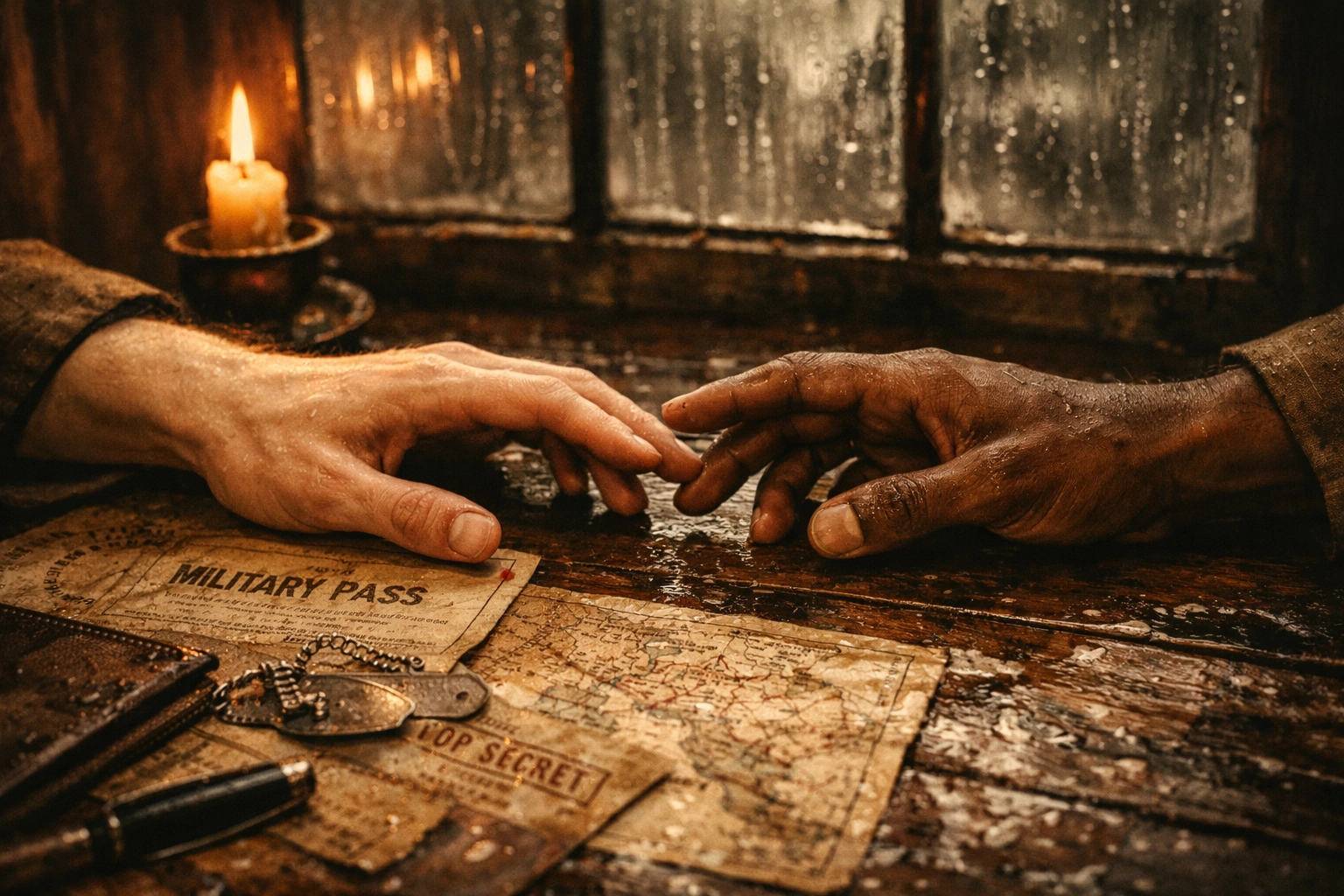
Anglo-Indians like Arjun in our imagined story occupied a particularly complex position. Often educated in English, familiar with both British and Indian culture, they could move between worlds in ways that pure British or Indian individuals couldn't. This made them invaluable as translators, liaisons, and, in the hidden queer underground, as bridges between divided communities.
The wartime setting added another layer. With tens of thousands of young men stationed far from home, homosocial spaces proliferated, barracks, officers' clubs, training camps. Some historians argue that wartime always creates more opportunities for same-sex relationships, simply because men are thrown together in intense circumstances with limited female presence.
Stories Worth Telling
These weren't just forbidden romances, they were acts of resistance. Every secret meeting, every stolen kiss, every whispered declaration of love was a rejection of colonial law, military discipline, and social convention.
The best gay romance novels set in this era don't shy away from the darkness. They acknowledge the dengue fever, the famine, the violence of war and empire. They show characters making impossible choices, between love and safety, between authenticity and survival, between two cultures pulling them in different directions.
But they also capture the beauty. The tenderness of two men finding each other in chaos. The courage it took to love when discovery meant destruction. The small rebellions, a hand held under a table, a letter written in code, a promise whispered during a monsoon storm.
Finding These Stories Today
If you're craving MM historical romance that explores these complex dynamics, Read with Pride offers a stunning collection of gay historical romance that brings these forgotten stories to light. From British India to other corners of WWII, these LGBTQ+ ebooks don't just tell love stories, they reclaim queer history that's been erased or ignored for too long.
The beauty of MM romance books is how they make history personal. They take big historical events, wars, empires, social upheaval, and show us the individual hearts beating within them. They remind us that gay men have always existed, always loved, always found ways to be together despite impossible odds.
Why These Stories Matter Now
Reading about gay romance in the British Raj during WWII isn't just historical curiosity. These stories connect us to our queer ancestors, showing us their courage and resilience. They prove that LGBTQ+ people aren't a modern invention, we've always been here, loving and fighting and surviving.
They also offer perspective. When current struggles feel overwhelming, it helps to remember that our community has faced worse and prevailed. Men loved each other when it was literally illegal, when discovery meant prison or death. They still found ways to be together, to create joy in the margins, to build lives in the cracks of oppressive systems.
That's the power of gay fiction, it preserves and celebrates these stories, ensuring they're not lost to history.
Your Next Read Awaits
Whether you're drawn to the forbidden romance across colonial lines, the tension of wartime secrecy, or the pure emotional intensity of love against all odds, there's an MM romance waiting for you at Readwithpride.com.
These aren't your grandmother's history books (unless your grandmother is exceptionally cool). These are passionate, authentic, deeply researched gay novels that honor both the historical record and the human heart. They're stories about men like Captain Thornton and Arjun Das, fictional, yes, but representing thousands of real men who loved in secret and defied empires to be together.
The monsoon rains still fall in India every summer. But now, we can tell the stories they once concealed.
Discover more powerful historical MM romance at Read with Pride: because love has always been worth fighting for.
Follow us for more LGBTQ+ content: Facebook | Instagram | X/Twitter
#MMRomance #GayHistoricalRomance #ReadWithPride #LGBTQBooks #HistoricalRomance #GayRomance #BritishRaj #WWII #QueerHistory #MMBooks #GayFiction #LGBTQFiction #HistoricalMMRomance #ForbiddenLove #GayRomanceBooks #QueerBooks #LGBTQReads #MMRomanceBooks #GayLoveStories #HistoricalFiction

Leave a Reply
You must be logged in to post a comment.