

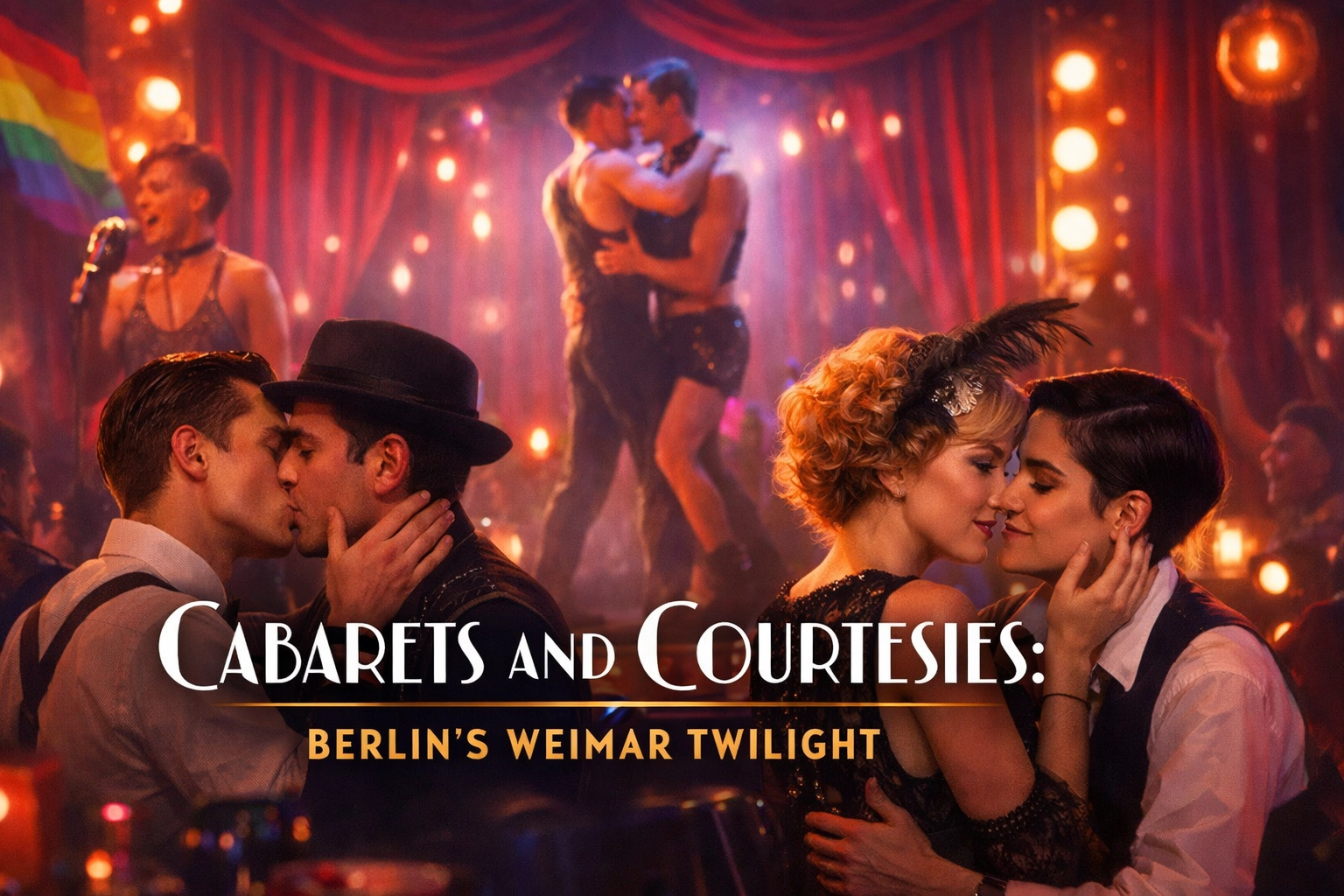
There's something achingly romantic about Berlin in the 1920s: a city that sparkled with sequins and champagne while dancing on the edge of an abyss. For a brief, glorious moment between the collapse of Imperial Germany and the rise of the Third Reich, Berlin became the queer capital of the world. It was a place where love could flourish openly, where two men could dance cheek-to-cheek in a smoky cabaret, and where possibility felt limitless. Until it wasn't.
If you're drawn to historical MM romance that captures both the exhilaration and heartbreak of love against impossible odds, the Weimar Berlin era offers some of the most compelling stories you'll ever encounter. Let's step back into that glittering twilight.
The Golden Age of Queerness
When the Kaiser abdicated in November 1918, more than just a monarchy fell: the rigid censorship restrictions that had suffocated German cultural expression collapsed with it. What emerged from the rubble was extraordinary. Berlin transformed almost overnight into what many historians consider the most open and vibrant LGBTQ+ scene Europe had ever witnessed.
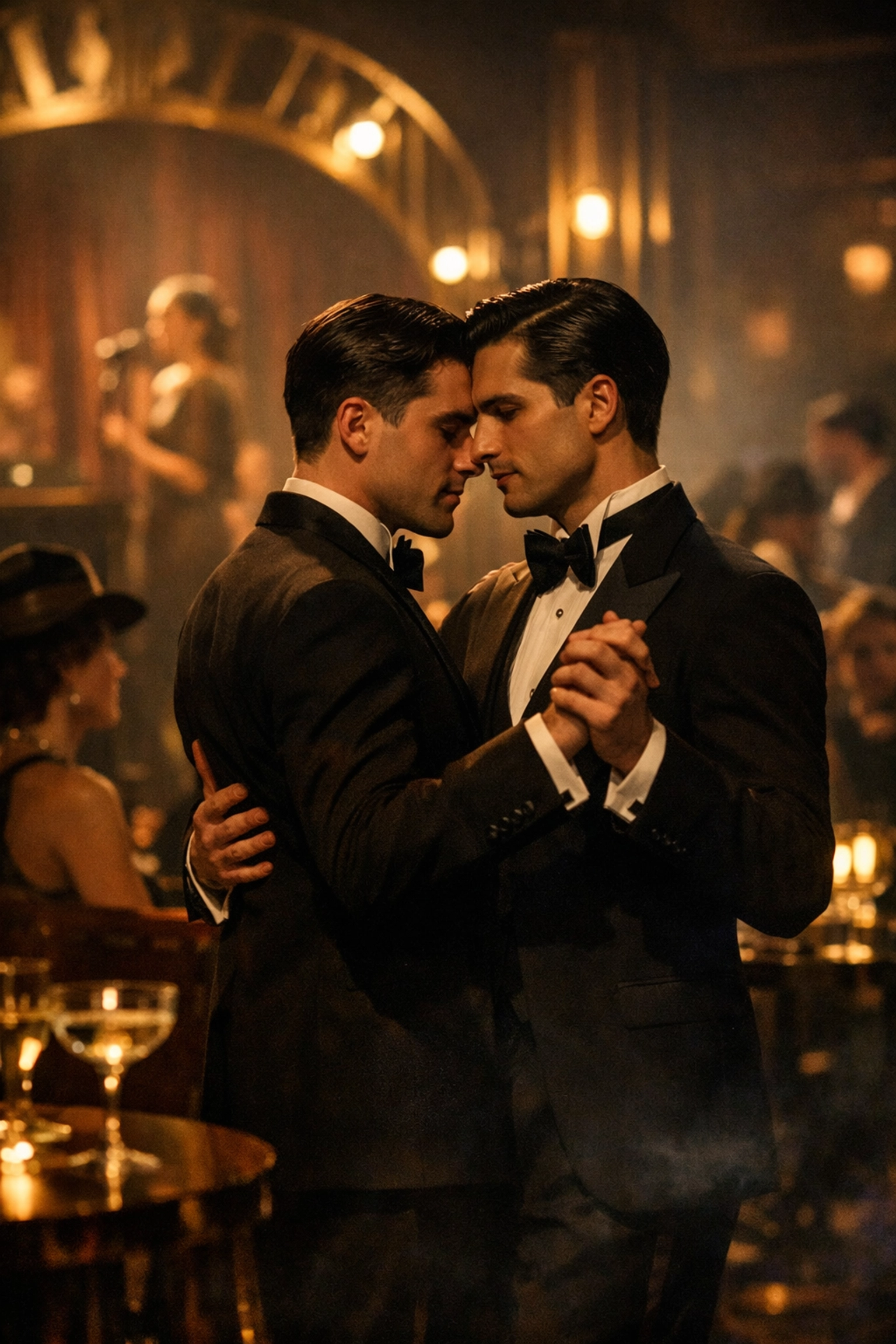
The city boasted over 100 gay and lesbian bars, clubs, and cabarets by the late 1920s. There were LGBTQ+ magazines, advocacy organizations, and even the world's first Institute for Sexual Science, founded by pioneering sexologist Magnus Hirschfeld. For queer people living elsewhere in Europe: where criminalization and persecution remained the harsh reality: Berlin represented freedom itself.
This wasn't just tolerance. This was celebration. Men could walk arm-in-arm down the Kurfürstendamm. Cross-dressing was part of the theatrical landscape. Love: in all its messy, beautiful forms: was out in the open. For a community so used to hiding, it must have felt like breathing for the first time.
Where Love Met Performance
The cabaret scene became the beating heart of this queer renaissance. These weren't your typical theaters: cabarets were intimate, provocative spaces where the boundaries between performer and audience blurred, where satire cut deeper than any newspaper editorial, and where societal norms were gleefully dismantled nightly.
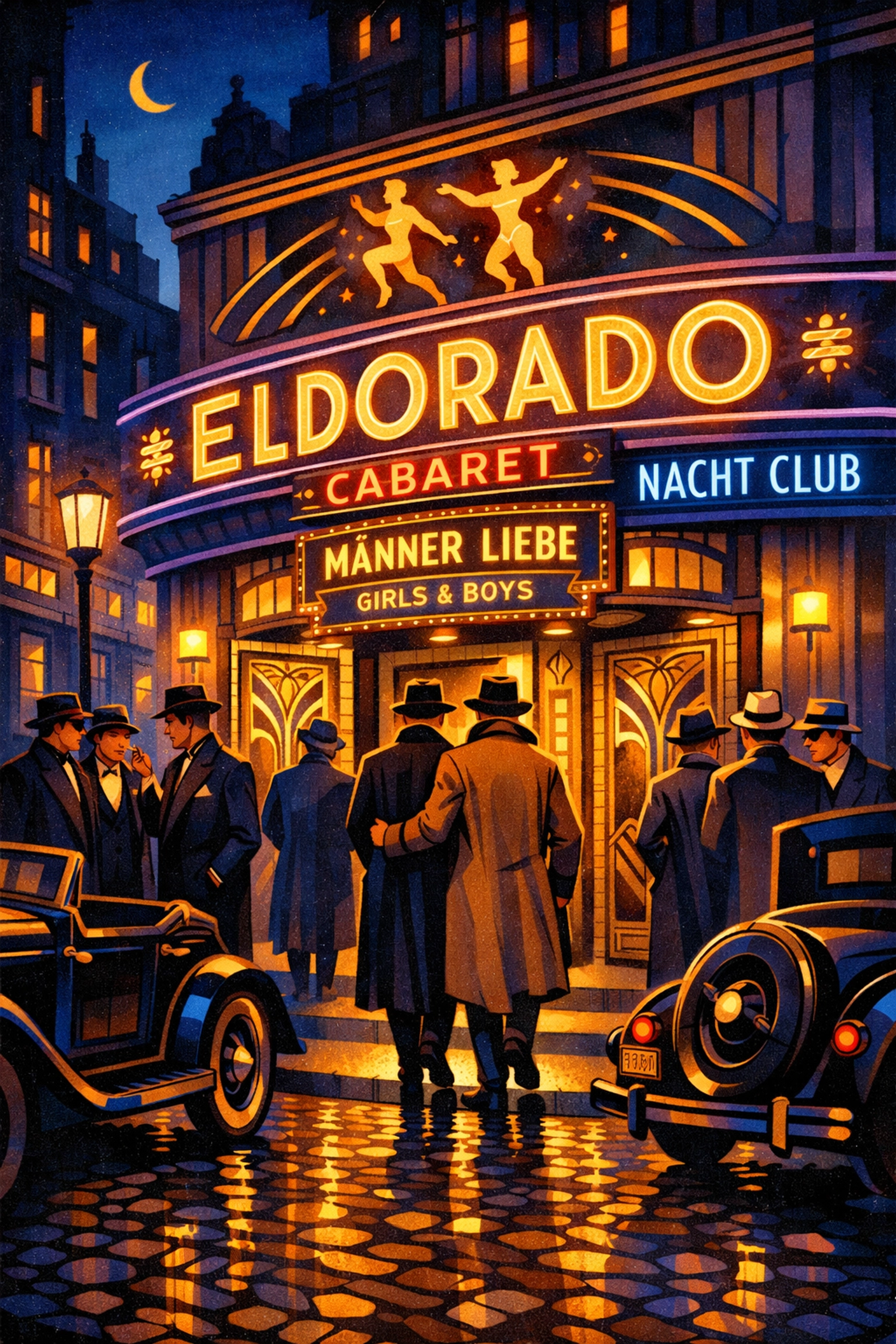
Venues like Schall und Rauch (Noise and Smoke) specialized in parody and experimental performance. Cabaret Megalomania, founded by the incomparable Rosa Valetti, featured biting political commentary wrapped in sardonic musical numbers. But the crown jewel of Berlin's queer nightlife? That was Eldorado.
Located on Motzstraße, Eldorado became legendary by 1929. Its motto: "Hier ist's Richtig" (Here it is Right): welcomed everyone: gay men, lesbians, cross-dressers, curious straight patrons, and tourists from around the globe. The venue featured elaborate stage shows, a live orchestra, and an atmosphere of radical acceptance that would later inspire the musical Cabaret. Men in elegant evening wear danced with other men. Performers in drag commanded the stage with fierce glamour. For a few precious hours each night, the world made sense.
Love Stories in the Shadows
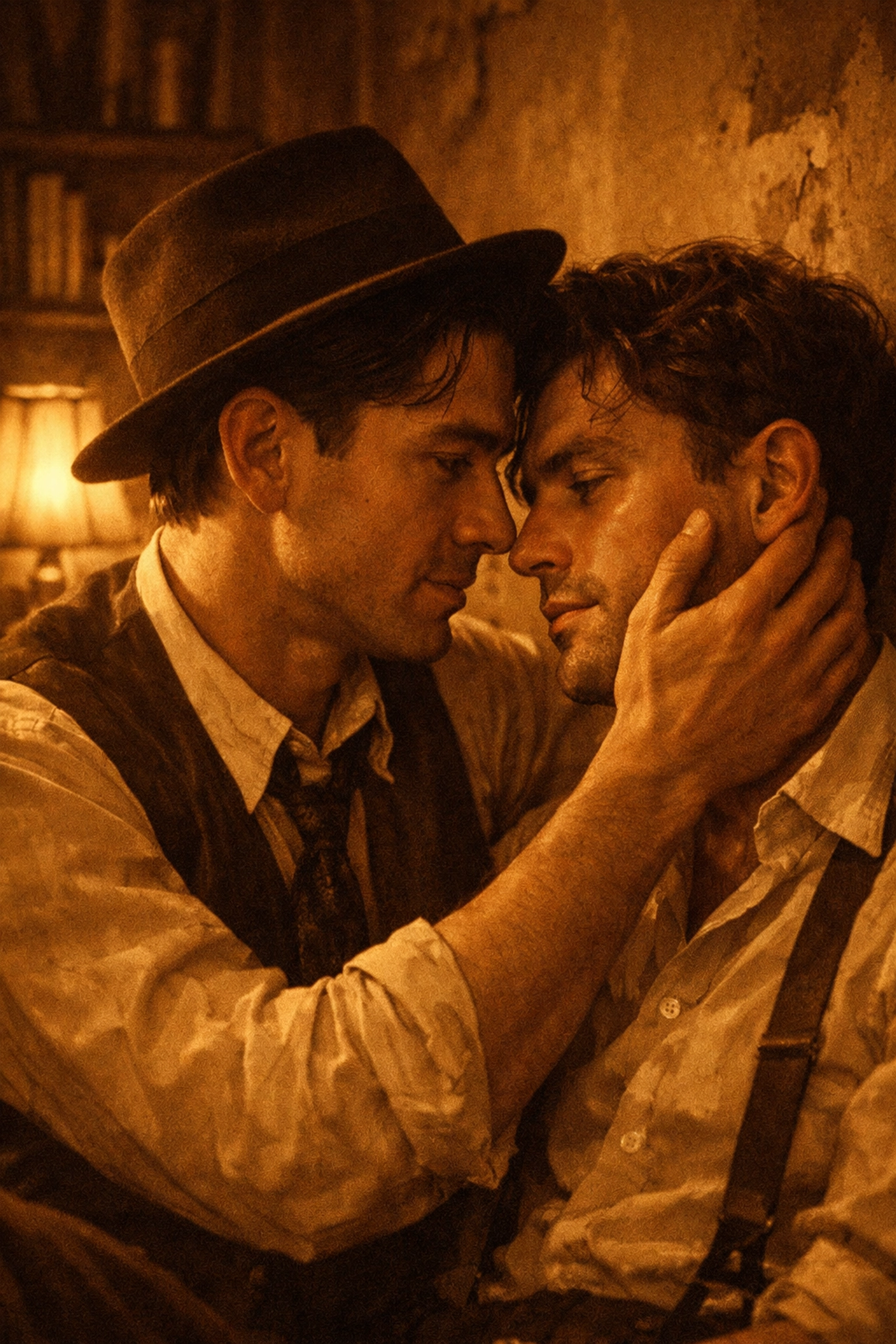
Imagine two men meeting across a crowded cabaret floor, eyes locking as a jazz band swings into something sultry. One might be an artist still splattered with paint from his studio in Kreuzberg. The other could be a university student studying literature and dreaming of writing the great German novel. They wouldn't need to hide their attraction: not here, not in this moment.
These were the gay love stories that unfolded in Weimar Berlin. Relationships that began with a shared cigarette outside Eldorado or a stolen kiss in the shadowy corners of the Alexander-Palais. Men fell in love openly, built lives together in rented flats with peeling wallpaper and ambitious dreams. They navigated the inflation crisis together, laughed at the absurdity of carrying wheelbarrows full of worthless currency to buy bread, and held each other when the political tensions grew too frightening to ignore.
The best MM romance books set in this era capture this duality: the intoxicating freedom paired with a growing sense of dread. Because even as these lovers danced, the ground was shifting beneath their feet.
When the Music Stopped
The warning signs were there, scratched into the graffiti on the walls, shouted at rallies by men in brown shirts. The Nazi Party was gaining traction, fueled by economic desperation and promises to restore "traditional German values." What that really meant for the queer community became brutally clear.
In January 1933, police began targeting venues deemed "depraved." Hermann Goering, who would become second only to Hitler in the Nazi hierarchy, personally ordered the closure of gay and lesbian establishments. In February 1933, the Eldorado was raided and shuttered. The space that had been a sanctuary was repurposed as headquarters for the SA stormtroopers: a cruel symbolic victory for the regime.
Other venues fell like dominoes. The Katakombe and Tingeltangel closed in 1935. By 1941, the Ministry of Propaganda issued decrees forbidding the kind of performances that had defined the cabaret era. Performers like Claire Waldoff, whose irreverent songs had delighted audiences for years, were banned from appearing on stage entirely.
And the people? Many fled: those who could, those who saw the writing on the wall early enough. Others stayed, out of love for their city or inability to leave, and faced persecution, imprisonment, and worse. The Institute for Sexual Science was ransacked, its library burned. The community that had flourished so briefly was systematically destroyed.
Why These Stories Still Matter
Historical gay romance novels set during the Weimar era don't just offer escapism: they preserve memory. They remind us that queer love has always existed, even in the darkest times. They honor the courage it took to love openly when doing so became dangerous, and the resilience required to survive when the world turned hostile.
These stories also teach us something vital: freedom is fragile. The rights we have today weren't inevitable: they were fought for, often at tremendous personal cost. And they can be lost again if we're not vigilant.
At Read with Pride, we believe in the power of LGBTQ+ fiction to connect us across time. Our historical MM romance collection includes stories that capture the complexity of loving during times of political upheaval. These aren't just romance novels: they're acts of remembrance, ensuring that the men who loved each other in Weimar Berlin aren't forgotten.
Finding Your Next Historical Romance
If this glimpse into Berlin's twilight has sparked your interest, there's so much more to explore. MM historical romance offers endless possibilities: from medieval knights to World War II codebreakers, from Victorian gentlemen to Cold War spies. The common thread? Love persisting against the odds.
Looking for your next read? Browse the collection at readwithpride.com where you'll find everything from steamy historical romances to deeply emotional explorations of queer love across the centuries. Because every era has had its love stories, and every one of them deserves to be told.
The cabarets of Weimar Berlin may be long gone, but their spirit lives on: in every MM romance that refuses to let queer love be erased from history, in every story that says "we were here, we loved, and we mattered."
Read with pride. Remember with pride.
Follow us for more LGBTQ+ book recommendations and historical deep dives:
Facebook | Instagram | Twitter/X
#ReadWithPride #MMRomance #GayRomanceBooks #LGBTQFiction #HistoricalRomance #MMHistoricalRomance #GayHistoricalRomance #WeimarBerlin #QueerHistory #GayLoveStories #MMNovels #LGBTQBooks #GayFiction #QueerFiction #MMBooks #GayRomance #LGBTQRomance #HistoricalMMRomance #BestMMRomance2026 #GayBooks #PrideReading

Leave a Reply
You must be logged in to post a comment.