

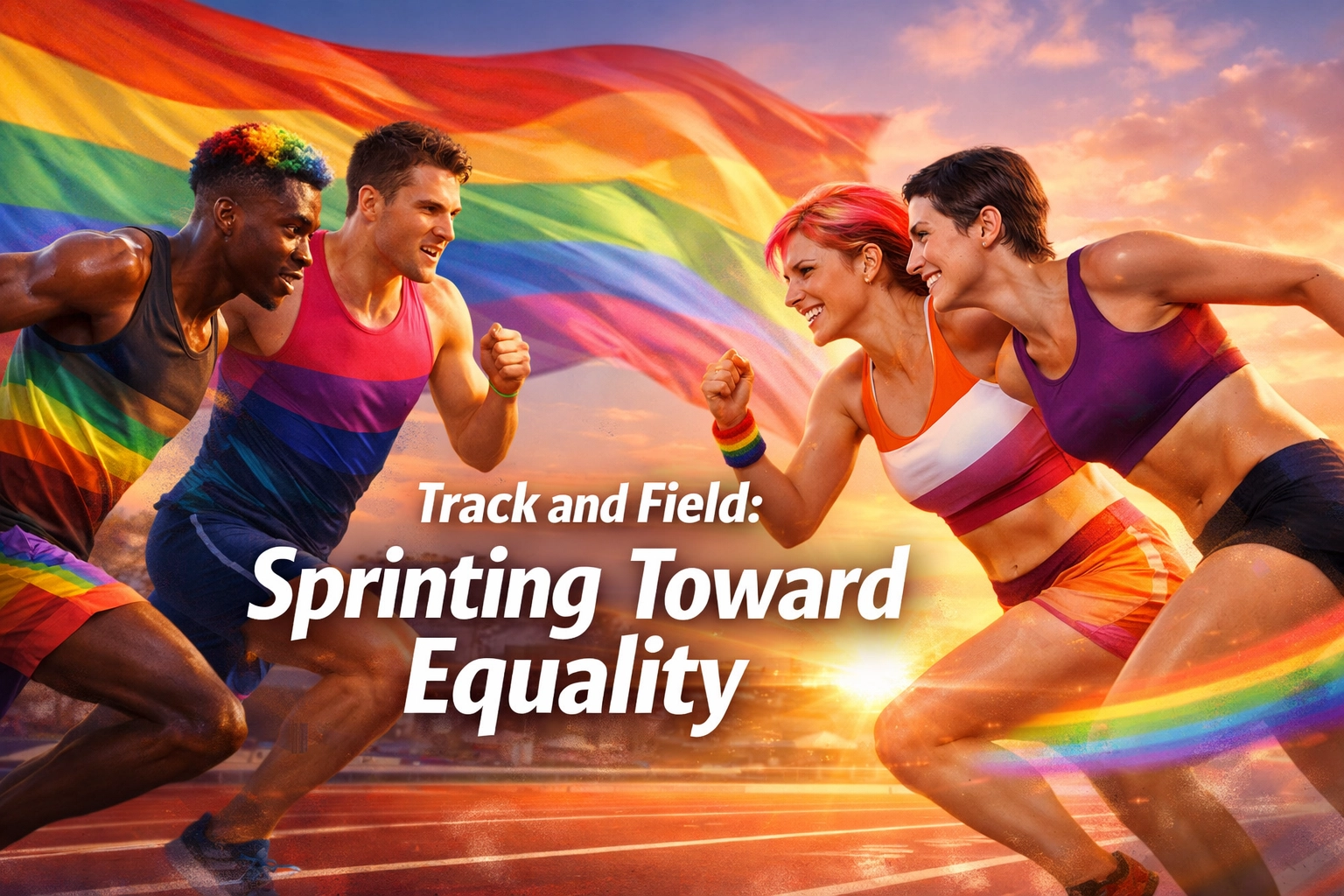
There's something inherently queer about track and field: the unapologetic display of physicality, the tight uniforms, the raw vulnerability of putting everything on the line in front of thousands of spectators. And yet, for decades, LGBTQ+ athletes sprinted, jumped, and threw in silence, closeted by a sports culture that demanded they hide their authentic selves to compete.
But times are changing. The track is becoming a space where speed meets authenticity, where personal bests include living your truth.
The Closet Was Always Too Small for Athletes
Let's be real: elite athletics and the closet have never been compatible. You can't compartmentalize your identity when your entire existence revolves around peak performance, mental toughness, and physical excellence. The emotional energy spent hiding who you love is energy not spent on the starting blocks.
For years, LGBTQ+ track athletes faced an impossible choice: stay closeted and compete, or come out and risk losing sponsorships, team support, and even their careers. The whispers in locker rooms, the carefully worded press conference answers, the "roommate" who traveled to every competition: it was exhausting theater that had nothing to do with running faster or jumping higher.

The pioneering athletes who did come out during their competitive years were exceptionally brave. They faced backlash not just from conservative sports institutions but from a public that wasn't ready to see queer people as athletic heroes. Each openly gay sprinter, each lesbian hurdler who refused to hide, was doing more than competing: they were rewriting the narrative about who belongs on the track.
Modern Athletes Changing the Game
Today's track and field landscape looks different, though we're still sprinting toward full equality rather than having crossed the finish line. Athletes like Sha'Carri Richardson have brought unapologetic self-expression to the sport, while others have quietly come out after retirement, finally able to tell their complete stories.
The difference? Younger athletes are increasingly refusing to choose between their sport and their identity. They're showing up as whole people: posting about their partners on social media, advocating for LGBTQ+ rights, and proving that being out doesn't slow you down. In fact, the psychological freedom of living authentically often translates to better performance.
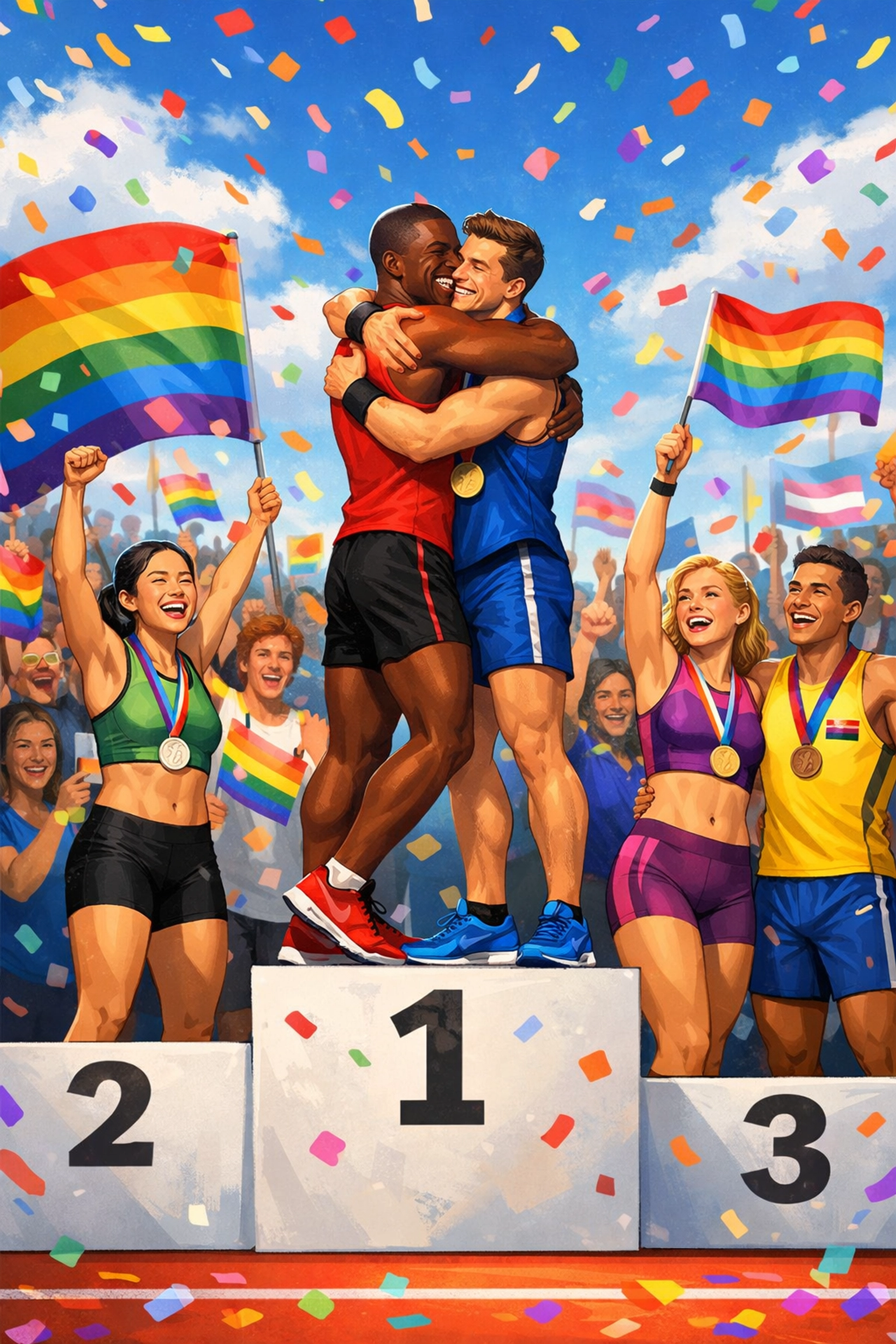
Still, representation matters, and we need more. When young queer kids watch track and field, they should see themselves reflected not just occasionally, but consistently. They should see that the starting line is for everyone, that speed has no sexual orientation, and that the podium has room for all identities.
The Intersection of Athletics and Queer Identity
There's a beautiful parallel between athletic competition and queer existence: both require resilience, both demand you push past limits society tries to impose, and both ultimately come down to being true to yourself under pressure.
Track and field, in particular, strips away pretense. You can't fake a 100-meter sprint. Your time is your time. Your distance is your distance. This brutal honesty mirrors the queer experience of learning to live without masks, of measuring yourself by your own standards rather than heteronormative expectations.
The training, the dedication, the single-minded focus: these are all things the queer community understands intimately. We've been training our entire lives to exist in spaces that weren't built for us, to excel despite obstacles, to run our own race even when others question our right to be on the track.
Why MM Romance Gets Sports Stories Right
Here's where we connect the dots between real-world athletics and the fiction that captures its emotional truth: MM romance has been exploring the intersection of sports and queer identity for years, often with more nuance and authenticity than mainstream sports media.

Gay romance novels featuring athletes understand something fundamental: that sports narratives are inherently romantic. The dedication, the physicality, the teammates-to-lovers pipeline, the locker room tension that's actually sexual tension: it's all there, waiting to be explored. When mainstream sports culture was still clutching its pearls about gay athletes, MM romance books were already telling stories about out and proud runners, swimmers, and competitors finding love without compromising their athletic dreams.
The best gay romance books featuring track athletes don't just throw in the sport as window dressing. They understand that being an elite athlete shapes everything: your body, your schedule, your psychology, your relationships. They get that the vulnerability required for intimacy mirrors the vulnerability of standing on the starting blocks, every muscle exposed, knowing the whole world is watching.
Whether it's enemies-to-lovers between rival sprinters, forced proximity during Olympic training camps, or slow-burn romance between a veteran athlete and a rookie, these stories validate what LGBTQ+ athletes have always known: your identity and your sport aren't separate. They're integrated parts of who you are.
Finding Your Own Finish Line
The journey toward equality in track and field isn't over. We still need more openly LGBTQ+ coaches, more queer representation in sports media, more sponsors willing to back athletes who won't stay in the closet for commercial appeal. We need high school and college programs that explicitly welcome LGBTQ+ athletes, where coming out doesn't mean losing your scholarship or your spot on the team.
But progress is happening, one race at a time. Every openly gay athlete who steps onto the track makes it easier for the next one. Every queer kid who sees themselves reflected in sports media learns that athleticism isn't heterosexual: it's universal.

And while we wait for the sports world to catch up completely, we have LGBTQ+ fiction that tells our stories, that imagines worlds where being gay and being an elite athlete isn't a conflict but simply a fact. Where the victory isn't just crossing the finish line first, but doing it as your authentic self.
Start Your Own Reading Sprint
If you're craving stories that capture the intensity of athletic competition alongside authentic queer relationships, Read with Pride has you covered. From contemporary MM romance featuring everyday athletes to high-stakes sports dramas that'll have your heart racing faster than a 400-meter dash, there's something for every reader.
Looking for that perfect sports romance where the competition on the track is matched only by the chemistry off it? Check out The Open Field for athletic passion and emotional depth. These are the stories mainstream sports media isn't telling yet: but queer fiction has been perfecting for years.
Because at the end of the day, whether we're talking about real-world track stars or fictional athletes finding love, the message is the same: you don't have to choose between your identity and your passion. You can have both. You deserve both.
The track is long, the competition is fierce, but the finish line? It's worth every step.
Ready to discover more MM romance books featuring athletic heroes? Visit Readwithpride.com for your next favorite read.
Connect with us:
📘 Facebook
🐦 Twitter/X
📸 Instagram
#MMRomance #GayRomance #LGBTQBooks #TrackAndField #SportsRomance #QueerAthletes #ReadWithPride #GayBooks #LGBTQFiction #MMBooks #QueerFiction #GayRomanceBooks #2026Reads #AuthenticStories #LGBTQReading #MMContemporary #GayLoveStories #QueerRepresentation #PrideReading


Leave a Reply
You must be logged in to post a comment.