

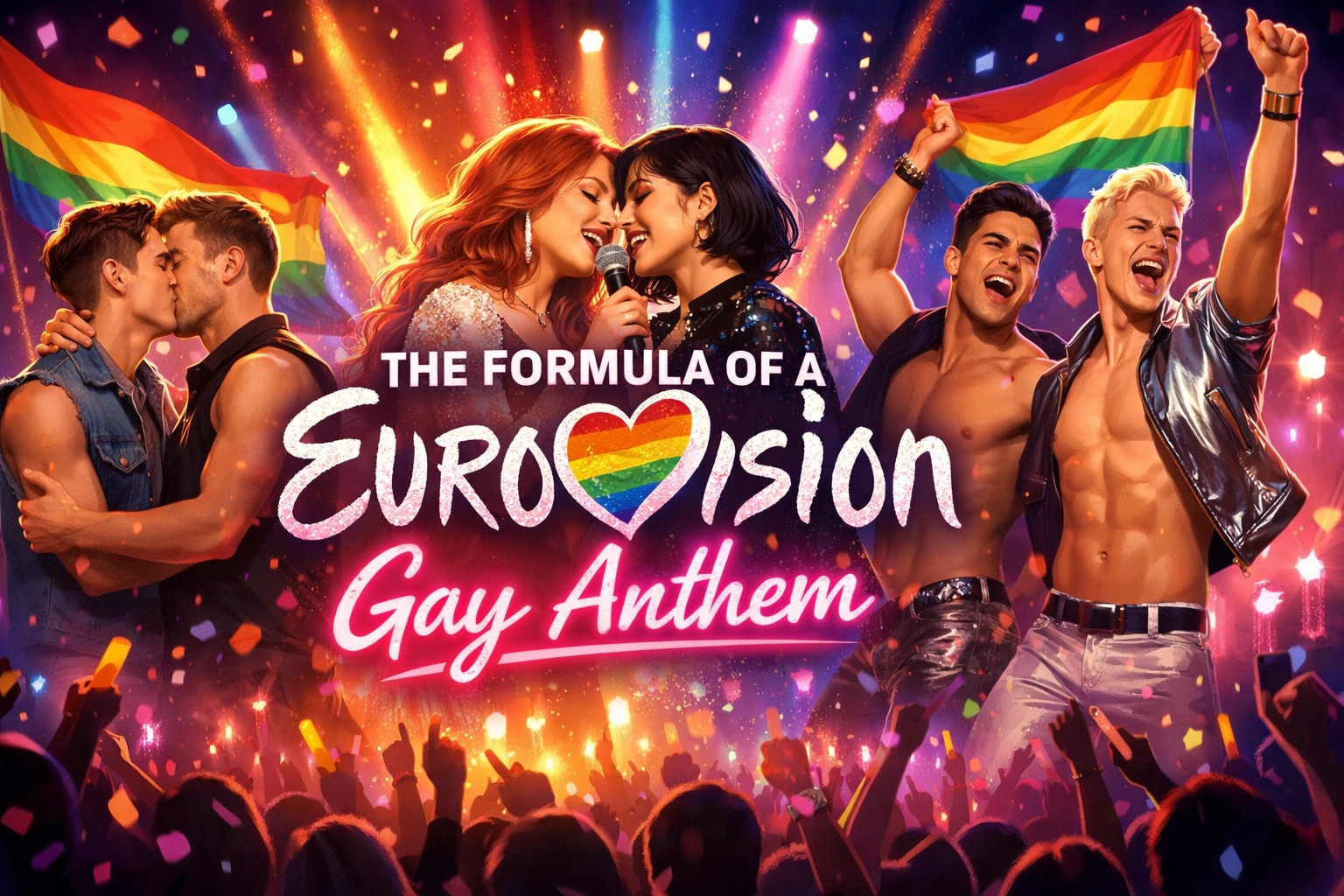
Every May, the world watches as Eurovision transforms into something more than just a song contest. For the LGBTQ+ community, it's basically our Super Bowl, complete with sequins, drama, and enough key changes to make your heart soar. But what exactly makes a Eurovision entry become a gay anthem? Is there an actual formula, or is it just sparkles and vibes?
Turns out, there's a bit of both. Let's break down the secret recipe that transforms a three-minute pop song into a queer club staple that'll have you screaming lyrics at 2 AM for years to come.
The Sacred Key Change
First things first: if your Eurovision entry doesn't have at least one dramatic key change, are you even trying? The key change is the moment when a good song becomes transcendent. It's that shift, usually in the final chorus, where everything suddenly goes up a notch (or a whole tone, if we're being technical).
Think about it. You're building, building, building… and then BAM, the music lifts, the vocalist hits notes you didn't know existed, and suddenly you're having a spiritual experience on a dance floor in Vauxhall. The key change is the musical equivalent of a phoenix rising from the ashes, and the gays? We live for that resurrection energy.
Vocal Gymnastics and The High Note
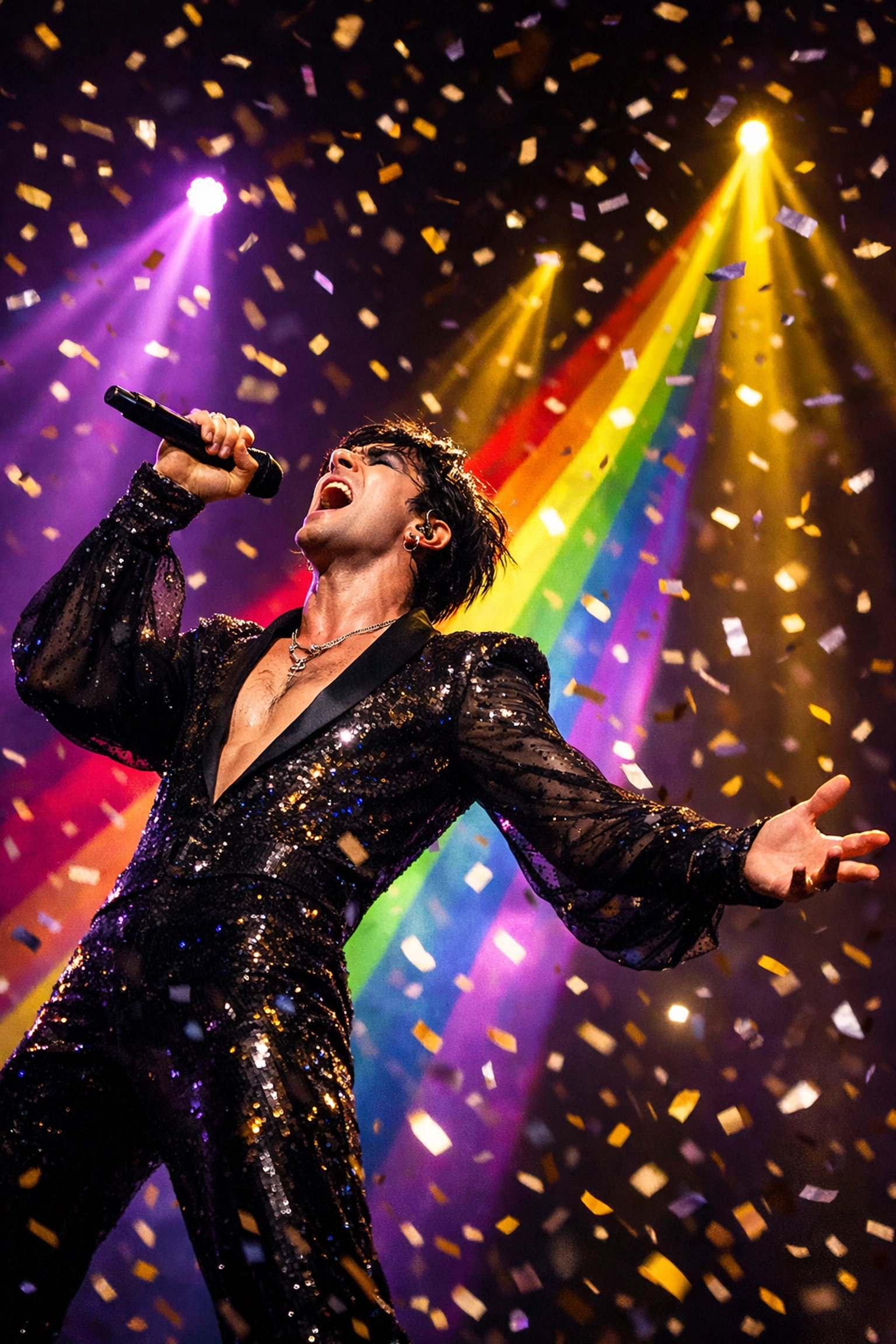
Speaking of notes you didn't know existed, let's talk about vocal acrobatics. A true Eurovision gay anthem requires a singer who can hit notes so high that only dogs and devoted fans can hear them. We're talking about those moments where the vocalist's veins are bulging, their face turns red, and you're genuinely concerned for their wellbeing, but also… yes, give us everything.
These aren't just high notes; they're statements. They're declarations. They're proof that excellence exists in this world. When Loreen won in 2012 with "Euphoria," she didn't just sing, she soared. The song's power lies in its universal representation, as Loreen herself noted: "it represents everything; male, female, everything, up, down, ding ding!" And yeah, we're still not entirely sure what "ding ding" means, but we're here for it.
The Power of Inclusive (But Not Preachy) Messaging
Here's where it gets interesting. The best Eurovision gay anthems don't need rainbow flags or explicit queer messaging to resonate with LGBTQ+ audiences. In fact, some of the most beloved anthems are about universal themes: resilience, joy, self-acceptance, breaking free.
What matters is that queer people can see themselves in the story. Whether it's Conchita Wurst's "Rise Like a Phoenix" or ABBA's "Waterloo," these songs speak to our experiences without needing to spell everything out. We're experts at reading between the lines, it's basically our superpower after years of finding queer subtext in every piece of media ever created.
Camp, Theatricality, and Gender-Bending Glory
Let's be real: Eurovision is camp incarnate, and camp is fundamentally queer. The more theatrical, the more over-the-top, the more likely a performance will become iconic in LGBTQ+ culture. MÅNESKIN's 2021 winning entry "Zitti E Buoni" featured androgynous performers with flamboyant style that screamed confidence and rebellion, exactly the kind of energy that resonates in queer spaces.
The formula here isn't subtle: dramatic costumes, choreography that defies physics, lighting that could power a small city, and performers who commit completely to the bit. Half-hearted won't cut it. We want full commitment to the fantasy, because that's what we do every day, we create our own realities, our own expressions of self.
Eurovision gives performers permission to be excessive, extravagant, and unapologetically themselves. Sound familiar? That's because it's the same permission queer people have had to fight for in every other aspect of our lives.
Dance-Ability: The Club Test
A Eurovision entry might have all the emotional depth in the world, but if you can't dance to it at 1 AM after three cosmos, it's not making the gay anthem cut. The beat needs to be infectious, the rhythm needs to move through your body, and the tempo needs to make standing still physically impossible.
Eurodance and pop genres dominate the gay anthem landscape for a reason. These are songs designed to make you move, to lift your spirits, to transform a regular Saturday night into something magical. MM romance books often capture similar escapist joy, stories that transport us to worlds where love wins and happy endings are guaranteed. It's the same energy.
The Empowerment Factor
Look at the playlist of recognized gay anthems, and you'll spot a pattern: empowerment and self-acceptance run through them like a rainbow thread. Songs that celebrate being yourself, standing tall, refusing to dim your light, these become anthems because they reflect our collective journey.
Whether it's the "Born This Way" energy or the "I Am What I Am" defiance, these songs give voice to feelings the LGBTQ+ community knows intimately. They're about transformation, resilience, and claiming space in a world that hasn't always made room for us.
The Melodrama (Because Why Not?)
Subtlety? We don't know her. A proper Eurovision gay anthem needs drama, the kind that makes straight people slightly uncomfortable and queer people feel deeply seen. We're talking about lyrics that could double as poetry, metaphors that reach for the cosmos, and emotional delivery that suggests the fate of the world hangs on this three-minute performance.
This isn't over-the-top for the sake of it (well, maybe sometimes it is, and that's okay too). It's about permission to feel everything intensely. In a world that often tells LGBTQ+ people to tone it down, to be less visible, to take up less space, Eurovision says: "Actually, be MORE. Be so much that people can't look away."
Building the Bridge (Literally and Metaphorically)
Every great gay anthem needs a bridge: that section before the final chorus where everything strips back before building to the climax. It's the moment of reflection, the gathering of strength before the triumphant finale. Musically, it creates tension and release. Emotionally, it mirrors the queer experience of struggle followed by celebration.
The bridge is where vocalists show their range, where the production adds unexpected elements, where the audience catches their breath before the final emotional wallop. It's structural genius that creates a journey within the song itself.
Why It Matters
At Read with Pride, we understand that representation matters everywhere: in books, in music, in every form of art and expression. Eurovision gay anthems aren't just fun songs to dance to (though they absolutely are that). They're cultural touchstones that bring queer communities together across borders, languages, and generations.
These songs become part of our collective soundtrack, marking moments in LGBTQ+ history and personal journeys alike. They're the songs we blast when we need courage, when we're celebrating, when we're mourning, when we're living our fullest lives.
The Final Formula
So what's the actual formula? It's this: Take universal themes of empowerment and self-acceptance. Add spectacular vocal performances with at least one key change and multiple high notes. Mix in theatrical presentation that embraces camp and gender fluidity. Make it dance-able. Season generously with melodrama. Serve with absolute commitment.
But honestly? The real secret is authenticity. The Eurovision entries that become lasting gay anthems are the ones performed by artists who believe in what they're singing, who commit fully to the performance, who aren't afraid to be vulnerable and powerful simultaneously.
It's the same quality that makes great gay romance novels and MM fiction resonate: authenticity, emotional honesty, and the courage to be unapologetically yourself.
Now if you'll excuse me, I have some key changes to practice and a dance floor calling my name. 🌈✨
Discover more stories celebrating LGBTQ+ culture and expression at readwithpride.com
Follow us:
📘 Facebook
🐦 Twitter/X
📸 Instagram
#Eurovision #GayAnthems #LGBTQCulture #ReadWithPride #QueerCulture #EurovisionSongContest #MMRomance #GayRomance #LGBTQBooks #Pride2026 #EurovisionGay #QueerJoy #CampCulture #GayAnthem #LGBTQ2026

Leave a Reply
You must be logged in to post a comment.