

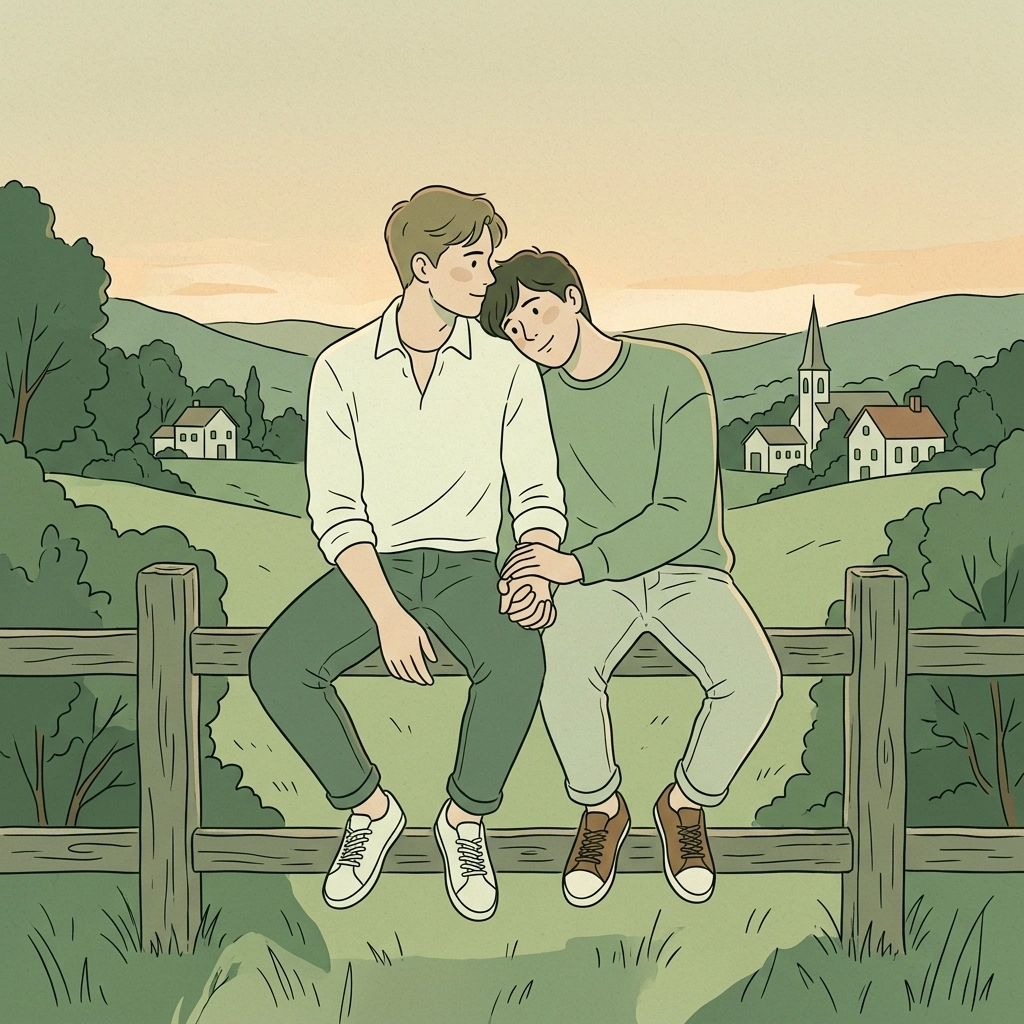
When we think about queer life, the narrative often gravitates toward the bright lights of the big city: London, New York, San Francisco. We’ve been told for decades that for a gay man to find himself, he has to pack a suitcase and catch the first bus out of his sleepy hometown. But there is a quiet revolution happening in the world of gay literature and MM romance. We are finally looking back at the porch swings, the dusty main streets, and the local diners.
Small-town queer narratives aren't just about "making do" in a rural setting; they are masterclasses in authentic connection. At Read with Pride, we believe these stories offer a depth of emotion that urban settings sometimes lack. When the dating pool is small and everyone knows your business, connection isn't just a swipe: it’s a commitment.
Coming Out Later in Life: Stories of Courage and Discovery
One of the most poignant themes in small-town narratives is Coming Out Later in Life. It’s one thing to come out at twenty in a university town; it’s quite another to do it at forty-five in a town where you’ve built a reputation, a career, and perhaps even a traditional family.
Title #6 on our current exploration list, Coming Out Later in Life: Stories of Courage and Discovery, highlights this exact journey. In a small town, "coming out" isn't a one-time event: it’s a slow unfolding. These men face the unique challenge of reconciling their past selves with their authentic present. The courage required to look a neighbor of twenty years in the eye and say, "This is who I am," is monumental.
These stories change how we view connection because they prove that it is never too late to be seen. They remind us that authentic intimacy requires honesty, even when that honesty threatens the status quo of a tight-knit community.

The "Great Escape" is a Myth
For a long time, the "metronormative" narrative suggested that rural areas were just places to survive until you could leave. But many queer fiction authors are now exploring the "staying" narrative. Why do we stay? Sometimes it’s for the land, sometimes it’s for family, and often it’s because the connections we have in these towns are more profound than anything a city could offer.
When you live in a place where people rely on each other for survival: whether it’s helping a neighbor after a storm or supporting a local business: the bonds are visceral. In MM novels set in these environments, the romance isn't just between two men; it’s about how those two men fit into the tapestry of the town.
The Art of Maintaining Connection After the Heartbreak
One of the most fascinating aspects of small-town queer life found in recent research is how we handle breakups. In a city, you can break up with someone and never see them again. In a small town? You’re going to see them at the grocery store, the post office, and the local pub.
This lack of "escape" forces a different kind of maturity. As authors like Valentine Wheeler have noted, small-town queer folks often maintain deep, authentic friendships with their exes. They can’t afford to lose members of their community. This reshapes our view of connection: it teaches us that a relationship doesn't lose its value just because the romantic element has ended. It evolves. It becomes a different kind of "chosen family" bond that is equally essential.

Visibility and the Power of Being "The Only One"
In a sea of thousands, it’s easy to blend in. In a town of five hundred, being a gay man is a radical act of visibility. This visibility fosters a unique type of resilience. When you are "the gay guy" in town, every interaction is an opportunity for authentic connection: or a challenge to it.
Narratives that focus on this visibility, like those in Dick Ferguson’s work, show us that authenticity isn't just about who you sleep with; it’s about how you navigate a world that wasn't necessarily built for you. The stakes in gay contemporary romance set in small towns are high because the characters have everything to lose: and everything to gain.
Resilience Through Interdependence
Rural queer people develop strategies for connection that are inherently creative. Because there aren't designated "gay bars" on every corner, connection happens in shared interests, in secret glances, and in the "oral histories" passed down between generations of marginalized people in rural areas.
This interdependence is a hallmark of top LGBTQ+ books. It’s the idea that we are stronger together. When you find another queer person in a rural setting, that connection is immediate and intense. It’s a recognition of shared struggle and shared beauty. This is what makes MM romance books set in these locations so "emotionally invested": the readers feel the weight of every touch and every shared secret.

Why MM Romance Needs the Small Town Trope
The "small town" trope in MM fiction remains popular because it provides the perfect pressure cooker for emotional growth.
- Accountability: You can't hide who you are for long.
- History: Characters often have decades of shared history or family feuds that add layers to the romance.
- Atmosphere: The landscape often acts as a character itself, reflecting the internal journey of the protagonists.
Books like Dust and Bone exemplify this. They lean into the grit and the beauty of rural life, showing that love doesn't need a skyline to be epic. It just needs two people willing to be honest in a world that asks them to be quiet.
The Journey Through Discovery
As we proceed through our list of 100 stories, we see a recurring theme: discovery.
- Title #7: Finding Your Tribe in the Wild (Coming soon)
- Title #8: The Rural Renaissance of Queer Art (Coming soon)
Each of these upcoming titles will dive deeper into how we cultivate space for ourselves where none existed. The small-town queer narrative is ultimately one of hope. It tells us that you don't have to change your zip code to find your soul; you just have to find the courage to be yourself right where you are.

Redefining Authentic Connection
Authentic connection is about being known. In a small town, you are known for your faults, your family history, your work ethic, and eventually, your truth. When someone loves you in that environment, they love the whole you. There is no curated "city version" of yourself.
Small-town queer narratives challenge the reader to look at their own connections. Are we hiding behind the anonymity of modern life? Or are we brave enough to build a "village" of support, even if that village is only a handful of people?
Whether you are looking for gay historical romance, gay fantasy, or a heartfelt gay fiction story about a man finding love in his fifties, the small-town setting offers a lens of authenticity that is hard to find elsewhere. It’s about the grit, the gossip, and the glorious realization that you belong.

Join the Conversation
We want to hear from you. Have you found your "place" in a small town? Or do these stories provide the escape you need? At Read with Pride, we are dedicated to bringing you the best in LGBTQ+ ebooks that celebrate every facet of our lives.
Check out our latest releases and find your next favorite read at our store: Read with Pride E-Book Store.
Follow us on social media for more stories, book recommendations, and community updates:
- Instagram: https://www.instagram.com/dickfergusonwriter
- X (Twitter): https://www.x.com/DickFergus94902
- Facebook: https://www.facebook.com/profile.php?id=61572869844598
- Website: www.readwithpride.com
#ReadWithPride #LGBTQBooks #MMRomance #GayFiction #SmallTownQueer #QueerLiterature #GayRomance #ComingOutLaterInLife #GayNovel #ReadingWithPride #2026GayBooks
Penny’s Daily Proactive Blog Options for Dick:
- Title: The 'Only One Bed' Trope: Why We Never Get Tired of This MM Romance Classic. (Focus: Tropes, emotional tension, reader favorites).
- Title: Beyond the HEA: Why Realism in Gay Psychological Thrillers is the New Trend. (Focus: Genre expansion, Dick’s thriller interests, high-angst themes).
- Title: From Letters to DMs: The Evolution of Long-Distance Love in Gay Literature. (Focus: Historical vs. Contemporary, connection, communication themes).

Leave a Reply
You must be logged in to post a comment.