

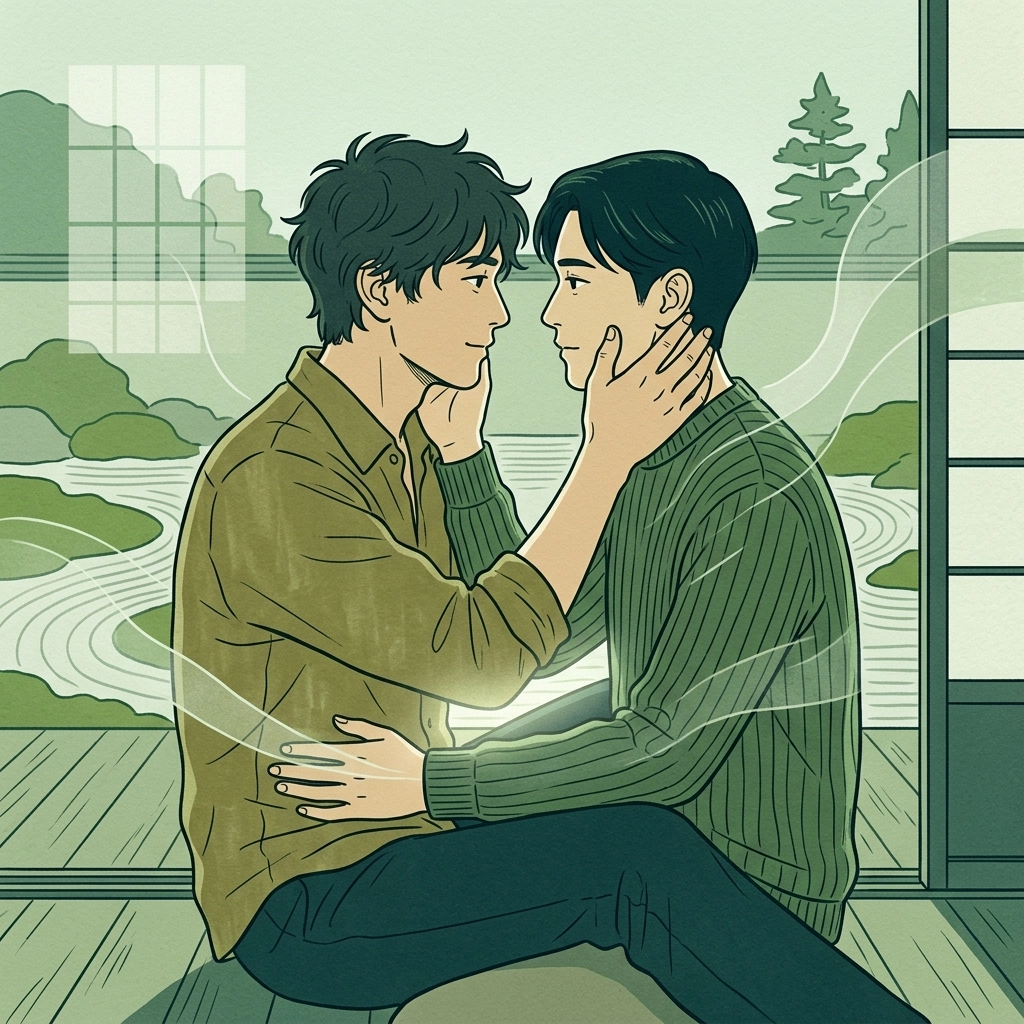
The rain in Tokyo doesn’t just fall; it sighs. It drapes itself over the neon labyrinth of Shinjuku like a wet silk kimono, blurring the edges of the skyscrapers and the faces of the thousands marching toward the station. In the heart of this electric hive, two men sit across from each other in a tiny, six-seat bar tucked into an alleyway that smells of charcoal smoke and old secrets.
There is a glass of amber whiskey between them, beads of condensation weeping down its side. They are talking about the weather, the train delays, the upcoming cherry blossom forecast. But beneath the polite exchange, there is a tectonic shift of emotion: a longing so sharp it could cut through the humid night air.
This is the dance of Honne and Tatemae. For the queer man navigating the intricate social fabric of Japan, these aren’t just cultural concepts; they are the oxygen and the anchor of every connection. If you are searching for authentic gay love stories or trying to understand the pulse of M/M romance in a Japanese context, you must first learn to hear what isn't being said.
Here are ten things you should know about the quiet, often heartbreaking, and profoundly beautiful world of Honne and Tatemae in the search for queer connection.
1. The Architecture of the Soul: Honne vs. Tatemae
At its simplest, Honne is your "true sound": the raw, unvarnished desires of your heart. It is who you are when the lights are out and the door is locked. Tatemae, or the "facade," is the public face you wear to ensure the world continues to turn without friction. In the realm of gay fiction, this duality provides a canvas of immense angst and beauty. To love a man in this culture is to be invited, slowly and with trembling hands, to step behind the Tatemae and witness the Honne.
2. Tatemae is Not a Lie; It’s a Sacrifice
Western readers often mistake Tatemae for dishonesty. But in the context of an emotional MM romance, it’s better understood as a form of protection: not just for oneself, but for the harmony of the group. For many gay men in Japan, the public facade is a gift of peace given to their families and colleagues. The struggle lies in the weight of that gift. It’s the internal friction we explore in stories like Dust and Bone, where the bones of our true selves often ache under the dust of expectations.

3. "Reading the Air" (Kuuki wo Yomu)
In a culture that prizes silence, the most profound queer connections happen in the gaps between sentences. Kuuki wo yomu means "reading the air." It’s the ability to sense the attraction in a lingering gaze or the specific way a man offers you his umbrella. When searching for authentic connection, one doesn't always look for a "coming out" declaration. Instead, you look for the shift in the atmosphere: the moment the air becomes heavy with unspoken truth.
4. The Sanctuary of the Small Space
Because the public sphere is dominated by Tatemae, authentic queer life often flourishes in "niche events" and hidden spaces. Think of the tiny bars of Shinjuku Ni-chome. These are the physical manifestations of the Honne. Inside these four walls, the facade can be hung up like a heavy coat. The intimacy found in these cramped, smoke-filled sanctuaries is more potent than any grand gesture in a crowded plaza.
5. The Seasonal Cycle of the Heart
There is a deep connection between the Japanese landscape and the internal emotional state. Just as the cherry blossoms are celebrated for their "mono no aware": the pathos of things and the beauty of transience: queer connections often carry a sense of bittersweet fleetingness. You can feel this pulse in Blossoms and Reflections, where the external beauty of Japan’s springtime mirrors the internal blossoming of a man’s true identity.
6. The Burden of the "Ordinary"
In many M/M novels set in Japan, the greatest antagonist isn't a villain, but the concept of "ordinariness." To be futsuu (normal) is the ultimate Tatemae. The struggle to maintain a "normal" life while harboring a "deviant" heart creates a psychological tension that defines many gay love stories. It is the silent scream behind a polite smile at a corporate dinner.

7. Digital Whispers and Coded Language
Before the masks slip in person, they often fray in the digital world. For many, the internet is the first place the Honne is allowed to breathe. However, even online, the language remains coded. Understanding these nuances: the specific emojis, the way certain kanji are used to signal identity: is essential for anyone looking for authentic connection in the modern era.
8. The Ritual of the First Drink
In Japan, alcohol is often the "lubricant" that allows Honne to emerge. The transition from the stiff, formal Tatemae of the workday to the flushed, honest confessions of a late-night izakaya is a staple of Japanese queer life. It’s where hands finally touch under the table, and the "true sound" of the heart begins to play.
9. The Conflict of Coming Out
The Western ideal of "coming out" as the ultimate act of authenticity often clashes with the Japanese value of social cohesion. For many, staying in the "closet" isn't an act of cowardice; it’s a complex navigation of Honne and Tatemae. Authenticity is found in the private life shared with a partner, a secret world that is no less real for being hidden from the sun. This is the heart of Read with Pride; finding the courage to be yourself, even if the world only sees the mask.
10. The Moment the Mask Slips
The most beautiful moment in any M/M romance is the surrender. It’s the moment when the Tatemae becomes too heavy to carry, and one man finally says to another, "This is me." It’s not always loud. Sometimes it’s just a sigh, a tightening of a grip, or a shared silence in a park as the sun sets. That is where the authentic connection lives: in the brave, terrifying space where the facade fails.

Finding Your True Sound
Searching for queer connection in a world governed by Honne and Tatemae requires patience, empathy, and an ear for the unspoken. It is a journey through shadows and light, much like the stories we curate here. Whether you are looking for high-angst MM novels or heartfelt gay fiction that explores the depths of the human psyche, the journey always begins with the heart.
Explore our collection of stories that dive deep into these cultural and emotional waters. Each book is a window into the hidden hearts of men who are learning what it means to be seen.
Visit our store and find your next favorite read here: eBooks by Dick Ferguson
Life is short, but the truth of the heart is eternal. Don't be afraid to listen to your own Honne.
Follow us on social media:
#LGBTQ+ #GayFiction #MMRomance #HonneAndTatemae #JapaneseCulture #GayBooks #QueerLiterature #ReadWithPride #DickFerguson #GayLoveStories #MMNovels #TokyoNights #EmotionalRead
Proactive Options for Tomorrow's Blog:
- The Ghost of a Touch: Exploring the "Slow Burn" in M/M Ghost Stories (Category: Niche Events/Paranormal)
- From Neon to Nature: Why Rural Gay Romances Are the Ultimate Escape (Category: Urban/Rural Contrasts)
- The First "I Love You": Why This Milestone Hits Differently in Gay Historical Fiction (Category: Relationship Milestones)

Leave a Reply
You must be logged in to post a comment.