

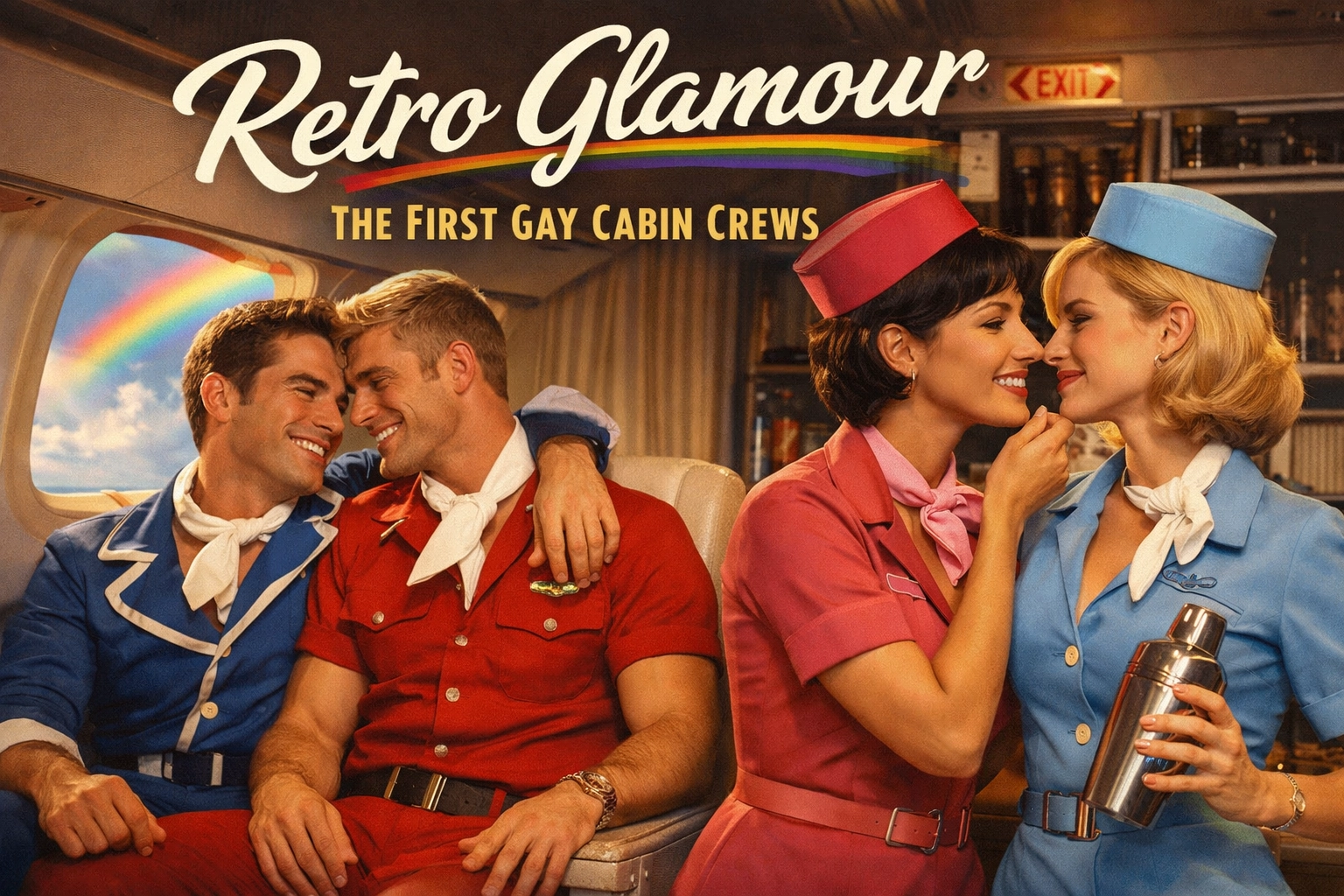
![[HERO] Retro Glamour: The First Gay Cabin Crews](https://cdn.marblism.com/3frC7pIx901.jpg)
Picture this: It's 1973, and you're boarding a Pan Am flight to San Francisco. The cabin door swings open, and there he is: perfectly coiffed hair, impeccable uniform with just the right amount of flair, a smile that could charm the turbulence right out of the sky. Welcome aboard, darling. The golden age of gay cabin crews had arrived, and honey, they were serving looks at 30,000 feet.
But the story of LGBTQ+ folks in aviation isn't just about the fabulous '70s. It's a rollercoaster tale of glamour, persecution, resilience, and ultimately, triumph. Let's take a trip back through the decades and explore how gay men transformed the skies into their runway: long before "Pride" became a hashtag.
The Original Sky-High Style Icons (1920s-1930s)
Before flight attendants were even called flight attendants, there were stewards. And not just any stewards: these were the elite gentlemen of the skies, debuting in the late 1920s as aviation's first taste of in-flight luxury.
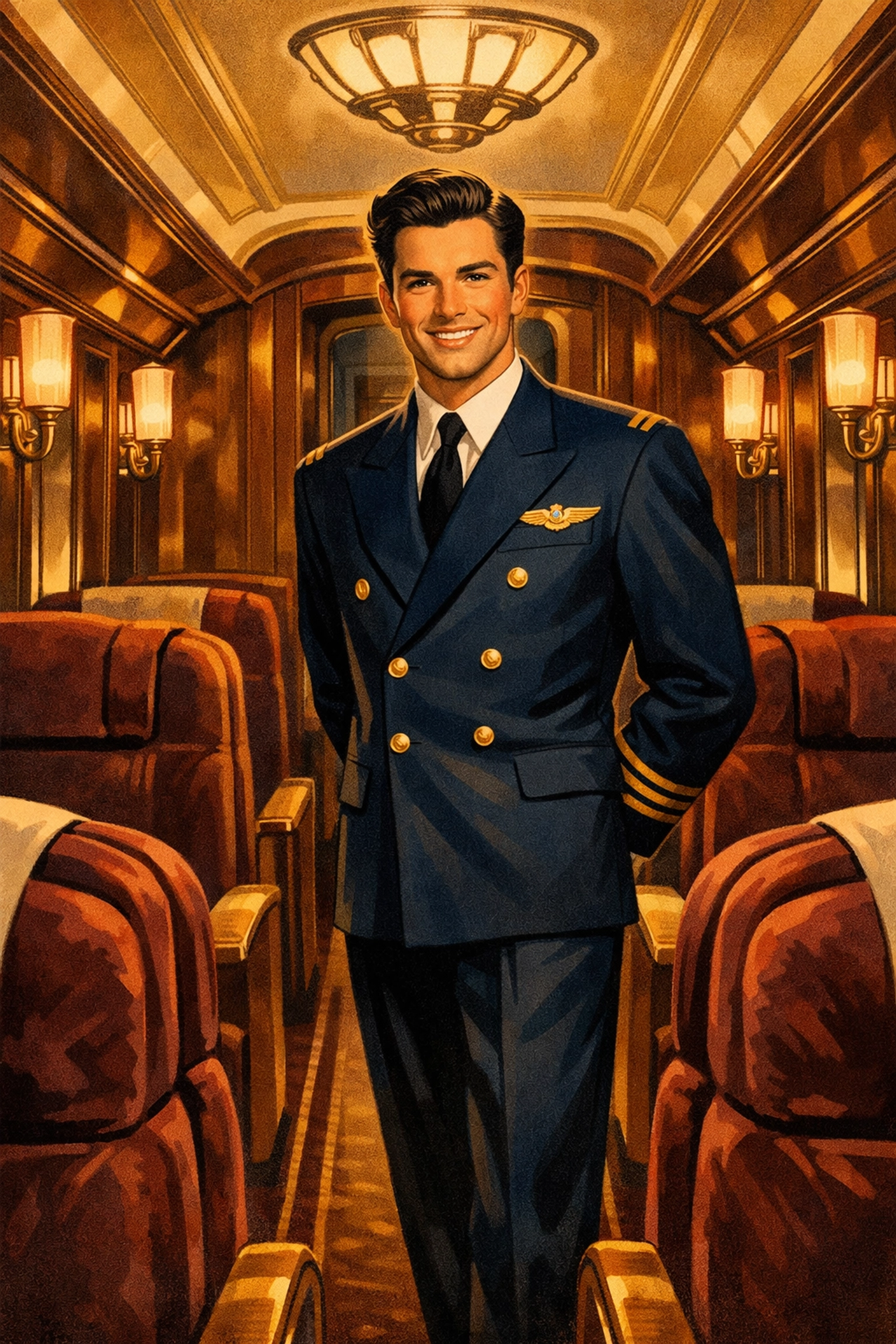
Here's the surprising part: airlines actually marketed these early male stewards as "graceful icons of style" designed to appeal to sophisticated, elite men who were well-versed in the glamorous, somewhat subversive speakeasy culture of the Prohibition era. You know, the kind of guys who knew their way around a velvet rope and could appreciate a well-tailored suit.
These stewards weren't just serving drinks: they were serving attitude. The position carried serious prestige, and the aesthetic sensibility required? Let's just say it attracted men who understood the assignment when it came to presentation and panache.
For a brief, shining moment, the skies were surprisingly queer-friendly. It was a profession where a certain "je ne sais quoi" wasn't just tolerated: it was practically required.
When the Clouds Turned Dark (1940s-1960s)
But like so many good things for the LGBTQ+ community, this golden era came crashing down after World War II. The post-war period brought with it a wave of virulent homophobia that swept through American institutions like wildfire, and the airline industry was no exception.
By the mid-1950s, airlines had systematically purged men from flight attendant positions. The discrimination was deliberate, calculated, and absolutely devastating. A 1966 letter from Delta Airlines to the Equal Employment Opportunity Commission laid it all out in black and white: male stewards hired between 1946-1948 were terminated due to "problems involving sex as such."
The euphemisms were barely euphemisms at all. Executives spoke of "the least trace of effeminacy" being enough to get someone "tagged as a sex deviate" and fired. The paranoia ran so deep that even the 1954 murder of Eastern Airlines flight attendant William Simpson intensified the anti-gay sentiment rippling through the industry.
For nearly two decades, men were essentially banned from the profession they'd helped create. The message was clear: the skies were no longer safe for anyone who didn't fit the heteronormative mold.
The 1971 Revolution That Changed Everything
Fast forward to 1971. The Diaz court case landed like a legal bomb on the airline industry, forcing all U.S. carriers to hire men and women equally as flight attendants. Suddenly, the doors that had been slammed shut swung wide open again.
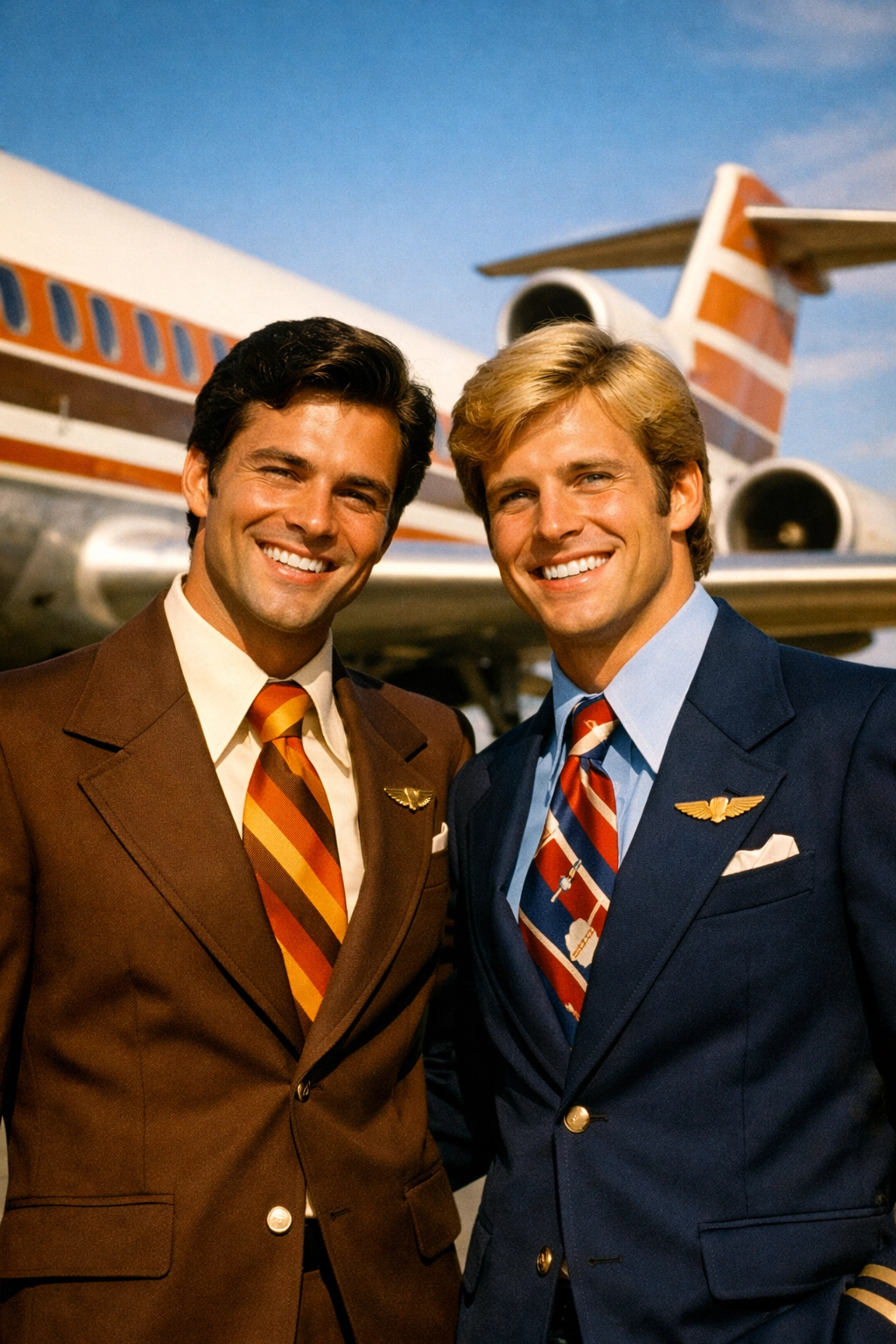
And guess who came rushing back in? Gay men: in absolutely massive numbers. We're talking estimates of up to 75% of newly hired male flight attendants in the early '70s through the '80s being gay. That's not a typo. Three-quarters.
Why such a dramatic influx? Because being a flight attendant offered something incredibly rare for gay men in that era: a middle-class job with solid benefits where they didn't need to stay closeted. In a world where most professions demanded you hide your authentic self just to keep food on the table, this was revolutionary.
Plus, let's be real: the job came with serious perks. We're talking international travel, connections with elite passengers, the prestige of working for carriers like Pan Am or TWA, and uniforms that actually had style. For gay men who appreciated aesthetics and wanted to see the world, it was basically a dream gig.
The Secret Network at 30,000 Feet
What happened next was pure magic. While mainstream media tried to "heterosexualize" male flight attendants in their portrayals, gay cabin crews were quietly building a discreet but vibrant national social network that connected LGBTQ+ passengers and crew members across the country.
Think about it: At a time when gay bars could still be raided and holding hands in public was dangerous, these men created safe spaces in the sky. They could spot each other, connect travelers with local queer communities at destination cities, and build relationships that transcended the confines of any single flight.
The solidarity went beyond just gay men, too. Female flight attendants actually welcomed working alongside their gay male colleagues, often preferring their company to that of senior pilots: who tended to be older, married, and unfortunately prone to sexual harassment. The alliance between women and gay men in the cabin crew became a powerful force for workplace change.
Together, they achieved real victories through collective bargaining: removal of discriminatory weight limits, and crucially, the creation of "buddy passes" for unmarried employees. These passes meant that gay partners: and straight unmarried partners: could finally access travel benefits that had previously been reserved exclusively for legal spouses. It was a quiet but significant step toward equality.
The Legacy Lives On in Our Stories
Today, when we read MM romance novels featuring pilots, flight attendants, or globe-trotting adventures, we're tapping into this rich history of LGBTQ+ folks conquering the skies. Those stories of love found in unexpected places, of professionals building authentic lives while soaring above the clouds: they're not just fantasy. They're rooted in decades of real queer history.
At Read with Pride, we celebrate these stories. Whether it's a contemporary romance about two flight attendants falling for each other on layovers in exotic cities, or a historical piece set during the glamorous Pan Am era, these narratives honor the pioneers who made spaces for themselves when the world told them they didn't belong.
The courage of those early gay cabin crews: the ones who showed up authentically, who built communities in the clouds, who refused to be erased: deserves to be remembered. And what better way to honor them than through the MM romance books and gay fiction that keep their spirit alive?
Buckle Up for More Stories
The history of gay cabin crews is just one thread in the rich tapestry of LGBTQ+ professional history. These men didn't just serve drinks and demonstrate safety procedures: they served revolution, one flight at a time. They proved that we belong everywhere, that our aesthetic sensibility and authentic selves aren't liabilities but assets.
So the next time you're settling in for a long flight with a great gay romance novel from Readwithpride.com, remember: you're part of a tradition of LGBTQ+ folks who've always known how to turn travel into something fabulous. Those first gay cabin crews paved the runway for every queer love story set in the skies.
Ready to explore more MM romance books and LGBTQ+ fiction? Check out our curated collection of gay romance novels that celebrate love in all its forms: from historical tales to contemporary adventures. Because at Read with Pride, we believe every love story deserves to soar.
Find your next favorite read at www.readwithpride.com
Follow us for more LGBTQ+ content and MM romance recommendations:
#ReadWithPride #MMRomance #GayRomance #LGBTQHistory #QueerHistory #GayFiction #LGBTQBooks #MMRomanceBooks #GayRomanceNovels #QueerFiction #LGBTQReads #GayLoveStories #AviationHistory #GayHistoricalRomance #PrideReading #LGBTQCommunity #GayBooks2026 #MMContemporary

Leave a Reply
You must be logged in to post a comment.