

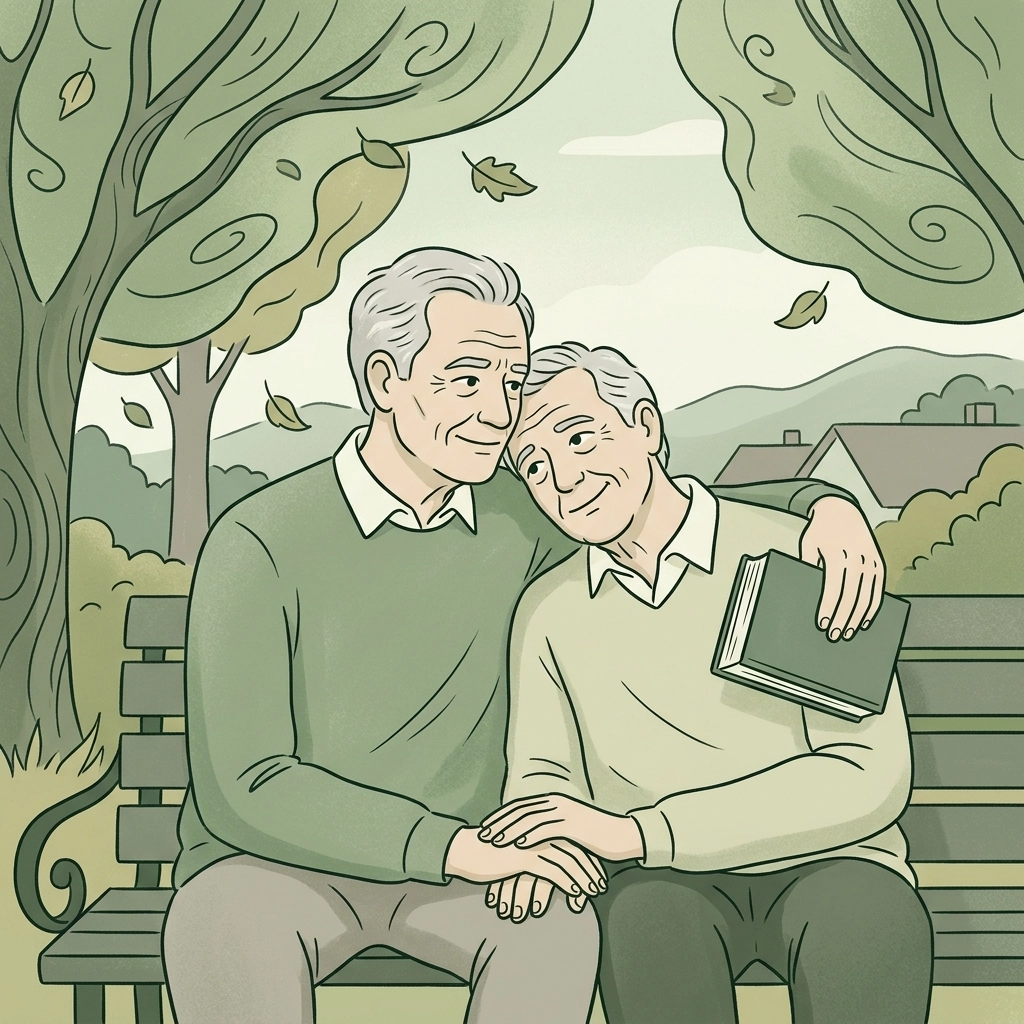
Have you ever felt like you were running a race where everyone else had a twenty-mile head start? In the queer community, there’s often this unspoken "timeline." You’re supposed to figure it out in your teens, have your wild "second adolescence" in your early twenties, and be settled into a cozy MM romance-style domestic bliss by thirty. But for many of us, life didn't get the memo.
The term "late bloomer" is popping up everywhere lately: in podcasts, on social media, and certainly in the pages of our favorite gay novels. But why now? And why does it feel like such a revolutionary act to simply exist on your own schedule?
At Read with Pride, we believe that every journey is a masterpiece, regardless of when the first brushstroke was laid down. Whether you’re discovering your truth at 40, 60, or 80, your story isn’t just valid: it’s vital.
Coming Out Later in Life: Stories of Courage and Discovery
Coming out is a monumental task at any age, but doing it later in life brings a unique set of challenges and, surprisingly, a powerful set of rewards. When we talk about Coming Out Later in Life, we’re talking about people who have lived entire lifetimes: sometimes raising families, building careers, and navigating the world: before finally saying, "This is who I am."

There is a specific kind of courage required to dismantle a life you’ve spent decades building. It’s the courage to admit that while the life you lived was real, it wasn't complete. In the world of MM romance, we’re seeing more authors tackle these "silver fox" or "mid-life discovery" tropes because they resonate so deeply. There is something incredibly romantic and high-angst about a man realizing he’s been missing a piece of his soul, only to find it in the arms of another man when he thought his "romantic" years were behind him.
These stories of discovery are often more than just about identity; they are about reclaiming agency. They remind us that the "closet" isn't a single room you leave once, but sometimes a series of doors you unlock over many years.
The Cultural Shift: Why the "Late Bloomer" Narrative is Winning
For a long time, pop culture obsessed over youth. If you hadn't "made it" or "found yourself" by 25, you were considered a lost cause. But the tide is turning. We are collectively rejecting these arbitrary deadlines. Why? Because they are exhausting and, frankly, untrue.
The search for authenticity doesn't have an expiration date. We see this in literature and in history. Think about James Michener, who didn’t publish his first book until he was 40. In the realm of gay literature, we are seeing a surge in readers looking for characters who have wrinkles, histories, and a bit of "dust and bone" in their pasts. They want to see themselves reflected: not as teenagers, but as men who have survived life and are ready to finally live it.
This shift is a celebration of the "Renaissance Soul." It’s an acknowledgment that we are allowed to be multiple things in one lifetime. You can be a father, a veteran, a corporate executive, and then: at 55: the hero of your own gay love story.
The Superpowers of the Late Bloomer
Being a late bloomer isn't a setback; it’s a strategic advantage. When you come to your identity or your passion later in life, you bring a toolkit that a twenty-year-old simply hasn't built yet.
- Life Experience as Perspective: You’ve seen the world. You’ve handled grief, success, and boredom. This gives your new journey a layer of depth and appreciation that is hard to replicate.
- Clarity Through Exploration: By the time you "bloom," you usually have a very good idea of what you don’t want. This makes your "yes" much more powerful.
- Resilience and Grit: You’ve navigated a world that perhaps didn't always have a place for you. That survival instinct turns into a fierce loyalty to your own happiness once you finally claim it.
- Authenticity Over Approval: When you're younger, you’re often performing for others. Late bloomers are usually over the performance. They aren't looking for societal validation; they are looking for alignment with their own hearts.

Why Your Story is Valid in the World of MM Fiction
In the world of M/M books, the "Late Bloomer" trope often falls under "Gay Awakening" or "Mid-life Romance." These are some of the most emotionally invested stories we carry at eBooks by Dick Ferguson. Why? Because the stakes are higher.
When a character in an MM contemporary novel realizes he’s gay at 50, he might be risking a marriage, a reputation, or a long-standing family dynamic. The angst is real, the tension is palpable, and the payoff: the moment he finally allows himself to be loved by another man: is incredibly cathartic.
If you are a reader or a writer in the LGBTQ+ fiction space, don't shy away from these stories. They offer a blueprint for hope. They tell us that no matter how much time has passed, there is still room for a "happily ever after." Whether it’s a gay historical romance where a gentleman finds love in his twilight years or a gay thriller where the stakes are compounded by a hidden identity, these narratives prove that growth is a lifelong process.
Rejecting the "Falling Behind" Narrative
The biggest hurdle for any late bloomer is the feeling of being "behind." We look at the "young and beautiful" crowd and feel like we missed the party. But here’s the secret: the party is still going, and the conversation is much better in the "mature" corner.
Success, love, and self-discovery aren't a race. There is no finish line where someone hands out medals for finishing first. In fact, the most "successful" people are often those who took the scenic route. They explored the side roads, took the wrong turns, and arrived at their destination with stories worth telling.

If you’re feeling "late," remember that some of the most beautiful flowers in the world only bloom at night, or only after a long winter. Their beauty isn't diminished by the wait; it’s enhanced by it.
Find Your Next Great Story
At Read with Pride, we curate gay eBooks that celebrate every stage of the journey. From steamy MM romance to heartfelt gay fiction and intense gay psychological thrillers, our collection is designed for the emotionally invested reader who knows that love is timeless.
If you’re looking for a story that mirrors your own journey: or if you just want to get lost in a world where courage is rewarded: check out our latest releases. You might find a character who, like you, is just beginning their most important chapter.
Explore the collection here: Read with Pride E-Book Store
Final Thoughts
Your timeline is yours alone. Don't let a fast-paced world tell you that you’ve run out of time to be who you are or to find the love you deserve. Whether you are blooming now or preparing for your next season, your story is valid, your courage is inspiring, and your journey is beautiful.
Read with pride, live with pride, and never stop discovering.
#LGBTQ+ #MMRomance #GayBooks #LateBloomer #QueerFiction #GayAuthors #ReadWithPride #GayLoveStories #ComingOut #GayLiterature
Follow us on social media:
- Instagram: https://www.instagram.com/dickfergusonwriter
- X (Twitter): https://www.x.com/DickFergus94902
- Facebook: https://www.facebook.com/profile.php?id=61572869844598
- Website: www.readwithpride.com
Three New Blog Post Options for Tomorrow:
-
The Art of the "Slow Burn": Why We Love MM Romances That Take Their Time
Focusing on the emotional depth and tension in gay novels that prioritize character development over instant gratification. -
From Grumpy to Sunshine: Exploring the Most Popular Tropes in Gay Contemporary Romance
A fun, engaging look at why certain archetypes dominate the MM romance charts and how they reflect real-life dynamics. -
Hidden Figures: The Importance of Gay Historical Romance in Reclaiming Our Past
A deeper look at how queer authors are rewriting history to include the man/man love stories that were always there, just hidden.

Leave a Reply
You must be logged in to post a comment.