

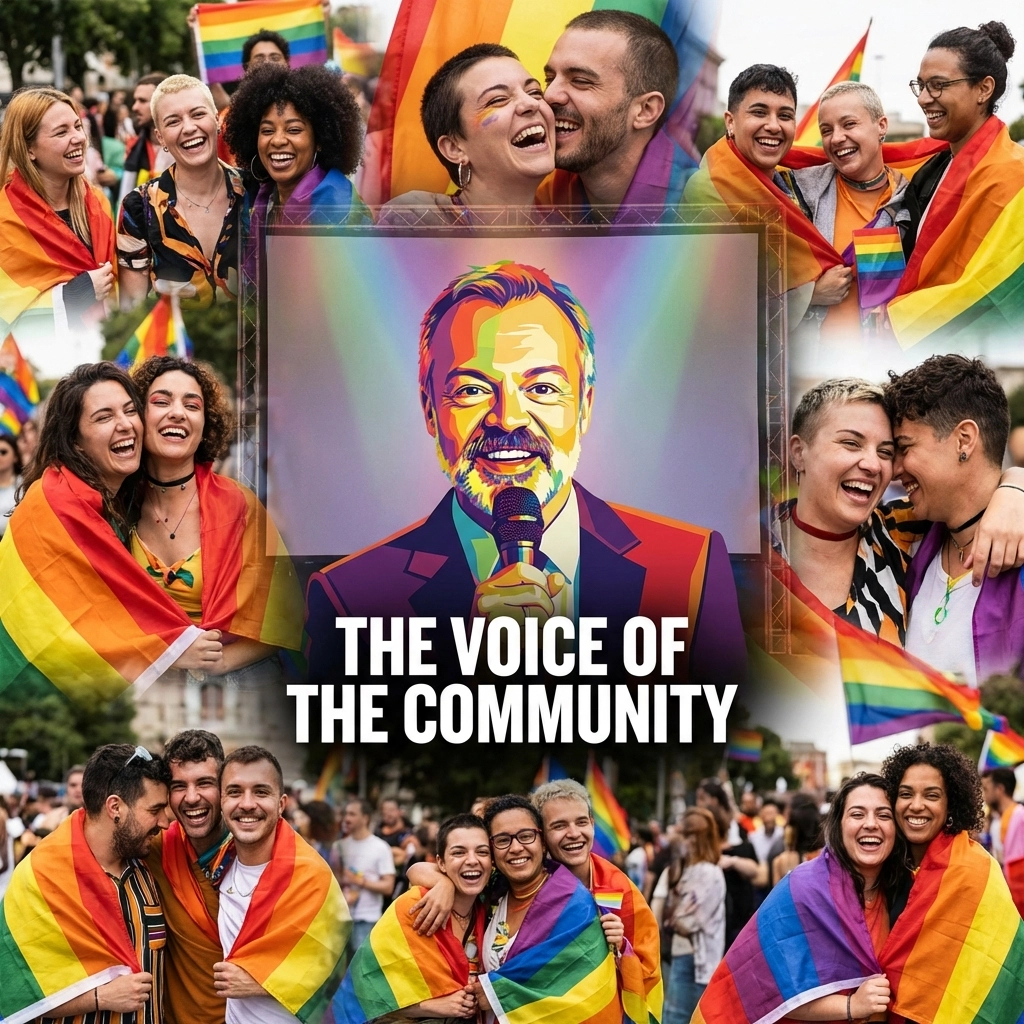
Every year when Eurovision rolls around, millions of viewers across the UK settle in for an evening of camp, chaos, and questionable costume choices. And guiding them through it all with razor-sharp wit and affectionate snark is Graham Norton, the man who transformed Eurovision commentary from a national institution into a queer cultural phenomenon.
The Passing of the Torch
When Graham Norton took over Eurovision commentary duties from the legendary Terry Wogan in 2009, he had impossibly large shoes to fill. Wogan had been the voice of Eurovision for BBC viewers since 1971, his gentle mockery and paternal bemusement becoming as much a part of the broadcast as the douze points themselves.
But Norton brought something different to the booth, something Eurovision had been quietly waiting for. Here was an openly gay Irish presenter taking the helm of Europe's campest night on television, and the fit was absolutely perfect. While Wogan had observed Eurovision as a beloved outsider, Norton understood it from the inside. He got it. He got us.
His first commentary in Moscow wasn't just a changing of the guard, it was a homecoming.
The Art of the Commentary
What makes Graham Norton's Eurovision commentary so special isn't just that he's funny (though he absolutely is). It's that his humor comes from a place of genuine love and understanding. He doesn't punch down at Eurovision's gloriously over-the-top performances; he celebrates them while gently ribbing the absurdity with the fondness of someone who's in on the joke.
"Well, they're not holding back on the wind machine tonight, are they?" he might observe as a performer's hair whips dramatically. Or, as pyrotechnics explode behind a bewildered-looking singer: "Someone's clearly spent the entire budget on fireworks and forgot about the song."
His commentary walks that perfect line between affectionate mockery and genuine appreciation. He'll make you laugh at the ridiculousness while simultaneously making you root for the performers. It's a skill that requires not just wit, but empathy: and Norton has both in spades.
Why Representation Matters
Having an openly gay commentator for Eurovision isn't just symbolically important: it fundamentally changes how the show is presented and understood. Eurovision has always been a queer cultural touchstone, a safe space where camp is celebrated and difference is the point. But for decades, that queerness was subtext, something understood but not spoken.
Norton made it text.
When he comments on a performance, he does so as someone who exists within the LGBTQ+ community, not as an outside observer. His references, his humor, his perspective: all of it comes from a shared cultural understanding with a huge portion of Eurovision's devoted fanbase. He speaks our language, gets our references, and isn't afraid to acknowledge the queer elephant in the sequined room.
This matters more than you might think. For young LGBTQ+ viewers watching at home, hearing someone like Graham Norton: successful, beloved, unapologetically himself: providing the soundtrack to one of television's biggest nights sends a powerful message. You belong here. Your perspective is valued. Your voice matters.

Beyond the Booth
Of course, Eurovision is just one facet of Graham Norton's remarkable career. His eponymous chat show, The Graham Norton Show, has become one of the most beloved programs on British television, winning five BAFTA TV Awards and featuring everyone from Meryl Streep to David Beckham. His decade-long stint on BBC Radio 2 made Saturday mornings something special for millions of listeners.
But it's his role as Eurovision commentator that has cemented his place in queer cultural history. He's hosted the BAFTA television awards 11 times, broken Guinness World Records for charity, and even been fictionalised as the British Eurovision commentator in Netflix's Eurovision Song Contest: The Story of Fire Saga: a meta moment that perfectly captures his importance to the institution.
His charity work speaks to his values, supporting organizations like the Elton John AIDS Foundation, Amnesty International, and Bowel Cancer UK. He uses his platform not just to entertain, but to make a difference: something that resonates deeply with viewers who see him as more than just a broadcaster, but as a voice for the community.
The Legacy of Laughter
What Graham Norton has done for Eurovision commentary goes beyond just making people laugh. He's reshaped how the UK: and by extension, much of the English-speaking Eurovision audience: understands and engages with the contest. His wit has made Eurovision appointment television not despite its camp and chaos, but because of it.
He's shown that you can be sophisticated and silly, clever and kind, critical and celebratory all at once. His commentary has given permission for millions of viewers to embrace Eurovision's glorious absurdity without shame or irony. Under his guidance, loving Eurovision has gone from a guilty pleasure to a badge of pride.
For LGBTQ+ viewers especially, Norton's presence in the commentary booth is a reminder that our perspectives, our humor, our cultural touchstones deserve to be centered and celebrated. Eurovision has always been ours in spirit; Graham Norton made it ours in voice.
The Show Must Go On
As Eurovision continues to evolve: becoming more political, more diverse, more explicitly connected to contemporary issues: having Graham Norton as the UK's guide through it all feels more important than ever. His ability to balance humor with heart, critique with compassion, means that even as the contest changes, the commentary remains grounded in what makes Eurovision special: its celebration of difference, its embrace of the extraordinary, its fundamental queerness.
Every May, when the lights dim and the music starts, Graham Norton's voice reminds us why Eurovision matters. It's not just about the songs (though some of them are genuinely brilliant). It's about the community, the celebration, the one night when Europe comes together to be gloriously, unapologetically extra. And having someone like Norton to narrate that journey? That's not just good television. That's representation that resonates.
Looking for more stories that celebrate LGBTQ+ culture and representation? Explore our collection of gay romance books, MM novels, and queer fiction at Read with Pride. From contemporary love stories to historical romance, we've got the perfect book for every mood.
Follow us for more LGBTQ+ content:
Visit us at readwithpride.com for the best MM romance books, gay fiction, and LGBTQ+ literature.
#GrahamNorton #Eurovision #LGBTQ #QueerCulture #ReadWithPride #MMRomance #GayFiction #LGBTQBooks #QueerRepresentation #EurovisionSongContest #CampCulture #GayRomanceBooks #LGBTQLiterature #QueerReading #PrideReading

Leave a Reply
You must be logged in to post a comment.