

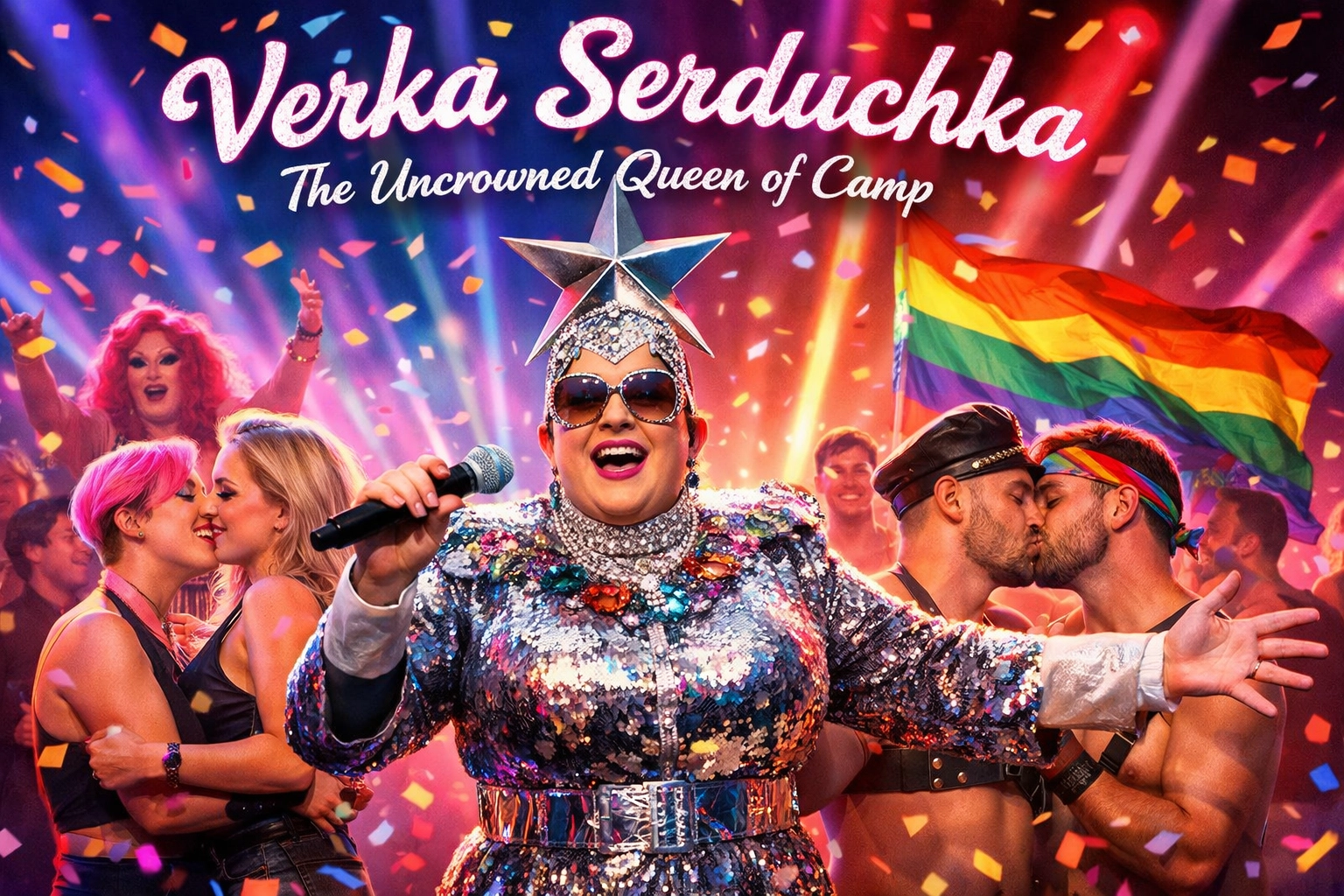
If you've ever wondered what pure, unapologetic camp looks like when it takes human form, straps on a disco ball for a hat, and storms the Eurovision stage, well, let me introduce you to Verka Serduchka. Or should I say, reintroduce you? Because this silver-starred legend didn't just participate in Eurovision 2007. She became Eurovision 2007.
Verka Serduchka is the drag persona of Ukrainian comedian and performer Andrey Danilko, and honestly? She's everything we didn't know we needed but absolutely deserved. Born from post-Soviet comedy clubs and perfected on the glittering Eurovision stage, Verka represents the beautiful collision of Eastern European humor, drag excellence, and the kind of high-energy performance that makes you want to dance and question reality simultaneously.
The Birth of an Icon
Let's rewind to 1990. Andrey Danilko, a young comedian from Poltava, Ukraine, creates a character that would eventually become a cultural phenomenon. The name? A random selection of "Verka" combined with a modified version of his former classmate's last name, Serduk. The concept? A flamboyant middle-aged woman from a rural Ukrainian family working as a railroad sleeping car attendant.
It sounds oddly specific, and that's exactly why it worked.
Verka made her public debut on January 4, 1991, at a comedy competition in Poltava. By 1995, she was appearing in Ukrainian television commercials for PrivatBank, and the character's popularity exploded across the post-Soviet space. This wasn't just drag: this was comedy, social commentary, and pure theatrical genius wrapped in sequins and served with a side of absurdist humor.
Eurovision 2007: A Moment That Changed Everything
Now, let's talk about that performance. Eurovision Song Contest 2007 in Helsinki, Finland. The song: "Dancing Lasha Tumbai." The outfit: an absolute fever dream of silver, disco balls, and enough sparkle to be visible from space. The energy: chef's kiss perfection.
Verka Serduchka took the stage in a costume that could only be described as "What if a Christmas tree married a UFO and they had a very glamorous baby?" The centerpiece was a massive silver star headpiece that defied both gravity and good taste: in the best possible way. The performance featured backup dancers, high-octane choreography, and lyrics that mixed German and English in a way that somehow made perfect nonsensical sense.
The result? Second place with 235 points. But here's the thing about Verka's Eurovision moment: it transcended the competition itself. Many fans and critics have called it "the best song that did not win Eurovision," and honestly, they're not wrong. The single hit No. 6 on French charts and became the first non-UK, non-winning Eurovision entry to chart in the UK since 1974, reaching No. 28. That's the power of camp, baby.
The Camp Aesthetic and LGBTQ+ Culture
Let's get real about why Verka Serduchka resonates so deeply with the LGBTQ+ community and why Eurovision itself has become such a queer cultural touchstone. Camp: as Susan Sontag famously outlined: is about artifice, exaggeration, and the love of the unnatural. It's about taking something and turning the volume up to eleven, then somehow finding twelve.
Verka embodies camp in its purest form. The character doesn't just bend gender: she shatters it, bedazzles the pieces, and throws them like confetti. There's a deliberate rejection of subtlety in favor of spectacle, a celebration of excess that feels both satirical and sincere. And isn't that what the best drag does? It holds up a glittery mirror to society while simultaneously making you dance.
For LGBTQ+ audiences who grew up in spaces where queerness had to be coded, hidden, or apologized for, Verka's unabashed flamboyance is revolutionary. She doesn't ask permission to take up space: she demands it, in the loudest, most fabulous way possible.
The Barbara Dex Award and Fashion as Statement
In a deliciously ironic twist, Verka received the Barbara Dex Award at Eurovision 2007: an unofficial prize given to the artist with the worst outfit. And you know what? She probably would have been proud. Because the outfit wasn't bad: it was deliberately, gloriously, intentionally over-the-top.
The silver star ensemble wasn't trying to be conventionally beautiful or tasteful. It was making a statement: "I am here, I am loud, and I am fabulous on my own terms." In the world of gay fashion and drag culture, that's not a fashion faux pas: that's a philosophy.
Cultural Impact and Legacy
At her peak, Verka Serduchka wasn't just a character: she was a cultural phenomenon across Eastern Europe. She appeared regularly on Russian state television's popular New Year specials, hosted her own talk show called "SV-show" (named after "Spalnyy Vagon," meaning sleeping car), and sold over 600,000 records. That's not niche cult status: that's mainstream superstardom.
But here's what makes Verka's story even more compelling: the resilience. After Ukraine's 2014 conflict and the intensifying political tensions with Russia, Danilko's presence in Russian media diminished. Yet he made a powerful return during the 2017 Eurovision final in Kyiv, reminding everyone that Verka's spirit: joyful, defiant, unapologetically queer-coded: couldn't be suppressed.
Following Russia's 2022 invasion of Ukraine, Danilko took a clear stand, condemning Putin's actions while refusing to leave Kyiv. In that moment, Verka Serduchka transformed from camp icon to symbol of resistance: proving that drag, humor, and LGBTQ+ culture have always been inherently political, even when they're wearing disco balls.
Why Verka Matters to Read With Pride
At Read With Pride, we celebrate stories that embrace authenticity, challenge norms, and find beauty in being unapologetically yourself. Verka Serduchka's Eurovision moment is all of that, amplified through speakers that go to eleven.
She represents the kind of queer joy and camp excellence that we celebrate in MM romance books and LGBTQ+ fiction: the understanding that being yourself, especially when that self is loud, sparkly, and refuses to fit into neat boxes, is an act of courage. Whether you're exploring gay romance novels or diving into queer fiction, that theme of authentic self-expression runs through the best stories.
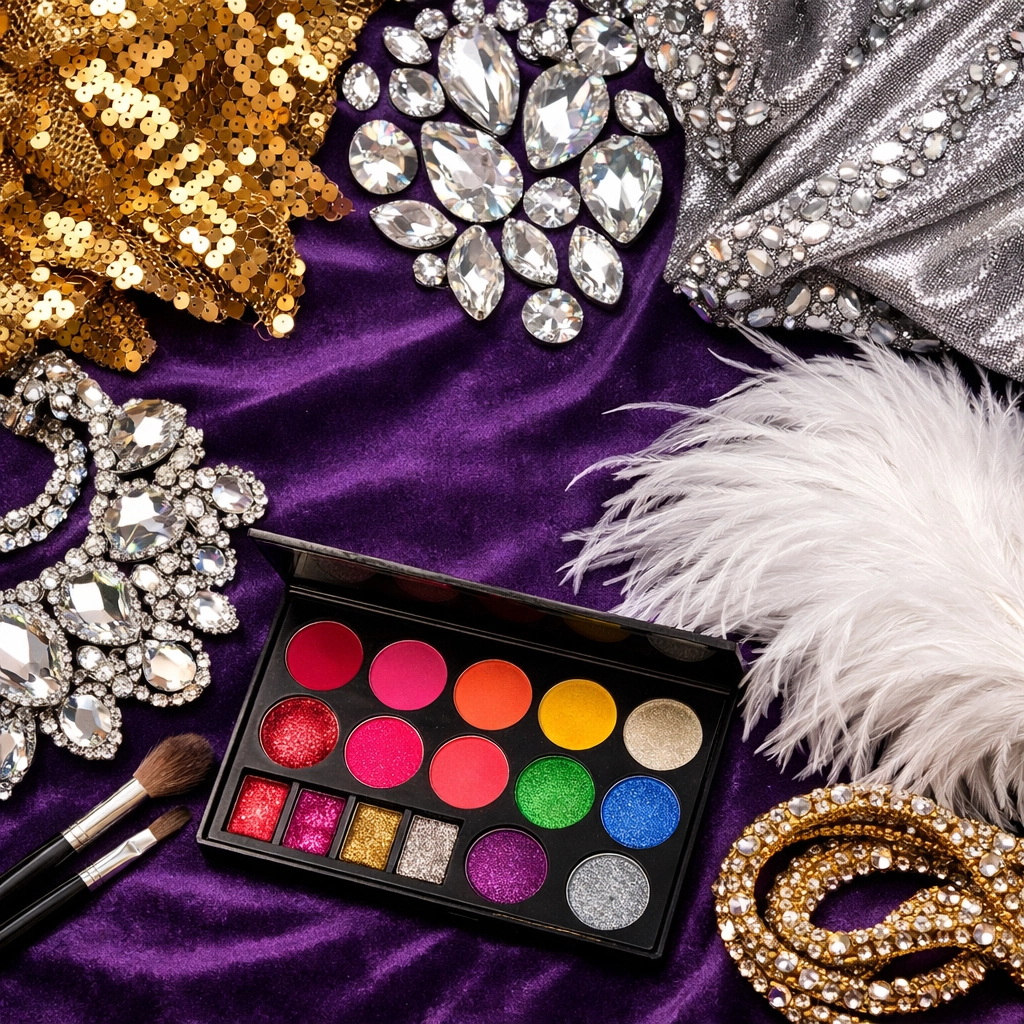
Verka didn't win Eurovision, but she won something more important: our hearts, our memes, and her place in the pantheon of queer cultural icons. She showed up as a middle-aged Ukrainian railroad attendant in a silver star costume and reminded everyone that camp isn't just an aesthetic: it's a way of seeing the world with humor, creativity, and unshakeable confidence.
So here's to Verka Serduchka: the uncrowned queen of camp, the silver-starred legend, and the reminder that sometimes the most revolutionary thing you can do is dance like everyone's watching and you genuinely don't care what they think.
Discover more LGBTQ+ stories and celebrate authentic queer culture at Read With Pride. Because every love story deserves to be told with pride.
Follow us:
#ReadWithPride #VerkaSerduchka #Eurovision #LGBTQCulture #CampIcon #QueerHistory #EurovisionHistory #DragCulture #MMRomance #GayRomanceBooks #LGBTQFiction #QueerFiction #GayBooks #Eurovision2007 #UkrainianPride #QueerIcons #GayCulture #PrideReading #LGBTQLiterature #ReadwithPride2026

Leave a Reply
You must be logged in to post a comment.