

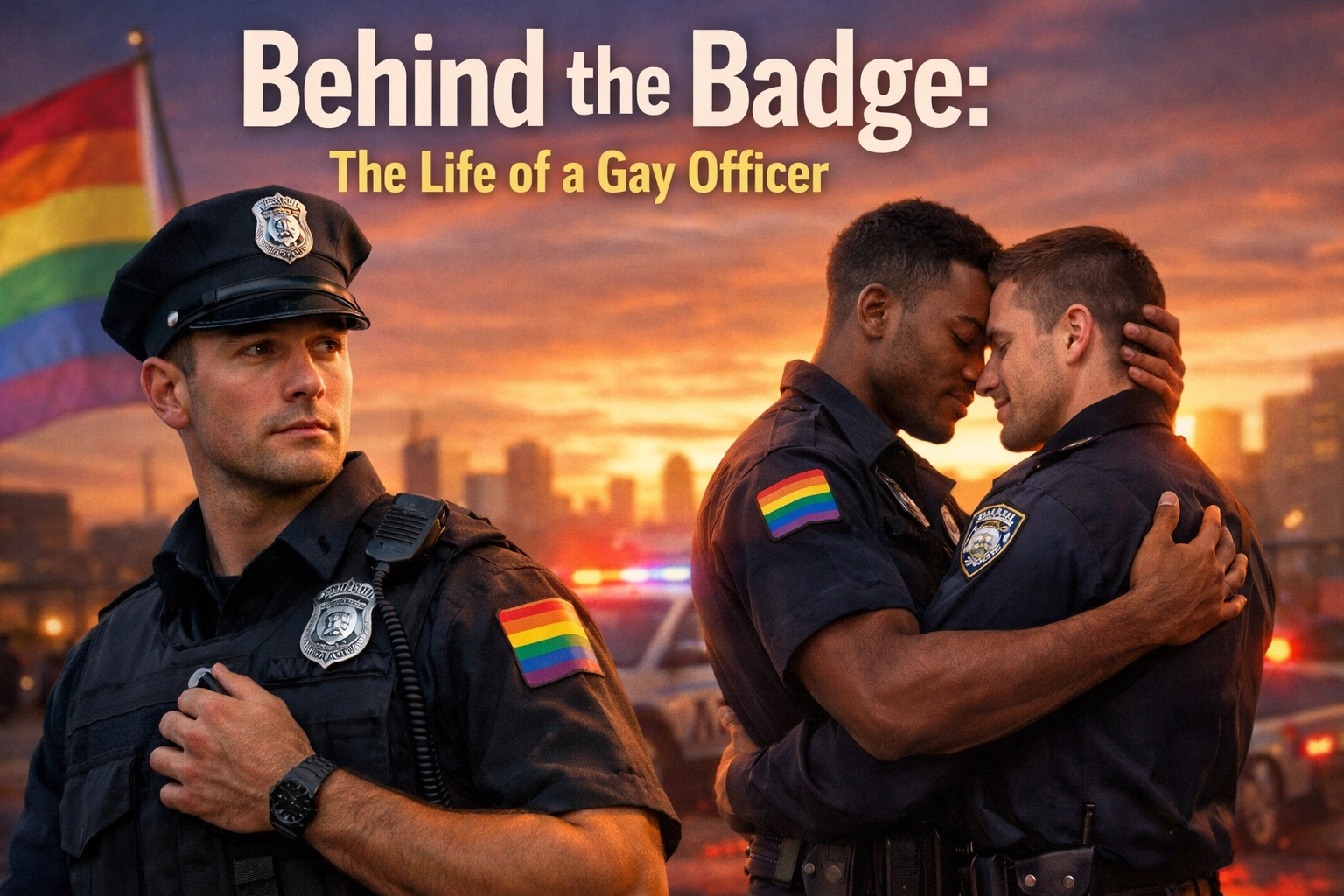
Let's talk about one of the most enduring fantasies in LGBTQ+ culture: the man (or woman) in uniform. There's something undeniably compelling about a police officer, the authority, the confidence, the way they carry themselves. It's why cop characters show up constantly in MM romance books and gay fiction, from steamy contemporary romances to slow-burn procedural dramas.
But here's the thing: behind that fantasy is a reality that's far more complex, nuanced, and sometimes heartbreaking than any romance novel could capture in a single scene.
The Fantasy vs. The Reality
In the world of gay romance novels, the cop character often represents protection, strength, and that delicious forbidden element, especially when paired with a civilian or someone on the wrong side of the law. It's enemies-to-lovers gold, and we're absolutely here for it. The uniform becomes a symbol, a shorthand for all those qualities we find irresistible.
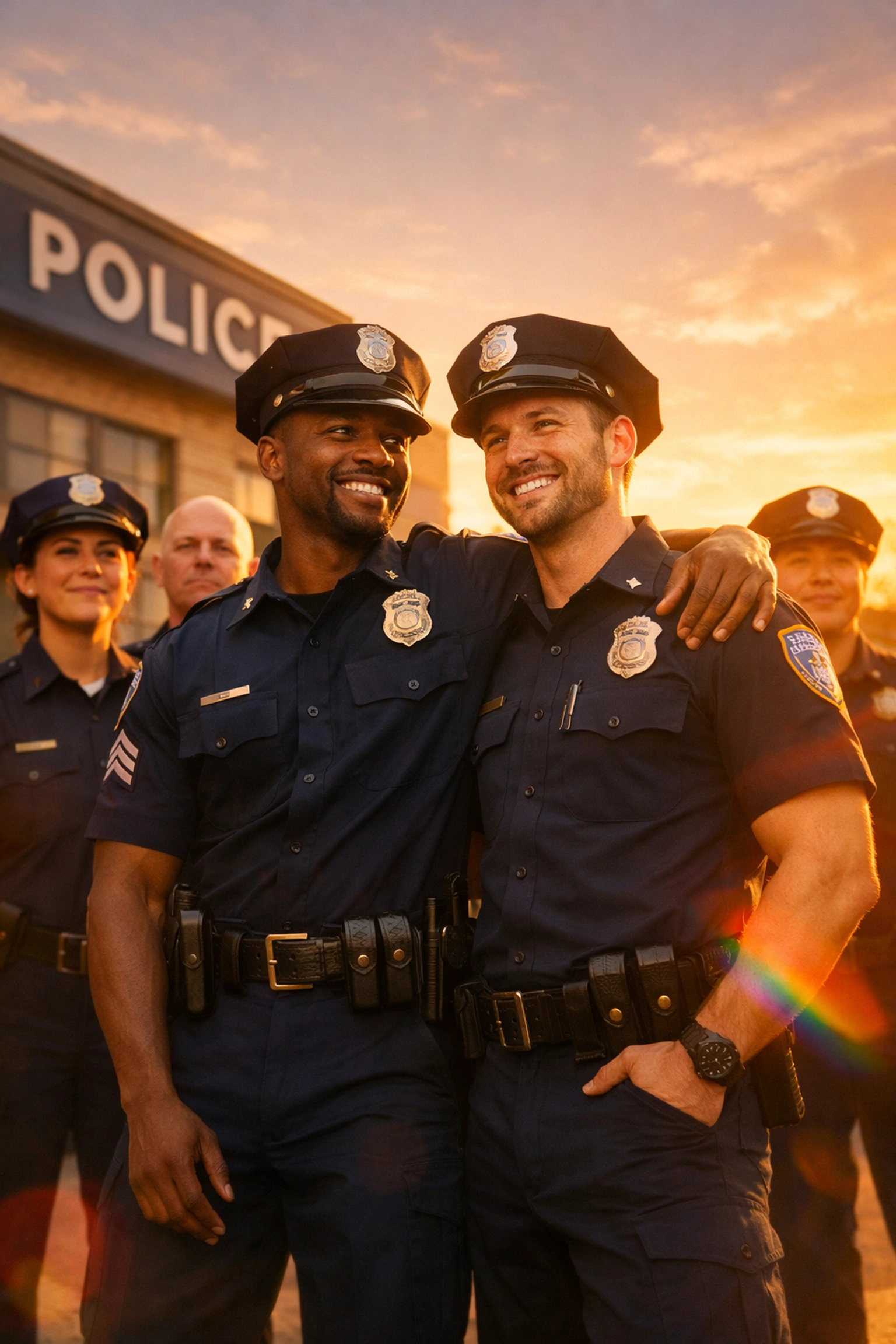
But real gay officers? They're navigating something far more complicated than deciding whether to break protocol for love. They're balancing their authentic selves with a career in one of the most historically hyper-masculine, heteronormative professions out there.
Living a Double Life
The reality for many LGBTQ+ officers, particularly in the not-so-distant past (and honestly, still in many departments today), meant living in two separate worlds. One U.S. Secret Service agent described being "deeply closeted" while working as a Deputy Sheriff from 2003-2009, terrified that revealing his identity would end his career in what he called a "hyper-masculine career field."
Imagine showing up to work every single day, putting on that uniform, and having to actively hide a fundamental part of who you are. Not just casually avoiding the topic, but living in genuine fear that mentioning your partner's name, your weekend plans, or anything that hints at your true identity could cost you everything you've worked for.
That's not a plot point in a gay thriller. That's someone's lived experience.
The Hyper-Masculine Culture Problem
Here's where it gets really complicated. Law enforcement culture has traditionally been built on a particular brand of masculinity, tough, stoic, brotherhood-oriented. And while there's nothing inherently wrong with any of those traits, they've often been weaponized against anyone who doesn't fit a very narrow definition of what a "real cop" looks like.
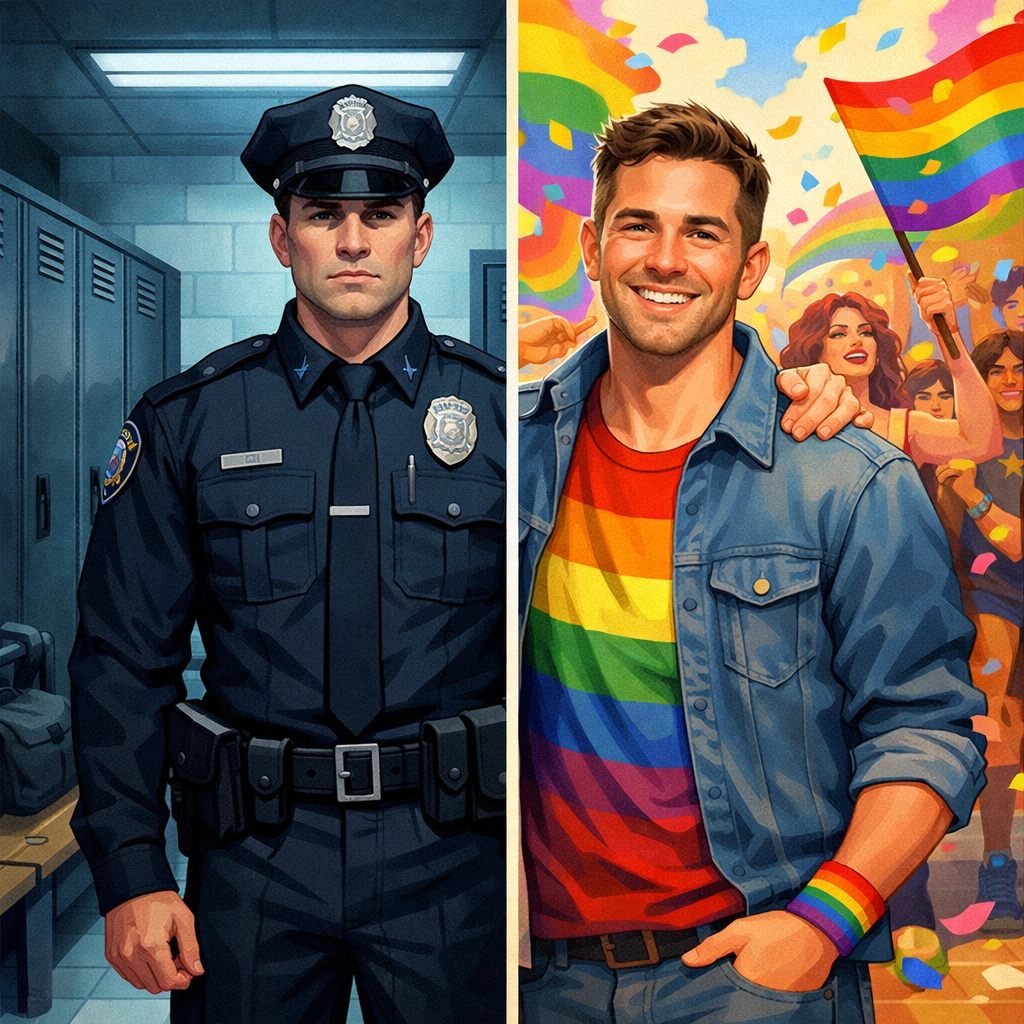
Male LGBTQ+ officers face unique challenges in this environment. Research shows they're particularly reluctant to come out because of concerns about how they'll be perceived by straight male colleagues. The locker room talk, the roll calls, the squad barbecues, all those spaces where straight cops casually mention their wives and kids become minefields for gay officers deciding whether to risk mentioning their husband or boyfriend.
Many officers report that discussing LGBTQ+-related topics could result in ridicule, missed promotions, transfers, or termination. And here's the kicker: often these fears are based on the perceived risk rather than actual incidents. The threat doesn't even have to be real, the culture itself creates enough uncertainty that staying closeted feels like the only safe option.
Interestingly, veteran lesbian officers have reported feeling more comfortable serving openly compared to their male counterparts, whose comfort levels researchers described as ranging "from caution to paranoia." The intersection of gender and sexuality creates different experiences even within the LGBTQ+ officer community.
The Progress (Yes, It Exists!)
Before we get too bleak, let's acknowledge the bright spots: because they're real and they matter.
Some departments are genuinely getting it right. Three openly gay officers with the Norfolk Police Department reported overwhelmingly positive responses from colleagues after coming out. One sergeant noted he "came into a police department that was welcoming and diverse." The Austin Police Department has been described as "one of the most accepting departments in the country," actively recruiting LGBTQ+ individuals.
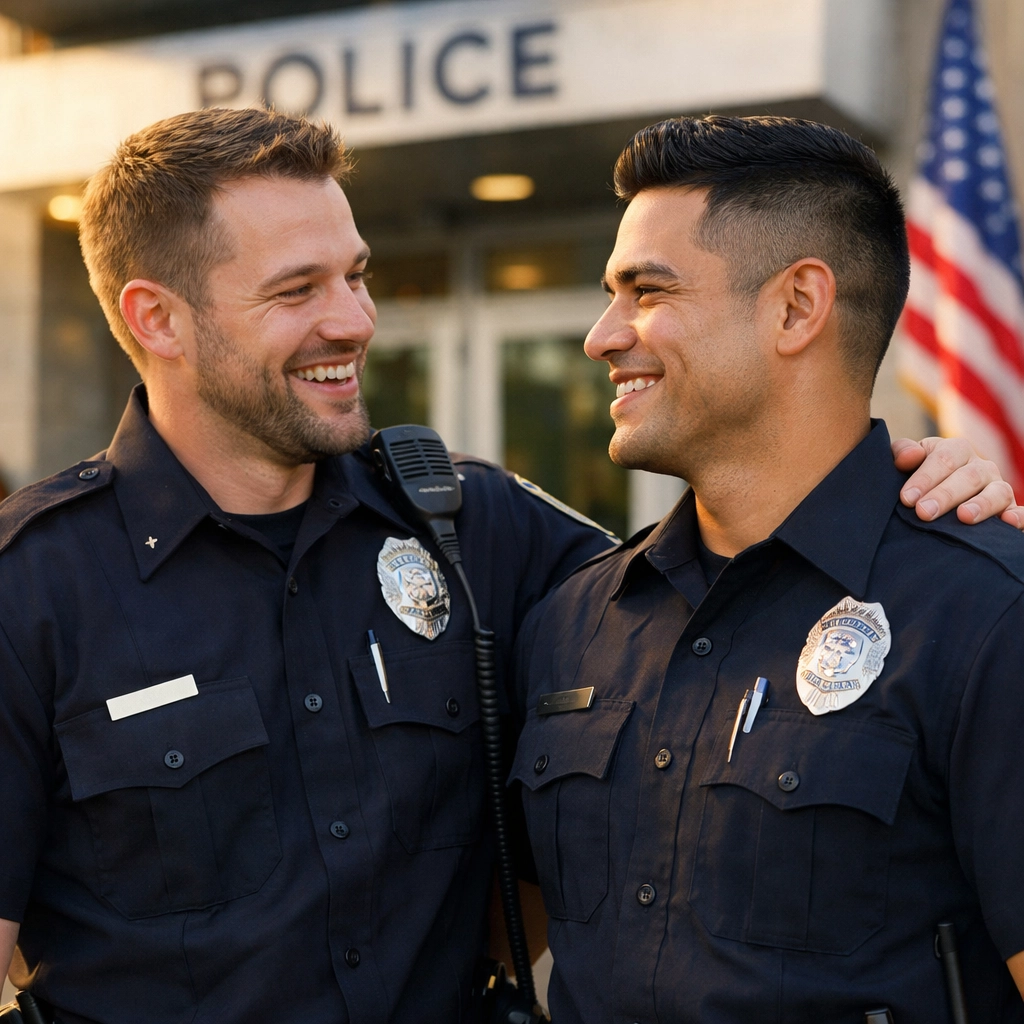
But even in progressive departments, there's often an unspoken "everything's fine; we just don't talk about it" approach that feels like a holdover from the 1970s and 1980s. Progress doesn't always mean full acceptance: sometimes it just means a more polite version of silence.
Why This Matters Beyond the Badge
The experiences of gay officers matter not just for representation in law enforcement, but for the entire LGBTQ+ community. When we can't be ourselves in institutions designed to protect and serve everyone, it sends a message about whose safety and dignity really counts.
It also impacts how LGBTQ+ individuals interact with law enforcement. Trust goes both ways. When queer officers feel they have to hide, when departments maintain cultures of exclusion, it affects the relationship between law enforcement and LGBTQ+ communities: communities that have historically had fraught relationships with police, from Stonewall to present-day debates about police presence at Pride events.
From Fantasy to Fiction to Reality
At Read with Pride, we celebrate LGBTQ+ fiction that explores these complexities. The best MM romance books and gay novels don't just give us the fantasy of the hot cop falling for the civilian: they dig into the real tensions, the code-switching, the cost of authenticity in uniformed professions.
When you pick up a gay contemporary romance featuring a police officer, you're often reading more than a love story. You're reading about someone negotiating identity, safety, duty, and desire all at once. That's the kind of nuanced queer fiction that resonates because it reflects real struggles wrapped in a hopeful narrative.
The Path Forward
So where do we go from here? How do we bridge the gap between fantasy and reality, between the idealized version of the officer in uniform and the complex human underneath?
It starts with visibility: officers feeling safe enough to come out, departments creating genuinely inclusive cultures rather than just checking diversity boxes. It continues with accountability, addressing discrimination and harassment when it happens rather than perpetuating the code of silence.
And it includes storytelling. The gay romance books and LGBTQ+ ebooks that feature law enforcement characters with authenticity and depth help normalize what it looks like to be both gay and a cop. They show younger LGBTQ+ people considering careers in law enforcement that it's possible, even if it's not always easy.
Reading With Pride
The officer in uniform will probably always be a fixture in LGBTQ+ fantasies and fiction: and honestly? There's nothing wrong with that. Fantasies serve a purpose. But understanding the reality behind the badge adds depth to our appreciation for those stories and, more importantly, for the real officers living those experiences every day.
Want to explore more stories about LGBTQ+ individuals in all walks of life? Check out our collection at ReadWithPride.com: from steamy MM contemporary to thought-provoking gay psychological thrillers, we've got stories that honor both the fantasy and the reality.
Follow Read with Pride:
Facebook | Instagram | X/Twitter
Explore our collection: ReadWithPride.com
#ReadWithPride #GayRomance #MMRomance #LGBTQFiction #QueerFiction #GayBooks #MMBooks #LGBTQRepresentation #GayRomanceBooks #QueerStories #MMContemporary #LGBTQEbooks #GayFiction #PrideReading #AuthenticStories #MMRomanceBooks #LGBTQCommunity #GayLoveStories #QueerAuthors #2026Books #BestMMRomance

Leave a Reply
You must be logged in to post a comment.