

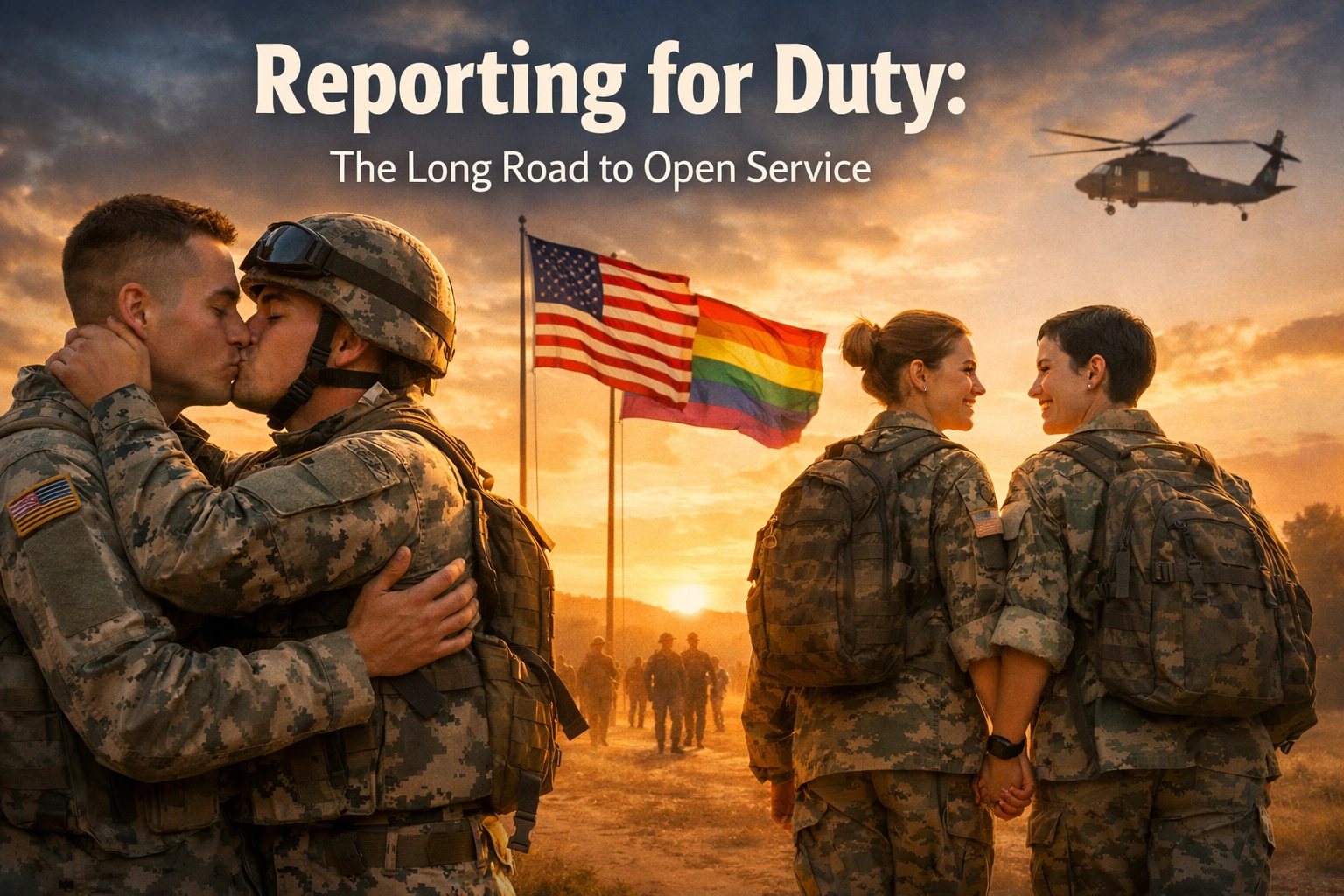
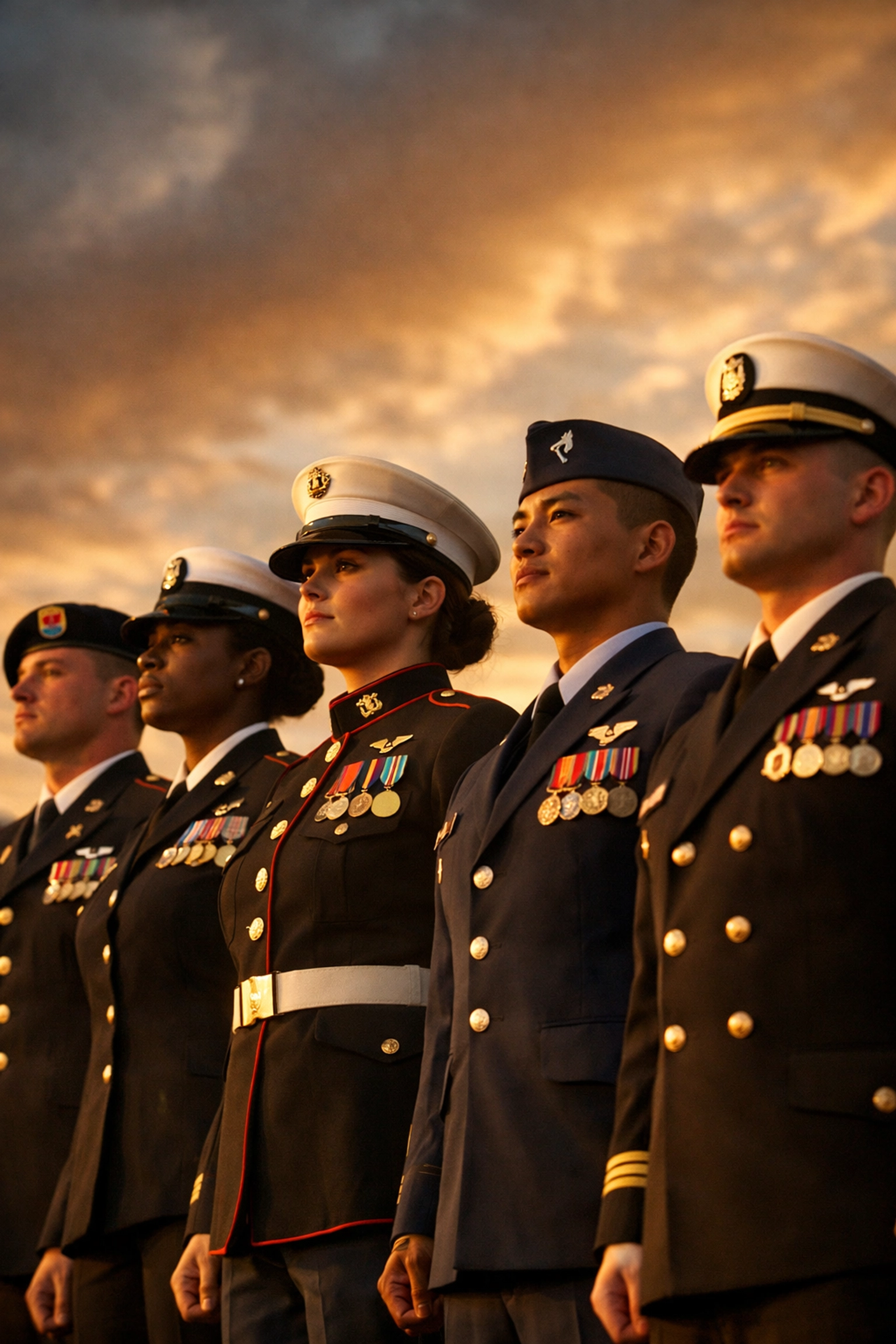
Let's talk about military uniforms. Those crisp dress blues, the sharp lines of a formal service uniform, the way a well-fitted ACU makes shoulders look just right. There's a reason "man in uniform" is a whole category of gay fantasy, and let's be honest, it's not just the aesthetics (though those certainly help).
But behind every service member who can now serve openly and authentically, there's a decades-long battle that had nothing to do with enemy combatants and everything to do with fighting for the right to simply exist in those uniforms.
The Fantasy Meets the Reality
The military uniform represents strength, honor, duty, and sacrifice. It's also been part of queer desire and imagination for generations, shown up in everything from Tom of Finland artwork to modern gay romance novels. At Read with Pride, we celebrate those MM romance books featuring military heroes finding love, but we also recognize the real history behind those stories.
Because here's the thing: LGBTQ+ people have always served. From the American Revolution through every major conflict, queer service members have been there, often hiding, always serving, frequently punished for who they loved.
When Love Became a Crime in Uniform
Members of the LGBTQ+ community have served in U.S. military branches since the very beginning, yet they faced systematic exclusion for most of American history. During World War II, things got particularly nasty. Instead of just punishing homosexual conduct, the military started screening recruits based on sexual orientation itself, using stereotypes, snap judgments, and about five minutes of evaluation time.
Get caught? Dishonorable discharge. Which didn't just mean you left the military, it meant no veterans benefits, no GI Bill, employment doors slamming shut across the country. Your entire future, torched.
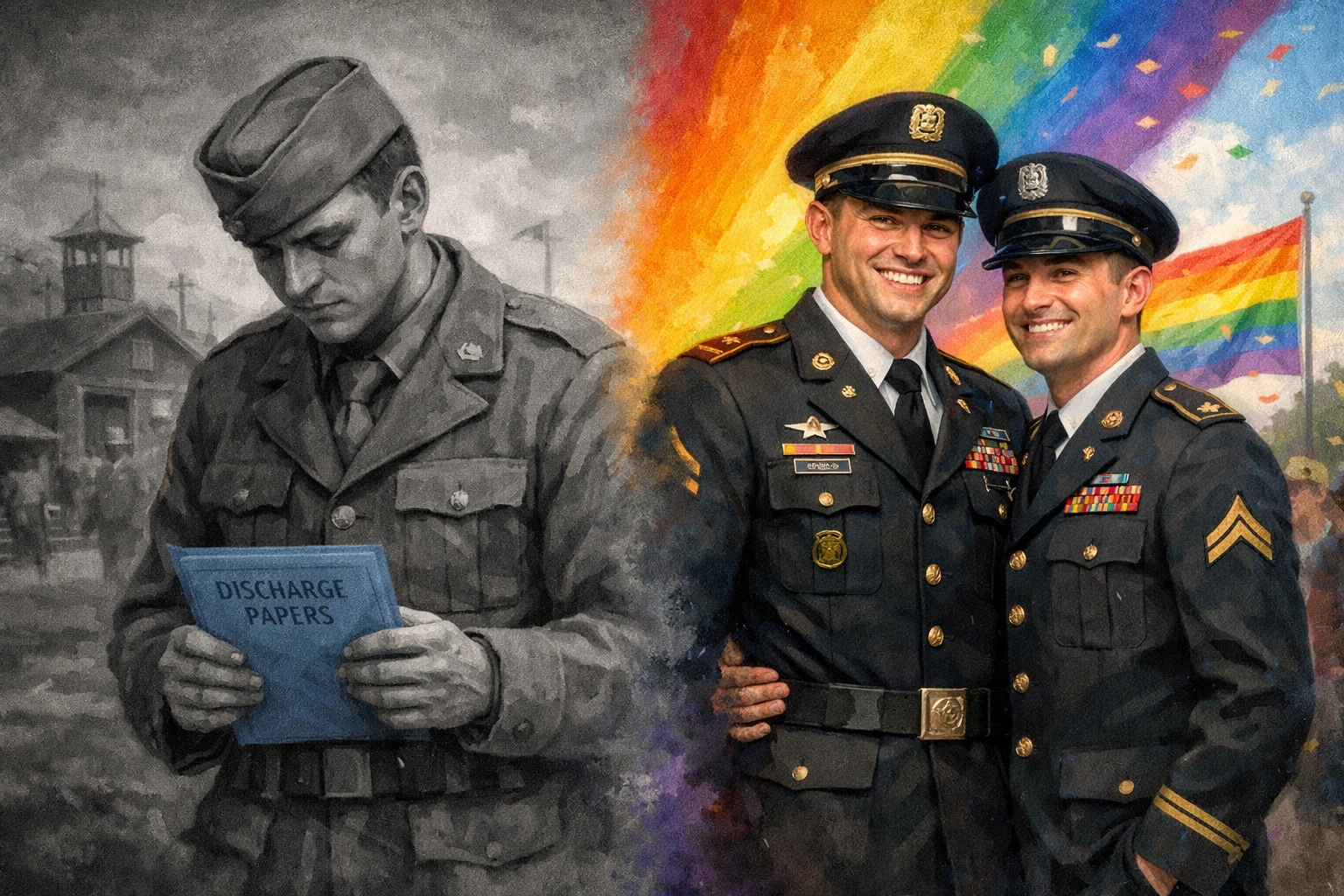
In October 1949, the newly formed Department of Defense made it official and standardized: all military branches would mandate "prompt separation of known homosexuals from the Armed Forces." They classified homosexuality as a mental illness. Yeah, we've come a long way, but damn, that still stings to read.
Many discharged service members received "blue discharges", literally printed on blue paper. While technically not dishonorable, these documents were used to deny veterans benefits and created a stigma that followed people for the rest of their lives. About 10,000 civil service members also got the boot during what's now called the "Lavender Scare."
Don't Ask, Don't Tell: The "Compromise" That Wasn't
Fast forward to November 30, 1993. President Bill Clinton signed "Don't Ask, Don't Tell" into law, and it was sold as progress, a compromise. The idea? LGBTQ+ folks could serve as long as they stayed closeted. The military wouldn't ask, you wouldn't tell, and everyone would pretend that queer people in combat boots didn't exist.
Spoiler alert: it wasn't progress. It was legislated invisibility.
Over 13,000 service members were discharged under DADT. Thirteen thousand careers ended, families disrupted, lives upended, all because someone found out who they loved. Meanwhile, the military lost experienced linguists, medical personnel, intelligence officers, and combat specialists at a time when it could least afford to.
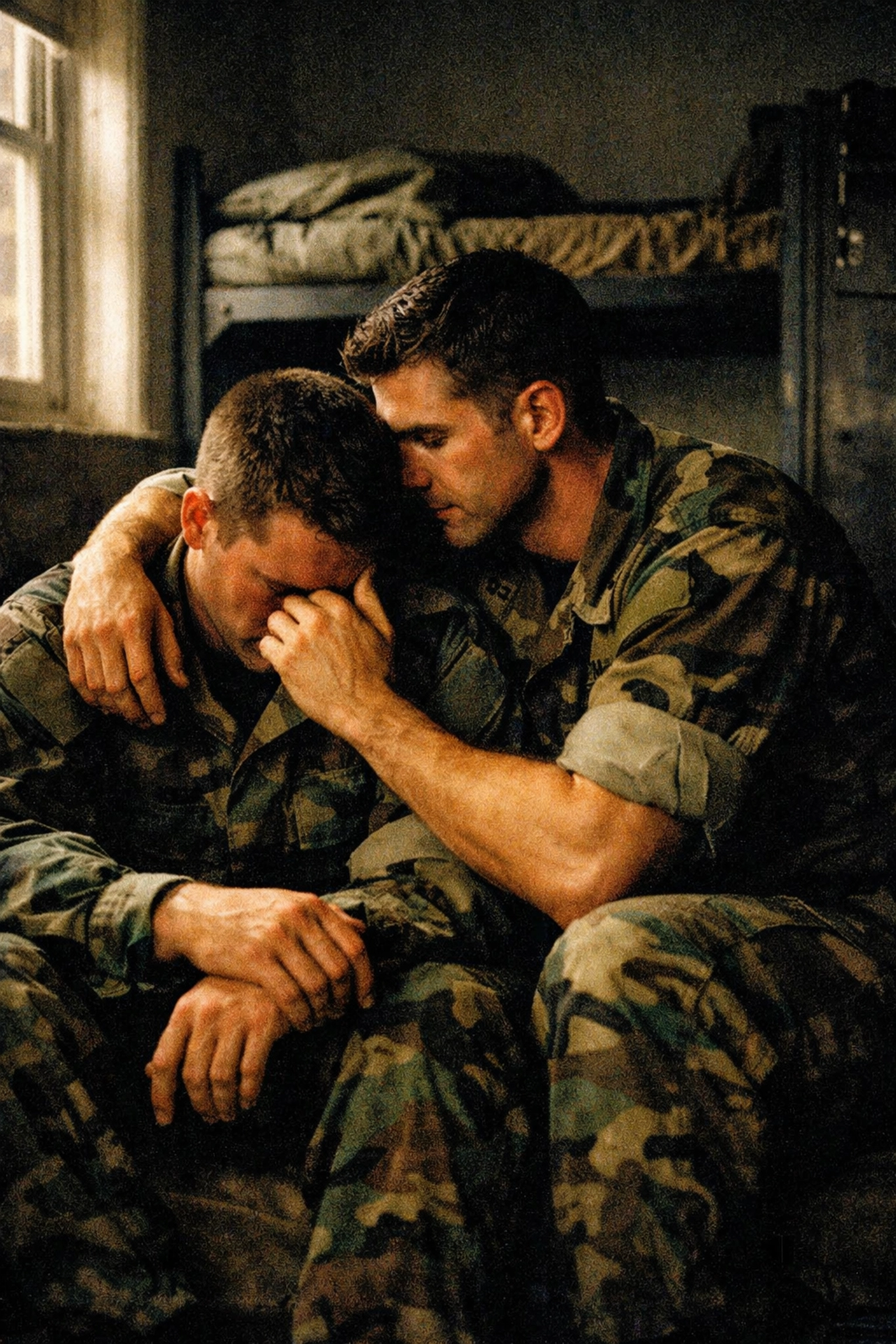
The policy forced people to live double lives. No photos of your partner on your desk. No mentioning weekend plans that involved your girlfriend. No being yourself at the unit barbecue. Serve your country in silence or don't serve at all.
The Turning Point
The repeal of DADT came in 2010 under President Obama, and when it finally took effect, something beautiful happened: people could breathe. Gay, lesbian, and bisexual service members could serve openly for the first time in modern military history.
No more hiding. No more lying. No more fear that an overheard conversation or a letter from home would end your career.
This is where the fantasy and reality start to converge. Those MM romance novels about military heroes finding love? They became possible. Not in fiction, they always were in fiction, but in real life. Service members could have photos of their partners. They could bring dates to military balls. They could get married and have their spouse receive military benefits.
The Ongoing Battle: Transgender Service
But the journey wasn't, and isn't, over. Transgender service members faced their own uphill battle. From June 2016 to April 2019, trans personnel could serve in their preferred gender. Starting January 2018, transgender individuals could enlist. Progress, right?
Then the Trump administration reversed it. The ban was back.
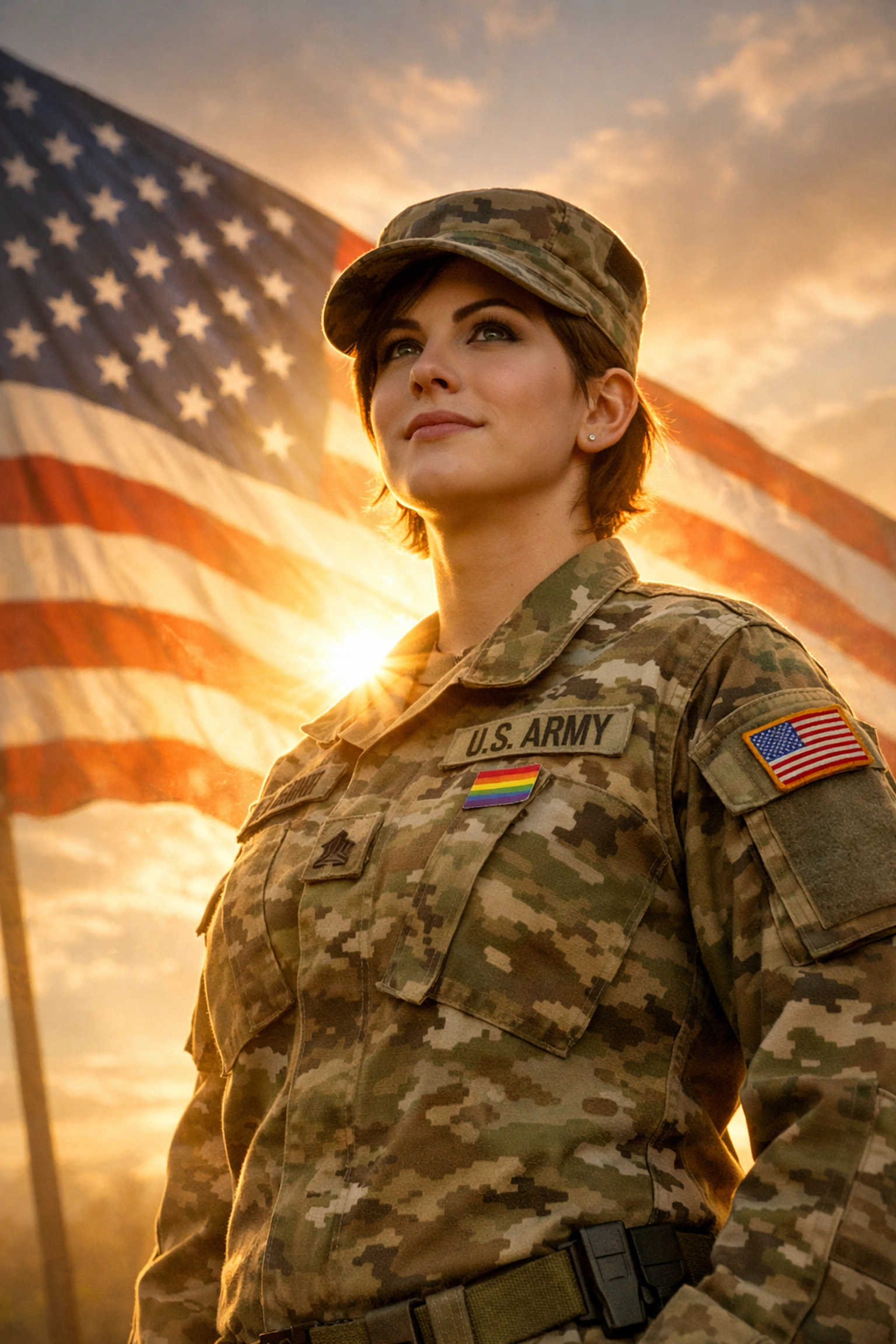
In 2021, the Army officially changed policy again to allow transgender people to serve. It's been a brutal back-and-forth that highlights just how fragile progress can be when it depends on who's in power rather than being grounded in basic human rights.
Why This Matters Beyond the Military
This history matters whether you're reading gay romance books on your commute or you've never touched an MM novel in your life. It matters because it's about the right to exist authentically in any uniform, military, police, fire, medical scrubs, whatever.
The "man in uniform" fantasy exists partly because uniforms represent authority, competence, and yes, they're hot. But they also represent something more: the ability to serve, to be respected, to take up space in institutions that have historically rejected queer people.
Every time you see an out service member, a gay police officer at Pride, a lesbian firefighter, a trans EMT: you're seeing someone who fought for the right to be there. Not fought metaphorically. Actually fought through discrimination, policy, law, and prejudice.
From Fantasy to Future
The military romance trope in gay fiction isn't going anywhere: and honestly, it shouldn't. We deserve our love stories in every setting, including (especially?) in crisp dress uniforms. But as we celebrate those MM romance books and LGBTQ+ fiction that feature service members finding love, we honor the real people who made those stories possible by living them.
At Read with Pride, we believe every queer story matters: the fantasies and the realities, the romance novels and the history books. Understanding where we've been makes the stories we read now that much sweeter. Because when that fictional Army captain finally admits his feelings for his fellow soldier, we know that somewhere, in real life, that's happening too: and nobody's getting discharged for it.
That's not just progress. That's a revolution in uniform.
Want more LGBTQ+ stories that blend fantasy and reality? Check out our collection of MM romance novels and gay fiction at readwithpride.com.
Follow us for more:
📘 Facebook
📸 Instagram
🐦 X/Twitter
#ReadWithPride #MMRomance #GayRomanceBooks #LGBTQHistory #MilitaryRomance #DontAskDontTell #LGBTQFiction #GayBooks #QueerHistory #MMNovels #GayLoveStories #LGBTQRights #AuthenticStories #QueerFiction #MilitaryHistory #LGBTQPride #GayRomance #MMBooks #LGBTQReading #Pride2026

Leave a Reply
You must be logged in to post a comment.