

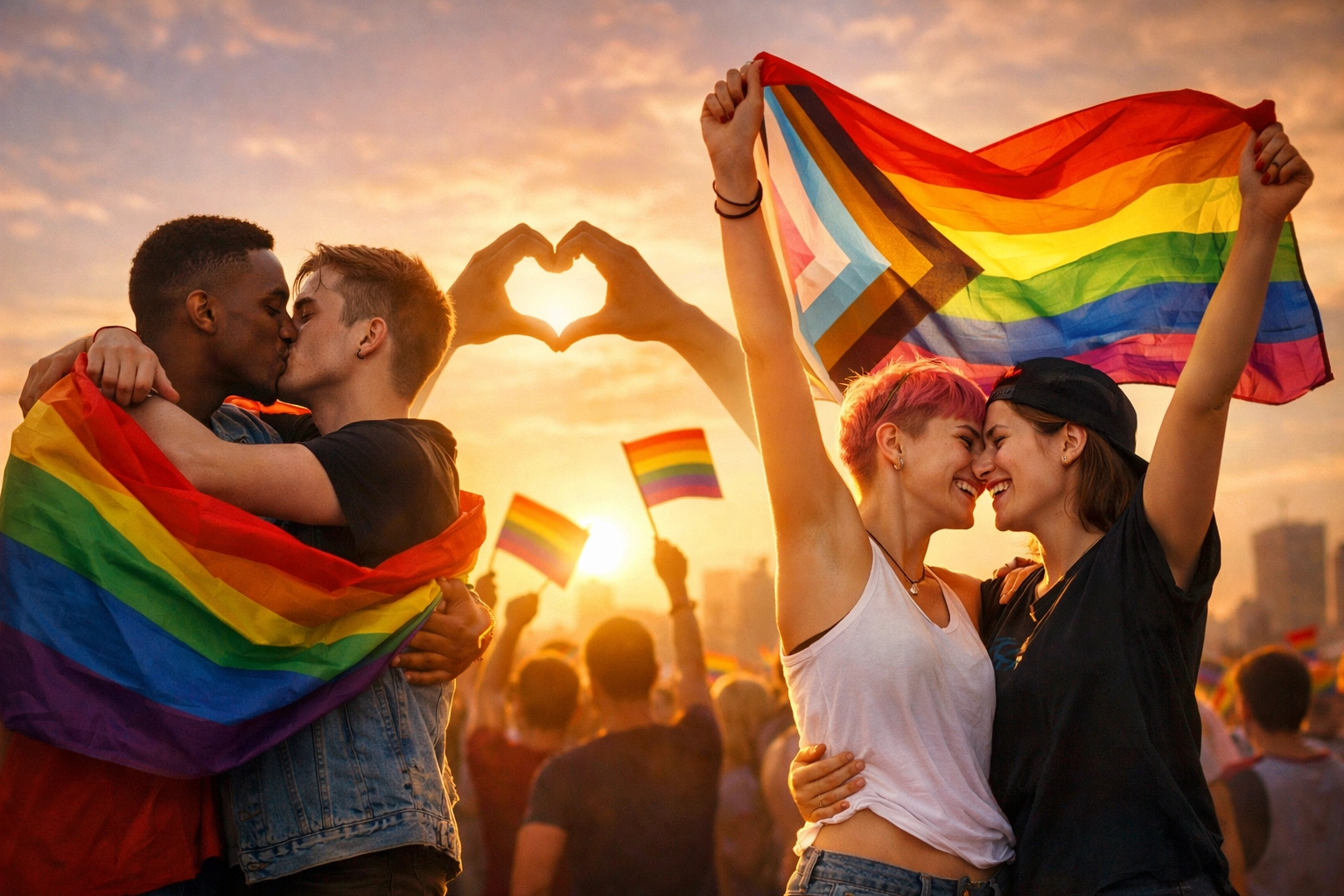
There's something undeniably captivating about a person in uniform. Maybe it's the crisp lines, the sense of duty, or the inherent bravery these clothes represent. For decades, LGBTQ+ folks harbored those same attractions while being forced to hide who they loved. But times have changed, and some couples didn't just break barriers: they shattered them completely, becoming living symbols of progress in the fight for equality.
When Love Met Military Policy
For most of modern history, being openly gay in the military wasn't just frowned upon: it was illegal. The "Don't Ask, Don't Tell" policy in the United States (1994-2011) forced thousands of service members to live double lives, compartmentalizing their identities just to serve their country. In the UK, the ban wasn't lifted until 2000. Canada led the charge in 1992, proving that inclusive militaries don't just survive: they thrive.
But behind every policy change were real people: couples who risked everything, who loved in secret, and who eventually stepped into the light to show the world that love and duty aren't mutually exclusive.
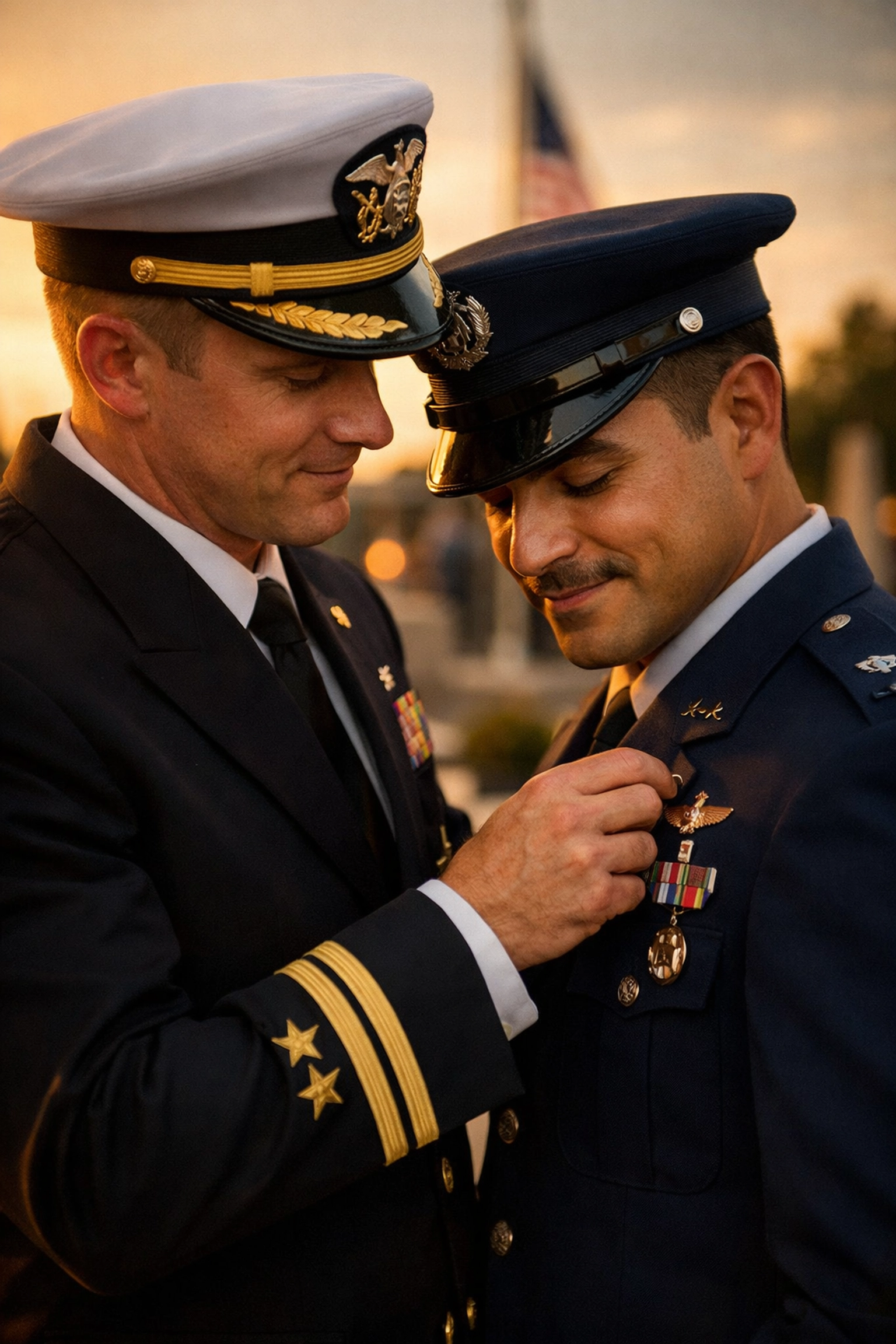
The Pioneers Who Paved the Way
When Navy Lieutenant Gary Ross and his partner Dan Swezy got married in 2011: just months after DADT's repeal: their wedding photos went viral. Not because it was scandalous, but because it was beautifully, authentically normal. Two men in dress whites, sharing their first kiss as a married couple, showed millions that gay love in the military wasn't a threat: it was a reality that had always existed, finally allowed to breathe.
Captain Steve Snyder-Hill deployed to Iraq three times, serving with distinction while knowing he couldn't openly love his husband Josh. When he appeared via video at a 2011 Republican presidential debate and was booed for asking about DADT, the moment became a flashpoint. His courage: asking a simple question about serving his country while being himself: represented thousands of service members who'd fought battles both abroad and at home.
Then there's the story of Air Force Colonel Grethe Cammermeyer, a highly decorated Vietnam War nurse who served for 26 years before being discharged in 1992 for being a lesbian. Her fight for reinstatement, her relationship with her partner Diane, and her eventual Congressional testimony helped shift public opinion. When she won her case in 1994, she didn't just win for herself: she won for every LGBTQ+ service member who came after.
Across the Pond and Beyond
The UK's military transformation has been equally inspiring. When the Royal Navy allowed same-sex couples to marry aboard HMS ships, it wasn't just symbolic: it was revolutionary. Flight Lieutenant Caroline Paige became the first transgender officer to serve openly in any military worldwide, breaking ground in 1999 and continuing to serve for two more decades.
In 2019, British Army Major Luke Thomas married his partner Alberto in a ceremony that would have been unthinkable just 20 years earlier. His rainbow flag pin worn proudly on his uniform during Pride events sent a clear message: You can serve with honor and love without shame.
The Ripple Effect
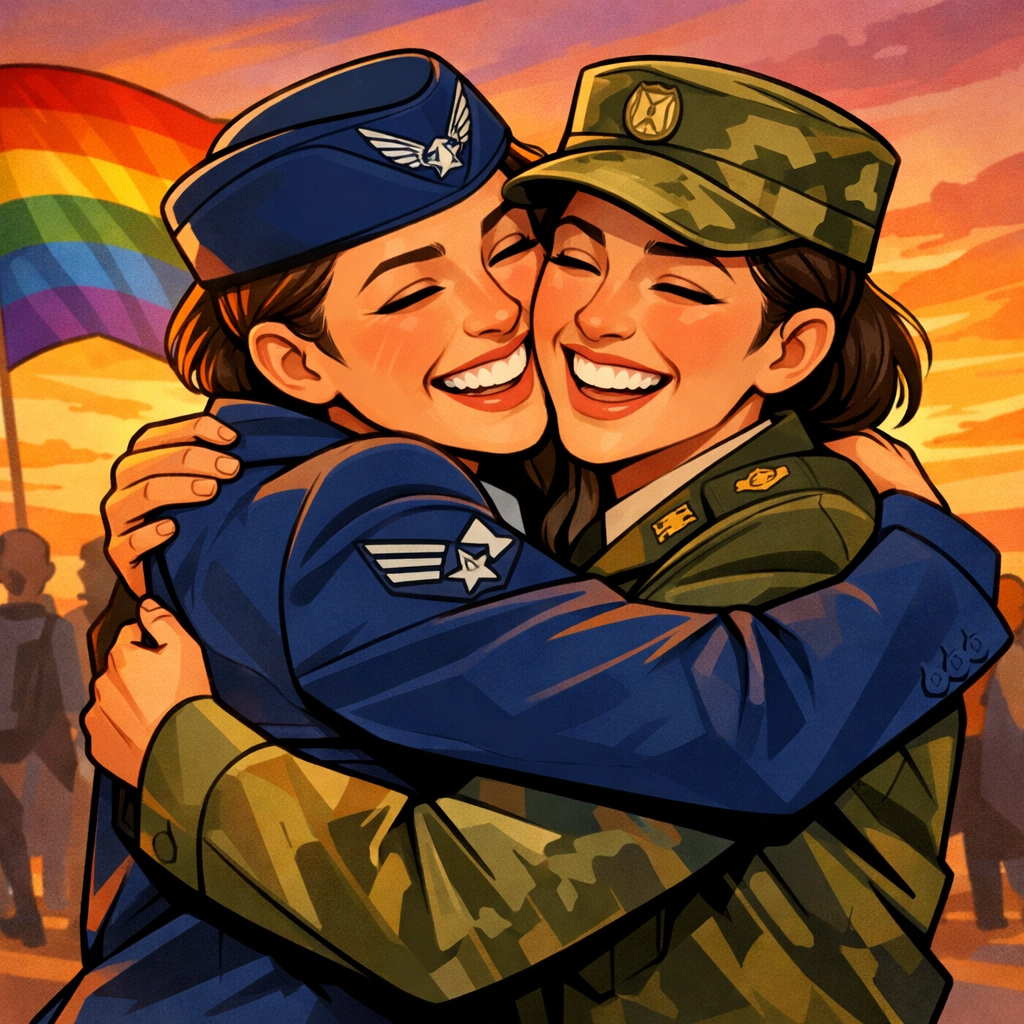
These couples didn't just change policy: they changed hearts and minds. Their visibility challenged stereotypes about masculinity, duty, and what it means to be a hero. When active-duty service members can post photos with their same-sex partners on social media, when military bases host Pride celebrations, when transgender troops serve openly: that's the legacy these pioneers created.
The fantasy of the man or woman in uniform has always existed in LGBTQ+ culture. The difference now? Those fantasies can become reality without fear, secrecy, or shame. MM romance novels have long explored military love stories, giving readers the happy endings that real-life couples were denied for decades. Now, those stories aren't just fiction: they're reflected in real couples who post their anniversaries online, who share deployment reunions, who live openly.
From Banned to Celebrated
The transformation has been stunning. Countries like Canada, Israel, and many European nations now actively recruit LGBTQ+ service members. Australia's Defence Force marches in Pride parades in full uniform. The Netherlands has had openly gay military members since the 1970s. These aren't just policy changes: they're cultural shifts.
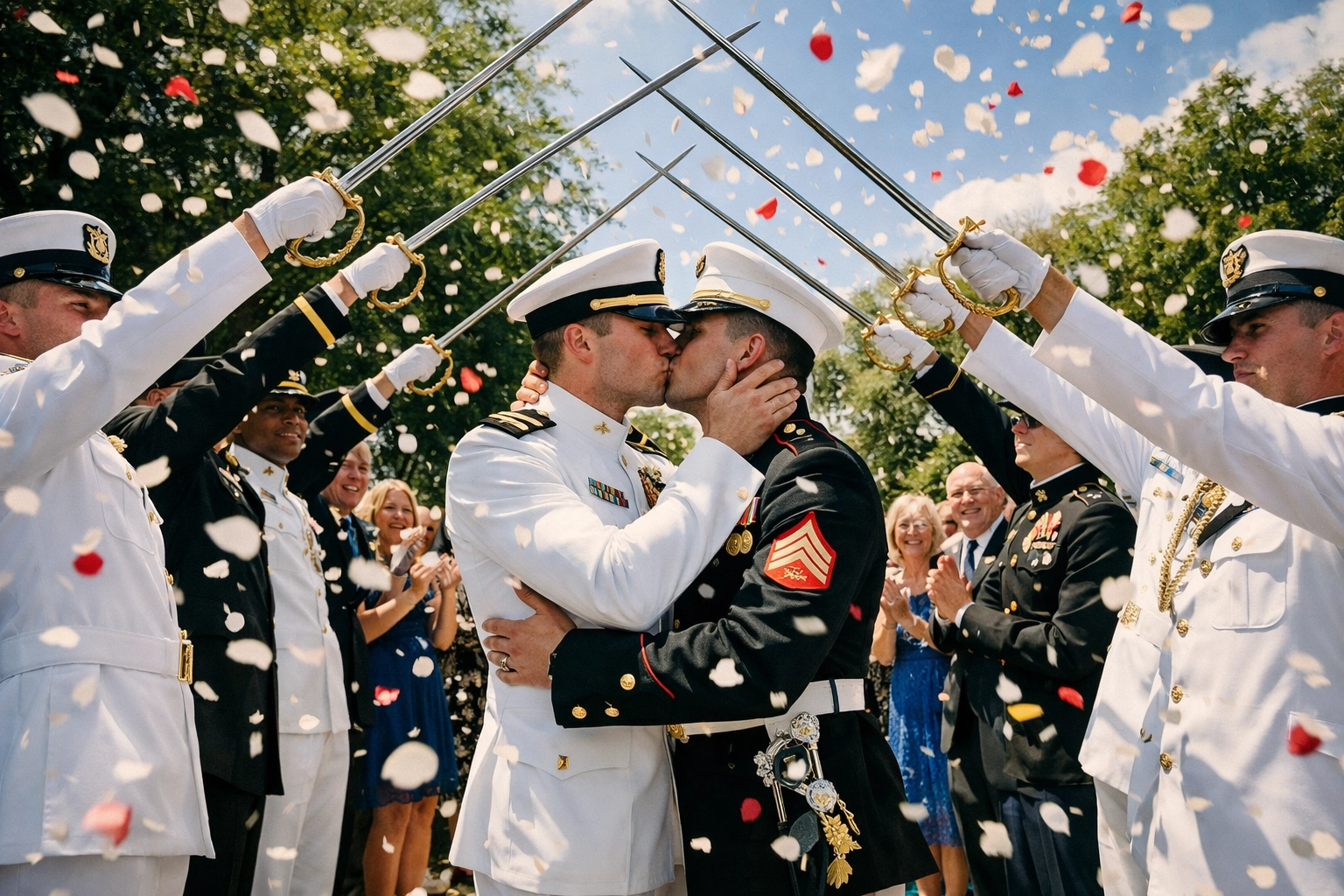
Consider the power of visibility: When young LGBTQ+ people see gay couples in military uniforms, they see possibility. They see that service and authenticity aren't contradictory. They see heroes who look like them, love like them, and prove that you don't have to choose between duty to country and truth to self.
The Ongoing Battle
Progress isn't universal, and the fight continues. Many countries still ban LGBTQ+ people from military service. In some nations, being openly gay while serving means risking your life: not from enemy combatants, but from your own comrades. The couples who live and love openly in accepting countries carry the torch for those who still can't.
That's why these visible couples matter so much. Every photo of two men in Air Force blues cutting their wedding cake, every Instagram post of a same-sex military family on base housing move-in day, every news story about transgender service members serving with distinction: these are acts of resistance and hope.
Reading Their Stories
At Readwithpride.com, we celebrate these real-life love stories while also bringing you gay romance novels and LGBTQ+ fiction that honor military love. Whether you're into MM contemporary romance set on military bases or gay historical romance exploring forbidden love during wartime, these stories matter. They reflect our history, honor our progress, and imagine futures where love always wins.
The fantasy of the uniformed hero has evolved. It's no longer just about the attraction: it's about the recognition that LGBTQ+ people have always been those heroes. They've always served, always protected, always sacrificed. Now, finally, they can also love openly.
Symbols That Salute Back
These couples: the Rosses, the Snyder-Hills, the Paiges, the Thomases, and countless others: didn't just make history. They made it possible for the next generation to serve without fear. They transformed military culture from within, proving that diversity makes forces stronger, not weaker.
Their love stories aren't just romantic: they're revolutionary. Every time a same-sex military couple shares their story, they're dismantling decades of discrimination. They're turning fantasy into reality, showing that the person in uniform can also be your person, without asterisks or apologies.
So here's to the couples who saluted love even when institutions didn't salute back. Here's to the pioneers who loved in secret and the activists who loved out loud. Here's to progress: messy, hard-won, and absolutely worth celebrating.
Because at the end of the day, love is love. And sometimes, love wears combat boots, dress blues, or flight suits. And that's exactly as it should be.
Follow us for more stories of LGBTQ+ pride and progress:
📘 Facebook
🐦 Twitter/X
📸 Instagram
🌐 Readwithpride.com
#ReadWithPride #LGBTQMilitary #MilitaryPride #MMRomance #GayRomanceBooks #LGBTQFiction #QueerMilitary #LoveIsLove #MilitaryCouples #GayMilitary #LGBTQHistory #ProgressNotPerfection #PrideInService #MMRomanceBooks #GayLoveStories #LGBTQRights #MilitaryEquality #GayHeroes #AuthenticLove #LGBTQProgress

Leave a Reply
You must be logged in to post a comment.