

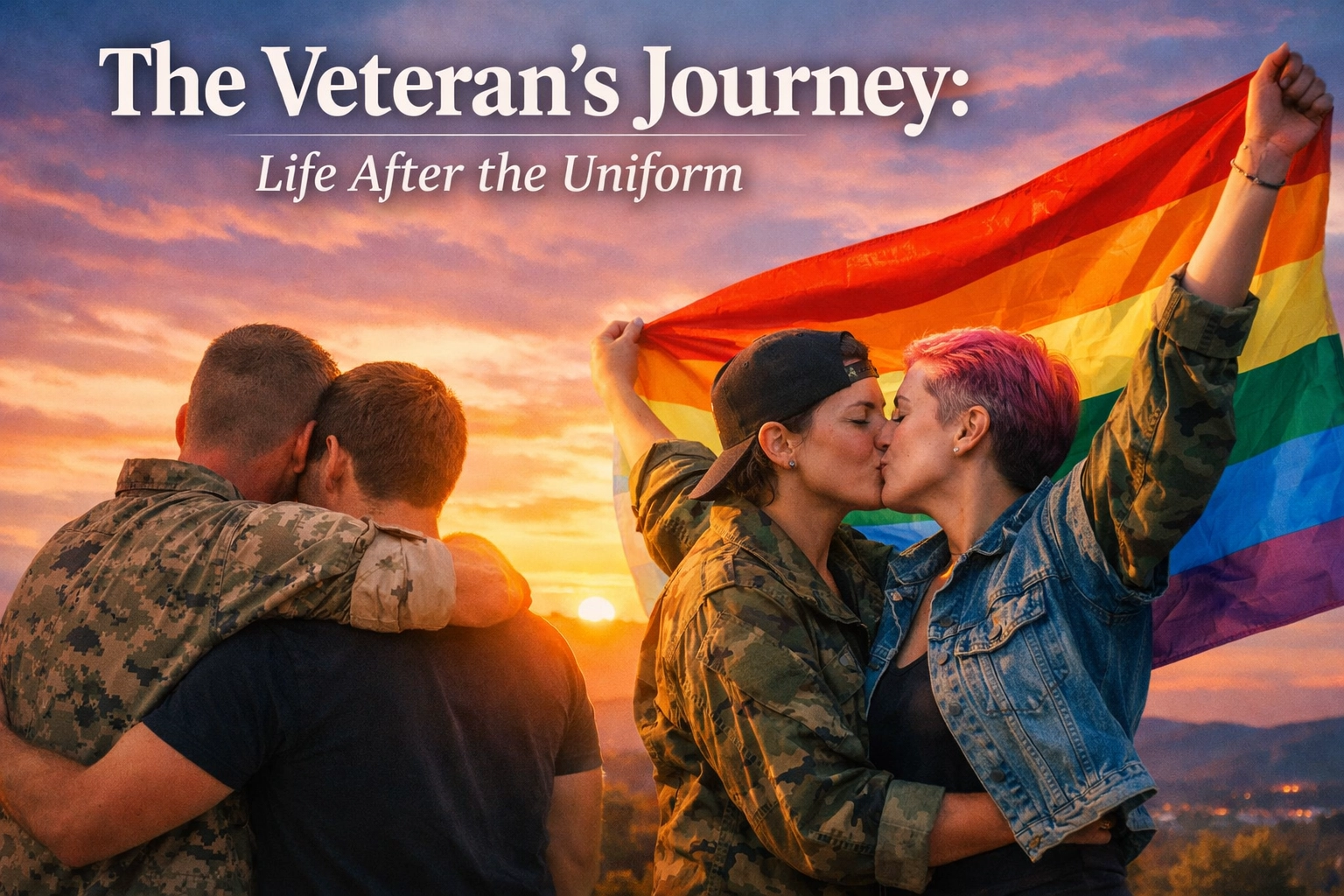
Let's be real, there's something undeniably hot about a person in uniform. Military dress blues, combat fatigues, that crisp salute… it's peak fantasy material. But what happens when the uniform comes off for good? When the service ends and real life begins?
For LGBTQ+ veterans, the journey from military service to civilian life is complex, layered, and often messy. It's about shedding more than just the uniform, it's about rebuilding identity, finding new purpose, and discovering love and community in a world that suddenly feels very different.
The Fantasy vs. The Reality
The "man in uniform" trope runs deep in gay culture. It's shorthand for discipline, strength, honor, and yes, undeniable physical appeal. We fantasize about the stoic soldier, the brave firefighter, the dedicated officer. Romance novels at Read with Pride explore these dynamics beautifully: the forbidden love, the stolen moments, the intensity of connection forged under pressure.
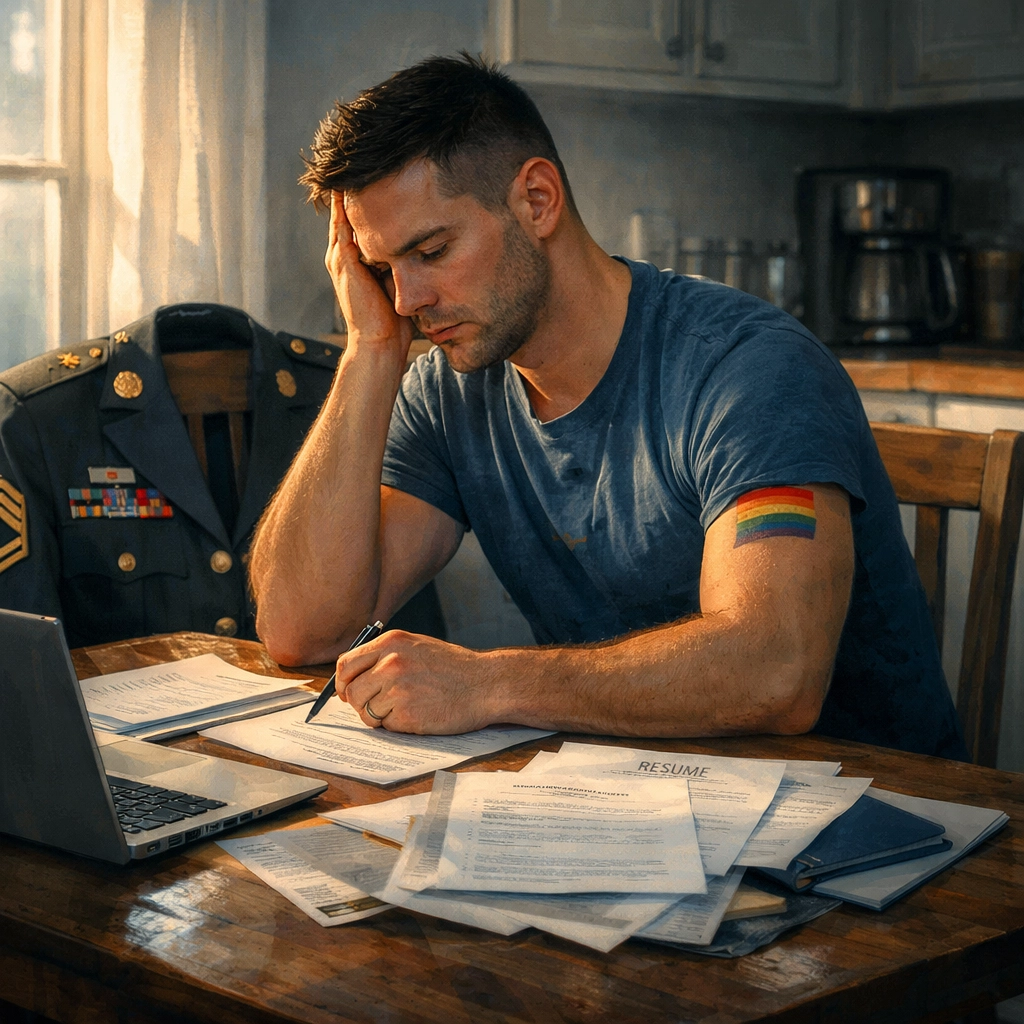
But here's what the fantasies don't always show: the veteran struggling to write their first civilian resume, the former sergeant having panic attacks in grocery stores because there's too much noise and too many choices, or the decorated officer who can't explain a seven-year employment gap to a hiring manager who's never served.
Between 27% and 44% of all veterans report difficulty readjusting to civilian life. For LGBTQ+ veterans, particularly those who served under "Don't Ask, Don't Tell" or before marriage equality, the challenges multiply. They're not just transitioning from military to civilian: they're often coming out, exploring their identity publicly for the first time, and navigating queer spaces they couldn't safely access while in uniform.
Losing the Structure, Finding Yourself
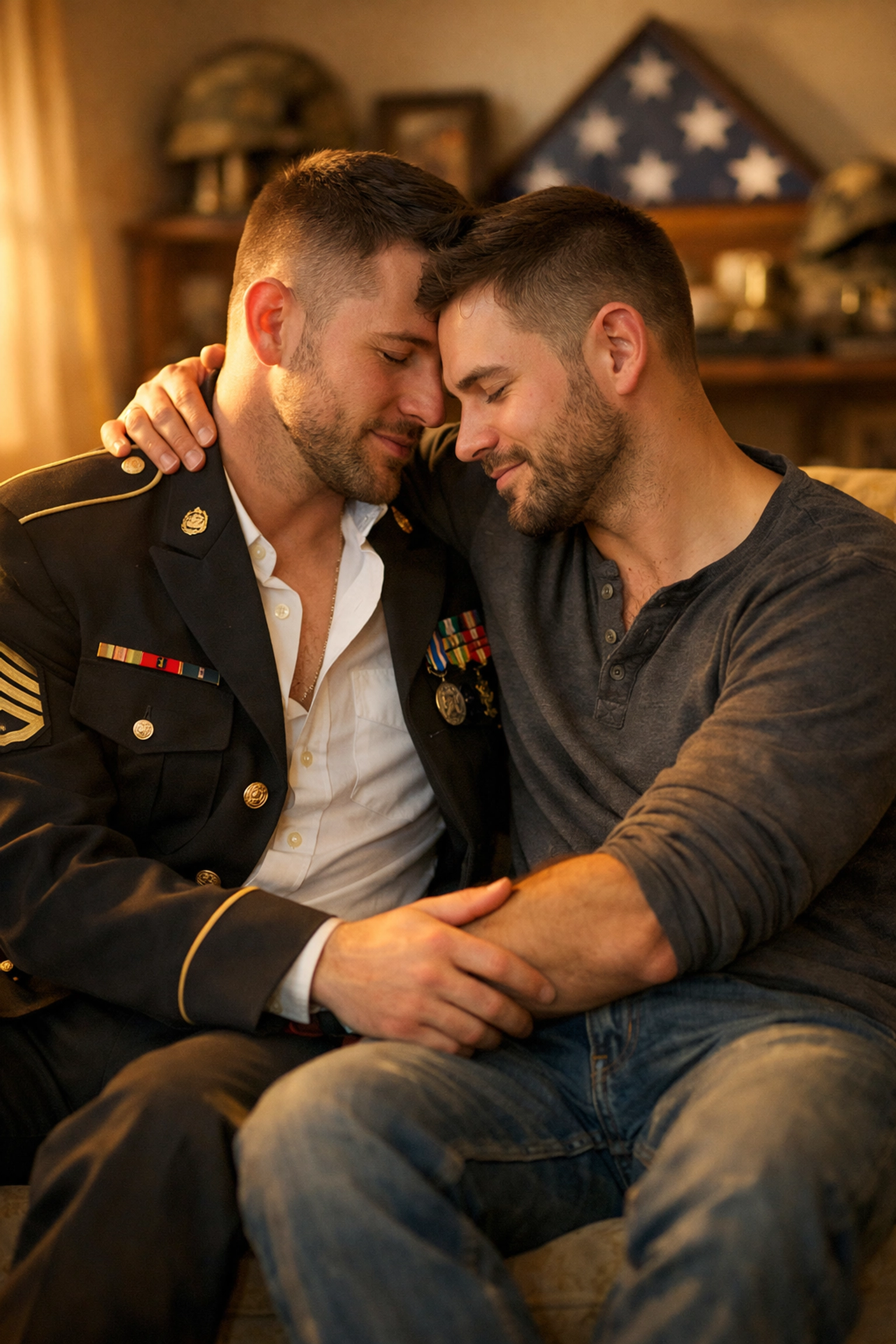
The military provides something intoxicating: purpose, structure, brotherhood. You know your role, your mission, your place in the hierarchy. Your day is planned. Your squad has your back. There's clarity in the chaos.
Then you separate from service, and suddenly… nothing. No reveille. No formation. No mission briefing. The average veteran takes about seven months to feel adapted to civilian life, but that timeline can stretch much longer when you're also figuring out who you are outside the closet.
"I spent eight years being exactly who the Army needed me to be," one gay veteran shared in an online forum. "When I got out, I realized I had no idea who I actually was. I'd been performing two roles simultaneously: straight soldier by day, closeted gay man in stolen moments. Remove the soldier part, and I was left with… what?"
This identity crisis affects one in ten veterans who struggle with the lack of civilian structure, with post-9/11 veterans experiencing it at even higher rates. Add the complexity of exploring your sexuality or gender identity for the first time in your thirties or forties, and the ground feels especially unsteady.
The Employment Battlefield
Here's a harsh truth: 33% of veterans cite employment as their biggest post-service challenge. It takes an average of four months to find civilian work, and one in five veterans have never even created a resume.
For LGBTQ+ veterans, there are additional landmines. Do you disclose your identity in interviews? Does your military service "out" you to potential employers who wonder why you separated? How do you explain that you thrived under DADT but left when repeal allowed you to finally live authentically?
The skills are there: 50% of veterans excel at performing under pressure, 41% at teamwork, 39% at problem-solving. But translating "led a platoon of 40 soldiers through hostile territory" into "managed cross-functional teams in high-stress environments" isn't intuitive. And doing it while also managing your identity disclosure is its own special challenge.
Finding Your People
Here's where it gets better. The queer veteran community is fierce, supportive, and growing.
Organizations like SPART*A (Service Members, Partners, Allies for Respect and Tolerance for All), OutServe-SLDN, and the American Military Partner Association have created spaces where LGBTQ+ veterans can connect, share resources, and support each other through transition. These aren't just networking groups: they're lifelines.
Many queer veterans describe their post-service community as the family they couldn't have while serving. They attend Pride events together, mentor younger LGBTQ+ service members, and create chosen families that understand both the military experience and the queer one.
"I went to my first gay veteran meetup expecting maybe five guys," one Marine Corps veteran recalled. "There were forty of us. We swapped stories, shared job leads, and I met my husband there. Turned out he'd been stationed twenty miles from me overseas, but we could never acknowledge each other. Now we're married with two dogs."
Love After Service
The dating landscape post-military is wild for everyone, but especially for LGBTQ+ veterans. Some are dating for the first time as their authentic selves. Others are re-entering the dating pool after military marriages that couldn't survive their coming out. Many are navigating modern dating apps and hook-up culture while also managing PTSD, physical injuries, or depression.
But there's also something uniquely powerful about finding love as a veteran. You've survived things most people can't imagine. You've learned discipline, commitment, and loyalty. You understand sacrifice. Those aren't just resume bullet points: they're the foundation for deep, meaningful relationships.
Many LGBTQ+ veterans find partners who appreciate their service without fetishizing it, who see the person beyond the uniform fantasy, and who support them through the ongoing challenges of transition. Some find love within the veteran community, where shared experience creates instant understanding. Others find civilian partners who help them build entirely new lives.
The Seven-Month Journey (and Beyond)
Research suggests it takes about seven months for veterans to feel adapted to civilian life, but healing isn't linear. Some veterans face substance abuse issues (one in five struggle with this). Others battle with accessing medical care, navigating VA benefits, or managing mental health complications: 66% of veterans with PTSD report difficult readjustment.
For LGBTQ+ veterans, add therapy to process years of hiding, potentially rebuilding relationships with family members who rejected them, and learning to exist in a world where being queer isn't a career-ending secret.
But here's the beautiful part: queer people are experts at resilience. We've been adapting, surviving, and thriving in hostile environments long before we enlisted. Those skills don't disappear when we hang up the uniform. If anything, military service sharpens them.
Building a New Mission
The best veteran transition stories aren't about forgetting military service: they're about integrating it into a fuller, more authentic life. Many LGBTQ+ veterans find new missions: advocacy work, mentoring younger queer service members, writing their stories, or simply living openly and proudly as examples of what's possible.
The uniform was powerful. But the person who wore it? Even more so.
For LGBTQ+ veterans, life after the uniform isn't about losing identity: it's about expanding it. It's about adding "out and proud" to "honor and service." It's about finding love, building community, and creating the life you fought to protect but couldn't fully live while serving.
That's not a fantasy. That's the reality, and it's far more compelling than any romance novel could capture (though we'll keep trying at readwithpride.com).
To every LGBTQ+ veteran reading this: Thank you for your service. Your journey didn't end when you left the military: it evolved. And your story matters.
Connect with Read with Pride:
Facebook | Instagram | X/Twitter | www.readwithpride.com
#LGBTQVeterans #MilitaryTransition #QueerVeterans #ReadWithPride #MMRomance #GayVeterans #LGBTQFiction #VeteransDay #QueerCommunity #GayRomanceBooks #MilitaryRomance #LGBTQStories #AuthenticVoices #GayLoveStories #MMRomanceBooks #VeteranSupport #LGBTQReading #QueerLit #GayBooks #PrideReading

1 thought on “The Veteran's Journey: Life After the Uniform”
-
Pingback: Collective Beauty: Group Nudity in Queer Artistic Expression - readwithpride.com The best LGBTQ+ e-books
Leave a Reply
You must be logged in to post a comment.