

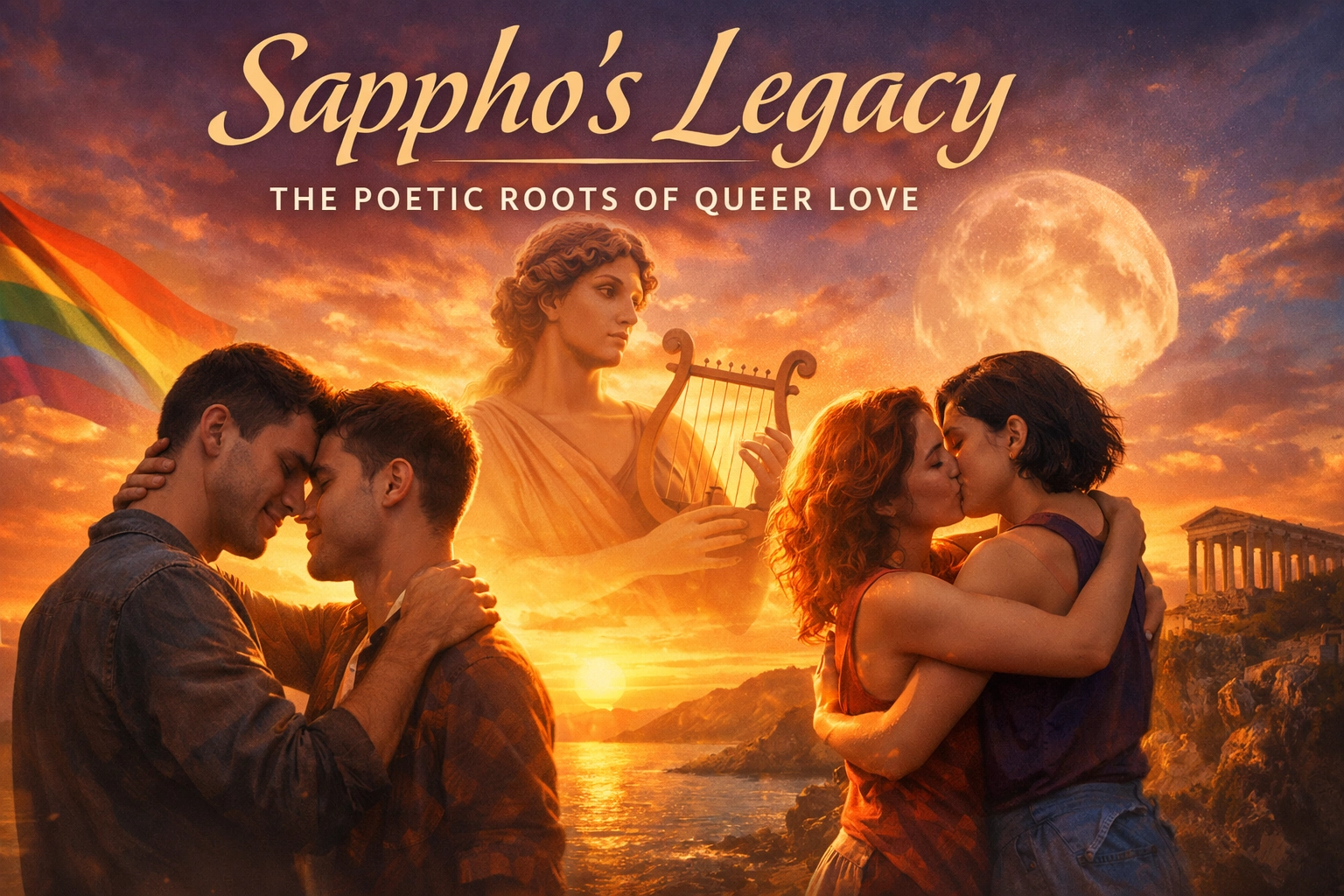
Let's talk about the OG queer icon, the poet who was writing sapphic love poems before "sapphic" was even a word. We're diving into the life and legacy of Sappho, the ancient Greek poet whose verses about desire, passion, and longing between women literally changed the course of LGBTQ+ literature forever.
Born around 630-620 BCE on the island of Lesbos (yes, that Lesbos), Sappho wasn't just any poet: she was a certified legend. Plato himself called her "the tenth Muse," which in ancient Greek terms is like being inducted into the literary hall of fame. Her face appeared on coins and pottery, putting her in the same cultural stratosphere as Homer. Not bad for a woman writing about loving other women in a time when that kind of visibility could have gotten her canceled in ways far more permanent than Twitter.
The Tenth Muse Who Wrote From the Heart
What made Sappho revolutionary wasn't just what she wrote about: it was how she wrote. Before Sappho, most Greek poets positioned themselves as vessels for divine inspiration, basically saying "the gods made me write this, don't @ me." Sappho flipped the script entirely. She was among the first to adopt the "lyric 'I'": writing from her own specific, personal viewpoint. She owned her feelings, her desires, her jealousy, her heartbreak. She wasn't channeling anyone else's experience; she was documenting her own.
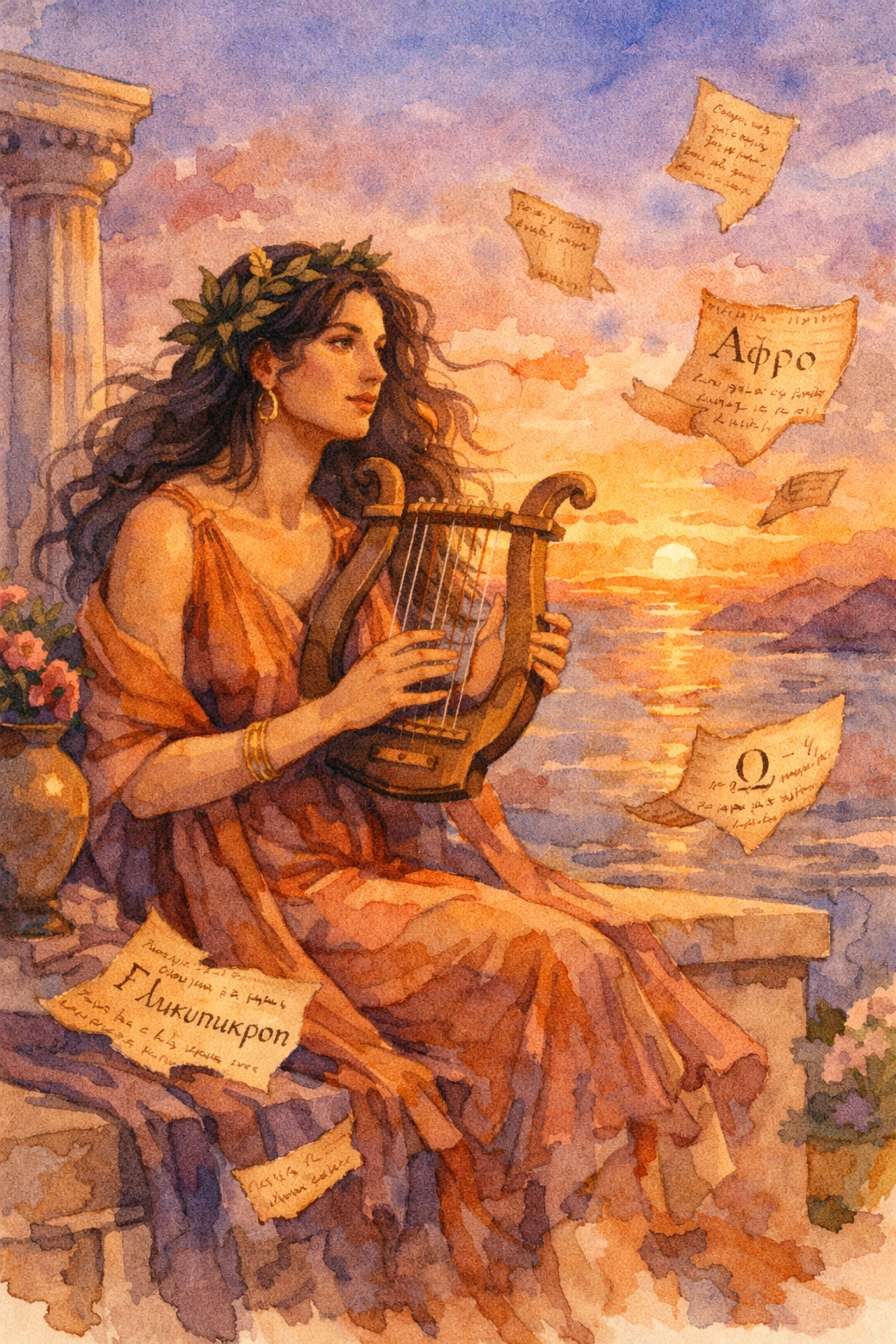
Her poetry was concise, direct, and breathtakingly visual. She could capture the physical sensations of desire: the racing heart, the trembling limbs, the heat that rises through your body when your crush walks into the room: with a precision that still resonates today. Reading Sappho, you don't just understand her emotions intellectually; you feel them in your bones.
She established a school devoted to the cult of Aphrodite and Eros, serving as both teacher and poet. Think of it as an ancient Greek version of a progressive arts academy where young women came to study poetry, music, and probably had a lot of feelings about each other. It was a space where female relationships: romantic, intellectual, emotional: were centered and celebrated.
When the World Tried to Erase Her
Here's where the story gets frustrating. Sappho originally composed around nine books of poetry, totaling approximately twelve thousand lines. Today, we have about seven hundred lines. That's roughly 6% of her complete works. Let that sink in for a moment: 94% of the poetry that made her one of the most celebrated writers of the ancient world is just… gone.
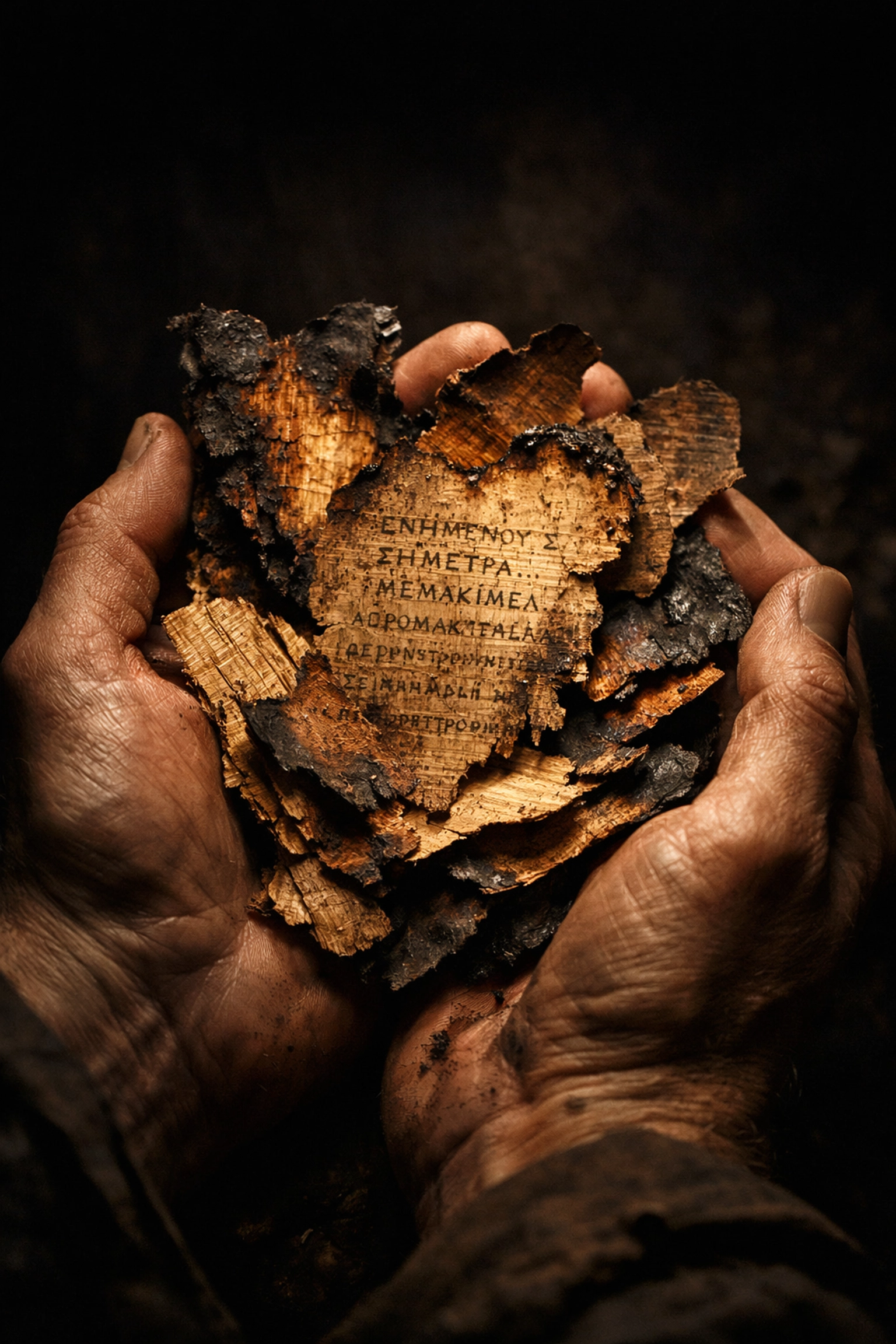
How did this happen? The losses began early. Sappho wrote in the Aeolic Greek dialect, which made her work difficult for Latin-trained medieval scholars to translate and preserve. But the deliberate destruction is harder to stomach. According to historical accounts, Pope Gregory VII ordered her books burned around 1073 CE. The church saw her work: especially the parts about women loving women: as dangerous. And they weren't entirely wrong. Sappho's poetry was dangerous to their worldview. It proved that queer love wasn't modern, wasn't aberrant, wasn't new. It was ancient, beautiful, and worthy of the highest art.
Despite centuries of attempted erasure, Sappho refused to disappear. The fragments that survived: some discovered on scraps of papyrus used as mummy wrapping or stuffing for ancient garbage dumps: were enough to cement her legacy. Even in pieces, her voice rang clear.
How Sappho Became Synonymous With Sapphic Love
The most profound aspect of Sappho's legacy is literally embedded in our language. The words "sapphic" and "lesbian" both derive directly from her. "Sapphic" comes from her name, while "lesbian" references her home island of Lesbos. Think about that: this poet's impact was so monumental that her very identity became the terminology for female same-sex love itself.
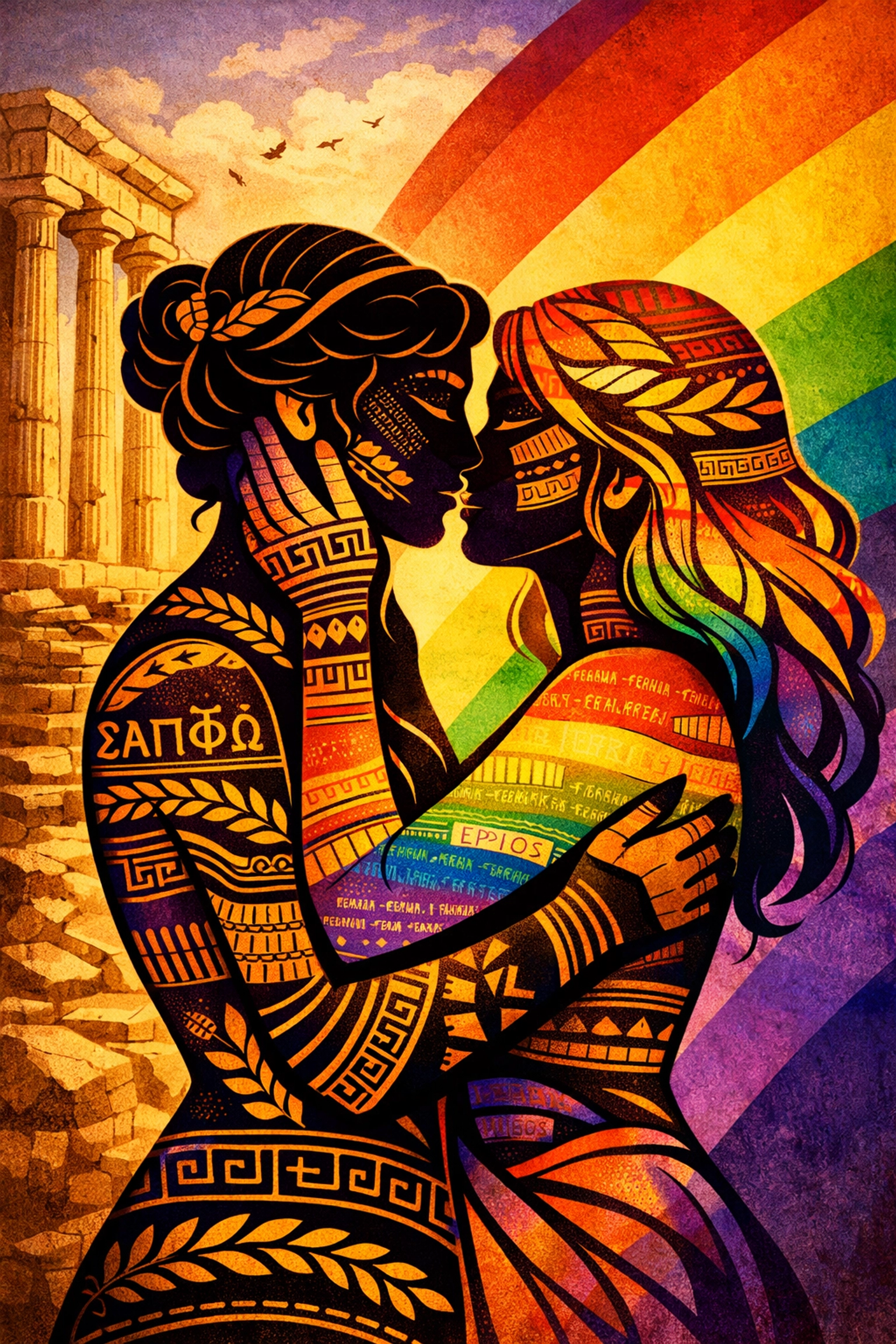
This wasn't some academic decision made in a committee room. It happened organically, over centuries, because Sappho's poetry so perfectly expressed something that needed expressing. She gave voice to experiences that existed but had no public language. She made queer female desire visible, valid, and artistically magnificent.
For modern LGBTQ+ readers and writers, Sappho represents something essential: proof of continuity. When anti-LGBTQ+ voices claim that queer identity is somehow "new" or "trendy" or a product of modern culture, we can point to Sappho and say, "Actually, let me tell you about this poet from 2,600 years ago who was so gay that we literally named being gay after her."
Why Sappho Still Matters in 2026
Reading Sappho today: or even reading about Sappho: is an act of queer reclamation. It's connecting with literary roots that run deeper than almost any other Western tradition. While we celebrate contemporary gay literature and the explosion of MM romance books, queer fiction, and LGBTQ+ ebooks available now at Read with Pride, we're part of a continuum that stretches back millennia.
Sappho teaches us several crucial lessons. First, that queer love deserves beautiful language and high art. Second, that personal truth-telling is revolutionary. Third, that even when systems try to erase us, fragments survive: and those fragments can be enough to rebuild entire worlds of meaning.
Her influence ripples through every piece of gay romance, every sapphic novel, every poem that dares to name desire honestly. When contemporary queer authors write about longing, when they describe the particular ache of wanting someone you're not supposed to want, when they center female relationships or celebrate passion between women, they're walking in footsteps Sappho carved out centuries ago.
Claiming Our Literary Heritage
The story of Sappho isn't just ancient history: it's a roadmap for how LGBTQ+ literature survives, thrives, and ultimately wins. They tried to burn her books. They succeeded in destroying most of them. And still, here we are in 2026, talking about her, reading her fragments, finding ourselves in her words.
That's the power of authentic queer storytelling. That's why platforms like Read with Pride matter: because every generation needs access to stories that reflect their truths, whether those stories were written yesterday or 2,600 years ago.
So here's to Sappho, the tenth Muse, the original sapphic poet, the woman whose fragments of verse proved more durable than empires. She wrote about love between women with such beauty and honesty that her name became synonymous with that love itself. She gave us language, legitimacy, and a literary tradition to call home.
And she reminds us that when we write our own stories: when we create gay novels, MM romance, lesbian fiction, or any form of queer literature: we're not just entertaining ourselves. We're leaving fragments for future generations. We're ensuring that our voices, our loves, our lives can't be fully erased, no matter who tries.
That's the kind of legacy worth celebrating. 🏳️🌈
Explore more LGBTQ+ literary history and discover incredible queer stories at readwithpride.com
Follow us for more queer book love:
📘 Facebook
🐦 Twitter/X
📸 Instagram
#SapphicLegacy #QueerLiterature #LGBTQBooks #ReadWithPride #GayLiterature #LesbianPoetry #AncientQueerHistory #SapphicPoetry #QueerFiction #LGBTQReading #GayBooks #QueerAuthors #LiteraryPride #SapphicReads #QueerBookClub #LGBTQHistory #BookPride #ReadQueer #GayRomanceBooks #MMRomance #QueerReading2026

Leave a Reply
You must be logged in to post a comment.