

readwithpride.com
Let’s be real for a second: as much as we love devouring a spicy MM romance or a heart-wrenching lesbian romance from the comfort of our couches, there is a specific kind of magic that only happens when we step out and meet our people. We’re talking about "found family": that classic queer fiction trope that we all crave. But in 2026, finding that community shouldn't feel like a 100,000-word slow burn where the protagonists don’t even hold hands until chapter thirty-eight.
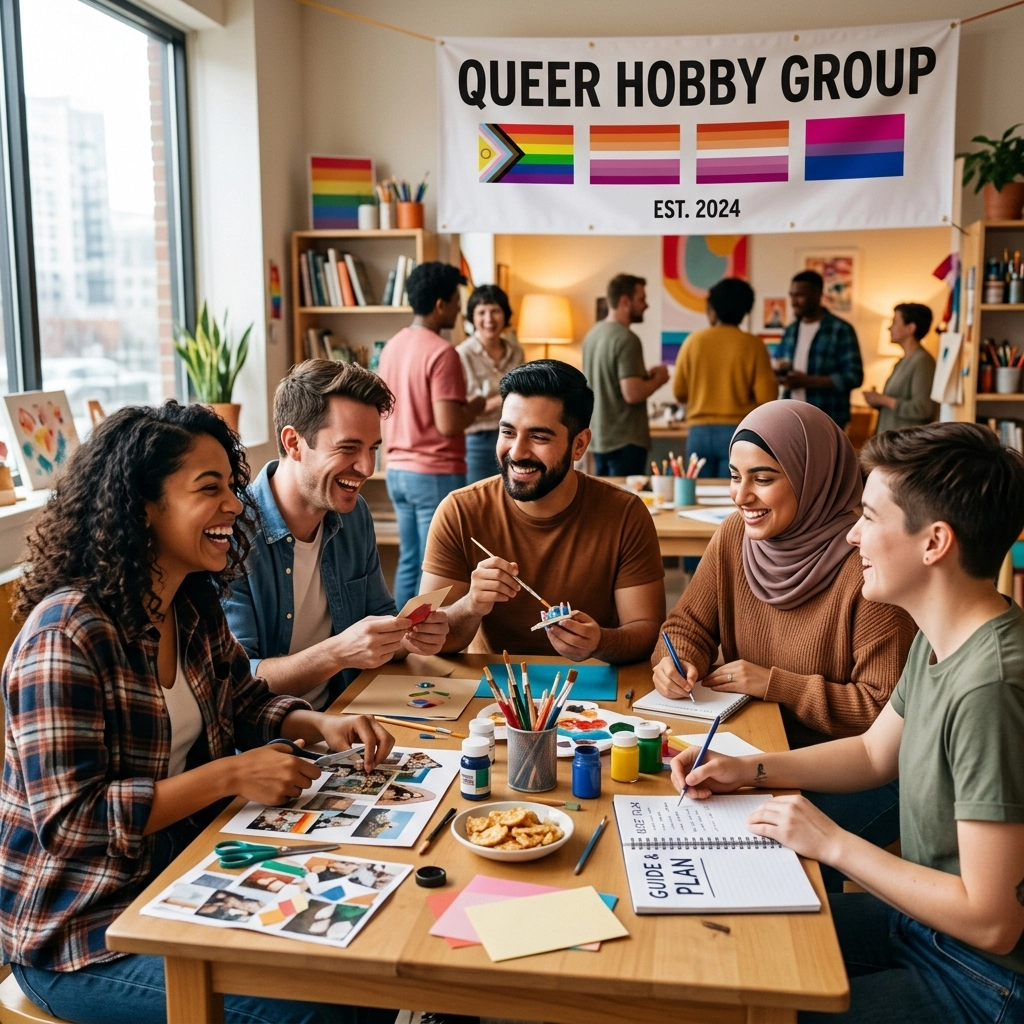
Starting a queer hobby group is the ultimate act of grassroots organizing and, quite frankly, an act of queer joy. Whether you’re into knitting, competitive axe throwing, or analyzing the latest 2026 gay books, building a space that is authentically yours is transformative.
Ready to be the main character of your own community-building arc? Here are five steps to starting your own queer hobby group and mastering the art of the "hangout."
Step 1: Define Your "Subgenre" (The Vibe Check)
Every great gay love story starts with a premise. Before you invite the masses, you need to decide what exactly this group is. Are we talking about a "Bi+ Board Game Night" or a "Trans & Non-Binary Hiking Collective"?
Being specific isn't about being exclusionary; it’s about signaling. When you define your niche: say, a gay book club focused on MM fantasy and gay thriller novels: you help the right people find you.
Ask yourself:
- What’s the hobby? (Be specific! "Queer Crafts" is good; "Queer Crochet & Chaos" is better.)
- Who is it for? Is it for the whole alphabet soup, or a specific subset?
- What are the goals? Are we here to master a skill, or is the hobby just an excuse for gay contemporary romance levels of socializing?
Write down a "Mission Statement" that’s as punchy as a blurb on a gay romance novel. Something like: "We’re a low-pressure space for LGBTQ+ folks to enjoy board games without the 'bro' culture. Pronouns respected, snacks required."

Step 2: Set the Scene (Logistics and "Forced Proximity")
In the world of MM romance tropes, "forced proximity" is a fan favorite. In real life, we just call that "finding a venue." You need a place where people can actually gather without feeling awkward.
If you’re starting an in-person group, look for:
- LGBTQ+ Centers: They often have rooms you can rent or even use for free if the group is open to the public.
- Local Libraries: The unsung heroes of community building. Plus, you’re surrounded by queer fiction: what’s not to love?
- Queer-Friendly Cafes: Great for casual meetups, but keep an eye on noise levels and the "purchase expectation" (not everyone has $7 for a latte).
If you’re going digital (perfect for those of us who prefer LGBTQ+ ebooks and Discord chats), pick a platform that’s easy to navigate. A Discord server or a private Facebook group can work wonders for coordinating meetups and sharing gay book recommendations.
Pro-tip: Don't do this alone. Find a co-conspirator. Every hero needs a sidekick (or a love interest). Having a co-organizer prevents burnout and ensures that if you get sick or just need a night off to read the latest heartfelt gay fiction, the group still happens.
Step 3: Design Your Ground Rules (The "Not Here for the Drama" Clause)
We’ve all seen it in MM novels: the unnecessary misunderstanding that could have been solved with one conversation. In community building, we avoid that by setting clear expectations from Day One.
Authenticity is our brand here at Readwithpride.com, and that means creating spaces where people feel safe being their true selves. Your ground rules should cover:
- Respect for Identities: Names and pronouns are non-negotiable.
- Intersectionality: Be mindful of how race, disability, and class impact how people move through the world.
- Consent: This isn't just about dating; it's about physical space and sharing personal info.
- No Gatekeeping: Whether someone has read every gay classic ever written or just discovered their first MM romance book, they belong.
Post these rules everywhere. If you have a store listing or a social media page, make the rules visible. It sets the tone and acts as a shield for your community.

Step 4: Spreading the Word (Marketing Your "Gay Love Story")
Now that you have a plan, you need people. This is where you put on your "Publisher" hat. How do you get your group in front of the people who need it most?
- Social Media: Use those hashtags! #QueerHobbies #GayBookClub #LGBTQCommunity. Tag us on Instagram or share your flyers in local queer Facebook groups.
- Flyers: Don’t underestimate the power of a cute physical flyer in a bookstore or a community center.
- The Read with Pride Community: Check out our blog for more inspiration or ask questions in our community categories.
When writing your invite, keep it witty and engaging. Use your keywords. If you’re starting a book group, mention that you’ll be diving into top LGBTQ+ books and steamy MM romance. People want to know what they’re signing up for!

Step 5: Sustaining the Spark (The Happily Ever After)
The first meeting is a rush, but the real work of community building is the "Happily Ever After": keeping the group going month after month.
To master this:
- Be Consistent: Whether it’s once a week or once a month, stick to the schedule. Consistency builds trust.
- Share the Love: Let other members take the lead sometimes. Maybe someone else wants to pick the gay romance series for next month, or someone else wants to host the "forced proximity" craft night at their place.
- Check In: Every few months, ask the group: "Is this still working? Do we want more gay historical romance and less gay adventure romance?" (The answer is usually 'more of both,' but it’s good to ask).
Remember, the goal is to create a space that celebrates queer joy. Life is heavy enough; your hobby group should be the place where we get to be light, creative, and unashamedly ourselves.

Why This Matters in 2026
We live in a world where digital connection is everywhere, but true, hands-on community can sometimes feel like a rare find. By starting a queer hobby group, you’re doing more than just knitting or gaming; you’re building a sanctuary.
At Readwithpride.com, we believe in the power of queer stories: both the ones written in LGBTQ+ fiction and the ones we write ourselves every day. Whether you’re a writer looking to join our vendor onboarding or a reader looking for your next favorite MM contemporary escape, remember that your voice and your presence matter.
So, go forth! Start that group. Build that community. And if you need some reading material to bring to your first meeting, you know where to find the best MM romance of 2026.
Stay authentic, stay proud, and keep reading.
#QueerJoy #CommunityBuilding #ReadWithPride #LGBTQ2026 #MMRomance #GayBookClub #FoundFamily #QueerHobbies

Leave a Reply
You must be logged in to post a comment.