

Let's talk about a book that changed the game. When Bernardine Evaristo won the 2019 Booker Prize for Girl, Woman, Other, she didn't just make history as the first Black woman to receive this prestigious honor: she gave us a literary tapestry that's as complex, messy, and beautiful as real life. And honestly? It's the kind of queer fiction that reminds us why representation matters so damn much.
What Makes This Book Different
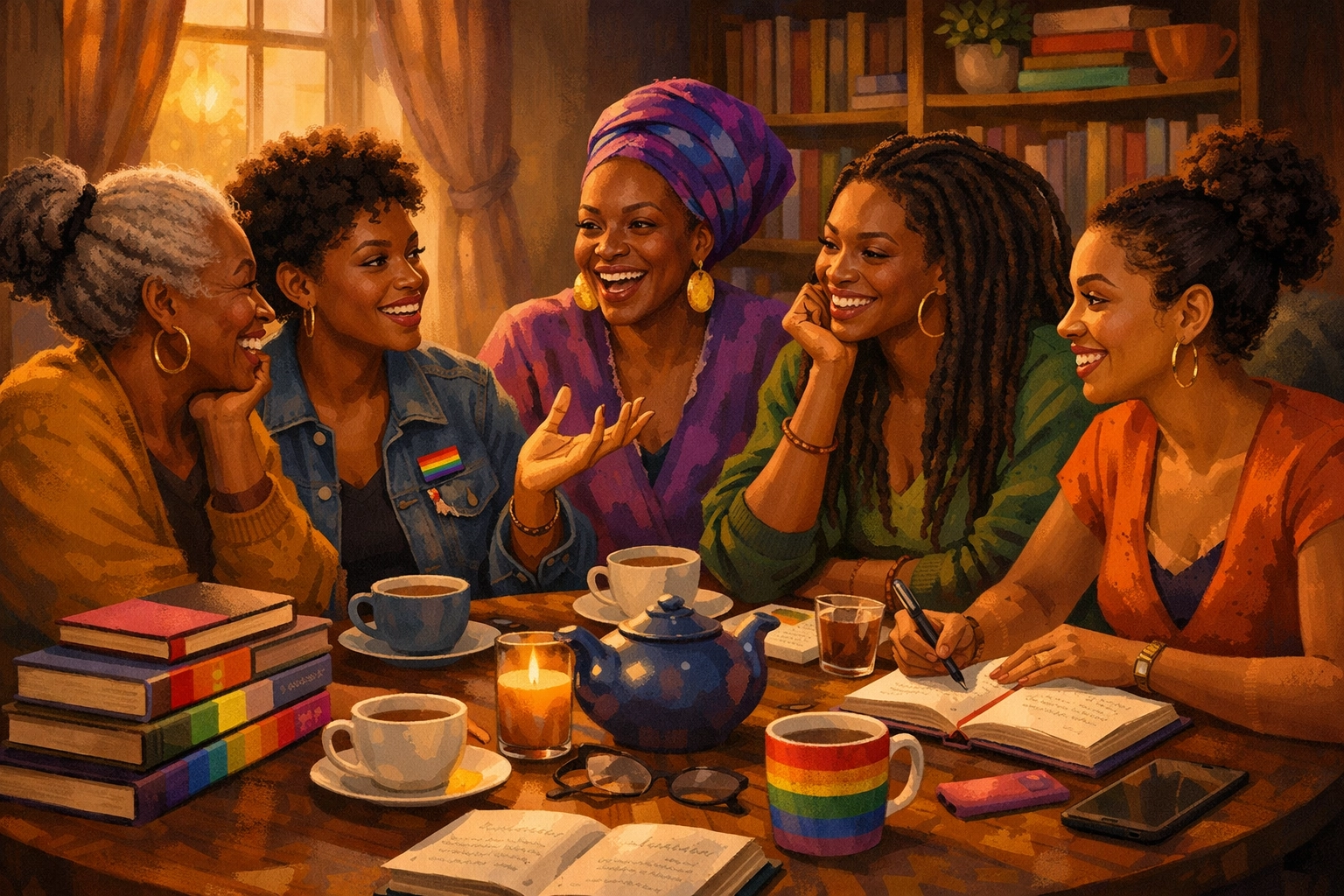
If you're tired of books where queer characters exist solely to teach straight people lessons or serve as tragic plot devices, Girl, Woman, Other is your antidote. This isn't a single-narrative gay love story or a tidy MM romance (though we absolutely love those at Read with Pride). Instead, Evaristo weaves together the lives of twelve Black British women and non-binary people whose stories intersect, collide, and illuminate each other in unexpected ways.
The genius here? These characters aren't defined by one aspect of their identity. They're not just "the lesbian character" or "the non-binary character." They're fully realized humans navigating the world with all its complications: dealing with racism, sexism, homophobia, classism, and the weight of colonial history, all while trying to figure out who they are and what they want.
The Characters Who'll Stay With You
Among the twelve voices, you've got Amma: a Black lesbian playwright who's spent decades creating radical theatre that nobody wants to see. There's Shirley, a jaded teacher who's sacrificed her own dreams to tick society's boxes. Carole's the high-achieving investment banker who's internalized more respectability politics than she'd care to admit. And Bummi? She's a cleaner whose journey from Nigeria to Britain tells a different story about survival and dignity.
What Evaristo does so brilliantly is show how these women's experiences diverge wildly based on their class, education, age, and when they came out (if they came out at all). Amma's experience as an out Black lesbian in London's alternative theatre scene is worlds apart from Carole's carefully constructed professional persona. Neither experience is more "valid" than the other: they're just different, shaped by different pressures and possibilities.
This intersectional approach isn't just politically correct box-ticking. It's the whole point. The novel asks: How do we become who we are? And the answer is always multifaceted, always shaped by forces bigger than ourselves.
Breaking All the Rules (And Making It Work)
Here's where Evaristo gets experimental in the best way. The prose doesn't follow traditional sentence structure. Instead, she uses what critics have called "long flights": streams of consciousness that flow like poetry, breaking conventional grammar rules to mirror how thoughts actually move through our minds.
At first, you might find it jarring. Where are the periods? Why does this read like verse? But stick with it, because this stylistic choice does something profound: it breaks down the rigid structures that have traditionally kept certain voices out of "serious" literature. The form itself is a rebellion.

Why This Matters for LGBTQ+ Literature
When we talk about gay literature and queer fiction, we often focus on stories that center romance or coming out narratives. And look, those stories are vital: we need them, we love them, and we'll keep celebrating them. But Girl, Woman, Other expands what queer storytelling can be.
This is LGBTQ+ fiction that refuses to be just about queerness. It's about queerness AND Blackness AND womanhood AND class AND immigration AND colonialism AND aging AND chosen family AND… you get the idea. It's the kind of intersectional storytelling that reflects how queer people actually live: not in a vacuum, but at the crossroads of multiple identities and experiences.
For queer readers, especially queer people of color, seeing characters whose sexuality is just one thread in a rich tapestry of identity? That's revolutionary. It's saying: your story doesn't have to be a tragedy or a coming out narrative to matter. Your full, complicated life: with all its intersections: deserves to be literature.
The Colonial Elephant in the Room
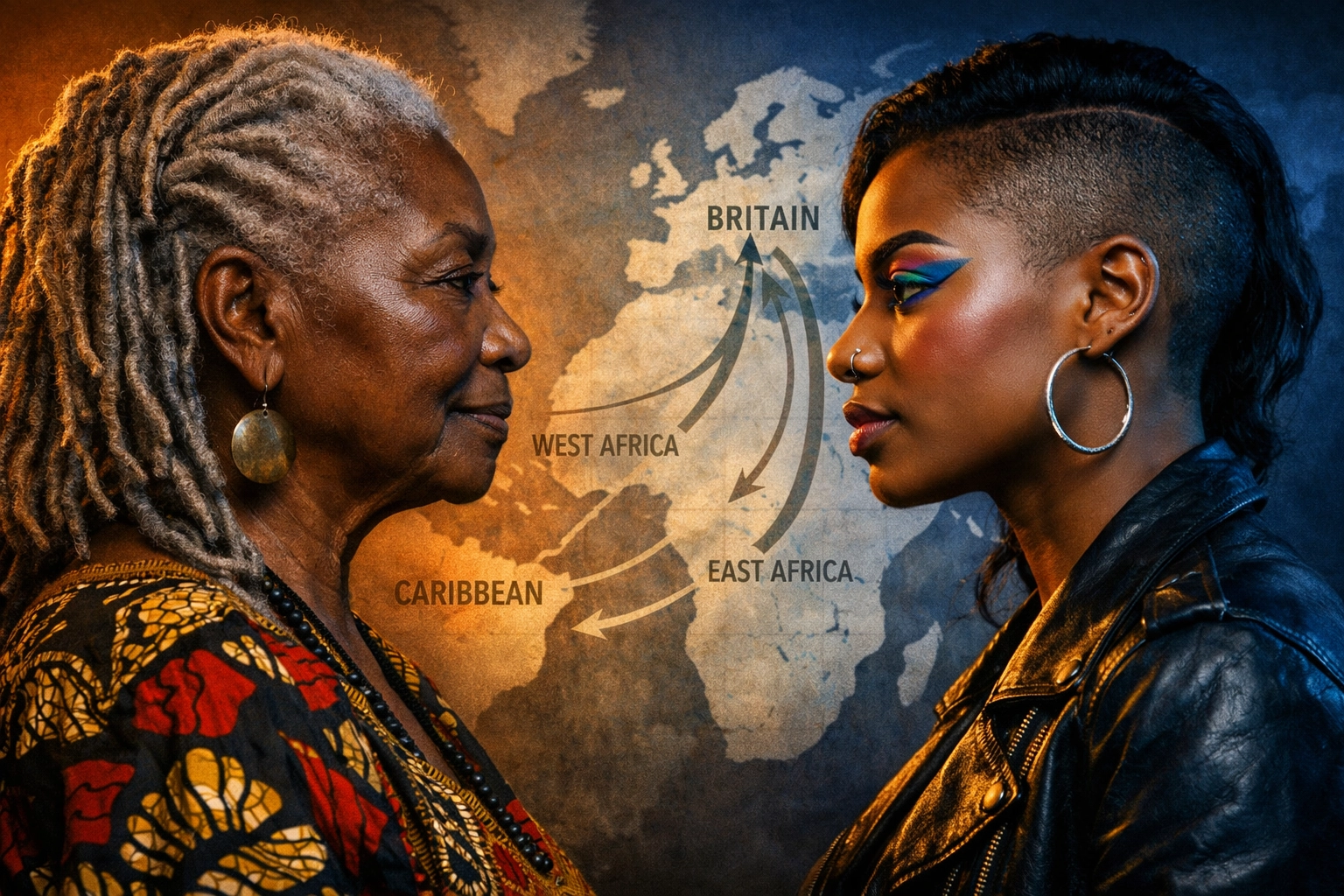
Evaristo doesn't let Britain off the hook. Throughout the novel, she contextualizes contemporary British identity within the country's brutal colonial history in Africa and the Caribbean. The characters' lives: where they live, how they're treated, what opportunities they have access to: are all shaped by this history.
This isn't a history lesson tacked on for good measure. It's woven into the DNA of the story, showing how colonialism's legacy determines who gets to move through the world with ease and who doesn't. For queer Black British characters, navigating both racism and homophobia means dealing with systems of oppression that have deep historical roots.
Who Should Read This?
If you're looking for a straightforward MM romance or a steamy gay love story, this might not be your next read (though we've got plenty of recommendations for that over at readwithpride.com). But if you want gay fiction that challenges, expands, and complicates what queer storytelling can be: if you want to see yourself reflected in all your intersecting identities: this book is essential.
It's perfect for:
- Readers who love character-driven literary fiction
- Anyone interested in intersectional feminism
- Queer people of color seeking representation that goes deep
- Book clubs ready for rich, meaningful discussions
- Fans of experimental prose who appreciate formal innovation
- Anyone tired of one-dimensional LGBTQ+ characters
The Legacy It's Building
Winning the Booker Prize put Evaristo and this novel on the map, but the real impact goes beyond awards. Girl, Woman, Other has opened doors for more diverse queer fiction: stories that don't ask permission to be complex, that don't center whiteness, that refuse to be easily categorized.
It's inspired a new generation of writers to tell multifaceted stories about queer lives, to experiment with form, and to insist that LGBTQ+ literature can be both accessible and artistically ambitious. That's the kind of legacy that changes the landscape of gay literature for decades to come.
Final Thoughts
Girl, Woman, Other isn't an easy read, and that's exactly why it's so important. It demands your attention, your empathy, and your willingness to sit with complexity. But if you're ready to engage with one of the most significant works of contemporary queer fiction, you'll find a book that's generous, challenging, and deeply human.
This is the kind of gay book that reminds us why we read: to see ourselves and each other more clearly, to understand how our stories intersect and diverge, and to imagine more expansive futures. It's a masterpiece of intersectional storytelling, and it absolutely deserves its place in any conversation about the best LGBTQ+ books of our time.
Find more groundbreaking queer fiction and LGBTQ+ books at Read with Pride. Follow us on Facebook, Instagram, and X for daily recommendations and queer book love.
#GirlWomanOther #BernardineEvaristo #QueerFiction #LGBTQBooks #GayLiterature #IntersectionalFiction #BlackQueerLit #ReadWithPride #QueerReads #LGBTQReads #BookerPrize #QueerAuthors #GayBooks #LGBTQFiction #DiverseBooks #QueerWomen #LesbianFiction #RepresentationMatters #ReadQueer #PrideReading

Leave a Reply
You must be logged in to post a comment.