

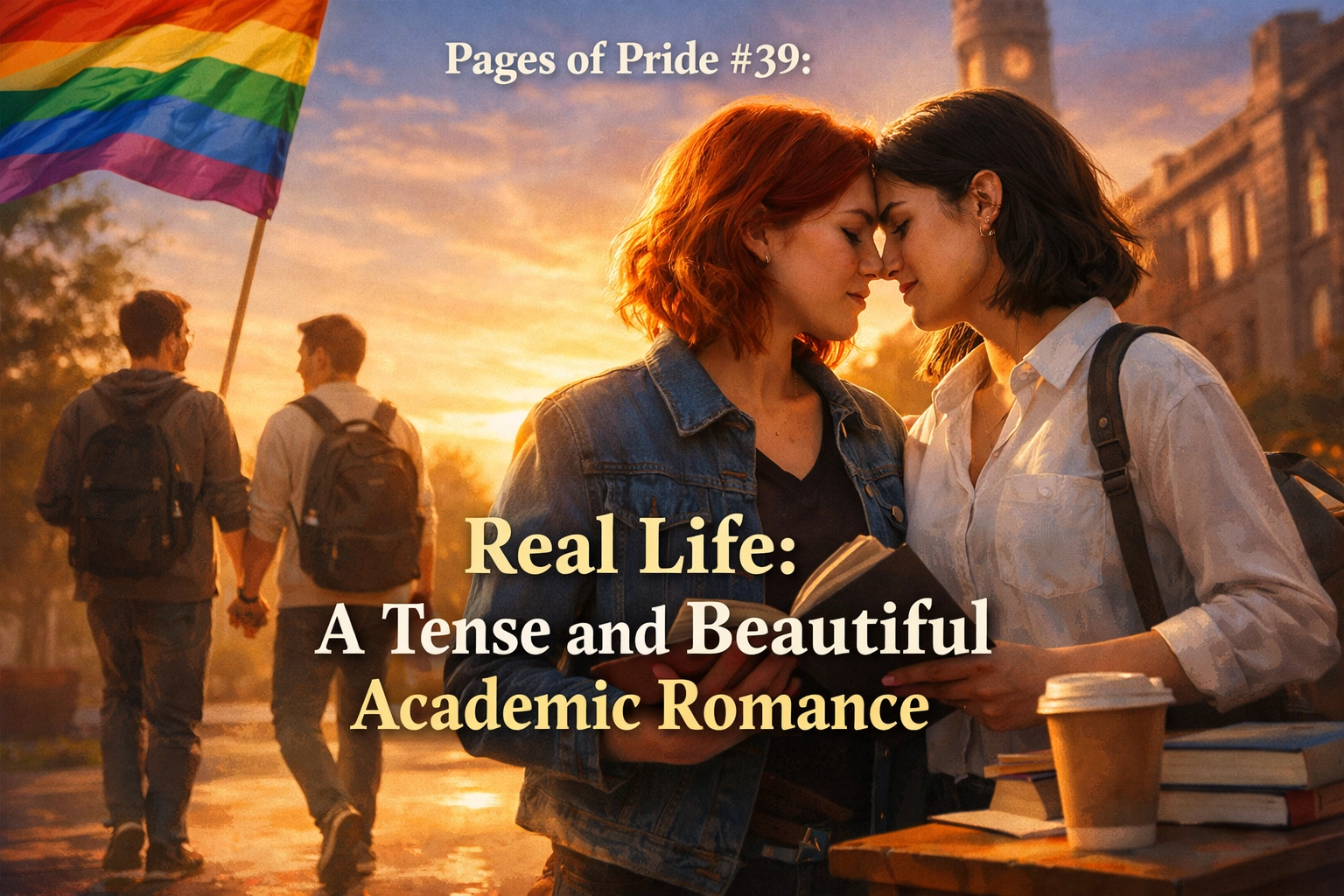
Let's talk about a book that'll make you feel everything: the kind that sits heavy in your chest long after you've turned the final page. Brandon Taylor's Real Life isn't your typical gay romance novel, and honestly? That's exactly why it matters.
This Booker Prize-shortlisted novel takes us into the life of Wallace, a Black queer biochemistry student navigating a predominantly white Midwestern university over one intense weekend. If you're looking for MM romance books that lean into the messy, complicated reality of queer life rather than offering easy answers, this is your next read.
When Academia Meets Desire
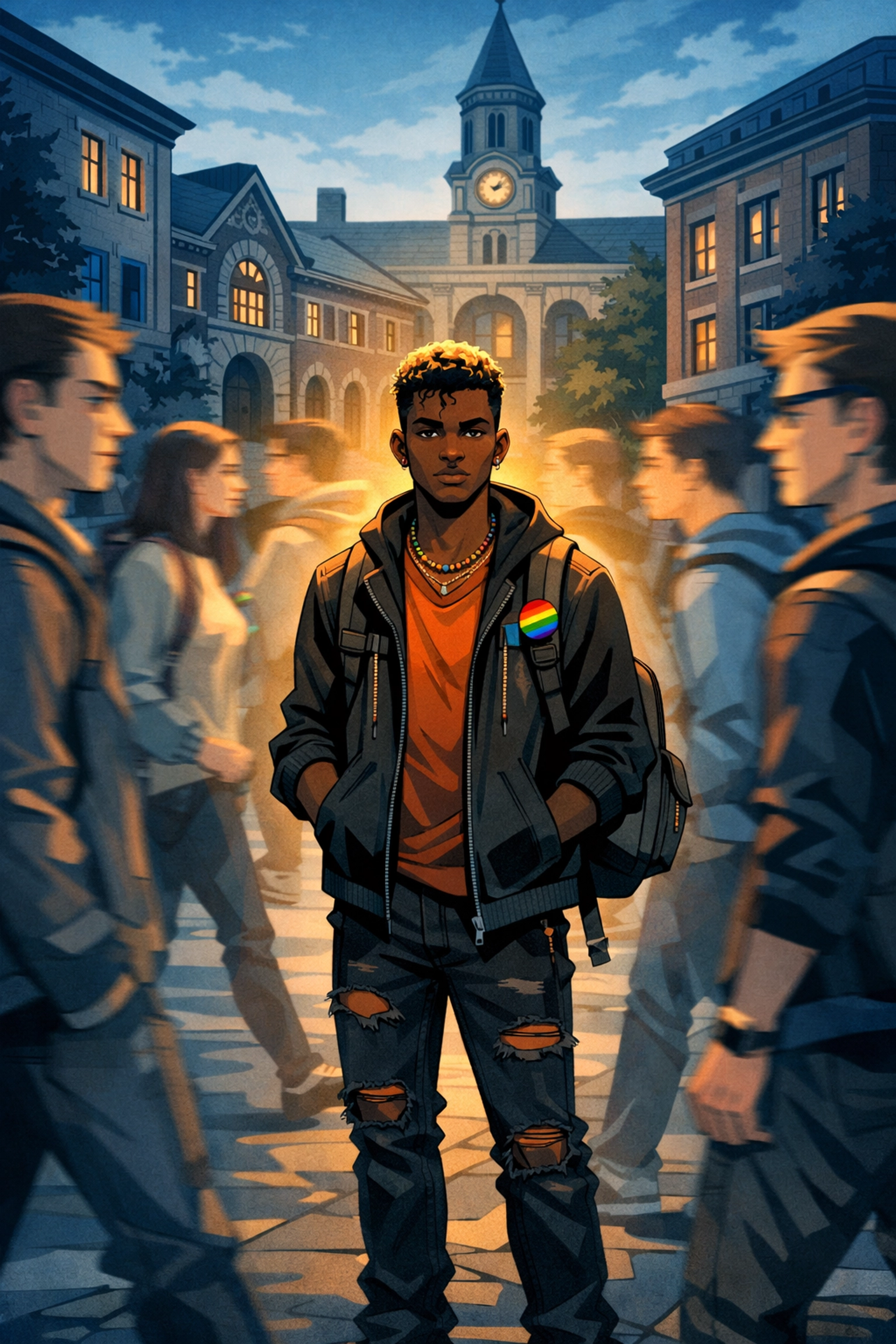
Wallace's world is one of microscopes and lab benches, where he's constantly code-switching and questioning whether he belongs. The academic setting here isn't just backdrop: it's a pressure cooker that intensifies every interaction, every microaggression, every moment of connection.

Enter Miller: a fellow graduate student who's everything Wallace tells himself he shouldn't want. Their relationship unfolds with the kind of raw honesty that makes gay fiction so powerful when it's done right. This isn't instalove or swooning declarations. It's fumbling conversations, physical intensity mixed with emotional distance, and two people trying to figure out what they mean to each other while everything else threatens to fall apart.
The gay workplace romance angle (if we can call academia a workplace: and let's be real, grad school is basically a 24/7 job) hits different here. There's no HR department to worry about, but there are power dynamics, gossip, and the claustrophobia of a small community where everyone knows everyone's business.
The Beauty in the Tension
What makes Real Life extraordinary is how Taylor captures the specific experience of being multiply marginalized in spaces that weren't built for you. Wallace deals with casual racism from his cohort, the weight of being one of the few Black students in his program, and navigating his sexuality in a Midwest that's more complicated than coastal stereotypes suggest.
The prose is precise and unflinching: Taylor doesn't flinch away from uncomfortable moments. When Wallace's experiments fail, when conversations turn microaggressive, when intimacy feels more threatening than comforting, we're right there with him. It's the kind of queer fiction that reminds us representation isn't just about happy endings; it's about seeing our complex realities reflected back at us.

The romantic and sexual elements weave through the narrative like a question Wallace keeps asking himself: Can I let someone in? Do I even want to? Miller becomes both an escape from the academic pressure and another source of confusion. Their scenes together crackle with tension: sometimes erotic, sometimes antagonistic, always deeply human.
Why This Book Matters for Queer Readers
Real Life occupies a unique space in LGBTQ+ fiction. It's literary without being pretentious, romantic without being a traditional romance, and unflinchingly honest about what it costs to exist in spaces that demand you shrink yourself.
For readers who love MM romance but crave stories that push beyond genre conventions, this book delivers. The relationship between Wallace and Miller doesn't follow a predictable arc. There's no grand gesture, no "I've loved you all along" moment. Instead, there's confusion, intensity, tenderness, and the recognition that sometimes connection is messy and incomplete.
The academic setting also offers something we don't see enough of in gay romance books: queer characters whose lives revolve around intellectual pursuits, where the mind is as present as the body. Wallace's scientific work, his relationship with his advisor, his complicated friendships with other grad students: these aren't obstacles to the romance; they're integral to who he is and what he needs.
The Weekend That Changes Everything
Taylor structures the novel around a single weekend, which creates this incredible pressure-cooker effect. Every conversation, every party, every lab session feels heightened. Wallace is already at a breaking point when we meet him: his experiments aren't working, he's questioning whether to continue in the program, and he's exhausted from performing a version of himself that feels increasingly false.
The compressed timeframe means we experience Wallace's emotional journey at the same intensity he does. There's no time to process before the next thing happens, no breathing room between revelations. It's uncomfortable and claustrophobic in the best way: the kind of reading experience that keeps you turning pages even when your heart is racing.

The supporting characters are equally complex. Wallace's friends are sometimes supportive, sometimes thoughtlessly cruel. His white peers say things that reveal their inability to see beyond their own experience. Miller himself is inconsistent, sometimes tender and sometimes distant. Nobody gets to be perfect, and that's the point.
Beyond Traditional Romance Tropes
If you're coming to Real Life expecting traditional MM romance tropes like enemies-to-lovers or forced proximity (though there is plenty of proximity in those tiny grad student apartments), you might be surprised. What Taylor offers instead is something rarer: a clear-eyed look at what happens when desire collides with self-preservation, when connection feels dangerous because you've been hurt before.
This is gay literature that trusts its readers to sit with ambiguity. The ending won't give you easy closure or promises of forever. Instead, it offers something more realistic: a moment of clarity, a decision made, a step forward that might not lead where you expect.
For fans of contemporary LGBTQ+ fiction who appreciate authors like Ocean Vuong, Garth Greenwell, or Hanya Yanagihara, Real Life will feel like coming home. It's part of a new wave of gay fiction that centers queer characters without making their queerness the entire plot, that explores desire and identity with nuance and intelligence.
Your Next Must-Read
Real Life proves that the best queer fiction doesn't need to choose between literary merit and emotional impact. It can be both: lyrical and raw, intellectual and visceral, specific and universal.
Whether you're a grad student who'll recognize every painful detail of academic life, a reader who loves MM romance with depth and complexity, or someone who simply wants to experience a beautifully crafted story about survival and connection, Brandon Taylor's debut novel delivers.
Find more stunning LGBTQ+ books and connect with fellow readers at ReadwithPride.com. Because every page deserves to be read with pride.
Follow us for more queer book recommendations:
📘 Facebook
🐦 X/Twitter
📸 Instagram
#ReadWithPride #MMRomance #GayFiction #LGBTQBooks #QueerLiterature #GayRomanceBooks #AcademicRomance #MMBooks #QueerFiction #GayLoveStories #LGBTQFiction #2026Books #BookerPrize #ContemporaryRomance #GayNovels #QueerReads #MMRomanceBooks #LGBTQReading #GayBookClub #RealLifeNovel

Leave a Reply
You must be logged in to post a comment.