

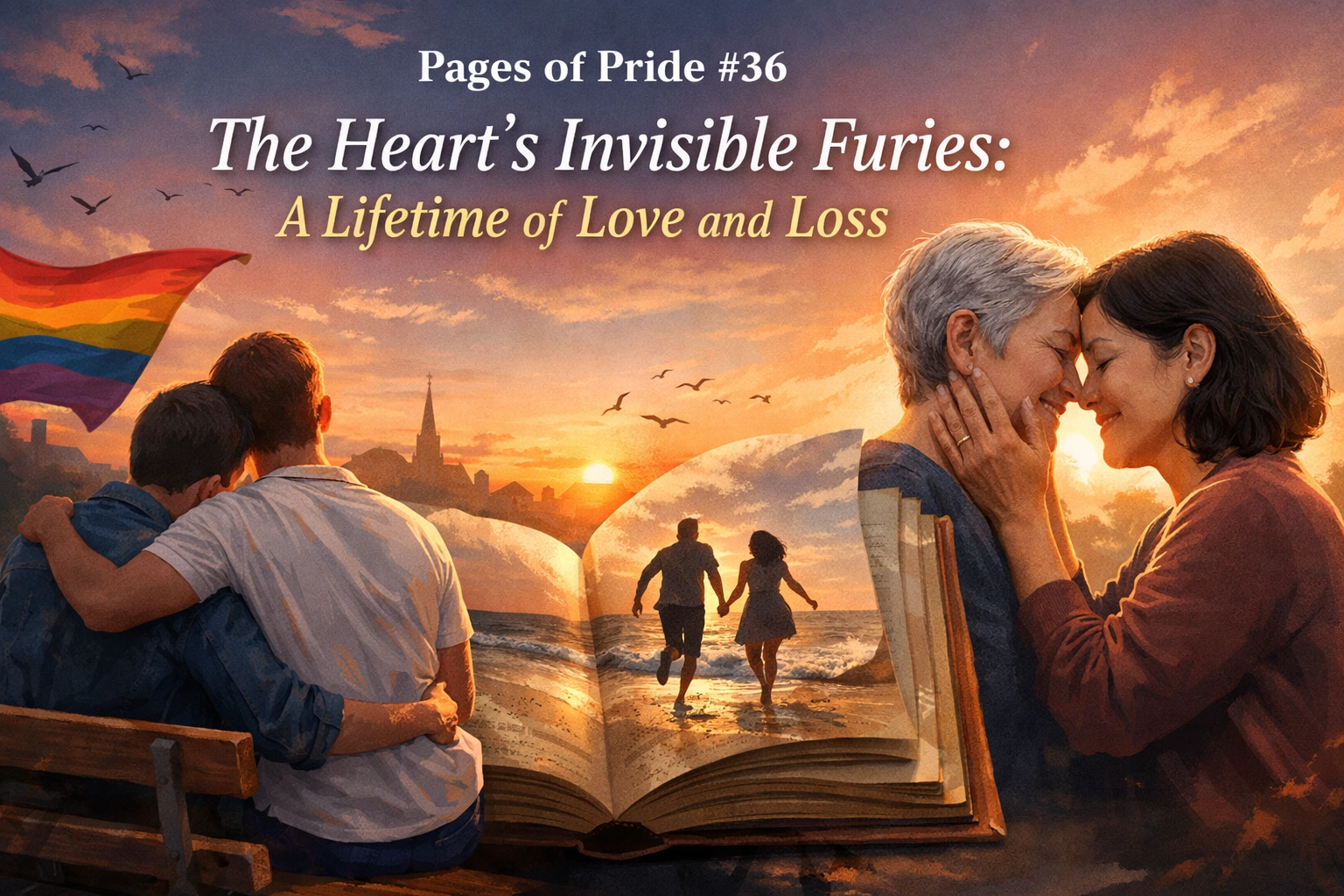
Some books whisper. Others shout. And then there are the ones that reach into your chest, wrap themselves around your heart, and refuse to let go. John Boyne's The Heart's Invisible Furies is that kind of book, the kind that leaves you ugly-crying at 2 AM, wondering how fiction can feel more real than your own life.
Published in 2017, this sweeping Irish saga has earned its place among the most important gay literature of the 21st century. It's not just a story about being gay in Ireland; it's a story about being human, about love that refuses to die, and about a country that took far too long to recognize the dignity of its queer citizens.
A Life Told in Seven-Year Intervals
Meet Cyril Avery, who we're told from the very first page is not a real Avery. Born to a young woman cast out by her family and the Catholic Church for the sin of pregnancy, Cyril's story begins with rejection, a theme that will echo through his life in ways both devastating and ultimately redemptive.
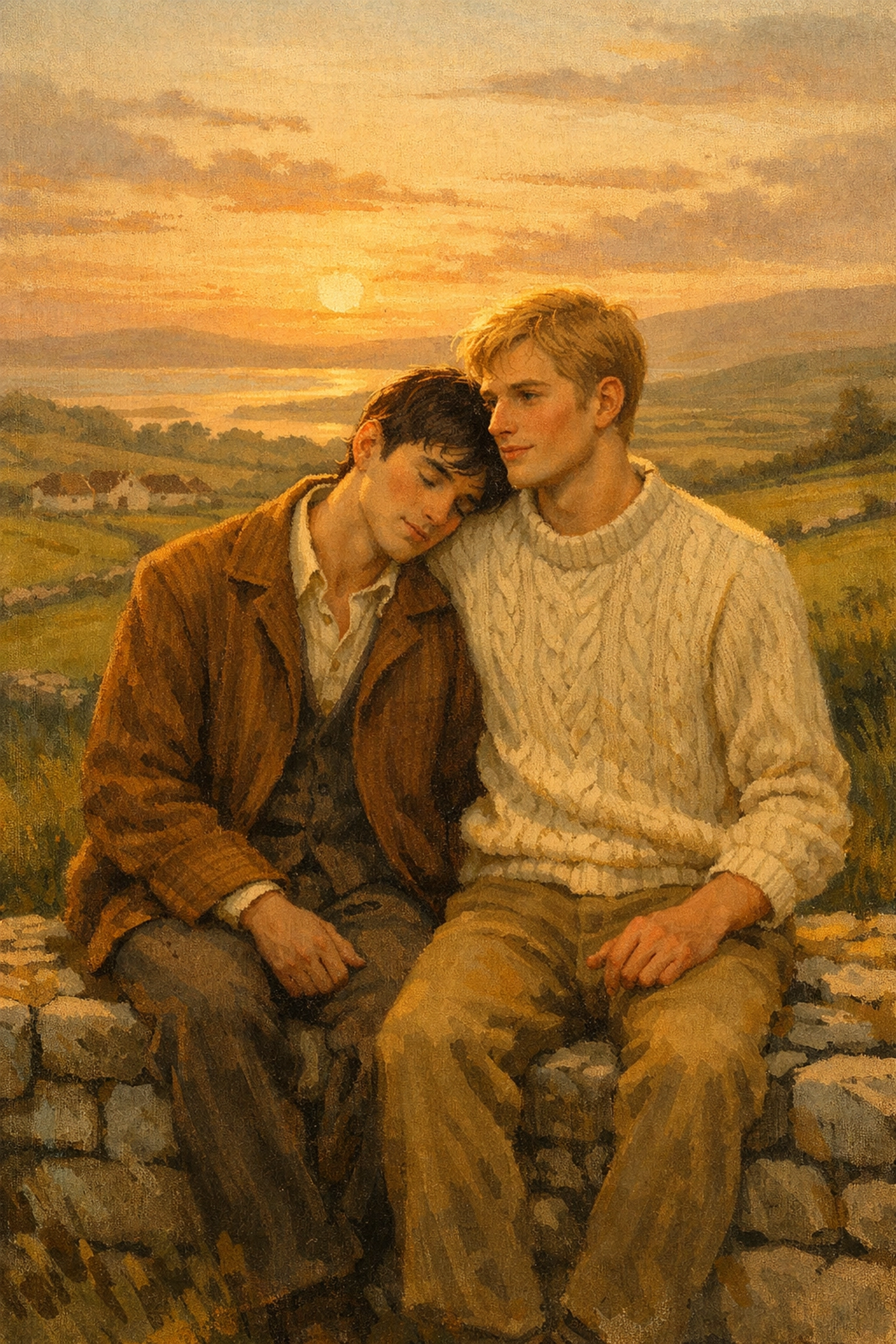
Boyne structures the narrative brilliantly, checking in on Cyril every seven years from 1945 to 2015. We watch him grow from a confused child in adoptive parents' loveless home to a teenager discovering his sexuality in an Ireland where being gay was literally illegal. We see him fall desperately in love with his best friend Julian, navigate the terror of the AIDS crisis, and eventually find his way to something resembling peace.
This isn't your typical MM romance novel, though the love story at its core is one of the most achingly beautiful in modern LGBTQ+ fiction. This is an epic, a lifetime compressed into pages that somehow feel both impossibly vast and intimately personal.
Why This Book Matters for Queer Literature
The Heart's Invisible Furies occupies a unique space in gay fiction. It's a mainstream literary novel that refuses to compromise on its queerness, a historical MM romance that doesn't exist to comfort straight readers, and a searing indictment of institutional homophobia wrapped in a deeply human story.
The book captures what it meant to be gay in a country where the Catholic Church held terrifying power, where being yourself could mean prison, exile, or death. Cyril's Ireland is one where gay men meet in public toilets because there's nowhere safe to love, where the law criminalizes your very existence, where families choose dogma over their own children.
But here's what makes Boyne's work so powerful: it never lets Ireland off the hook, and it never reduces Cyril to a victim. Yes, the homophobia is documented in all its cruelty. Yes, we see the damage it inflicts. But we also see Cyril's resilience, his capacity for joy, his devastating sense of humor, and his absolute refusal to let shame define him.
Irish Queer History: From Criminalization to Celebration
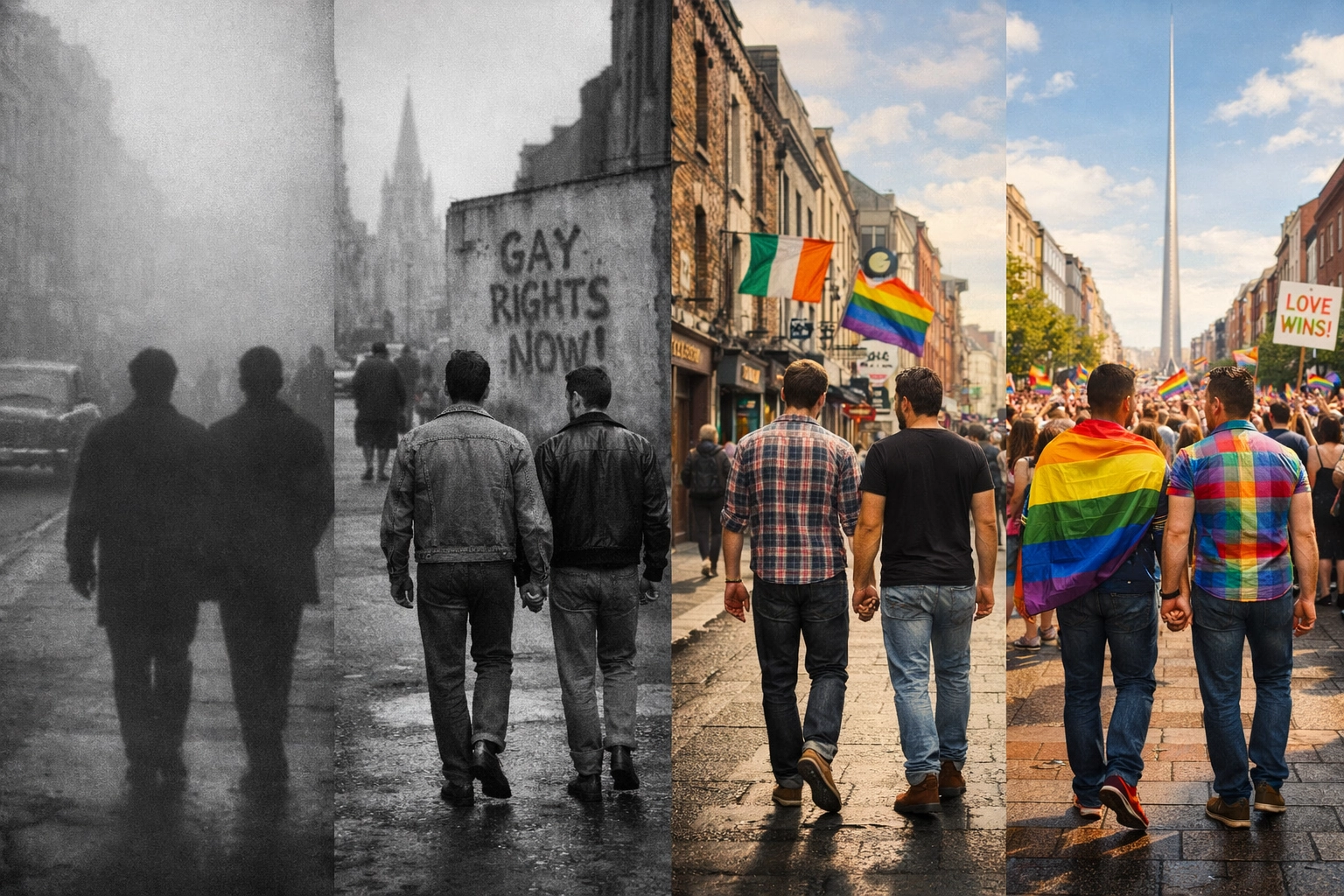
To understand The Heart's Invisible Furies, you need to understand Irish queer history, and it's not pretty. Homosexuality was illegal in Ireland until 1993. Read that again: 1993. While other Western countries were slowly beginning to recognize LGBTQ+ rights, Ireland was still prosecuting men for loving each other.
The novel spans this transformation, from the darkest days of illegality through the gradual, painful progress toward equality. When Cyril is a young man in the 1960s, being gay isn't just stigmatized, it's a crime. The church teaches that he's sick, sinful, an abomination. The law agrees.
Boyne doesn't just tell us this; he shows us. We see Cyril's first love go wrong in devastating ways. We watch him flee to Amsterdam and then New York, searching for places where he can exist without fear. We experience the AIDS crisis through his eyes, losing friend after friend while the world looks away.
And then, in one of the book's most powerful moments, we see Ireland itself begin to change. The 2015 marriage equality referendum, when Ireland became the first country in the world to legalize same-sex marriage by popular vote, isn't just historical backdrop. It's the culmination of everything Cyril and his generation fought for, survived, and demanded.
The Love Story at Its Heart
Let's talk about Julian. If you've read this book, you know. If you haven't, prepare yourself.
Cyril falls in love with Julian when they're teenagers, and that love never really ends. It shapes everything, every relationship Cyril attempts, every decision he makes, every moment of happiness or heartbreak. This is gay romance at its most gutting: unrequited, impossible, and somehow still the most important relationship in Cyril's life.

What makes it work is Boyne's refusal to make it simple. Julian isn't cruel or homophobic, he's just straight. Their friendship is genuine, deep, and complicated by Cyril's feelings in ways that feel painfully real. Anyone who's ever loved someone they couldn't have will recognize themselves in these pages.
But The Heart's Invisible Furies isn't just about longing. Cyril has other relationships, other loves, moments of connection and joy. The book ultimately argues that love takes many forms, that family is what you build, and that a life can be meaningful even when it doesn't follow the script you imagined.
More Than Just Historical Fiction
Yes, this is a historical MM romance in many ways: a love story set against decades of Irish history. But calling it just that undersells what Boyne achieves. This is a book about identity, belonging, faith, family, forgiveness, and the ways we construct meaning from the chaos of existence.
It's also wickedly funny. Cyril's narration is sharp, self-deprecating, and often hilarious even in the darkest moments. The humor never undercuts the tragedy; instead, it makes the tragedy more bearable, more human. It's the kind of gallows humor that actual queer people have always used to survive.
The novel also grapples with questions that resonate beyond Ireland and beyond the 20th century. What do we owe to people who hurt us? Can institutions that caused such harm ever truly atone? How do we forgive: ourselves, others, the world that tried to crush us? Where do we find hope when history seems determined to repeat its cruelties?
Why You Need to Read This Now

If you're looking for LGBTQ+ books that will change you, The Heart's Invisible Furies belongs at the top of your list. It's the kind of gay novel that reminds you why stories matter: why representation matters, why telling queer stories in all their complexity is essential.
This isn't a comfort read. It will hurt. You will cry. You might need to put it down and take breaks because the emotion is overwhelming. But you'll also laugh, hope, and ultimately feel profoundly grateful that books like this exist.
For readers who love MM fiction that doesn't shy away from the hard stuff, this is essential. For anyone interested in Irish queer history, it's an education wrapped in storytelling. For humans who want to understand the queer experience across generations, it's invaluable.
And for those of us at Read with Pride, it represents exactly what we're here to celebrate: gay literature that's unapologetically itself, that demands to be read, and that changes the landscape of what queer stories can be.
Your Next Great Read Awaits
The Heart's Invisible Furies proves that the best LGBTQ+ fiction doesn't just entertain: it illuminates, challenges, and transforms. It's a masterclass in storytelling, a tribute to queer resilience, and a reminder that our stories deserve to be told in all their messy, beautiful, heartbreaking glory.
Ready to dive into more extraordinary queer fiction? Visit readwithpride.com to discover your next favorite read, from contemporary MM romance to historical gay novels that span centuries of our community's stories. Because every page turned is an act of pride, and every story matters.
Connect with us and join the conversation:
- Facebook: Read With Pride
- Instagram: @read.withpride
- X: @Read_With_Pride
#ReadWithPride #MMRomance #GayLiterature #LGBTQBooks #IrishQueerHistory #TheHeartsInvisibleFuries #GayFiction #QueerBooks #HistoricalMMRomance #LGBTQFiction #GayRomanceBooks #QueerLiterature #PrideReading #BookRecommendations #LGBTQReads #GayNovels #MMBooks #QueerStories

Leave a Reply
You must be logged in to post a comment.