

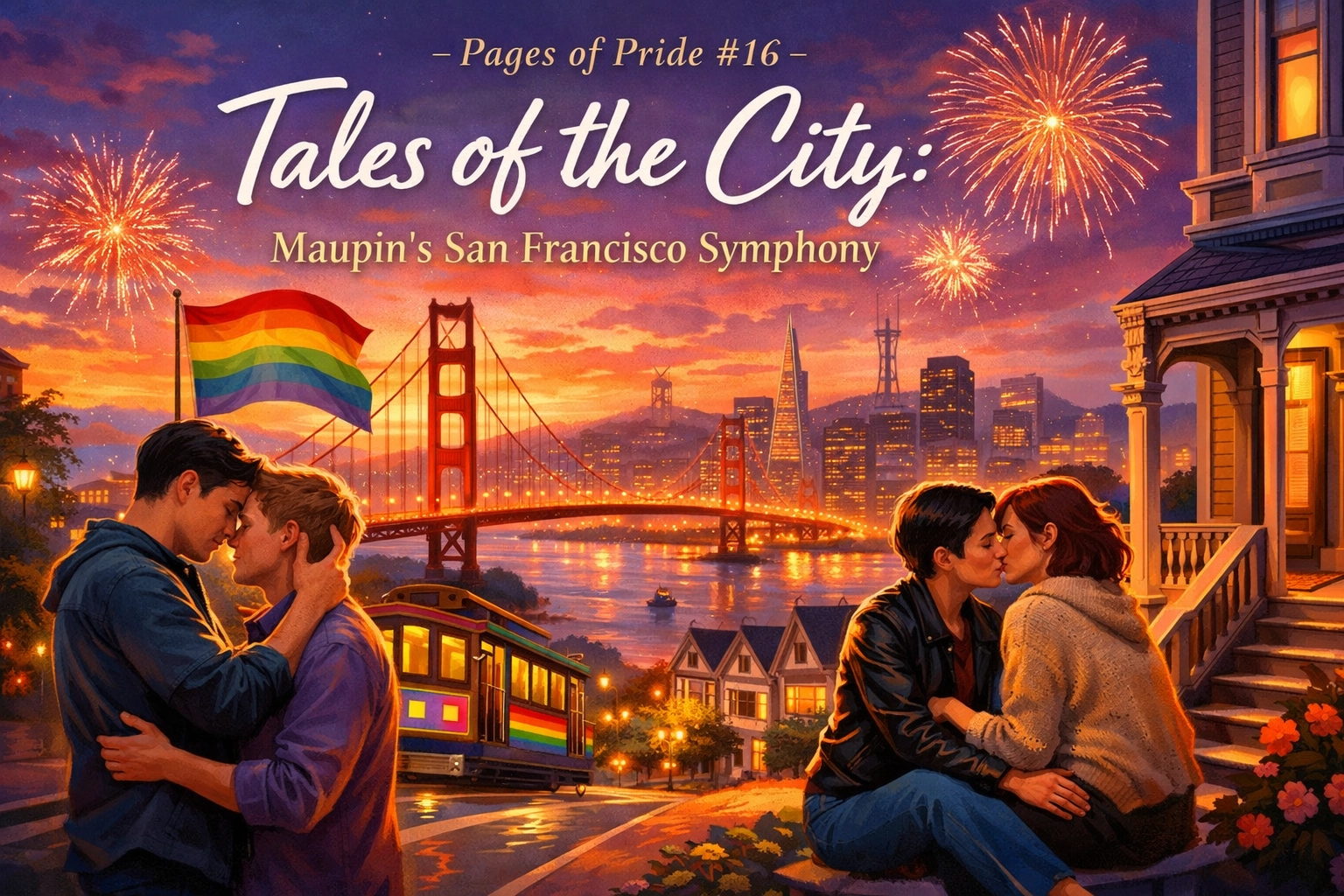
Before "Queer as Folk," before "Looking," before streaming services made queer stories accessible with a click, there was a little serialized story in the San Francisco Chronicle that changed everything. Armistead Maupin's Tales of the City didn't just tell LGBTQ+ stories, it smuggled them into the daily routine of millions of straight newspaper readers over their morning coffee. Revolutionary? Absolutely.
The Accidental Revolution
Starting in 1976, Maupin began what would become a groundbreaking ten-novel series (the final installment dropped in 2024!) that introduced America to 28 Barbary Lane and its gloriously messy, beautifully diverse found family. What makes this series a cornerstone of gay literature isn't just what it said, but where it said it.
These weren't stories hidden in niche bookstores or whispered about in underground zines. They were right there in the daily paper, between sports scores and comic strips. Your conservative uncle reading about his morning commute? He was also reading about Michael "Mouse" Tolliver's dating life, trans icon Anna Madrigal's past, and the bohemian chaos of 1970s San Francisco.
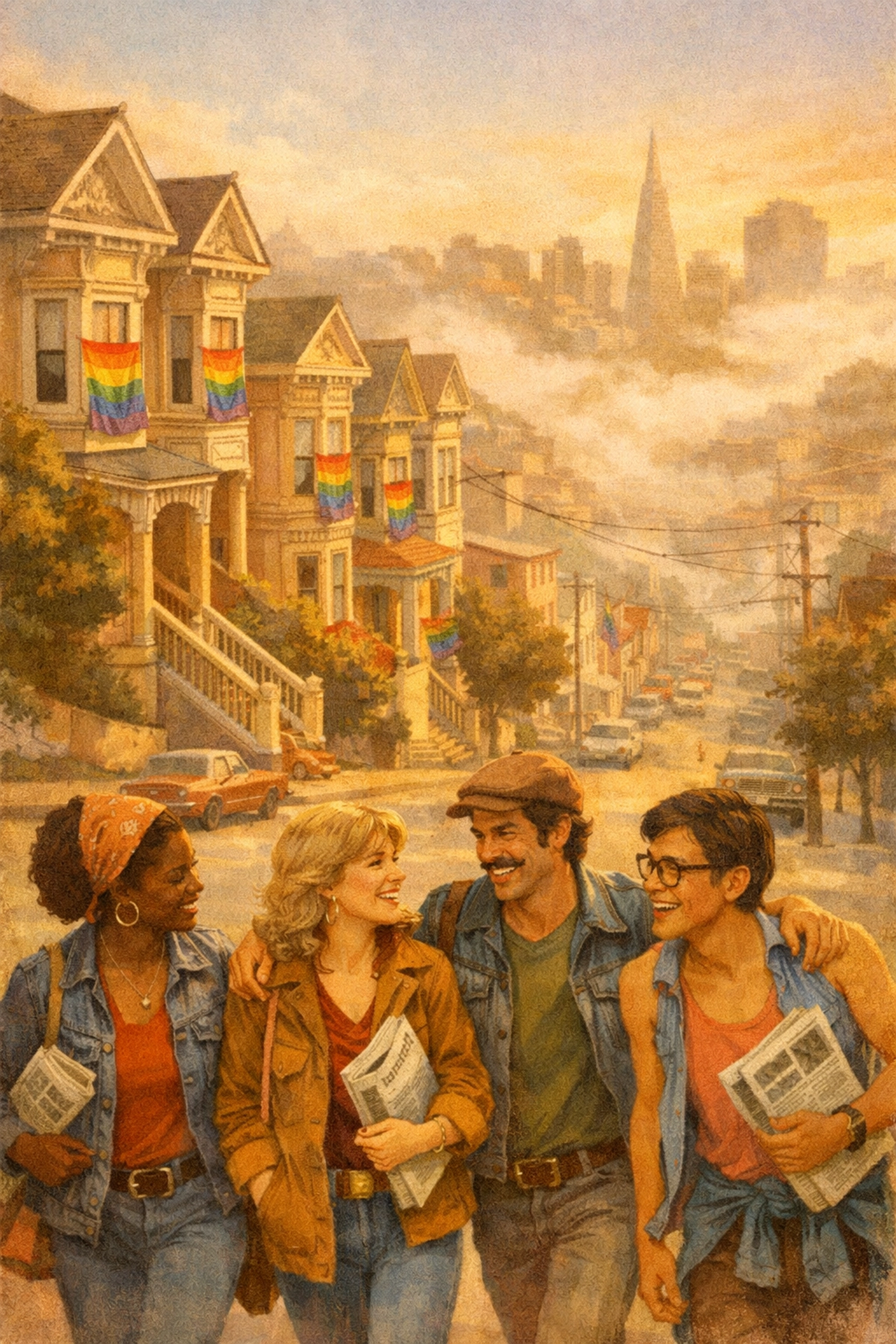
The genius of Maupin's approach was making queer lives utterly, wonderfully ordinary. Sure, there was drama, this is San Francisco in the '70s and '80s we're talking about, but at its heart, Tales of the City was about people trying to find love, community, and themselves. Sound familiar? That's because it's the foundation of every great MM romance and queer fiction piece you've ever loved.
More Than Just Gay Books, A Tapestry of Queer Experience
What sets Tales of the City apart from other LGBTQ+ books of its era is its refusal to center on just one experience. While many early gay novels focused solely on coming out narratives or tragic endings (we're looking at you, every pre-1990s gay film), Maupin gave us a full spectrum of queer life.
You've got:
- Michael Tolliver, the sweet gay man from Florida finding himself in San Francisco
- Anna Madrigal, a trans landlady who became one of fiction's most beloved characters decades before trans visibility became mainstream
- Mona Ramsey, exploring bisexuality before it was cool to talk about
- Brian Hawkins, the straight ally whose evolution mirrors America's own journey
- Mary Ann Singleton, the wide-eyed transplant learning that family isn't always blood
This wasn't a single narrative, it was a symphony. Each character brought their own melody, and together they created something magnificent.
The San Francisco That Lives in Our Hearts
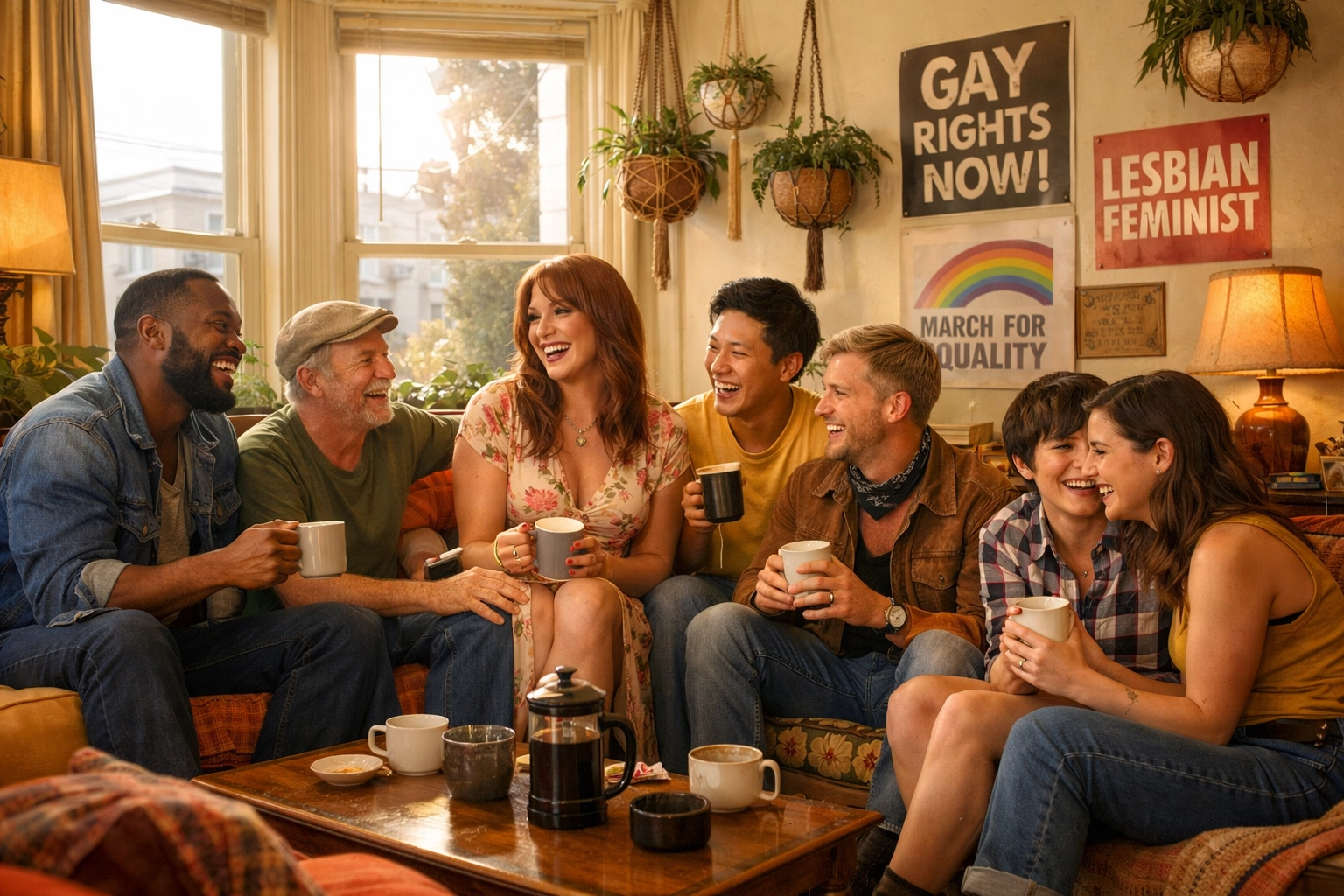
If you've ever read contemporary gay romance novels set in San Francisco, you owe a debt to Maupin. He didn't just use the city as a backdrop; he made it a character. The fog-kissed hills, the Castro's vibrant nightlife, the eccentric neighborhoods, San Francisco became synonymous with queer freedom and possibility.
Tales of the City captured a specific moment in queer history: the post-Stonewall euphoria before AIDS devastated the community. But Maupin didn't shy away from harder truths. As the series progressed into the '80s, it tackled the AIDS epidemic head-on, giving voice to a crisis that mainstream media largely ignored.
This historical grounding makes the series essential reading for anyone who wants to understand LGBTQ+ fiction beyond romance tropes. Yes, there's love and sex and relationship drama (plenty of inspiration for anyone writing MM romance books or gay love stories), but there's also activism, loss, resilience, and the fierce determination of a community refusing to be erased.
From Newspaper Serial to Cultural Institution
The journey of Tales of the City from daily newspaper installments to beloved book series to multiple TV adaptations is its own fairy tale. Maupin proved that queer stories could be commercially successful, critically acclaimed, and culturally significant, all at once.
For writers of MM romance and gay fiction today, the series offers a masterclass in:
Character Development: These aren't cardboard cutouts or stereotypes. They're fully realized humans with contradictions, growth arcs, and messy emotions.
Community as Character: While many gay romance books focus on the couple in isolation, Tales shows how community shapes and supports queer love. The found family at 28 Barbary Lane isn't background, it's essential.
Balancing Light and Dark: Yes, there's humor and joy and steamy romance (hello, inspiration for steamy MM romance!), but there's also grief and fear and anger. The tonal balance never feels forced.
Long-Form Storytelling: The ten-book arc (spanning 1976-2024 in publication) allows characters to age, evolve, and respond to changing times. It's a reminder that queer stories don't end at the happily-ever-after.
Why Tales of the City Still Matters in 2026
You might wonder why a series that started nearly 50 years ago still deserves a spot on your LGBTQ+ reading list. Fair question. Here's why it's still vital:
Historical Context: Want to understand where modern queer fiction came from? Start here. The series is a time capsule of queer culture's evolution.
Trans Representation Done Right: Long before trans stories became a publishing trend, Anna Madrigal was there, complex, loving, flawed, and human. Not a tragedy, not a teaching moment, just… a person.
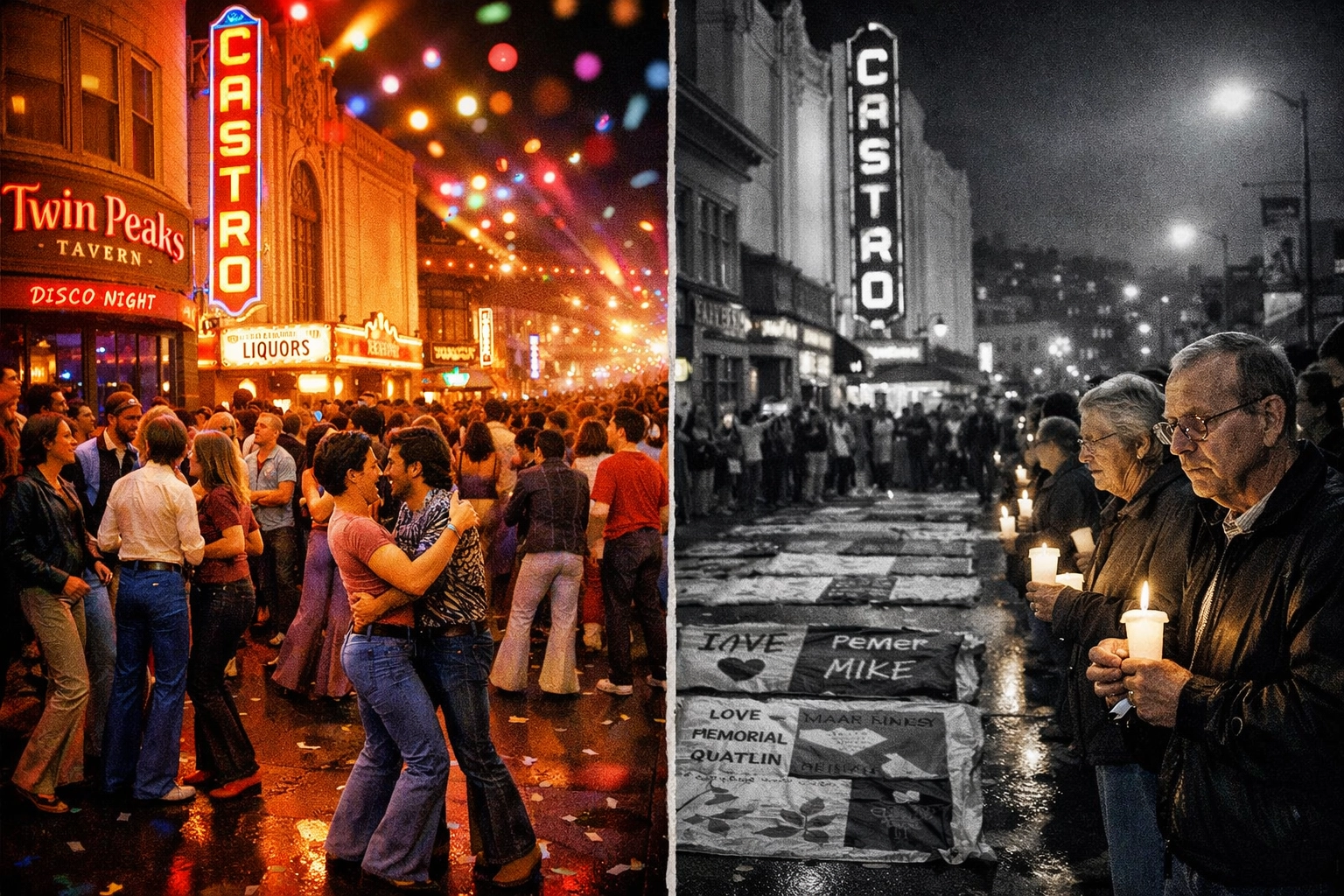
The Blueprint for Found Family: Every MM contemporary romance featuring a tight-knit friend group owes something to 28 Barbary Lane. Maupin showed that chosen family could be just as powerful as blood relations.
Intersectional Before It Was a Buzzword: The series includes characters across races, classes, sexualities, and gender identities, all living together in beautiful chaos.
It's Still Damn Entertaining: Beyond its historical importance, these are just genuinely great stories. Funny, sexy, heartbreaking, and utterly addictive.
For Modern Readers of MM Romance and Gay Fiction
If you're coming to Tales of the City as a fan of contemporary MM romance books, you'll find familiar elements: workplace dynamics (hello, gay workplace romance themes!), friends-to-lovers arcs, coming out journeys, and steamy encounters that definitely earned those newspaper complaints back in the day.
But you'll also find something that sometimes gets lost in genre fiction: a sense of place and time that grounds the romance in lived reality. The characters at 28 Barbary Lane don't exist in a vacuum. They're shaped by their city, their community, their historical moment, and each other.
For readers who love emotional MM books and heartfelt gay fiction, the series delivers in spades. The relationship between Michael and his various partners throughout the series feels earned, messy, and real. When characters hurt each other, there are consequences. When they love each other, it matters.
The Legacy Continues
The completion of the series in 2024 with the final installment reminds us that queer stories are ongoing. Maupin aged his characters in real time, showing LGBTQ+ lives across decades: something rarely seen in gay romance series. We see characters navigate youth, middle age, and beyond. We see how they survive loss, celebrate joy, and keep building community.
For anyone exploring LGBTQ+ ebooks and building their digital library at ReadWithPride.com, Tales of the City represents a bridge between literary fiction and popular romance, between historical documentation and entertainment, between the specific (San Francisco's queer community) and the universal (the human need for love and belonging).
Your Next Read
Whether you're a longtime fan revisiting 28 Barbary Lane or a first-timer discovering why this series changed gay literature forever, Tales of the City offers something rare: a fully realized queer world where our lives are the norm, not the exception.
It paved the way for every MM romance, every queer fiction series, every gay love story that followed. It proved queer narratives could be complex, commercial, and culturally transformative. And it remains, nearly five decades later, absolutely essential reading.
So grab your copy (physical or digital: we don't judge at Read with Pride!), settle in, and prepare to fall in love with the most famous address in queer literature. 28 Barbary Lane is waiting.
Discover more groundbreaking LGBTQ+ stories and connect with our community on Facebook, Instagram, and X/Twitter. Visit ReadWithPride.com for our complete collection of gay romance, MM fiction, and queer literature.
#TalesOfTheCity #ArmistreadMaupin #LGBTQBooks #GayLiterature #MMRomance #QueerFiction #GayRomanceBooks #ReadWithPride #LGBTQReading #GayBooks #ClassicQueerLit #SanFranciscoPride #FoundFamily #TransRepresentation #GayClassics #MMRomanceBooks #QueerCommunity #LGBTQFiction #PagesOfPride #GayNovels

Leave a Reply
You must be logged in to post a comment.