

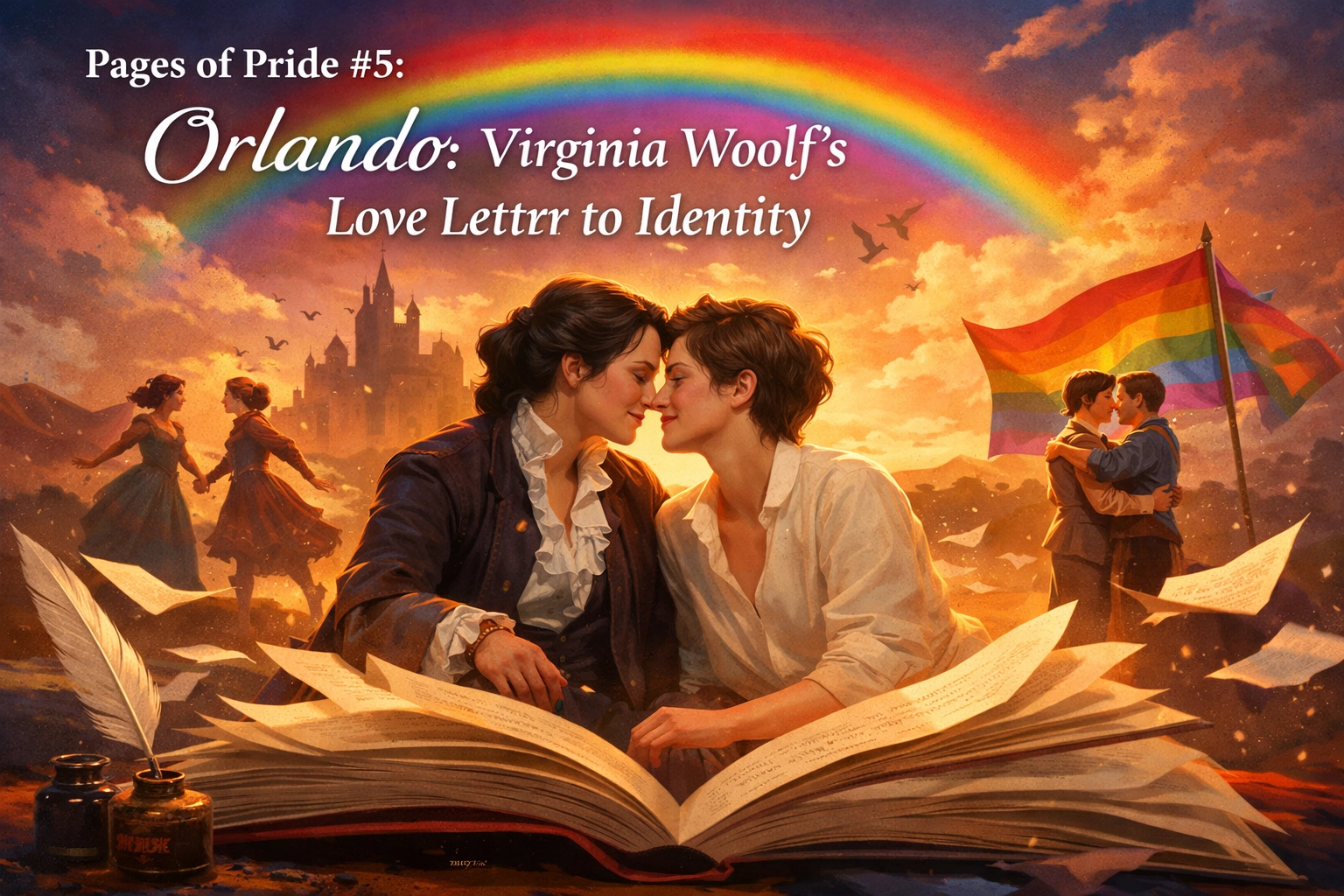
What if you could live for over 300 years, wake up one morning as a different gender, and still somehow be unapologetically you? Welcome to Virginia Woolf's Orlando, the 1928 masterpiece that said "gender is whatever" decades before it was cool: and did it with the kind of literary flair that makes this queer classic absolutely unforgettable.
If you're hunting for gay literature that transcends time (literally), Orlando deserves a spot at the top of your LGBTQ+ fiction reading list. This isn't your typical gay romance novel, but it's absolutely a love story: to identity, to fluidity, and to one very special aristocratic poet named Vita Sackville-West.
The Most Extra Biography Ever Written
Let's get the tea: Virginia Woolf was absolutely smitten with Vita Sackville-West, and instead of writing her a normal love letter, she wrote an entire novel where Vita gets to live for centuries, switch genders, and inherit the family estate she was denied in real life. Now that's romantic dedication.
Orlando follows its titular character from 1588 through 1928: a span of over 300 years during which Orlando ages only 36 years and transitions from a young nobleman at Queen Elizabeth I's court to a woman navigating the complexities of Victorian society. It's part fantasy, part satire, part historical fiction, and wholly queer fiction in the most delightful sense.
When You Wake Up and Everything's Different (But Also the Same)
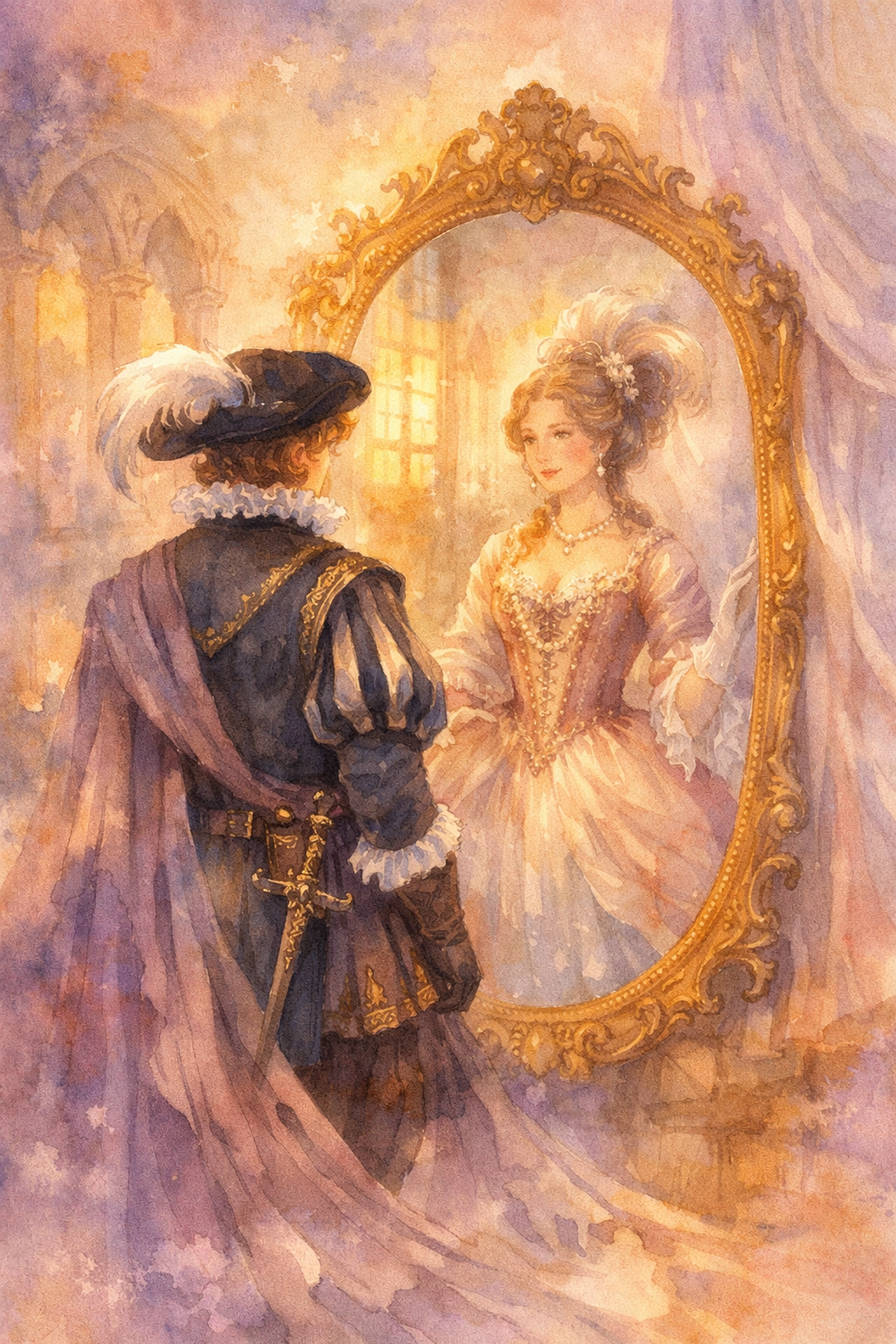
The transformation happens in Constantinople. Orlando falls into a deep sleep and wakes up as a woman. Woolf handles this monumental shift with characteristic elegance and a healthy dose of nonchalance: Orlando looks in the mirror, acknowledges the change, and essentially shrugs it off. "Same person, different packaging," seems to be the vibe.
What's revolutionary about this isn't just the gender fluidity in literature (though that's groundbreaking enough for 1928). It's how Woolf uses this fantastical premise to explore something deeply real: how society treats us differently based on how we're perceived, and how identity exists beyond these external constraints.
As a man, Orlando could write poetry without scrutiny, travel freely, and live according to his whims. As a woman in the eighteenth and nineteenth centuries, suddenly there are corsets (literal and metaphorical), social expectations, and the relentless pressure to find a husband. The book doesn't shy away from showing how gender shapes experience: but it also insists that Orlando's essential self remains unchanged beneath these shifting social performances.
The Self as a Crowded Room
Here's where Orlando gets really interesting for modern readers exploring LGBTQ+ romance and identity. By the novel's conclusion, Orlando grapples with the question that haunts us all: "Who am I, really?"
The answer Woolf provides is beautifully queer in its refusal of singular definition. Orlando realizes she isn't one self but rather a collection of all her selves: the nobleman, the woman, the poet, the lover, the aristocrat, the adventurer. She contains multitudes, and that's not a contradiction; it's the point.
This idea resonates powerfully with contemporary conversations about gender, sexuality, and identity. In a world that constantly demands we define ourselves in neat, immutable categories, Orlando insists on the validity: even the necessity: of complexity, change, and contradiction.

Love, Loss, and Literary Shade
The novel is also deliciously funny. Woolf takes shots at literary pretension, gender norms, and social convention with the kind of dry wit that makes you want to highlight entire passages. When Orlando, now a woman, encounters the stuffy Victorian era, the satire becomes particularly sharp.
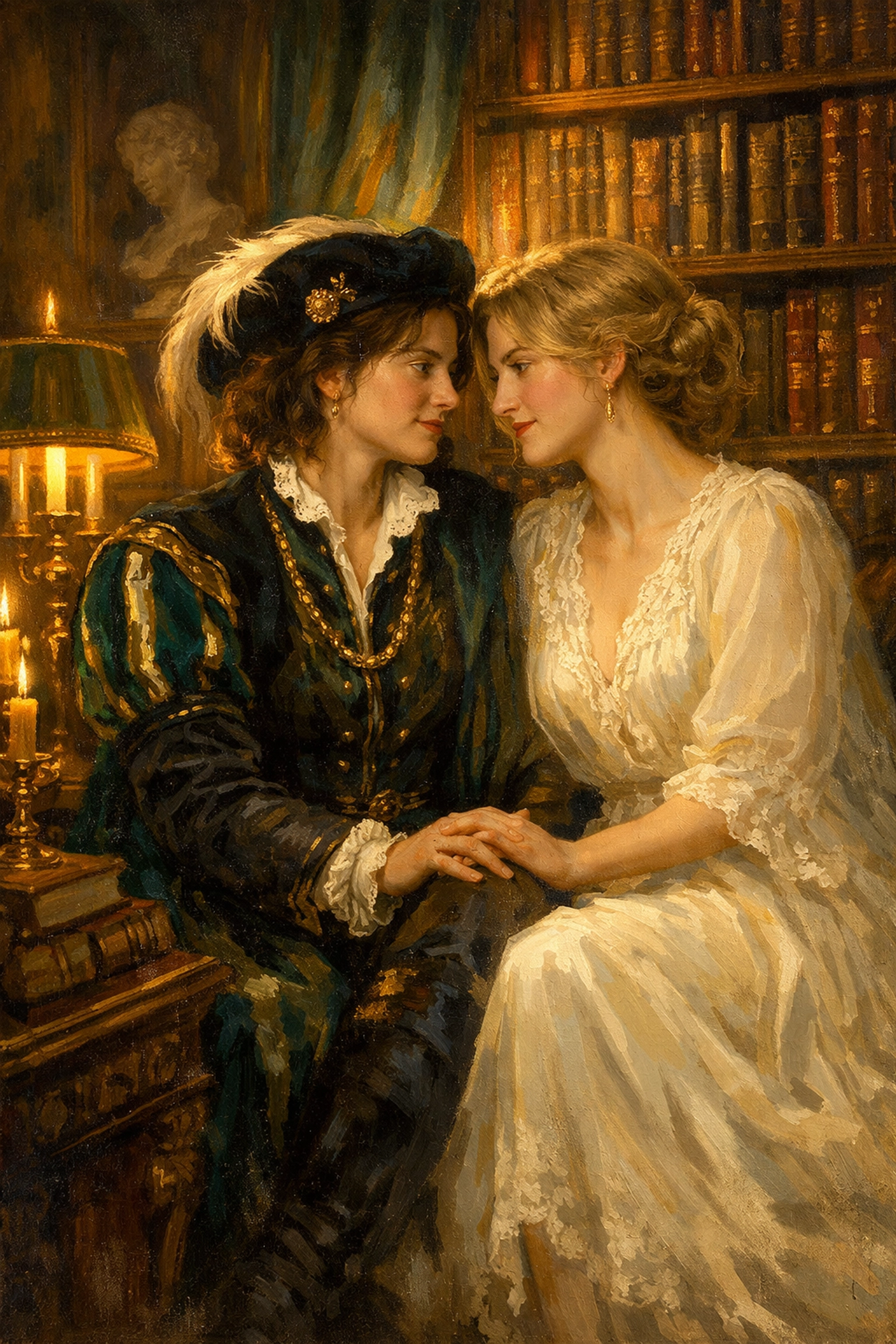
There's also real tenderness here: particularly in Orlando's romantic relationships. The connection with the Russian princess Sasha, the complicated marriage to Marmaduke Bonthrop Shelmerdine (who himself embodies gender nonconformity), and the underlying romance with Vita Sackville-West that inspired the whole endeavor create layers of gay love stories and queer longing.
Woolf gives Sackville-West what reality denied her: ownership of Knole, the ancestral estate that passed to male relatives due to inheritance laws. In Orlando, the protagonist gets to be both a woman and the rightful heir: a fantasy resolution to real injustice, wrapped in literary brilliance.
Why Orlando Matters Now
Nearly a century after publication, Orlando remains startlingly relevant. In an era where trans rights are under attack, where gender-nonconforming people face discrimination, and where we're still fighting for the right to define ourselves on our own terms, Woolf's insistence on the fluidity and multiplicity of identity feels prophetic.
This is why Orlando belongs in every collection of queer classics and why it continues to inspire gay authors and readers alike. It's not just about representation (though seeing gender transition portrayed with such matter-of-fact acceptance in 1928 is remarkable). It's about the deeper truth that identity is expansive, that we contain centuries within ourselves, that change doesn't negate who we were: it adds to who we are.
Reading Orlando Today
If you're diving into historical MM romance novels or exploring the foundations of LGBTQ+ literature, Orlando offers something unique. It's not romance in the conventional sense, but it's deeply romantic in its celebration of the self and its refusal to be constrained by binary thinking.
The prose is unmistakably Woolf: lyrical, introspective, occasionally challenging: but also surprisingly accessible. She's playful here in ways she isn't in some of her more experimental works like The Waves. This is Woolf having fun, writing a love letter, and simultaneously creating a foundational text of queer literature.
For readers discovering gay fiction beyond contemporary romance, Orlando demonstrates how queer themes have always existed in literature, sometimes in the most unexpected forms. It's a reminder that MM books and LGBTQ+ fiction have a rich, complex history worth exploring.
The Legacy Continues
Orlando has been adapted multiple times: most notably in Sally Potter's 1992 film starring Tilda Swinton: and continues to influence writers exploring gender and identity. Its impact on queer fiction cannot be overstated. From science fiction novels with gender-shifting aliens to contemporary trans narratives, you can trace a line back to Woolf's audacious imagination.
At Read with Pride, we celebrate these foundational texts alongside contemporary gay romance books because understanding where we come from enriches where we're going. Orlando isn't just a historical curiosity: it's a living, breathing work that speaks to anyone who's ever felt too expansive for the boxes society tries to put them in.
Final Thoughts
Virginia Woolf's Orlando is proof that the best love letters are the ones that give someone the gift of being fully, unapologetically themselves: across time, across gender, across all the boundaries that try to contain us. It's a celebration of fluidity, a meditation on identity, and a fantastical romp through centuries of English history.
Whether you're a longtime fan of LGBTQ+ ebooks or just beginning your journey into gay novels, Orlando offers something extraordinary: permission to be all of your selves, to contain contradictions, to change and grow while remaining essentially you.
And honestly? We could all use that reminder sometimes.
Looking for more queer classics and contemporary LGBTQ+ fiction? Explore our collection at ReadWithPride.com and join our community celebrating diverse stories and authentic voices.
Connect with us:
- Facebook: Read With Pride
- Instagram: @read.withpride
- Twitter/X: @Read_With_Pride
#ReadWithPride #OrlandaNovel #VirginiaWoolf #QueerClassics #LGBTQLiterature #GayFiction #QueerFiction #GenderFluid #TransLit #MMRomance #GayBooks #LGBTQBooks #QueerReads #GayLiterature #ClassicLGBTQ #HistoricalQueer #PagesOfPride #LGBTQHistory #QueerBookClub #BookRecommendations #DiverseReads #LGBTQReading #GayBookstagram #QueerCommunity #ReadQueer #LGBTQEbooks #GayNovels

Leave a Reply
You must be logged in to post a comment.